Weaving Tales: Building Community Through Storytelling

The Impact of Storytelling on Community Engagement
Building community through storytelling is an essential strategy for organizations looking to connect deeply and authentically with their audiences. It goes beyond simple narratives. It creates emotional bonds and strengthens the sense of belonging and identity within a community. Here's why it's crucial:
Emotional Connections: Storytelling evokes emotions, making messages memorable and relatable.
Community Identity: Stories help define and reinforce shared values and goals.
Understanding and Dialogue: They simplify complex messages and foster deeper understanding.
Inspiration and Action: Compelling stories can motivate individuals to participate and contribute to community initiatives.
Organizations, especially non-profits, can use storytelling to amplify their missions and create engaging content that resonates with their audiences. By focusing on stories of challenge, triumph, and collective effort, they not only highlight their impact but also inspire meaningful action.
Join us as we dig deeper into the incredible power of storytelling to engage communities and explore actionable strategies that harness this tool effectively.
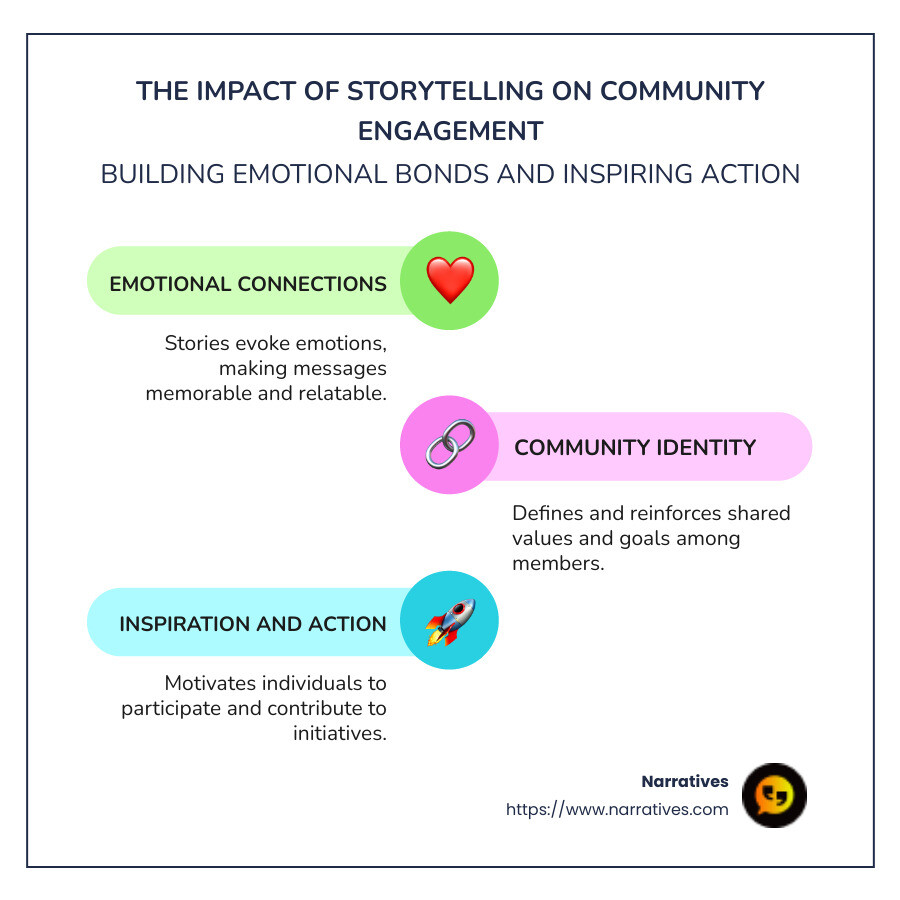
Simple guide to Building community through storytelling terms:
The Power of Storytelling in Community Building
Building community through storytelling is a powerful method that organizations can use to form lasting connections with their audiences. Let's explore how storytelling can improve emotional connections, strengthen community identity, and encourage participatory storytelling.
Emotional Connections
Stories have a unique ability to touch hearts and evoke emotions. When organizations share narratives that resonate with their community's experiences, they create a profound emotional bond. Consider this: a story about a student who finds housing and legal resources through an organization's services is more than just a tale. It’s a bridge that connects the audience emotionally to the cause.

Community Identity
Stories are the threads that weave together the identity of a community. By actively involving community members in the storytelling process, organizations can reinforce a shared identity. This sense of belonging is powerful. When people see themselves as part of a larger narrative, they feel more connected and involved. For instance, an organization that highlights collaboration with community members in a food pantry project fosters unity and a shared sense of purpose.
Participatory Storytelling
Participatory storytelling is about inviting community members to share their own stories. This approach not only democratizes the storytelling process but also enriches it with diverse perspectives. By creating spaces for dialogue—whether through social media, community events, or digital platforms—organizations empower individuals to contribute their voices. This shared storytelling experience not only strengthens community ties but also ensures that stories are authentic and representative of the community's diverse voices.
In summary, storytelling is more than just a communication tool; it's a catalyst for building strong, connected communities. By focusing on emotional connections, reinforcing community identity, and encouraging participatory storytelling, organizations can harness the full power of storytelling to engage and inspire their audiences.
Building Community Through Storytelling: Key Strategies
Building community through storytelling isn't just about sharing tales—it's about engaging people where they are and drawing them into a shared narrative. Here are some key strategies to make this happen:
Social Media
Social media is a powerful tool for storytelling. It allows organizations to reach a broad audience quickly and effectively. Platforms like Facebook, Instagram, and Twitter can amplify stories that highlight the community's identity and achievements. For instance, Eagle Mount in Bozeman, Montana, uses its Facebook page to share images and videos of people overcoming life's obstacles through recreation. This visual storytelling builds loyalty and connects community members through shared experiences.
To make the most of social media, focus on:
- Authenticity: Share real stories from real people. This resonates more deeply with audiences.
- Engagement: Encourage followers to share their own stories, creating a participatory environment.
- Consistency: Regular posting keeps your audience engaged and connected to your narrative.
Experiential Communities
Experiential communities are about creating events and spaces where people can engage directly with storytelling. Events like F.E.A.S.T. (Friends Eating and Storytelling Together) in Santa Fe, New Mexico, show how sharing food and stories can build community bonds. These gatherings offer a chance for people to connect on a personal level, fostering a sense of belonging.
To build experiential communities:
- Host Events: Organize storytelling nights, workshops, or community dinners.
- Create Safe Spaces: Ensure that everyone feels welcome and valued, allowing for open and honest storytelling.
- Encourage Participation: Invite community members to share their stories, making them active participants in the narrative.
Community Awareness
Raising community awareness through storytelling involves making sure people know about your organization and its mission. Conducting community awareness surveys can help gauge how much people know about your work. Use the survey results to tailor your storytelling efforts and address knowledge gaps.
To improve community awareness:
- Identify Key Messages: Clearly define what your organization does and the impact it has.
- Share Success Stories: Highlight stories of those you've helped to illustrate your mission's effectiveness.
- Use Multiple Channels: Distribute stories across various platforms, including social media, newsletters, and local events.
By leveraging these strategies, organizations can not only tell compelling stories but also foster a sense of community and belonging. This approach not only raises awareness but also inspires action and participation, creating a thriving community united by shared stories and goals.
How Storytelling Improves Non-Profit Engagement
Building community through storytelling can transform how non-profits engage with their supporters. Let's explore how it impacts donor relations, creates unified messaging, and inspires action.
Donor Relations
Storytelling is a bridge between non-profits and their donors. By sharing real-life stories, organizations can connect emotionally with their audience. Consider the approach of non-profits that use personal narratives to evoke empathy and highlight the urgency of their causes. This method not only attracts donors but also retains them by making them feel part of the story.
- Emotional Connection: Stories that highlight personal journeys or community impact can make donors feel valued and connected to the cause.
- Transparency: Sharing stories about how donations are used builds trust and encourages continued support.
Unified Messaging
A consistent narrative is crucial for non-profits. It ensures that everyone involved shares the same vision and message. This can be achieved by conducting storytelling workshops with staff and volunteers. The goal is to develop a shared understanding and articulation of the organization's mission.
- Consistency: Ensure everyone tells the same story about the organization's mission and impact.
- Clarity: Clear messaging helps prevent misunderstandings and ensures all stakeholders know the organization's goals.
Inspiring Action
A powerful story doesn't just inform; it motivates. By crafting stories with a strong call to action, non-profits can inspire their audience to get involved. This could mean volunteering, donating, or simply spreading the word.
- Call to Action: Clearly define what you want your audience to do after hearing your story.
- Engagement: Invite your audience to be part of the story, whether by participating in events or sharing their own experiences.

By using these storytelling techniques, non-profits can improve their engagement with donors, maintain unified messaging, and inspire meaningful action. These elements are vital for building a strong, supportive community around your cause.
Creating Impactful Stories for Community Awareness
Creating stories that raise community awareness is an art. A well-crafted story can inspire action and foster a sense of belonging. Let's break down the key elements that make a story impactful: character introduction, problem description, and a call to action.
Character Introduction
Start by introducing a relatable character. This is the heart of your story. People connect with other people, not abstract ideas. For example, charity: water uses personal stories to draw in their audience. Choose a character who represents the community or cause you serve. If privacy is a concern, consider using a composite character or changing names.
- Relatability: Your character should resonate with your audience.
- Authenticity: Use real stories to build trust and connection.
Problem Description
Next, clearly describe the problem your character faces. This is where you set the stage for why your organization exists. Explain how the problem affects your character and what could happen if it's not addressed.
- Clarity: Make sure the problem is easy to understand.
- Impact: Highlight the urgency and importance of addressing the issue.
Call to Action
Finally, end with a strong call to action. Tell your audience exactly how they can help. This could mean donating, volunteering, or sharing the story with others. Use the problem you've described to motivate your audience to act.
- Specificity: Clearly state what you want your audience to do.
- Urgency: Encourage immediate action to solve the problem.
By focusing on these elements, your stories can become powerful tools for raising awareness and driving change. Stories are more than just a way to share information—they are a way to connect, inspire, and build community.
Frequently Asked Questions about Building Community Through Storytelling
What is storytelling repertoire?
Storytelling repertoire refers to the collection of stories, styles, and techniques a storyteller uses to engage and connect with an audience. A rich repertoire includes a variety of narratives that resonate with different audiences and situations. It’s not just about having a lot of stories; it’s about having the right stories that can be adapted to fit the needs of your community.
Having a diverse storytelling repertoire allows you to:
- Connect Emotionally: Tailor stories that evoke emotions and foster empathy.
- Address Different Audiences: Use different stories to speak to various groups within your community.
- Adapt to Contexts: Modify stories for different platforms or events, whether online or in-person.
How can storytelling raise community awareness?
Storytelling is a powerful tool for raising community awareness because it transforms abstract concepts into relatable narratives. By telling stories, organizations can make their missions more tangible and inspire action.
Here’s how storytelling can boost awareness:
- Emotional Engagement: Telling stories that highlight real-life challenges and triumphs can evoke empathy and encourage community involvement. For instance, sharing how a local food pantry helped a family in need can prompt others to support the cause.
- Unified Messaging: Consistent storytelling ensures that everyone in your organization communicates the same core message, reinforcing your mission and values.
- Visibility: Stories shared across multiple platforms (social media, newsletters, events) reach a wider audience, increasing the chances of attracting new supporters.
How does storytelling foster a sense of belonging?
Storytelling fosters belonging by creating a shared narrative that community members can identify with. When people see themselves reflected in stories, they feel more connected and valued.
- Shared Identity: Stories help build a collective identity, making individuals feel like they are part of something bigger. Highlighting community achievements, like a successful neighborhood cleanup, can strengthen this sense of unity.
- Inclusive Participation: Encouraging community members to share their own stories can make everyone feel included and valued. This participatory approach empowers individuals and reinforces their role in the community.
- Emotional Bonds: By sharing personal stories, community members can connect on a deeper level, fostering trust and collaboration.
Through storytelling, communities can create a mix of shared experiences and values, enhancing engagement and unity.
Conclusion
In today's digital world, Narratives stands out as a vital partner for non-profits and purpose-driven organizations. By focusing on digital storytelling, we enable these organizations to amplify their voices and share their impact in a way that truly resonates. Our approach centers on elevating underrepresented voices through high-quality, emotionally engaging video and multimedia content. This not only helps in building community through storytelling but also inspires action, builds trust, and improves visibility.
Our commitment to non-profit partnerships ensures that we work closely with organizations to craft stories that reflect their mission and values. This collaboration allows us to create content that not only tells a story but also drives social change and community engagement. By weaving tales that connect emotionally and authentically, we help non-profits foster deeper connections with their audience.
We believe that storytelling is more than just a tool; it's a bridge that connects people, ideas, and communities. By sharing stories that matter, we contribute to a world where everyone feels seen, heard, and valued. If you're ready to share your organization's story and make a meaningful impact, explore our services here and let us help you craft the narrative that will inspire and unite your community.
Through our efforts, we aim to transform the way non-profits engage with their communities, turning every story into a catalyst for change. Together, we can create a mix of shared experiences that not only improves community awareness but also fosters a sense of belonging and unity.


.avif)