Weaving Tales: The Power of Storytelling in Building Connections

Building connections through storytelling isn't just about sharing tales; it's about fostering deep, meaningful relationships. At its core, storytelling is a powerful tool that helps bridge gaps between people, communities, and cultures. Here's why it matters:
- Creates Shared Identity: Stories unite us by forming shared experiences and values.
- Evokes Emotional Responses: Real stories stimulate emotions and biologically connect listeners.
- Breaks Down Barriers: Stories offer understanding, breaking down cultural and social barriers.
- Preserves History and Culture: By sharing stories, we ensure that our heritage and traditions live on.
- Inspires Action: A compelling story can motivate and inspire communities to act.
Why does storytelling resonate so well? As acclaimed storyteller Richard Van Camp says, “We all ache for stories because we ache for connection.” Through stories, we invite others into our world, allowing them to see their own experiences reflected back, fostering a strong sense of belonging and community.
When we share a piece of who we are through stories, we offer others a chance to understand us better and create a web of connection that is not easily broken.

The Science of Storytelling
Ever wondered why a good story can make you laugh, cry, or even change your mind? It's all about the brain chemicals.
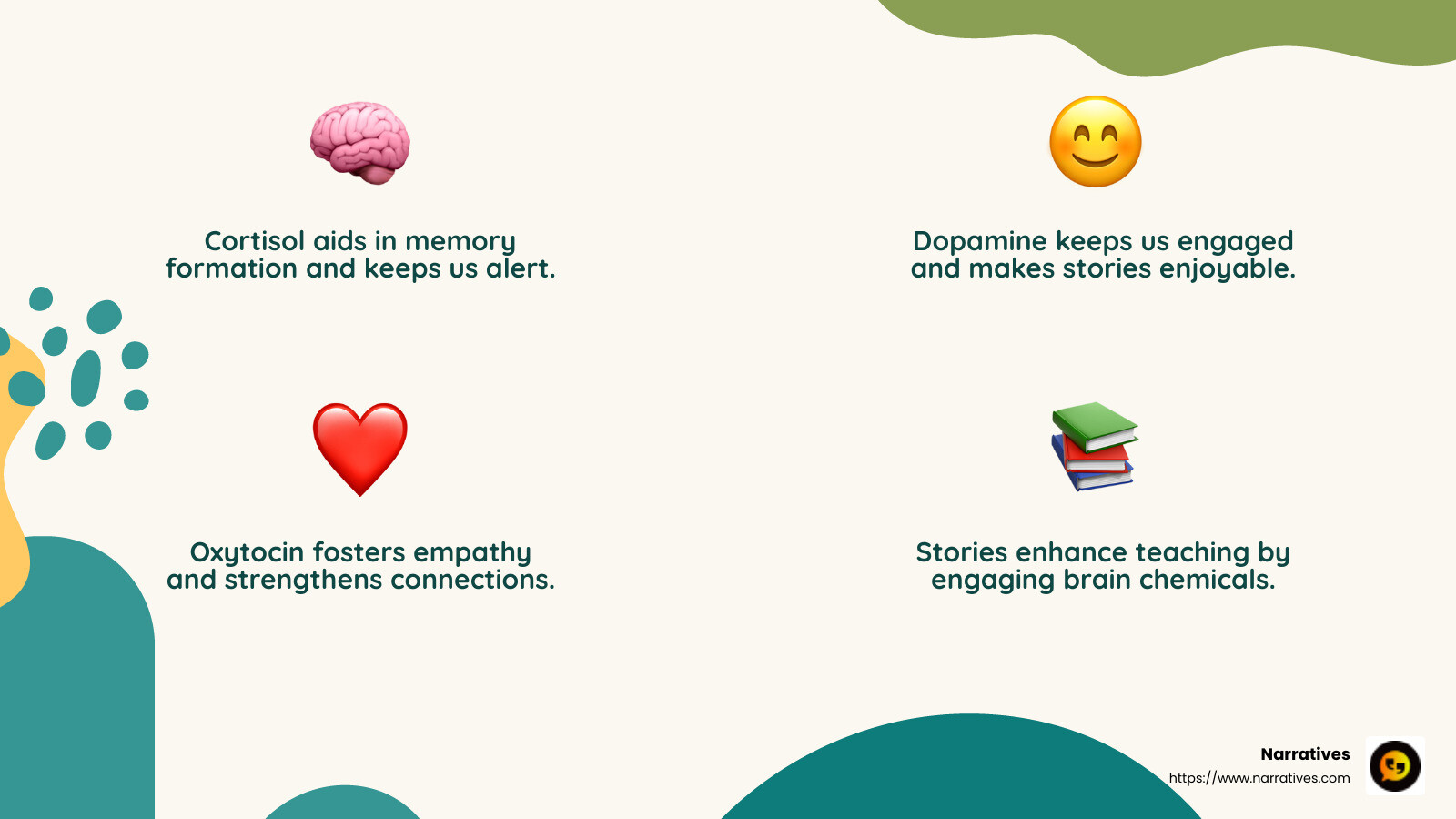
When you hear a story, your brain releases cortisol, dopamine, and oxytocin. These hormones play a big role in how we feel and connect with others.
Cortisol helps with memory formation. It keeps us alert, making sure we remember the important parts of a story. This is why storytelling is so effective in teaching and learning.
Dopamine is the feel-good chemical. It keeps us engaged and wanting more. Think of it as the reason you can't put down a good book or stop watching your favorite show.
Oxytocin, often called the "love hormone," is key for empathy and connection. When a story resonates, it can make us feel closer to others, even if we've never met them. This is why stories are so powerful in building connections.
These chemicals don't just make us feel good. They also help us understand and relate to the experiences of others. When we hear a story, we're not just passive listeners. Our brains are actively working to connect the dots, find meaning, and relate to the storyteller.
This emotional response is why storytelling is such a powerful tool for building connections. It taps into our basic human need to connect and understand each other. As Lani Peterson, a psychologist and storyteller, explains, storytelling helps us form and examine our truths and beliefs. By sharing and listening, we get closer to understanding what's true for us and others.
So, the next time you're telling a story, remember: you're not just sharing words. You're creating a chemical reaction in your listener's brain, building a bridge of understanding and connection.
Building Connections through Storytelling
Storytelling in Leadership
In leadership, storytelling isn't just a tool—it's a bridge that connects leaders to their teams. Building connections through storytelling helps create a shared identity and fosters a sense of community. When leaders share stories, they're not just sharing information; they're weaving a mix of shared experiences and values.
A good story can humanize a leader, making them relatable and approachable. It contextualizes complex ideas and makes them accessible to everyone. By doing this, leaders can tailor their messages to specific audiences, ensuring that each story resonates on a personal level.
Richard Van Camp, a renowned storyteller, emphasizes that we all crave stories because they help us connect. When leaders open up and share their narratives, they invite others into their world, creating a human connection that transcends titles and hierarchies.
Storytelling in Education
In the field of education, storytelling is a powerful tool for enhancing student engagement. It transforms classrooms into spaces where learning is not just about absorbing facts but about experiencing and understanding them. Stories create interdisciplinary learning opportunities, allowing students to see how different subjects connect in the real world.
Cross-cultural competence is another significant benefit of storytelling in education. By sharing diverse stories, educators can help students appreciate different perspectives and experiences. This not only enriches the learning experience but also prepares students for a globalized world.
Research shows that storytelling can create a safe environment for students. When students share and listen to stories, they build trust and feel more comfortable participating in class. This sense of safety encourages them to take risks and engage more deeply with the material.
Incorporating storytelling into education isn't just about telling tales; it's about creating a culture of learning where students feel connected to each other and to the material. It's about building a community where every story adds to the collective understanding and growth of the group.
By leveraging the power of storytelling, both leaders and educators can create environments where connections thrive, and learning becomes a shared journey.
Storytelling Techniques for Non-Profits
Crafting a Compelling Narrative
Non-profits have a unique opportunity to leverage storytelling to create emotional resonance and drive social impact. A compelling narrative isn't just about facts—it's about weaving stories that touch on core human needs like love, safety, and belonging. When these needs are addressed, stories become a powerful tool for connection.
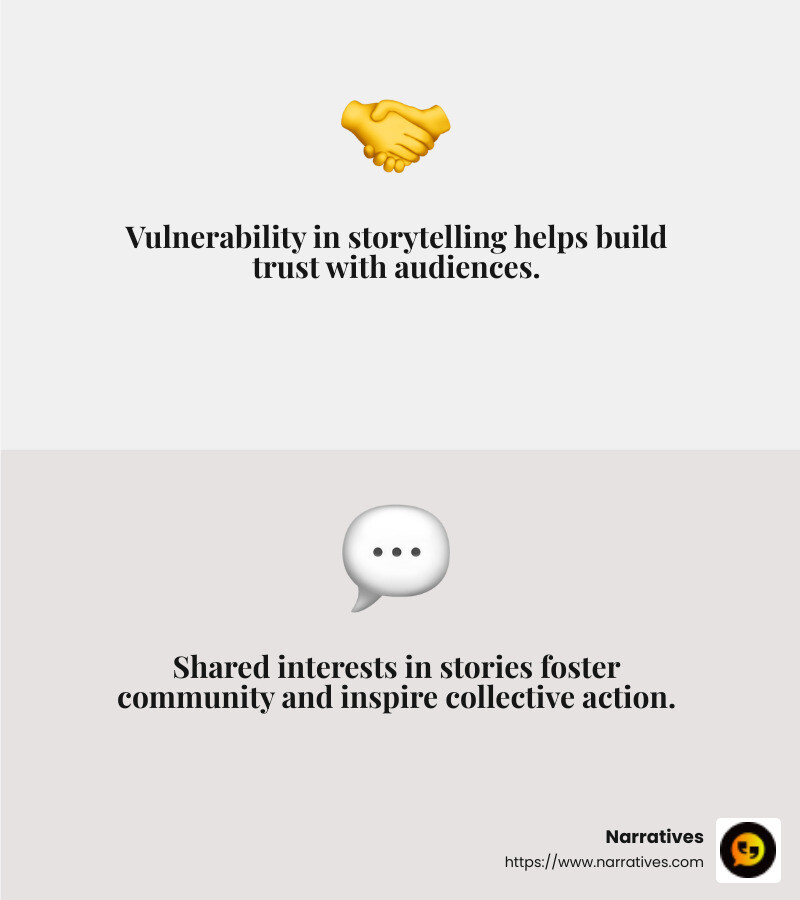
Vulnerability is a key component in crafting such narratives. By sharing stories that reveal challenges and triumphs, non-profits can create a community-driven message that resonates with their audience. This approach not only humanizes the cause but also builds trust, making the audience more likely to engage and support the mission.
A successful narrative also taps into common interests. By finding and highlighting shared values and experiences, non-profits can foster a sense of unity and purpose among their supporters. This shared identity strengthens the community and encourages collective action towards a common goal.
Using Storytelling to Inspire Action
To inspire action, non-profits must focus on audience engagement. Stories should be crafted to captivate and motivate, leaving a lasting impression. A memorable story is one that not only informs but also evokes an emotional response, compelling the audience to take action.
Building trust through storytelling is crucial. When a story is authentic and transparent, it creates a bond between the storyteller and the listener. This trust is the foundation upon which action is built. When people trust a non-profit, they are more likely to contribute their time, resources, and energy to the cause.
For non-profits, the goal is not just to tell a story but to create a narrative that moves people. By focusing on emotional resonance and creating a community-driven message, non-profits can harness the power of storytelling to inspire real change. Whether it's through a heartfelt personal story or a narrative that highlights the collective struggle and success of a community, storytelling has the power to turn listeners into active participants in the mission.
Frequently Asked Questions about Storytelling
How does storytelling facilitate human connection?
Storytelling is a powerful tool for building human connections. It works by tapping into our shared experiences and emotions. When we hear a story, our brains release hormones like oxytocin, which helps us feel empathy and trust. This emotional response makes us feel connected to the storyteller and others who share similar experiences.
Shared identity is another key element. Stories often highlight common values and experiences, creating a sense of belonging and unity. This is why storytelling is so effective in bringing people together, whether in a community meeting or a global movement.
What are the key elements of an effective story?
An effective story has several key elements:
Relatability: The story should connect with the audience's experiences or emotions.
Emotional impact: A good story evokes feelings, whether it's joy, sadness, or inspiration.
Clear structure: The story should have a beginning, middle, and end, making it easy to follow.
Authenticity: Authentic stories build trust and credibility. Being genuine is crucial.
Conflict and resolution: A story with a challenge and a resolution keeps the audience engaged and provides a satisfying conclusion.
How can storytelling be used in non-profit organizations?
Non-profits can use storytelling to engage and motivate their audience. By sharing stories of the people they help, non-profits can make their mission more relatable and urgent. These stories can highlight the impact of donations and volunteer work, showing the real difference that support makes.
Storytelling can also build trust with supporters. When non-profits share transparent and honest stories, they create a bond with their audience. This trust encourages more involvement, whether through donations, volunteering, or advocacy.
Moreover, storytelling can drive social change. By sharing stories of injustice or need, non-profits can raise awareness and inspire action. These stories can mobilize communities and create a collective voice to demand change.
In summary, storytelling is not just a communication tool for non-profits—it's a way to connect, inspire, and drive meaningful change.
Conclusion
At Narratives, we believe in the transformative power of storytelling to forge deep connections and drive meaningful change. Our focus is on partnering with non-profits to lift underrepresented voices through digital storytelling. By crafting emotionally resonant content, we help organizations share their impact stories in ways that inspire action and build trust.
Digital storytelling is a unique blend of technology and narrative that allows us to reach wider audiences. Through high-quality video and multimedia content, we bring stories to life, making them more engaging and memorable. This approach not only increases visibility but also improves the emotional impact of the stories we tell.
Non-profit partnerships are at the heart of what we do. We work closely with purpose-driven organizations to amplify their missions and highlight the communities they serve. By focusing on community-driven storytelling, we ensure that the narratives we create are authentic and resonate with their intended audiences.
Our strategy is simple but effective: use storytelling to create a shared identity and sense of community. This approach not only helps non-profits engage their audiences but also fosters a greater understanding of the social issues they address. Through storytelling, we aim to build connections that lead to real-world impact.
If you're a non-profit looking to improve your storytelling efforts, we invite you to partner with Narratives. Together, we can craft stories that inspire change and make a difference in the world.


.avif)