Narratives that Nurture: Building Empathy Through Storytelling

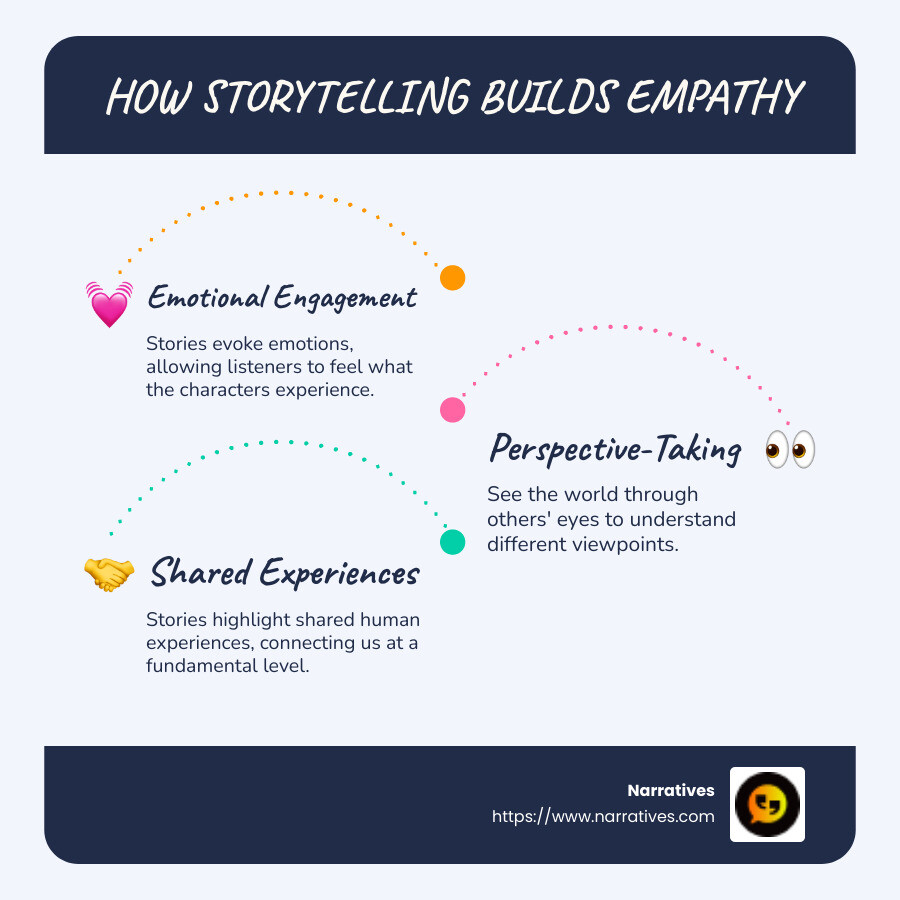
Building empathy through storytelling is a powerful way to foster understanding and connection among people. Stories act as bridges, letting us step into someone else's shoes and see the world from their perspective. They help us understand emotions and experiences that are different from our own.
Here's a quick look at how storytelling can help build empathy:
Emotional Engagement: Stories evoke emotions, allowing listeners to feel what the characters experience.
Perspective-Taking: By seeing the world through others' eyes, we develop a deeper understanding of different viewpoints.
Shared Experiences: Stories highlight shared human experiences, helping to connect us on a fundamental level.
Deep Connection: A well-told story can create a strong emotional bond between the storyteller and the audience.
The ability of storytelling to improve empathy is not just an art; it's also supported by science. When we listen to stories, our brains synchronize with the storyteller, experiencing emotions and sensory details as if we were part of the narrative ourselves. This immersive experience allows us to connect deeply with the emotions and experiences of others, making storytelling an essential tool for empathy development.
Whether you're a non-profit aiming to amplify your mission or a brand focused on advocacy, storytelling is the key to building authentic connections that resonate with your audience.
The Science of Storytelling and Empathy
When we talk about building empathy through storytelling, we're diving into a fascinating blend of art and science. At the heart of this process is the brain's remarkable ability to connect with narratives on a deep level.
Neuroscience: The Brain's Role in Storytelling
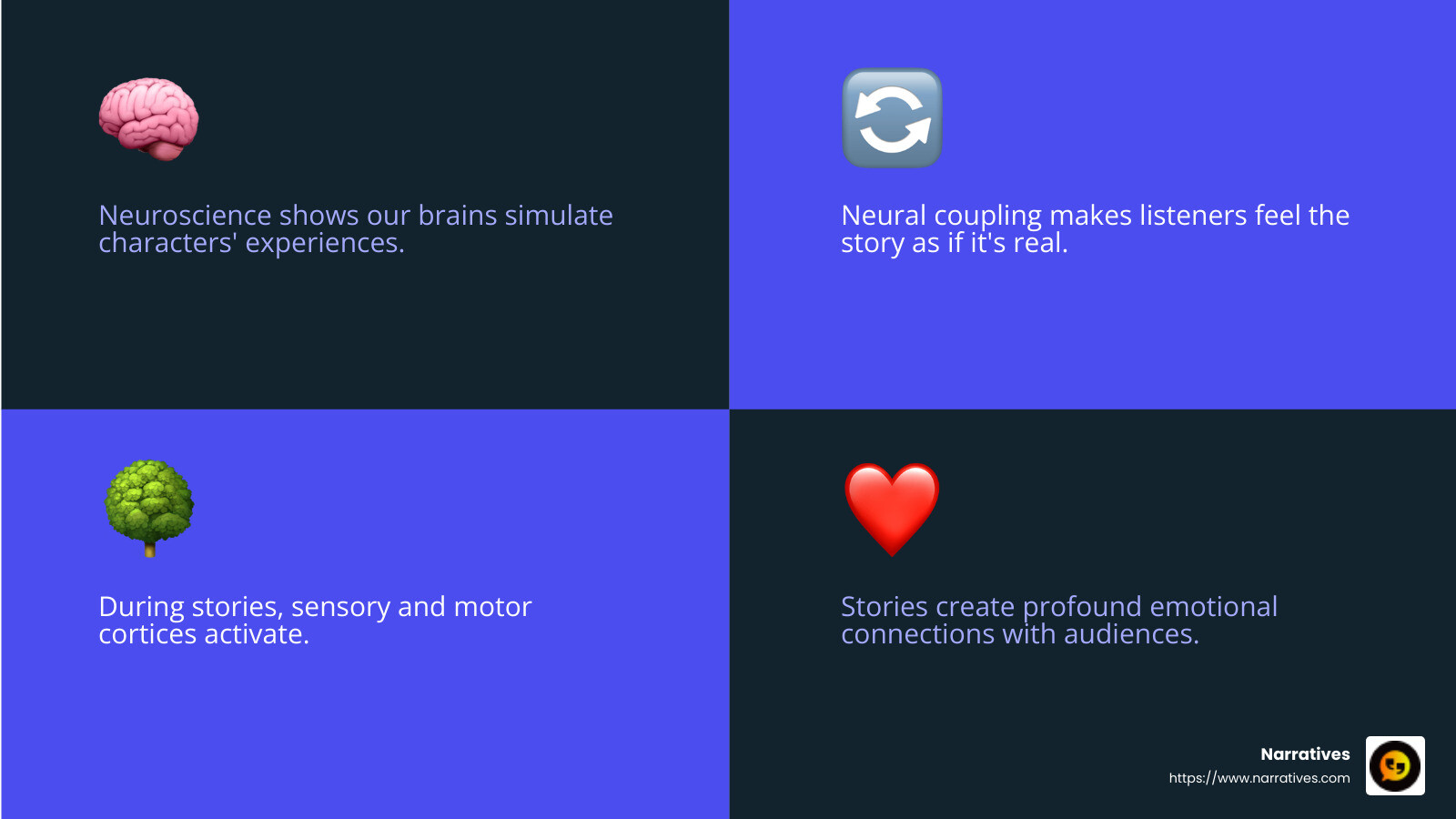
Our brains love stories. When we hear a compelling narrative, more than just the language processing areas are activated. Research suggests that parts of the brain involved in experiencing events—like the sensory and motor cortices—light up as well. This means that when a story describes a character running through a forest, our brains simulate the experience, engaging the areas responsible for movement.
This phenomenon, known as neural coupling, allows listeners to feel the emotions and sensations of the characters as if they were their own. It's like living the story, which can lead to a profound emotional connection.
Emotional Connection: Feeling What Others Feel
Stories are powerful because they evoke emotions. They make us laugh, cry, and feel suspense. When we connect emotionally with a story, we also connect with the people in it. This emotional bond is a key driver of empathy.
For instance, reading a high-quality fiction book can improve our ability to understand and share the feelings of others. A study highlighted in The Guardian found that people who read literary fiction—rich in character depth and ambiguity—were better at detecting and understanding emotions in real life.
Shared Experiences: Finding Common Ground
Stories often highlight shared human experiences, acting as a mirror that reflects our own lives back to us. Even if the specifics differ, the emotions and themes often resonate universally. This shared experience is a powerful tool for empathy because it reminds us that, despite our differences, we all experience joy, fear, love, and loss.
By understanding how storytelling affects our brains and emotions, we can see why it’s such a potent tool for fostering empathy. Whether it's a non-profit telling stories to highlight a cause or a brand using narratives to connect with customers, the science of storytelling shows us that stories are more than entertainment—they're a pathway to deeper human connection.
In the next section, we will explore how empathy in storytelling engages audiences emotionally and intellectually, creating a bridge to more compassionate interactions.
Building Empathy Through Storytelling
Storytelling isn't just about entertainment—it's a tool for building empathy. By understanding different types of empathy, we can see how stories connect us emotionally and intellectually.
Cognitive Empathy in Stories
Cognitive empathy is about perspective-taking. It allows us to put ourselves in someone else's shoes and understand their thoughts and feelings. In storytelling, this means creating characters whose lives and experiences offer insights into different perspectives.
When a story is rich in narrative depth, it encourages us to think deeply about the characters' situations. This intellectual understanding helps us see the world through their eyes. For example, a well-written novel might explore the inner workings of a character's mind, helping us grasp their motivations and challenges.
Emotional Empathy and Audience Connection
Emotional empathy, or affective empathy, involves sharing the emotions of others. When stories make us feel, they create a direct emotional connection. This is why a powerful narrative can make us cry or laugh along with the characters.
Movies, for instance, use visual and auditory elements to evoke strong emotions. The combination of music, dialogue, and imagery can create an immersive experience that pulls us into the story. This emotional engagement is crucial for fostering empathy, as it allows us to experience the characters' joys and sorrows firsthand.
Compassionate Empathy and Prosocial Action
Compassionate empathy goes beyond understanding and sharing feelings. It motivates us to take action. Stories that inspire empathic concern can lead to altruistic behavior.
Consider how documentaries about social issues often lead viewers to support causes or volunteer. By highlighting real-life struggles and triumphs, these stories move us to help. They show us that while understanding and feeling are important, acting on that empathy can make a real difference.
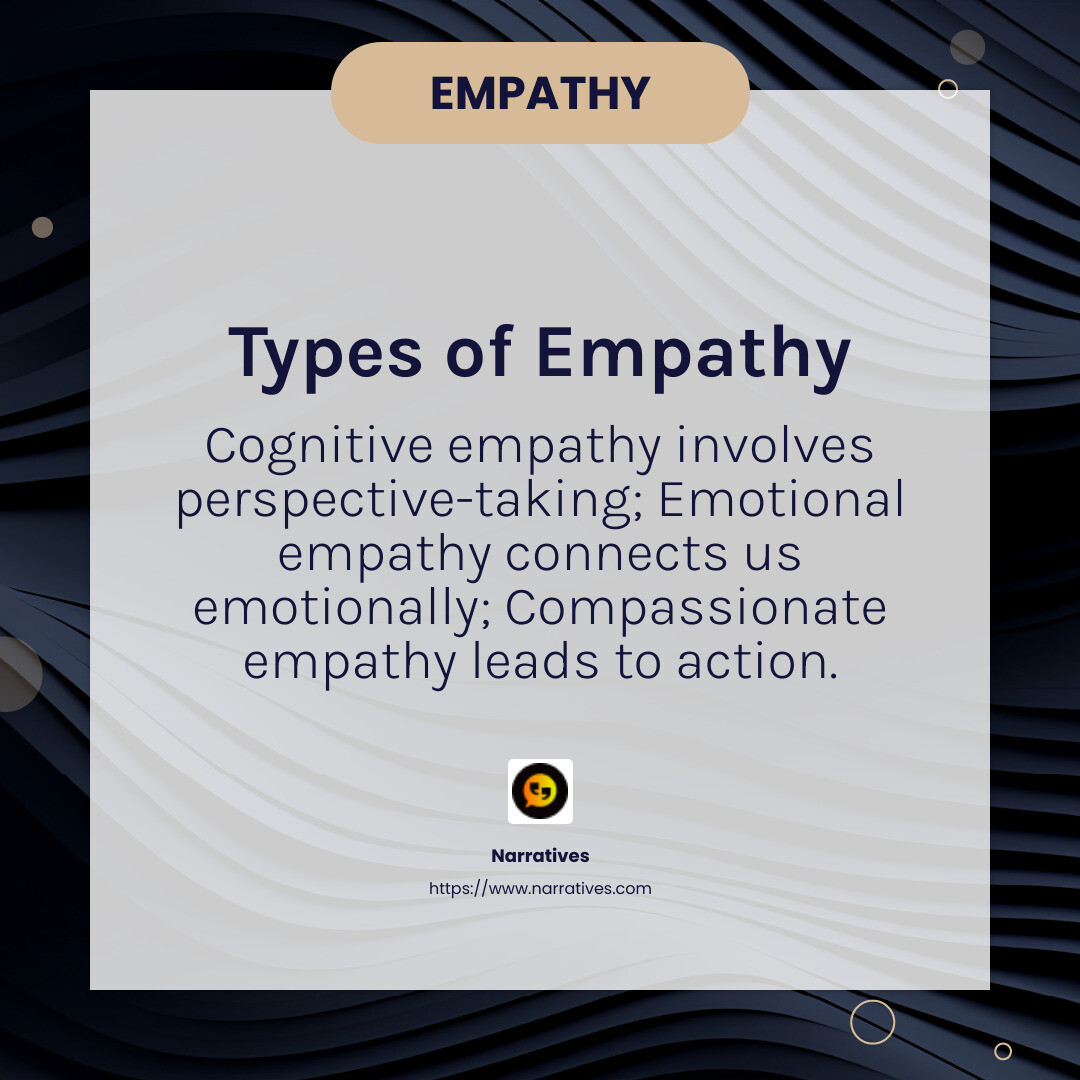
In storytelling, the blend of cognitive, emotional, and compassionate empathy creates a powerful tool for connection. By engaging audiences on multiple levels, stories have the potential to bring about more compassionate interactions and inspire positive change.
In the next section, we'll dive into the techniques for crafting effective stories, focusing on character development and narrative structure.
Techniques for Effective Storytelling
Creating Relatable Characters
Creating characters that resonate with audiences is key to effective storytelling. These characters should have depth, relatable traits, and a clear arc. Character development involves giving them backgrounds, motivations, and emotions that audiences can understand and connect with. This connection fosters empathy, allowing audiences to see the world through the characters’ eyes.
For example, Pixar's storytelling often focuses on character empathy. They craft characters with complex emotions and relatable challenges. This helps audiences relate to them on a personal level, making their journeys more impactful.
Character arcs are also crucial. They show how characters grow and change over time, often overcoming obstacles or learning important lessons. This change keeps audiences engaged and invested in the story.
Crafting Immersive Narratives
To captivate audiences, stories need a strong narrative structure. This involves organizing the story in a way that builds tension and maintains interest. A well-structured narrative guides the audience through the plot, ensuring they remain engaged from start to finish.
Emotional transportation is another important aspect. It’s the process of pulling audiences into the story world, making them feel as if they are part of it. This is achieved through vivid descriptions, engaging dialogue, and a compelling plot. When done effectively, it can lead to a release of oxytocin, the hormone associated with empathy and connection.
According to research, films can be particularly effective at creating this immersive experience. They use visuals, sound, and music to evoke emotions, allowing viewers to live the characters' experiences. This can lead to a deeper emotional response and a stronger connection to the story.
By focusing on character development and narrative structure, storytellers can craft stories that not only entertain but also build empathy. These techniques help audiences connect with characters on a deeper level, fostering understanding and compassion.
In the next section, we'll explore how storytelling can be used for social impact, addressing important issues and fostering inclusiveness.
Storytelling for Social Impact
Using Stories to Address Social Issues
Storytelling has a unique power to tackle social issues by fostering inclusiveness and breaking down biases. When we tell stories, we create a space where diverse voices can be heard and understood. This is crucial in a world where superficial differences often overshadow our shared humanity.
Inclusiveness in storytelling means giving a platform to those who are often marginalized. By sharing their stories, we can foster understanding and empathy among broader audiences. For instance, stories that highlight the experiences of different racial, cultural, or socio-economic groups can challenge stereotypes and promote empathy.
Breaking down bias is another key benefit of storytelling. By presenting narratives that showcase our commonalities, we can reduce prejudices. Storytelling encourages audiences to see beyond stereotypes and appreciate the depth and complexity of individuals, leading to a more open and accepting society.
Community projects often use storytelling as a tool to engage local audiences and address specific social issues. These projects can highlight the struggles and triumphs of a community, creating a sense of solidarity and prompting collective action.
Case Studies in Empathy-Driven Storytelling
Two excellent examples of empathy-driven storytelling are StoryCorps and The Moth. These projects have successfully used stories to foster empathy and understanding.
StoryCorps is a project that records and shares personal stories from people across the United States. By listening to these stories, audiences gain insights into the lives of others, often leading to a deeper understanding and appreciation of different perspectives. StoryCorps has been an empathy workhorse, using the power of personal narratives to connect people from all walks of life.
The Moth is another storytelling initiative that emphasizes the power of personal stories. It hosts live storytelling events where individuals share true stories from their lives. These narratives often touch on universal themes like love, loss, and resilience, making them relatable to a wide audience. The Moth's approach helps break down barriers and fosters a sense of shared human experience.
Both StoryCorps and The Moth demonstrate how storytelling can be a powerful tool for social impact. By highlighting diverse voices and experiences, these projects nurture empathy and encourage positive change.
In the next section, we'll address common questions about how storytelling improves empathy and which types of stories are most effective in this regard.
Frequently Asked Questions about Building Empathy Through Storytelling
How does storytelling improve empathy?
Storytelling improves empathy by creating emotional connections between the storyteller and the audience. When we hear a story, our brains release chemicals like oxytocin, which is associated with empathy and bonding. This helps us feel closer to the characters and understand their experiences.
Stories allow us to step into someone else's shoes and see the world from their perspective. This process, known as perspective-taking, engages our cognitive empathy. We intellectually understand what the characters are going through, which strengthens our emotional connection to them.
What types of stories are most effective for building empathy?
The most effective stories for building empathy are those that feature relatable characters and universal themes. Stories that touch on common human experiences, such as love, loss, or resilience, resonate deeply with audiences. This emotional engagement helps foster empathy.
Personal narratives, like those shared by StoryCorps and The Moth, are particularly impactful. These stories often reveal the joys and struggles of everyday life, making it easier for listeners to connect and empathize with the storyteller.
How can storytelling be used to reduce bias?
Storytelling can reduce bias by highlighting our shared humanity and challenging stereotypes. When we hear stories from diverse voices, we are exposed to different perspectives and experiences. This can help break down preconceived notions and foster a more inclusive mindset.
By presenting narratives that showcase commonalities rather than differences, storytelling encourages audiences to see people as individuals rather than stereotypes. This shift in perspective can lead to greater acceptance and understanding across different groups.
Through storytelling, we can create a more empathetic and open society, one story at a time.
Conclusion
At Narratives, we believe in the transformative power of digital storytelling to build empathy and drive social change. Our mission is to partner with non-profits and purpose-driven organizations to lift underrepresented voices and share impactful stories. By using high-quality video and multimedia content, we help these organizations connect emotionally with their audiences, inspiring action and fostering trust.
Building empathy through storytelling is at the heart of what we do. Stories are more than just entertainment; they are powerful tools for change. They allow us to see the world through someone else's eyes, breaking down barriers and fostering a sense of shared humanity. Whether it's through a touching personal narrative or a compelling community project, stories can illuminate the challenges and triumphs of different lives, encouraging us all to act with compassion.
Our partnerships with non-profits are vital in achieving this vision. By collaborating with organizations that are committed to social impact, we can amplify their messages and reach wider audiences. Together, we can create a ripple effect of empathy, understanding, and positive change.
If you're interested in how Narratives can help your organization harness the power of storytelling, explore our media services to learn more about how we can support your mission.
When digital content often divides, let's use stories to unite. Through empathy-driven storytelling, we can build bridges, nurture compassion, and create a more inclusive and understanding society.

.avif)