From Challenges to Solutions: The Journey of Community Networks in Latin America

Community networks in Latin America challenges regulations and solutions play a vital role in bridging the connectivity gaps in underserved regions. These networks have the potential to drive economic development and improve social development by offering much-needed internet access to rural and indigenous communities.
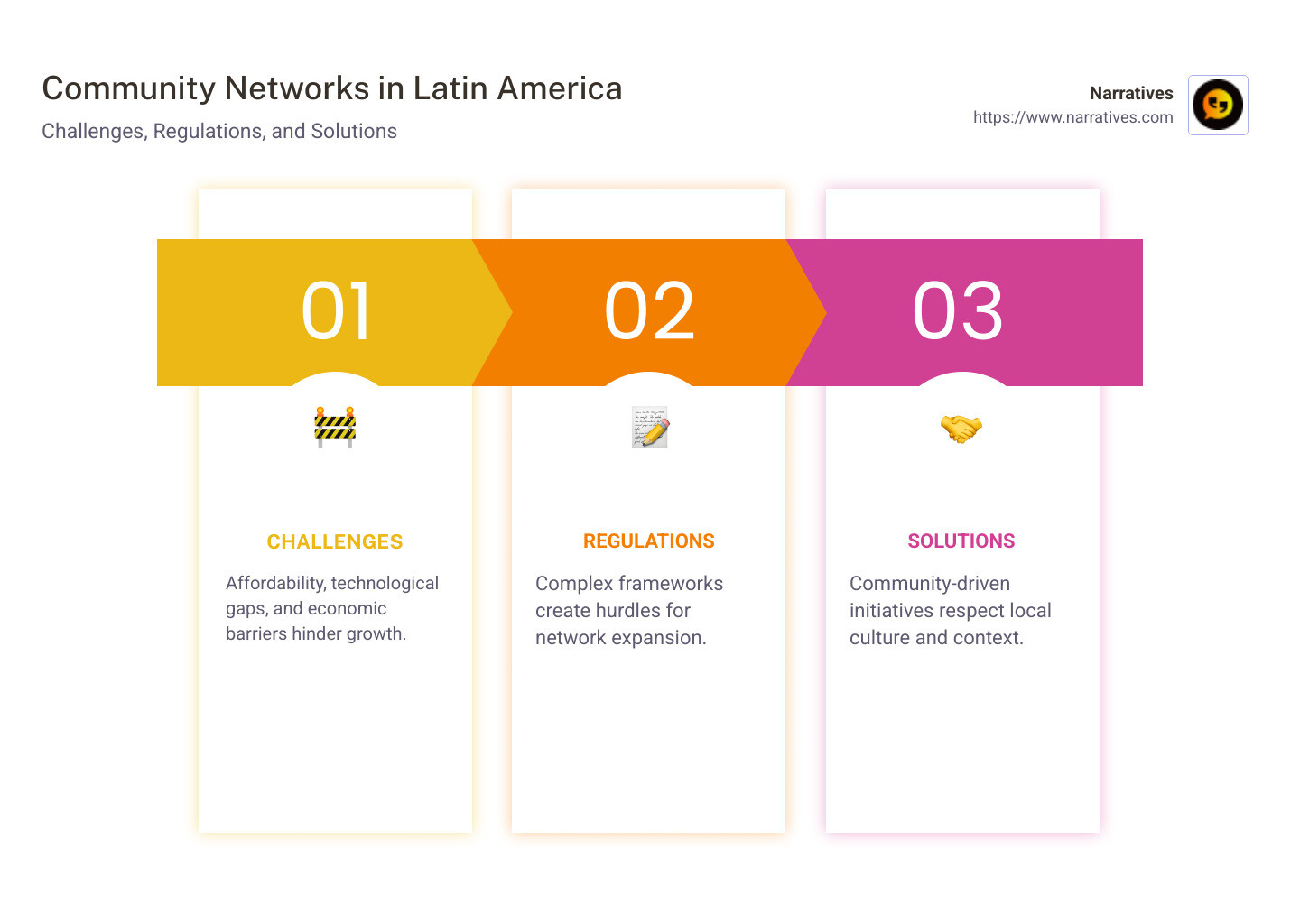
- Challenges: Limited affordability, technological capabilities gaps, and economic barriers hinder the growth of community networks.
- Regulations: Understanding and navigating complex regulatory frameworks can pose significant problems for these networks.
- Solutions: Community-driven initiatives that respect local culture and context prove most effective in expanding connectivity.
In the busy metropolises of Latin America, connectivity might be a given, but step into its rural heartlands, and the picture changes dramatically. Here, community networks offer a guide of hope, not just for online access, but as a catalyst for economic prosperity and a tool for social change. Yet, these networks face an uphill climb with regulatory challenges and infrastructure barriers.
This article explores how community networks harness collective efforts to overcome these obstacles, driving connectivity where it's needed most. By understanding the intricacies of these networks and the regulations shaping them, we can pave the way for widespread, inclusive connectivity that empowers every community.
Simple community networks in latin america challenges regulations and solutions word guide:
- challenges in community engagement and solutions
- communities thrive challenge a national challenge for local solutions
- content creation for nonprofits
The Current Landscape of Community Networks
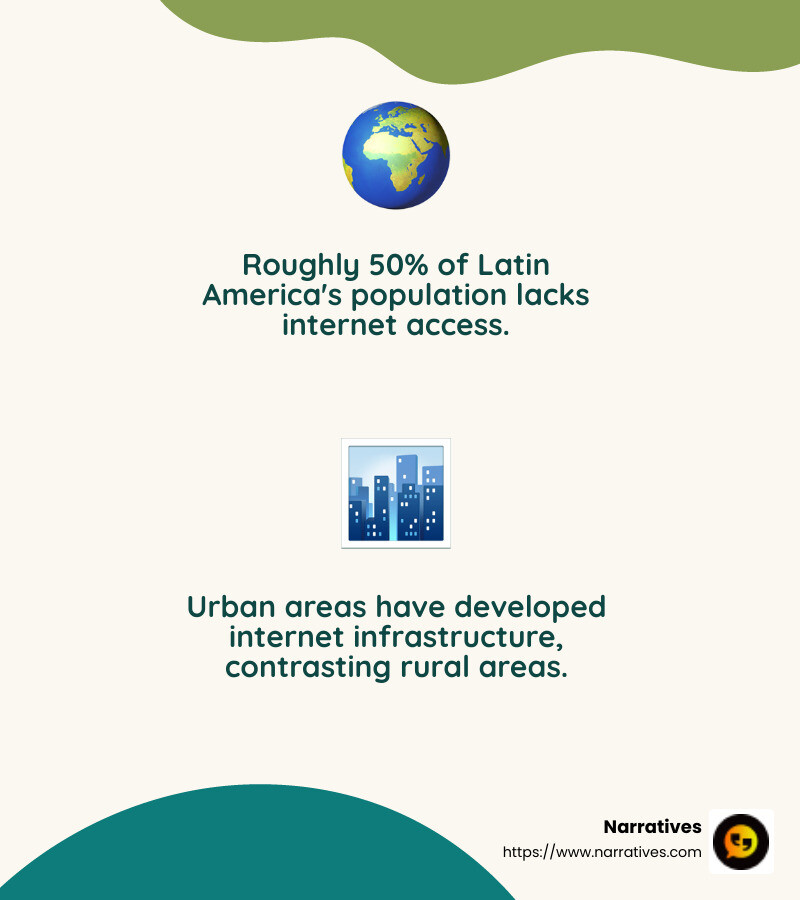
Internet penetration in Latin America paints a picture of stark contrasts. In busy urban centers, people enjoy relatively good connectivity. But in rural areas, the scene is different. Here, the internet is often a luxury, not a given.
Rural vs. Urban Disparities
Urban areas have the infrastructure that supports fast and reliable internet. But in rural regions, many communities are left behind. The cost of building infrastructure in remote areas is high, and the return on investment for big providers is low. This leaves a significant portion of the population without access to the internet.
ICT Literacy and Its Importance
Information and Communication Technology (ICT) literacy is crucial for leveraging the internet. However, in many parts of Latin America, ICT literacy lags. Without basic digital skills, people can't fully benefit from the internet, even if they have access.
This lack of skills is more pronounced in rural areas, where educational resources are limited. Efforts to boost ICT literacy are essential for enabling communities to use technology effectively. Programs like Techio Comunitario are stepping in to fill this gap, providing training that combines technical skills with cultural and community considerations.
Community Networks as a Solution
Community networks offer a promising solution to these challenges. They are often set up by the communities themselves, using local resources and knowledge. This approach not only provides internet access but also empowers communities to take control of their digital futures.
These networks thrive on a model of learning by doing, where community members gain skills through practical involvement in building and maintaining the network. This method helps build ICT literacy from the ground up, ensuring that the skills gained are relevant and sustainable.
In summary, while Latin America faces significant challenges in achieving widespread internet penetration, community networks are paving the way forward. By addressing both the infrastructure gap and the need for ICT literacy, these networks hold the potential to transform rural areas, bringing them into the digital age.
Community Networks in Latin America: Challenges, Regulations, and Solutions
Challenges Facing Community Networks
Community networks in Latin America face several problems. Affordability is a major issue. Internet service in rural areas can be costly, and many residents simply can't afford it. This creates a digital divide, leaving rural communities disconnected.
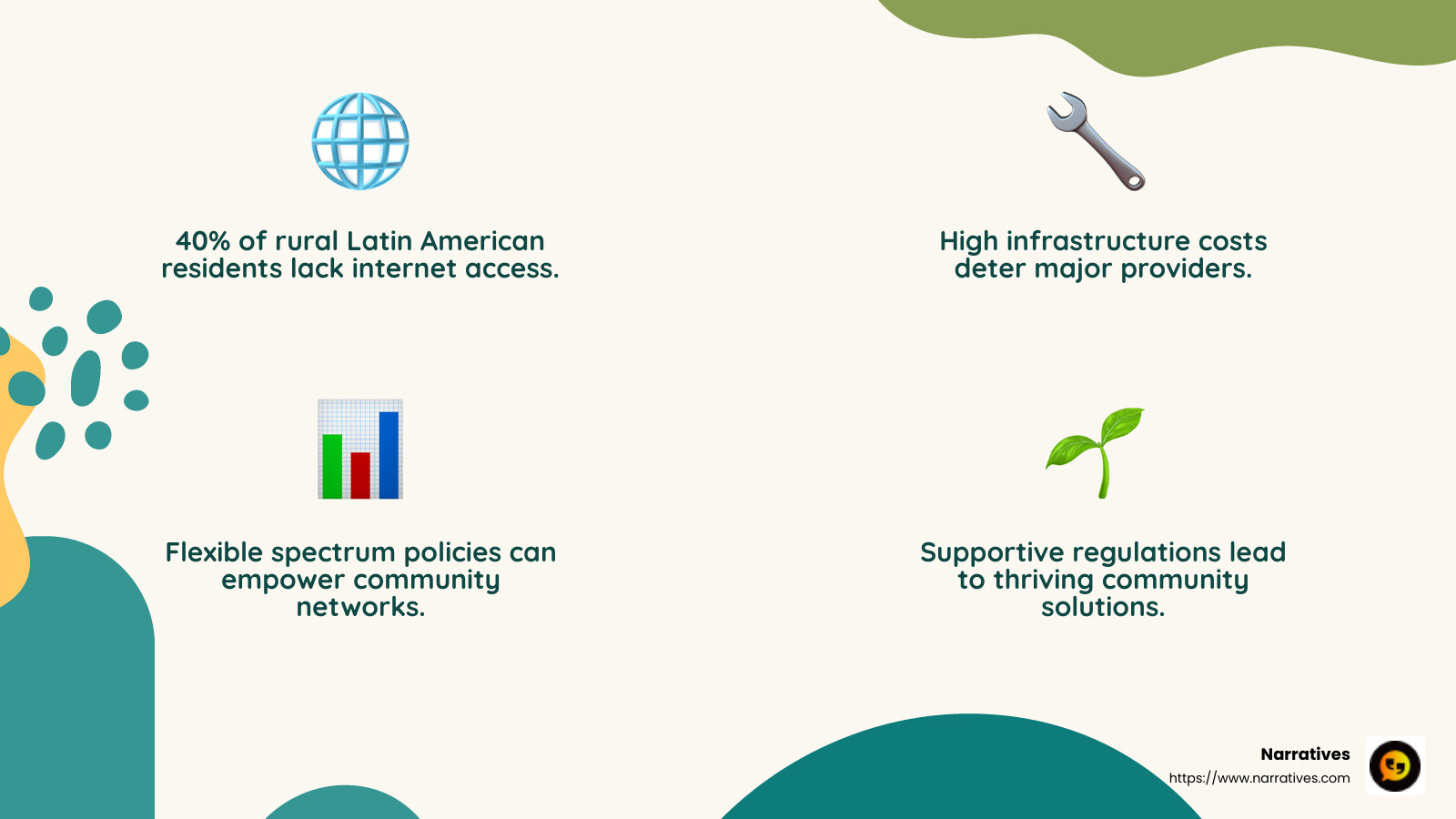
Technological capabilities also pose a challenge. Many rural areas lack the infrastructure needed for reliable internet. The cost of setting up this infrastructure is high, and big providers often see little financial incentive to invest in these regions. This is a classic example of market failure, where the market doesn't provide a solution due to low profit margins.
Economic barriers further complicate the picture. Many communities lack the financial resources to build or maintain their own networks. This is where community-driven initiatives can play a crucial role, pooling local resources and knowledge to create sustainable solutions.
Regulatory Frameworks and Their Impact
The regulatory conditions surrounding community networks in Latin America are complex. Regulations can either support or hinder these networks, depending on how they're designed and implemented.
Regulatory elements like spectrum allocation, licensing, and taxation can have significant impacts. For instance, community networks often need access to spectrum, which is tightly regulated. Flexible spectrum policies can make it easier for these networks to operate.
Policy design is key. Policies that encourage innovation and lower barriers to entry can foster the growth of community networks. Clear legal categorization of these networks can help in crafting policies that recognize their unique needs and contributions.
In some parts of Latin America, positive regulatory experiences have removed obstacles for community networks. Countries that have accepted supportive policies have seen these networks thrive, providing a blueprint for others to follow.
In conclusion, addressing the challenges facing community networks and creating supportive regulatory frameworks are essential steps in bridging the digital divide in Latin America. By focusing on affordability, technological capabilities, and policy design, these networks can become a powerful tool for social and economic development.
Successful Models and Case Studies
Indigenous and Rural Community Initiatives
Community networks in Latin America have shown remarkable success through various indigenous and rural community initiatives. These projects are not just about providing internet access; they are deeply rooted in the cultural relevance and sustainability of the communities they serve.
Altermundi in Argentina and Colnodo in Colombia are leading examples of how community networks can thrive when driven by local needs and knowledge. These initiatives empower communities to take control of their connectivity, ensuring that the solutions are custom to their specific contexts. By using low-cost technologies and open-source software, these projects reduce costs and improve accessibility.
One standout example is the Hermes project in Ecuador and Mexico. This initiative uses HF radio technology to provide connectivity in remote areas like the Amazon region and the Sierra Tarahumara. The Hermes project highlights how communities can adapt existing technologies to overcome geographical and economic barriers.
What makes these initiatives successful is their community-driven nature. Decisions about the design, operation, and management of the networks are made by those who use them. This approach ensures that the networks are sustainable and meet the genuine needs of the community. For instance, the IntraBach project in Mexico created a closed communication network to provide access to educational content custom to local students.
These projects also demonstrate the importance of knowledge exchange. Communities learn from each other, sharing experiences and strategies to improve their networks. This collaborative spirit fosters a sense of ownership and pride, which is crucial for the long-term success of these initiatives.
Through these community-driven models, Latin America is paving the way for a more inclusive digital future. By focusing on cultural relevance and sustainability, these networks not only bridge the digital divide but also strengthen the social fabric of the communities they serve.
Next, we'll explore how capacity building and training programs support these community networks, ensuring they continue to grow and adapt to changing needs.
Capacity Building and Training Programs
The Role of Education in Community Networks
Education plays a vital role in the success of community networks in Latin America. One standout example is the Techio Comunitario training program. This initiative combines "Tech" with "Tequio," a traditional form of community work in Mexico. It's a perfect blend of technology and community spirit.
Techio Comunitario focuses on learning by doing. Participants engage in solving real-world problems, gaining hands-on experience. This method ensures that they not only learn technical skills but also understand the cultural and economic aspects of technology use in their communities.
The program follows the Participatory Action Research (PAR) methodology. This approach involves community members in every stage, from identifying needs to implementing solutions. By doing so, it fosters a community vision where everyone has a voice and a stake in the network's success.
A key element of these training programs is capacity development. They provide the necessary tools and knowledge for managing and maintaining community networks. This includes everything from radio broadcasting to cellular and wireless internet technologies. Between 2016 and 2019, Techio Comunitario trained many indigenous and rural communicators, expanding their skills and confidence.
Knowledge exchange is also central to these initiatives. Participants share experiences and learn from each other, creating a robust network of support. This exchange not only improves technical skills but also strengthens community ties, ensuring the sustainability of the networks.
By integrating education with community values, these programs empower individuals to take control of their digital futures. They ensure that community networks are not just about access but about building a resilient and self-sufficient community.
Next, we'll address some of the most common questions about community networks, providing clarity on their benefits and challenges.
Frequently Asked Questions about Community Networks
What are community networks?
Community networks are internet networks built, managed, and used by local communities. They aim to provide connectivity, especially in areas where traditional internet service providers might not reach. These networks thrive on the principles of collaboration, inclusivity, and sustainability. They are often grassroots initiatives, empowering communities to bridge the digital divide.
How do community networks benefit rural areas?
Community networks bring several benefits to rural areas:
Affordable Connectivity: They offer a cost-effective solution for internet access, crucial for regions where commercial services are expensive or unavailable.
Local Empowerment: By involving local people in the setup and management, these networks foster skills and create a sense of ownership.
Cultural Relevance: Networks are custom to meet the specific needs and cultural contexts of the community, making them more effective than one-size-fits-all solutions.
Economic Opportunities: Improved connectivity can lead to new business opportunities and access to markets, boosting local economies.
Educational Access: They provide vital educational resources, enabling remote learning and access to global knowledge.
What are the regulatory challenges for community networks?
Community networks face several regulatory challenges:
Complex Licensing Procedures: Obtaining licenses can be difficult and costly, often requiring navigation through complex bureaucratic processes.
Spectrum Allocation: Access to radio frequencies is crucial, but these are often tightly controlled and expensive, limiting community networks' reach.
Policy Barriers: Existing telecommunications policies may favor large service providers, making it hard for community networks to compete or even operate legally.
Lack of Legal Recognition: In some regions, community networks aren't recognized as legitimate entities, hindering their development.
Despite these challenges, there are successful regulatory frameworks that support community networks. For instance, some Latin American countries have adopted policies that facilitate spectrum sharing and simplified licensing processes. These examples show how thoughtful regulation can remove barriers and support the growth of community networks, ensuring broader access to connectivity.
Next, we'll explore successful models and case studies that highlight the impact and potential of community networks.
Conclusion
Storytelling is more than just a way to share experiences; it's a powerful tool for creating social change. At Narratives, we understand the profound impact that stories have in amplifying voices, especially those that are often overlooked. Through our work, we strive to highlight the transformative power of community networks in Latin America, showcasing how these grassroots initiatives overcome challenges and steer regulatory frameworks to drive social impact.
Community networks are not just about providing internet access; they're about empowering communities, fostering local skills, and preserving cultural identity. By telling these stories, we aim to inspire action and support for these vital initiatives. Community networks offer a blueprint for how technology can be harnessed for the greater good, especially in rural and underserved areas.
Through our digital storytelling, we help non-profits and purpose-driven organizations lift their narratives, building trust and increasing visibility. Our stories focus on the challenges, regulations, and solutions these networks face, providing a platform for communities to share their successes and inspire others.
Join us in this journey of storytelling and social change. Learn more about how Narratives can help you share your impact stories and drive meaningful change in your community. Visit our service page to find how we can partner with you to bring these stories to life.


.avif)