Nonprofit Content Strategy: From Vision to Impact

Crafting Impact: A Nonprofit Content Strategy Primer
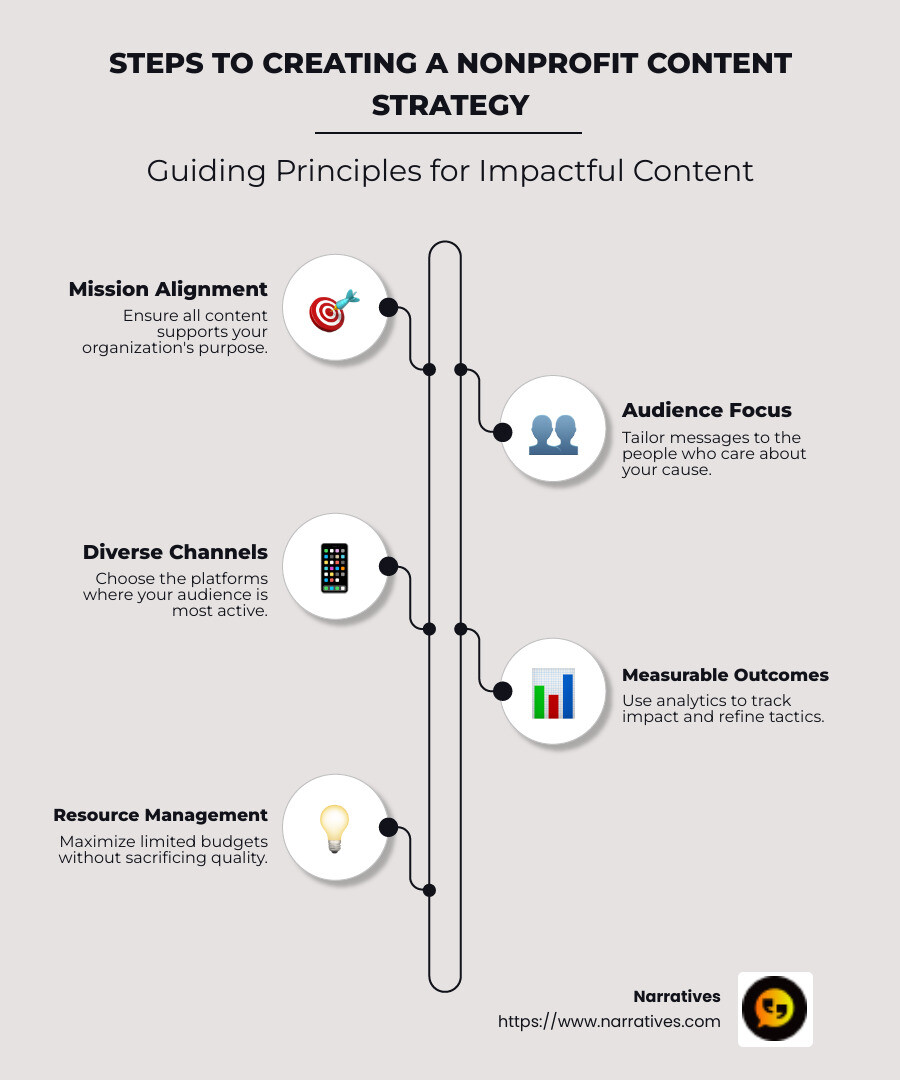
Content strategy for nonprofits can amplify your mission and drive tangible results. At its core, this strategy aligns content creation with your nonprofit's goals. Here's a quick breakdown of what that entails:
- Mission Alignment: Ensure all content supports your organization's purpose.
- Audience Focus: Tailor messages to the people who care about your cause.
- Diverse Channels: Choose the platforms where your audience is most active.
- Measurable Outcomes: Use analytics to track impact and refine tactics.
- Resource Management: Maximize limited budgets without sacrificing quality.
To start on a successful journey, nonprofits must recognize the unique potential of their status. Effective content strategy harnesses storytelling to inspire action, whether that means increasing donations, rallying volunteers, or building community support.
Gone are the days when nonprofits could rely on traditional fundraising alone. The digital era calls for strategic content that resonates deeply with audiences. As highlighted in stories like the Providence St. Vincent Medical Center's viral video, authentic storytelling gives nonprofits a powerful voice that commands attention.
By establishing clear goals and understanding your audience, your nonprofit can craft content that truly matters. This organized approach not only boosts your online presence but also strengthens your community relationships.
Understanding Content Strategy for Nonprofits
Content strategy for nonprofits is more than just pushing out information. It's about crafting meaningful narratives that align with your nonprofit's mission and strategic goals. This approach helps your organization stand out and make a real impact.
Content Marketing:
Content marketing involves creating valuable content to engage and educate your audience. For nonprofits, this means sharing stories that highlight your mission and impact. Whether through blog posts, videos, or social media, your content should resonate with those who support your cause.
Strategic Goals:
Every piece of content should serve a purpose aligned with your nonprofit's strategic goals. Are you looking to increase donations? Drive volunteer sign-ups? Raise awareness? Understanding these goals helps tailor your content to achieve them. A clear strategy ensures that your efforts contribute to your organization's broader objectives.
Nonprofit Mission:
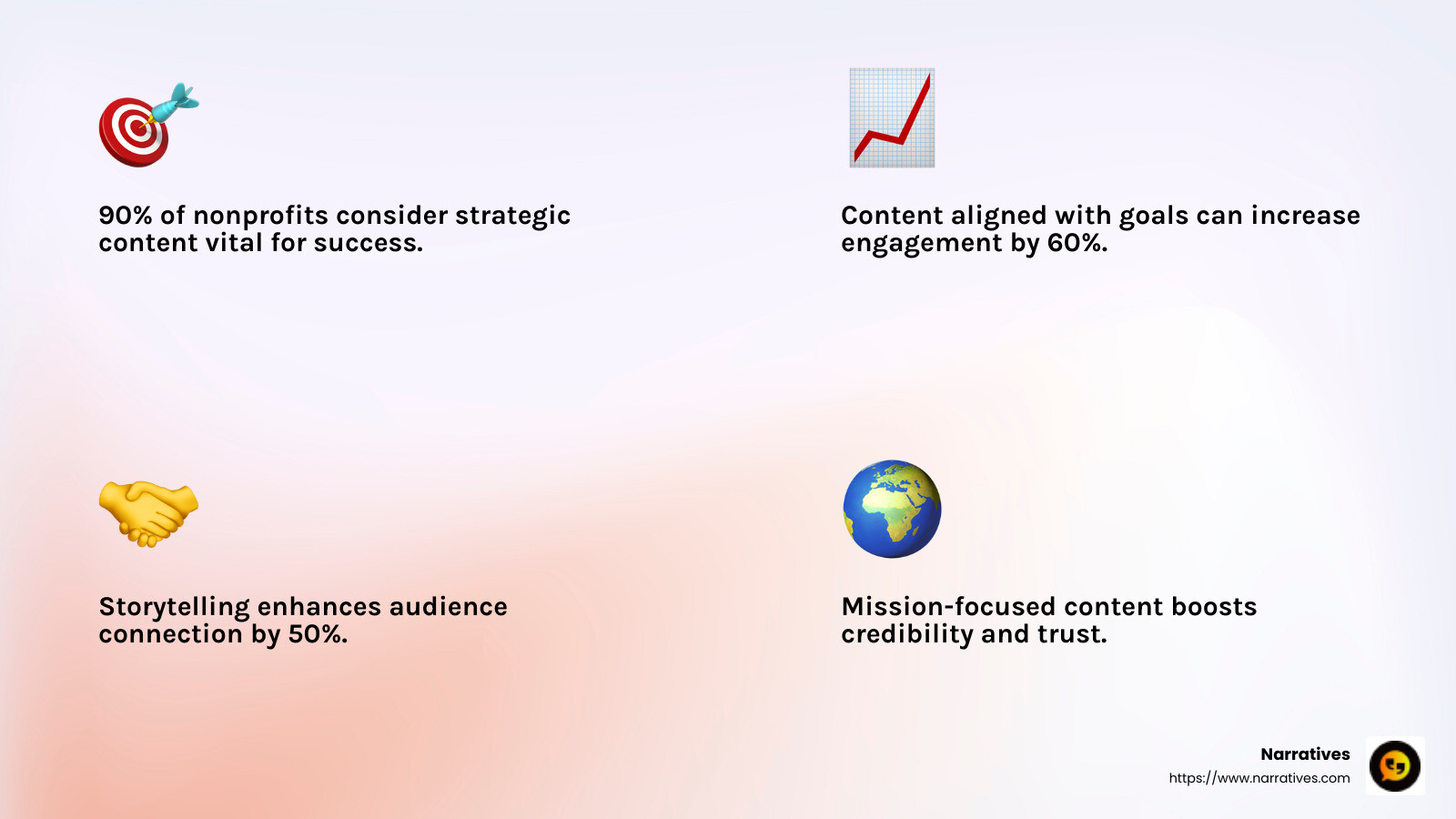
Your mission is the heart of your nonprofit. Content should reflect your core values and objectives. For instance, if your mission is to support environmental sustainability, your content might include educational articles about conservation or success stories from your projects. This alignment reinforces your credibility and builds trust with your audience.
Example:
Consider the story of the Providence St. Vincent Medical Center's breast cancer awareness video. This simple yet powerful content piece reached millions and highlighted their mission, showing how strategic content can amplify a nonprofit's voice.
By focusing on content that aligns with your mission and strategic goals, your nonprofit can create a lasting impact. This approach not only improves your online presence but also fosters deeper connections with your community.
Key Elements of a Nonprofit Content Strategy
Creating a content strategy for nonprofits is like crafting a roadmap for your storytelling journey. Let's break down the key elements that will guide your nonprofit to success.
Content Goals
Start with clear content goals. What do you want to achieve? Are you aiming to increase awareness, drive donations, or engage volunteers? Defining these goals helps you focus your efforts and measure success. Every piece of content should serve a purpose that aligns with your nonprofit’s mission.
Target Audience
Understanding your audience is crucial. Who are they? What do they care about? Create detailed profiles for each stakeholder group. These profiles should include demographics, interests, and communication preferences. Knowing your audience allows you to tailor content that resonates and drives action.
Content Channels
Choosing the right content channels is essential. Whether it's social media, newsletters, blogs, or videos, each platform has its strengths. Consider where your audience spends their time and how they prefer to consume content. For example, younger audiences might engage more with Instagram stories, while professionals might prefer LinkedIn articles.
Content Calendar
A content calendar is your organizational tool. Plan your content at least a quarter in advance. This helps you maintain a steady flow of content and allows flexibility for time-sensitive campaigns. With a calendar, you can balance different content types and ensure consistent messaging.
Measurement System
Measuring the impact of your content is vital. Set up a measurement system to track performance. Use tools like Google Analytics for website traffic or social media insights for engagement metrics. Regularly review these metrics to understand what works and adjust your strategy accordingly.
By focusing on these key elements, your nonprofit can build a robust content strategy that drives impact and strengthens your connection with your community.
Next, we'll explore how to develop a content strategy that brings these elements together into a cohesive plan.
Developing a Content Strategy for Nonprofits
Creating a content strategy involves more than just knowing what you want to say. It's about crafting a plan that brings your mission to life and engages your audience effectively. Let's explore how you can develop a content strategy for nonprofits that resonates and makes an impact.
Content Creation
Content creation is the heart of your strategy. It involves crafting messages that align with your goals and resonate with your audience. Start by identifying the types of content that best tell your story — blog posts, videos, infographics, or podcasts. Each format has its own strengths and can be used to communicate different aspects of your mission.
Tip: Don't just create content for the sake of it. Ensure every piece is valuable and serves a purpose. For example, if your goal is to increase donations, include compelling calls-to-action (CTAs) that guide your audience on how they can contribute.
Storytelling
Storytelling is your secret weapon. It's how you connect emotionally with your audience. Share real stories from the communities you serve. Highlight personal experiences, successes, and challenges. This not only humanizes your nonprofit but also inspires action.
"The best content you produce will be the most original. Look for the stories that no one else can tell."
Stories that are unique to your organization can set you apart and build a stronger connection with your audience.
Audience Engagement
Engagement is key to building a loyal community. Encourage your audience to interact with your content. Ask questions, invite feedback, and create opportunities for dialogue. Social media platforms are great for this, but don't overlook email newsletters and in-person events.
Pro Tip: Use analytics to track engagement levels. Identify which types of content generate the most interaction and double down on those formats.
Resource Assessment
Assessing your resources is crucial for sustainable content creation. Know your limitations — whether it's budget, technology, or manpower — and plan accordingly. Most nonprofits have small teams, so consider outsourcing to freelancers or using digital tools to streamline your efforts.
Resource Tip: Invest in platforms that allow you to operate at scale, like content management systems or social media scheduling tools. This can help maximize your team's efficiency and output.
By focusing on these areas, you can develop a content strategy that not only tells your story but also engages your audience and drives meaningful action. Next, we'll share some practical tips for making your content strategy even more effective.
5 Tips for Effective Nonprofit Content Strategy
Creating a content strategy for nonprofits that truly works requires more than just good ideas. It’s about aligning your content with your mission and engaging your community in meaningful ways. Here are five essential tips to make your nonprofit content strategy effective:
1. Prioritize Quality Content
Your content should be more than just words on a page. It needs to be insightful, engaging, and valuable to your audience. High-quality content builds your authority in the nonprofit world and encourages your readers to share it with others.
Tip: Always aim to educate, inspire, or entertain your audience. This keeps them coming back for more and strengthens your relationship with them.
2. Ensure Strategic Alignment
Every piece of content you create should align with your nonprofit's mission and strategic goals. This means having a clear purpose and knowing exactly what you want to achieve with each post, article, or video.
Strategy Tip: Develop a content mission statement that mirrors your organization’s mission. This keeps your strategic goals front and center and ensures all content serves a greater purpose.
3. Conduct a Content Audit
A content audit helps you understand what content you already have, what’s working, and what’s not. This process can uncover hidden gems that can be repurposed or updated to fit current trends and needs.
Audit Tip: Make a list of all the content you’ve published. Assess each piece for relevance, accuracy, and performance. Decide whether to keep, update, or discard content based on this evaluation.
4. Accept Unique Storytelling
Unique storytelling sets your nonprofit apart. Share stories that only your organization can tell. Highlight the unique aspects of your mission, the communities you serve, and the impact you make.
Storytelling Tip: Use real stories from those impacted by your work. Personal narratives create emotional connections and motivate your audience to support your cause.
5. Activate Your Community
Your content should not only inform but also activate your community of readers and donors. Encourage them to take action, whether it’s sharing your content, attending an event, or making a donation.
Community Tip: Use calls-to-action (CTAs) effectively. Make it easy for your audience to know how they can get involved and make a difference.
By focusing on these five tips, your nonprofit can create a content strategy that not only tells your story but also inspires action and builds a strong community around your cause. Now, let's address some common questions about nonprofit content strategy.
Frequently Asked Questions about Content Strategy for Nonprofits
What is a content strategy for nonprofits?
A content strategy for nonprofits is a plan that outlines how an organization will use content to achieve its objectives. This isn't just about creating content; it's about ensuring every piece serves a clear purpose in advancing the nonprofit's mission.
Think of it as a roadmap. It guides your storytelling efforts, ensuring they align with your strategic goals and resonate with your target audience. This strategy is essential because it helps nonprofits use their resources wisely while maximizing impact.
How can nonprofits measure content success?
Measuring the success of your content is crucial. It tells you what’s working and what’s not, helping you refine your approach. Nonprofits can use several key performance indicators (KPIs) to gauge content effectiveness:
- Engagement Metrics: Track likes, shares, and comments to see how your audience interacts with your content.
- Conversion Rates: Measure actions taken by your audience, such as signing up for a newsletter or making a donation.
- Traffic Analytics: Use tools like Google Analytics to monitor website visits and understand where your audience is coming from.
- Audience Growth: Observe increases in followers or subscribers across your platforms.
These metrics provide insights into your content’s reach and impact, helping you craft strategies that better serve your nonprofit’s objectives.
Why is storytelling important in nonprofit content?
Storytelling is at the heart of nonprofit content. It’s not just about sharing facts; it’s about creating an emotional connection with your audience. Emotional storytelling can transform passive readers into active supporters.
- Emotional Connection: Personal stories about those you help can evoke empathy and inspire action.
- Audience Engagement: Engaging stories keep your audience interested and invested in your mission.
- Mission Clarity: Stories clarify your mission and show the real-world impact of your work.
In the nonprofit world, storytelling isn't just a tool—it's a powerful way to build relationships and drive change. By sharing the stories that matter, you can connect with your audience on a deeper level and inspire them to support your cause.
Conclusion
In wrapping up, it's clear that a well-crafted content strategy for nonprofits is more than just a plan—it's a powerful tool for impact. At Narratives, we understand the unique challenges nonprofits face, and we’re here to help transform your vision into reality through digital storytelling.
Digital storytelling is at the core of what we do. We specialize in creating emotionally resonant multimedia content that not only tells your story but also inspires action. Whether it’s through compelling videos, engaging podcasts, or interactive stories, we help nonprofits share their impact in ways that build trust and increase visibility.
Our approach centers on nonprofit partnerships. We work closely with organizations to lift underrepresented voices and highlight the communities they serve. By focusing on authentic storytelling, we aim to foster connections that drive real change.
If you’re ready to take your nonprofit’s storytelling to the next level, we’re here to partner with you. Learn more about how we can help you create content that resonates and inspires by visiting our service page.
The goal is to use storytelling not just to inform, but to engage and activate your community. With the right strategy and partnership, your nonprofit can make a lasting impact.


.avif)