From Idea to Digital Storybook: A Creator's Guide

Creating a digital storybook is a powerful and innovative way to bring your ideas to life through multimedia content. With the rise of digital storytelling, anyone can combine audio, images, text, and video to craft engaging and impactful narratives that resonate emotionally and visually with audiences.
Here's a quick rundown of what creating a digital storybook involves:
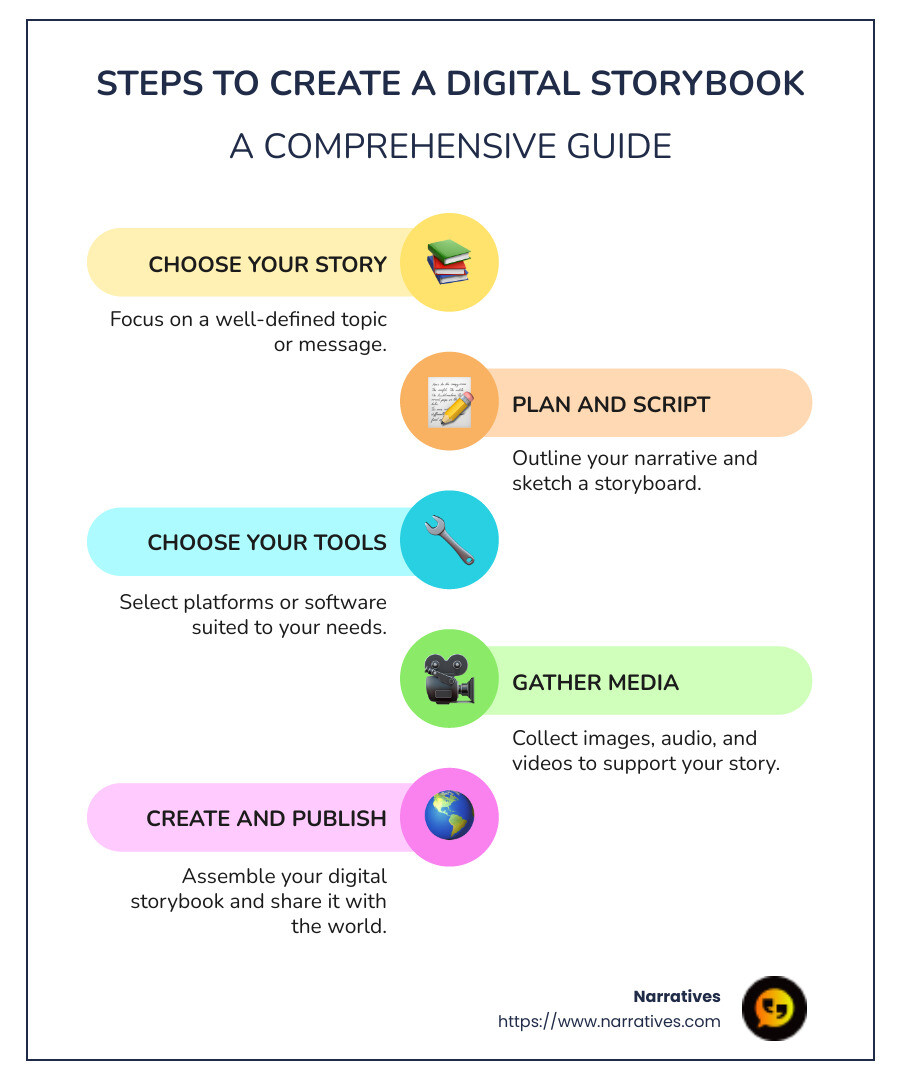
- Choose Your Story: Focus on a well-defined topic or message.
- Plan and Script: Outline your narrative and sketch a storyboard.
- Choose Your Tools: Select platforms or software suited to your needs.
- Gather Media: Collect images, audio, and videos to support your story.
- Create and Publish: Assemble your digital storybook and share it with the world.
In today's digital environment, the art of storytelling has evolved. By using digital tools, creators can craft narratives that are not only immersive but also accessible. Whether you’re a non-profit organization trying to amplify your mission or an agency looking to engage wider audiences, digital storytelling offers a dynamic solution.
Digital storytelling empowers creators to weave stories that capture attention and elicit emotions. By incorporating multimedia content, these stories become more than just words; they become experiences. The potential for broader narrative reach and deeper impact is vast, making this approach invaluable for those whose voices need to be heard.
Creating a digital storybook glossary:
- digital storytelling template
- interactive digital storytelling examples
- tools for creating digital stories
Planning Your Digital Storybook
Creating a digital storybook begins with idea generation. Every story starts with a spark—a unique idea or message you want to share. Whether you're crafting a tale for education, entertainment, or social impact, the first step is to clearly define your narrative's focus.
Developing Your Story
Once you have your idea, it's time to flesh it out. Mind-mapping is an excellent tool for this stage. It helps visualize connections between different elements of your story, allowing you to organize thoughts and identify key themes. A mind map can serve as a visual guide, helping you see the big picture and the finer details.
After mapping out your ideas, dive into research. Whether your story is fiction or non-fiction, thorough research adds depth and authenticity. Gather information, anecdotes, and data that will enrich your narrative and make it more compelling.
Next, channel your research and ideas into a script. Writing a script is like assembling a jigsaw puzzle. Consider the perspective—first-person can be intimate, while third-person offers a broader view. Choose your vocabulary carefully, keeping your audience in mind. Your script is the backbone of your digital storybook, setting the tone and direction for the entire project.
Creating a Storyboard
With a script in hand, the next step is organizing content visually. This is where a storyboard comes into play. Think of it as a blueprint that integrates your script with visual elements. A well-crafted storyboard outlines the sequence of events and helps you visualize how each component—text, images, audio, and video—will come together.
Storyboard integration is crucial for ensuring a cohesive narrative flow. It allows you to test the pacing and emotional impact of your story before diving into production. Visual planning at this stage can highlight any gaps or weak points, giving you a chance to refine your story further.
By following these steps, you'll create a strong foundation for your digital storybook. This careful planning and organization will make the creation process smoother and more enjoyable, ultimately leading to a more engaging and impactful final product.
Tools for Creating a Digital Storybook
Creating a digital storybook doesn't have to be complicated or expensive. With a variety of digital storytelling platforms and multimedia tools available, both beginners and professionals can bring their stories to life with ease.
Free Digital Storytelling Tools
For those just starting out or working within a budget, there are several free tools that offer robust features for creating engaging digital stories.
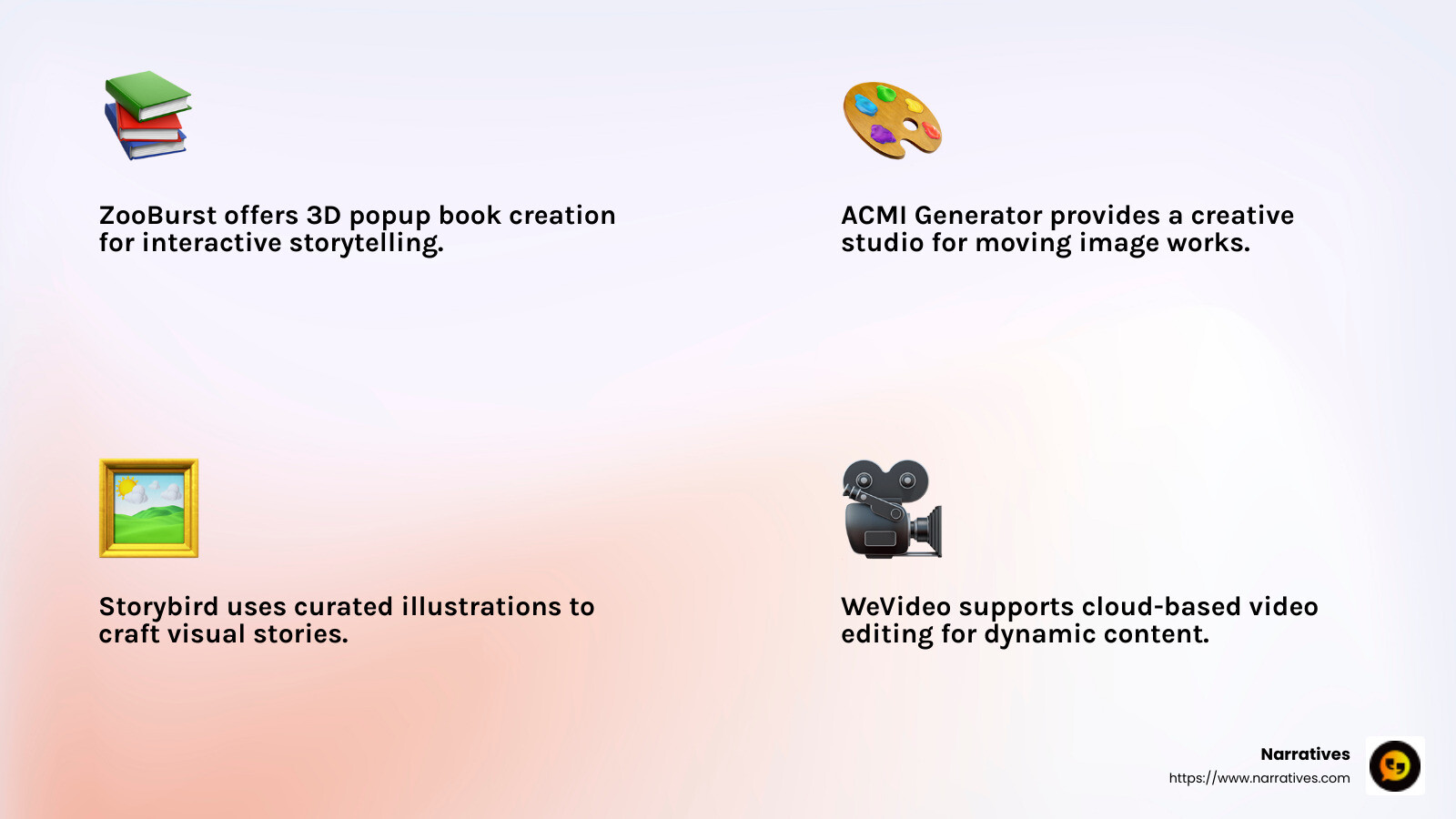
ZooBurst is a fantastic platform for creating 3D popup books. It's user-friendly and allows you to arrange characters and props in a three-dimensional space. This tool is perfect for adding an interactive element to your storybook, making it come alive for your audience.
ACMI Generator is another excellent choice. It provides a creative studio space where you can explore and create moving image works. With features like the Storyboard Generator, you can build your own storyboard and share it with a community, gaining insights and inspiration from others.
Storybird offers a unique approach by curating artwork from illustrators worldwide. This tool allows you to craft visual stories quickly, turning images into compelling narratives. While the creation and sharing of stories are free, there are options for printing or downloading your work at a fee.
Advanced Tools for Professionals
For creators looking for more advanced features, there are paid tools that offer additional capabilities and flexibility.
Adobe Slate is a professional-grade tool that combines text and images to create beautiful, magazine-style stories. It's ideal for those who want to produce polished and visually stunning content. Adobe Slate's integration with other Adobe products can streamline your workflow and improve your storytelling process.
WeVideo is another powerful tool designed for video storytelling. It offers cloud-based video editing, allowing you to add layers of audio, video, and images to your story. WeVideo is perfect for creating dynamic and engaging multimedia content, offering a range of features to fine-tune your project.
These tools, whether free or advanced, provide the resources you need to transform your ideas into captivating digital storybooks. By choosing the right platform, you can focus on what matters most—telling your story in a way that resonates with your audience.
Creating a Digital Storybook for Non-Profits
Non-profit organizations have a unique opportunity to leverage digital storytelling as a powerful tool for social impact. By creating a digital storybook, non-profits can engage underrepresented voices and share their message with a wider audience. Let's explore how this can be achieved.
Engaging Underrepresented Voices
Community-driven storytelling is at the heart of engaging underrepresented voices. By allowing individuals to share their personal experiences, non-profits can create content that resonates emotionally and fosters a sense of connection.
"Stories can inspire loyalty and spark social movements."
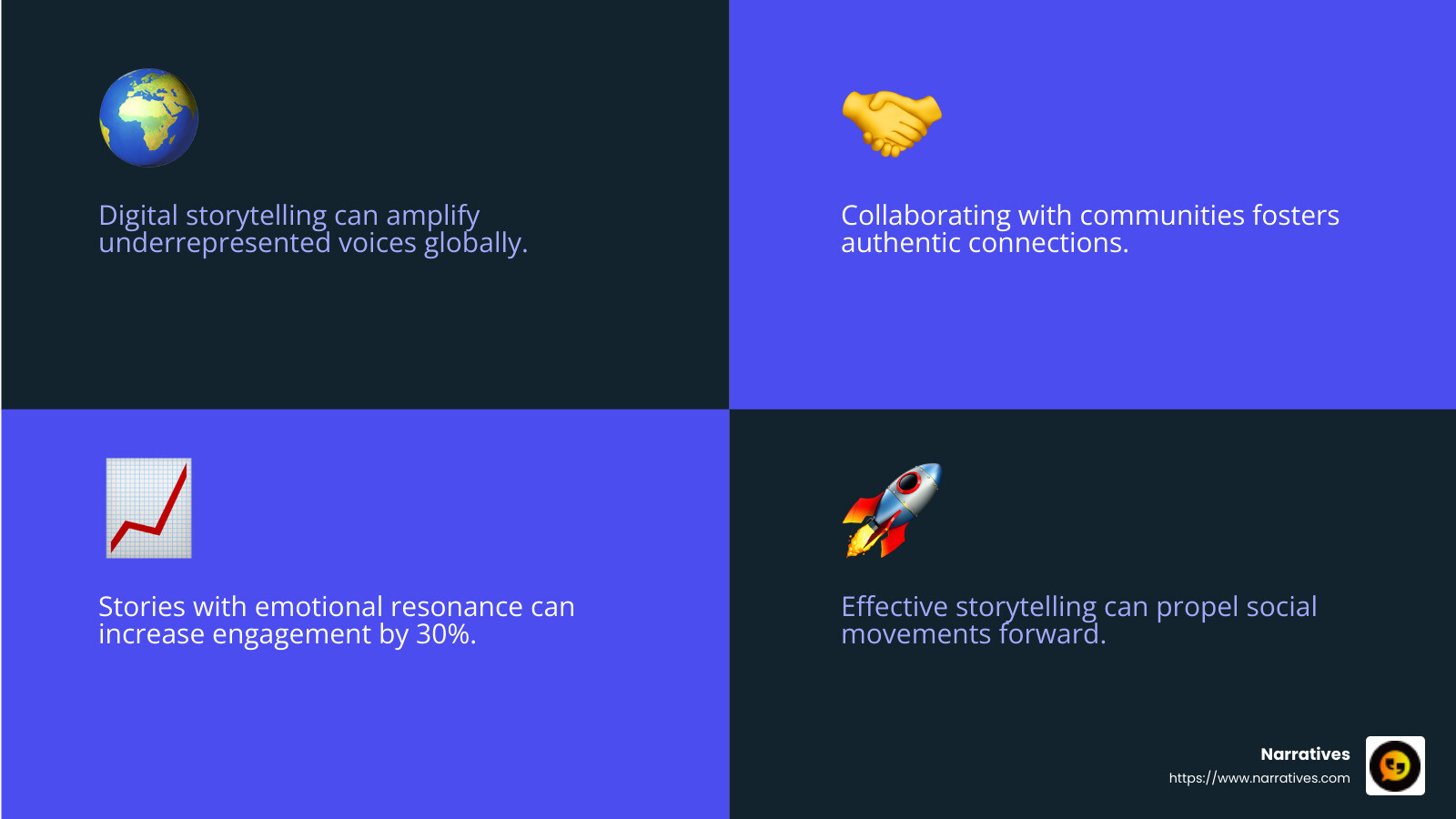
Consider collaborating with community members to co-create stories. This approach not only enriches the narrative but also ensures authenticity. By highlighting diverse perspectives, non-profits can create purpose-driven content that truly reflects the communities they serve.
Sharing Your Storybook
Once your digital storybook is ready, sharing it online is crucial for maximizing its reach and impact. Social media platforms offer an excellent avenue for distributing your story to a broad audience. Platforms like Facebook, Instagram, and Twitter can help amplify your message, allowing you to connect with supporters and potential donors.
Online sharing also opens up opportunities for feedback and engagement. Encourage your audience to share their thoughts and experiences related to your story. This interaction can deepen the emotional connection and drive further engagement with your cause.
To ensure your storybook reaches the right audience, consider using targeted hashtags and collaborating with influencers who align with your mission. This can improve your visibility and extend the reach of your story across different networks.
By focusing on emotional resonance and leveraging the power of digital platforms, non-profits can create impactful stories that not only inform but also inspire action. This approach not only benefits the organization but also empowers the communities involved, making digital storytelling a valuable tool for social change.
Frequently Asked Questions about Creating a Digital Storybook
How do I start creating a digital storybook?
Starting a digital storybook begins with a spark of inspiration. Think about what story you want to tell and who your audience is. This is the foundation of your project. Once you have an idea, organize your thoughts. Mind-mapping can be a handy tool here. It helps you visually lay out your ideas and see how they connect.
Next, dive into some research. Whether your story is fact or fiction, gathering information will enrich your narrative. Use outlines or digital note-taking tools to keep track of your findings. This organization will make writing your script much smoother.
What tools can I use for digital storytelling?
There are plenty of tools available to help you bring your digital storybook to life. For beginners, free tools like ZooBurst and Storybird offer user-friendly interfaces to create engaging stories without needing advanced skills.
For those seeking more advanced options, platforms like Adobe Slate and WeVideo provide professional-grade features. These tools allow you to incorporate multimedia elements, such as images, videos, and audio, to improve your storytelling. These platforms make it easy to create visually appealing and interactive storybooks.
How can digital storybooks benefit non-profits?
For non-profits, digital storybooks are a powerful medium to tell impact stories. They offer a unique way to highlight the work being done and the communities being served. By sharing these stories, non-profits can increase their visibility and connect with a broader audience.
Digital storybooks also help in engaging supporters emotionally, fostering a deeper connection to the cause. When stories resonate, they can inspire action, whether it's volunteering, donating, or spreading the word.
Overall, by utilizing digital platforms and tools, non-profits can effectively communicate their mission and drive social change through storytelling.
Conclusion
As we wrap up our guide on creating a digital storybook, it's clear that storytelling is more than just a creative endeavor—it's a powerful tool for change. At Narratives, we understand the unique power of stories to lift underrepresented voices and drive social impact. We are committed to being the go-to storytelling partner for non-profits and purpose-driven organizations.
Our mission is to help non-profits share their impact stories in a way that inspires action, builds trust, and increases visibility. Through high-quality, emotionally resonant multimedia content, we work to ensure that the stories of those who are often unheard are shared with the world.
Whether you're just starting out or looking to improve your existing storytelling efforts, our team at Narratives is here to support you every step of the way. Together, we can create digital stories that not only capture hearts but also drive meaningful change.
For more information on how we can help your organization tell its story, visit our Narratives service page. Let's make your story heard.

.avif)