From Awareness to Action: Leveraging Digital Marketing for Social Good

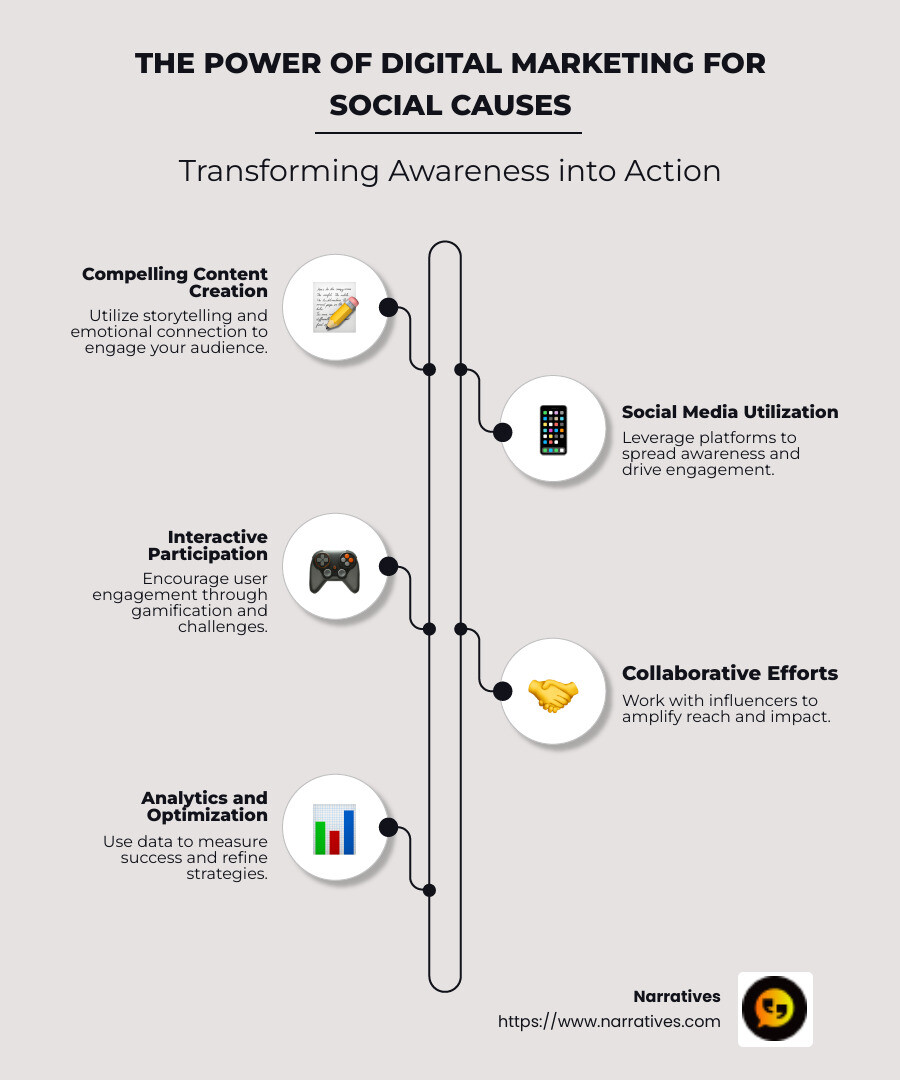
Digital marketing for social causes is more than just a trend; it's a toolkit for change. It helps raise awareness, inspire action, and create impact. Here's how it works:
- Create compelling and powerful content.
- Harness the power of social media for awareness.
- Engage your audience with interactive participation.
- Collaborate to amplify reach and influence.
- Measure and optimize with data analytics for maximum impact.
In today's digital landscape, organizations are using the power of digital marketing to drive social change. With the capability to connect vast audiences, digital marketing transforms awareness into action. Whether a nonprofit looking to amplify its mission or a brand focused on social justice, digital marketing offers the tools to engage, inspire, and effect real-world change.
One striking example is Nike's "Dream Crazy" campaign, which, despite initial backlash, achieved tremendous financial and cultural success, demonstrating the potency of bold, cause-driven marketing. As Phil Knight stated, "You can’t be afraid of offending people," highlighting the transformative power of taking a stand.
Digital platforms enable organizations to seamlessly share stories, galvanize supporters, and measure success. This dual capability of storytelling and analytics makes digital marketing a unique and effective approach for those committed to making a difference.
Digital marketing for social causes basics:
Creating Compelling Content
Authentic Storytelling
In digital marketing for social causes, storytelling is a powerful tool. It's not just about sharing information—it's about creating an emotional connection. Authentic storytelling can transform passive awareness into active empathy.
Real-life stories of individuals or communities facing challenges can spark that connection. When people hear a story that resonates, they're more likely to feel empathy and take action. For example, Yoplait's "Save Lids to Save Lives" campaign successfully used storytelling to raise over $50 million in donations. By sharing personal stories of those affected by breast cancer, they created a deep emotional bond with their audience.
To make storytelling effective, focus on authenticity. Share genuine experiences and struggles. This honesty builds trust and encourages people to join your cause.
Collaborations with Influencers
Influencers play a crucial role in amplifying content and reaching a wider audience. When influencers who genuinely care about a cause share it with their followers, the message spreads far and wide. This collaboration can transform a simple campaign into a movement.
Influencers like activists and advocates bring their own stories and credibility to the table. They can help convey your message with passion and authenticity, reaching audiences that might otherwise remain untouched. For example, Ben & Jerry's "Justice ReMix'd" initiative worked with influencers to advocate for criminal justice reform, blending product sales with social activism.
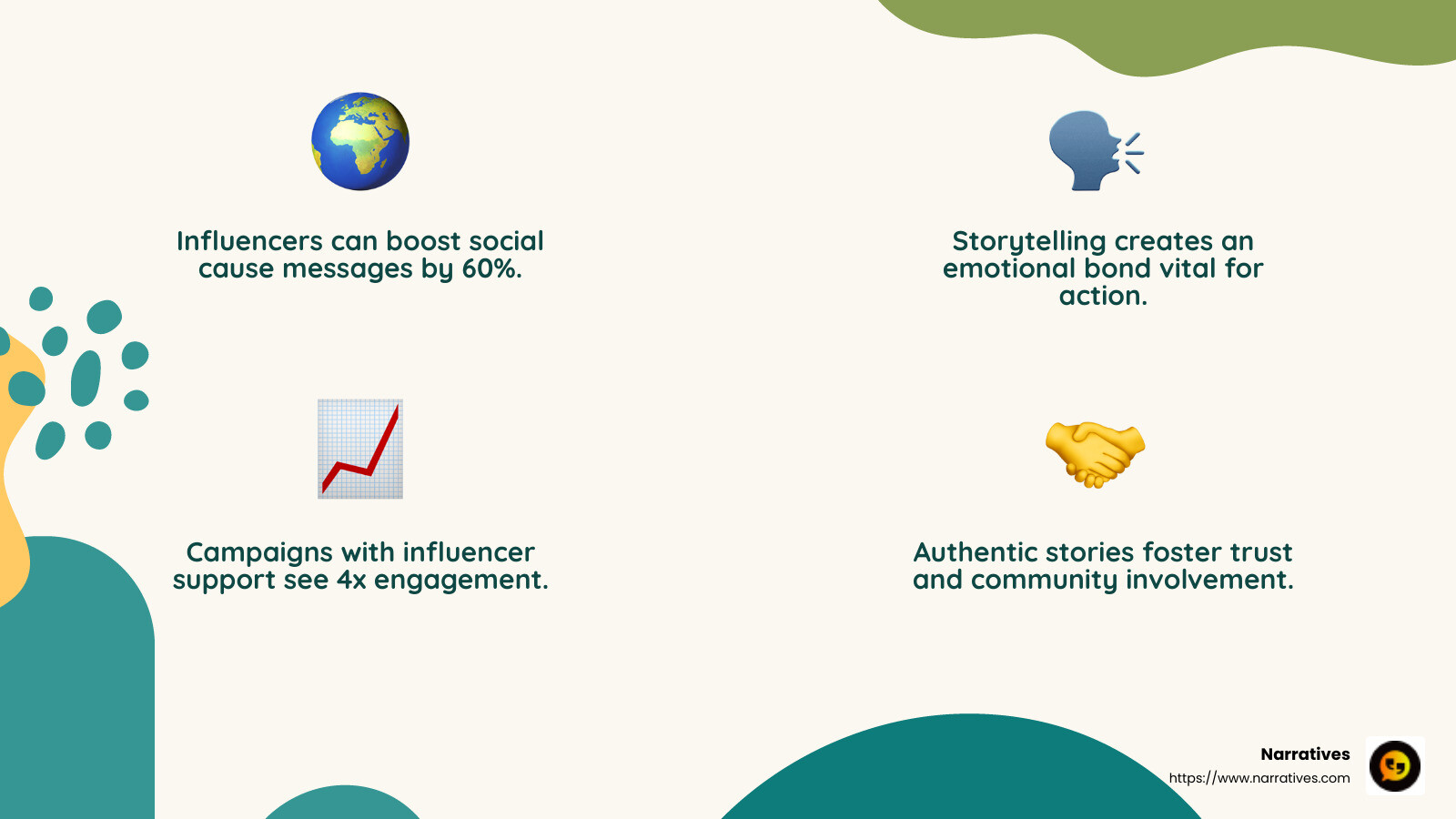
Working with influencers requires careful selection. Choose individuals whose values align with your cause. This ensures the collaboration feels genuine and not just a marketing ploy. When done right, these partnerships can amplify your message and drive meaningful social change.
In summary, crafting compelling content through authentic storytelling and influencer collaborations is key for any organization aiming to make an impact. By connecting emotionally and expanding reach, digital marketing becomes a powerful tool for social good.
Leveraging Social Media for Social Causes
Social Media Campaigns
In the field of digital marketing for social causes, social media platforms are indispensable. They offer a unique space to create awareness, spark conversations, and inspire action. By using hashtags, organizations can unify messages and encourage widespread participation.
For example, Whole Foods has effectively used social media to promote social causes related to sustainable farming and environmental practices. Their campaigns often focus on healthy food and community well-being, creating a strong connection with their audience.
Hashtags serve as digital rallying cries. They make it easy for people to find, join, and contribute to conversations about a cause. A well-crafted hashtag can bring together diverse voices and amplify the reach of a campaign.
Advocacy and Activism
Social media isn't just about raising awareness—it's a platform for advocacy and activism. Organizations can mobilize their audience to take tangible actions, like signing petitions or participating in fundraising campaigns.
Consider the example of Ben & Jerry's "Justice ReMix'd" initiative. By blending product sales with advocacy for criminal justice reform, they successfully engaged their audience in meaningful activism. This kind of integration demonstrates how brands can use social media to support social causes and drive change.
Fundraising campaigns on social media can also be incredibly effective. They allow organizations to reach a broader audience quickly and efficiently. Platforms like Facebook and Instagram offer tools for setting up donation drives, making it easy for supporters to contribute.
By engaging audiences through social media, organizations can transform passive supporters into active participants. This engagement is crucial for sustaining long-term social change.
In the next section, we'll explore how to facilitate engagement and participation through interactive campaigns and gamification strategies.
Facilitating Engagement and Participation
Creating a buzz around social causes isn't enough. To drive real change, organizations need to move audiences from awareness to active participation. Here's where interactive campaigns and gamification strategies come into play.
User-Generated Content
User-generated content (UGC) is a powerful way to engage communities. It invites people to share their own experiences and perspectives, creating a sense of ownership and involvement. Social media challenges are a popular form of UGC, encouraging users to participate and spread the word.
Take Nike's "Better For It" campaign, which inspired women to share their fitness journeys on social media. This initiative not only created a supportive community but also generated vast amounts of content that amplified the campaign's reach.
Crowdsourcing is another effective strategy. By tapping into the collective creativity of your audience, you can generate innovative ideas and solutions for social issues. This approach not only fosters engagement but also empowers individuals to contribute actively.
Gamification Techniques
Gamification leverages game-like elements to encourage participation and drive action. Using badges, rewards, and points can make supporting a cause fun and engaging.
For instance, the World Wildlife Fund's (WWF) "Earth Hour" campaign used gamification to motivate people to turn off their lights for an hour. Participants earned badges for their involvement, fostering a sense of achievement and community.
Interactive campaigns that incorporate gamification can transform passive viewers into active participants. By introducing elements of competition and reward, organizations can sustain interest and encourage ongoing involvement.
Rewards don't have to be tangible. Recognition, such as featuring participants on social media or acknowledging their contributions, can be equally motivating. This recognition not only validates participants' efforts but also inspires others to join in.
Incorporating these strategies can significantly improve engagement and participation in social causes. By making involvement enjoyable and rewarding, organizations can build a dedicated community of supporters ready to take action.
In the following section, we'll dig into how organizations can measure and optimize the impact of their digital marketing efforts for social causes.
Measuring and Optimizing Impact
To ensure digital marketing efforts for social causes are effective, organizations must measure and optimize their impact. This involves using data analytics and key performance indicators (KPIs) to track progress and refine strategies.
Analytics Tools
Analytics tools are vital for understanding how well your digital campaigns are performing. Google Analytics and Tableau are popular choices that provide detailed insights into audience behavior and campaign effectiveness.
Google Analytics offers real-time data on website traffic, user demographics, and engagement metrics. This information helps organizations understand which content resonates most with their audience.
Tableau excels in visualizing complex data, making it easier to identify trends and patterns. With its interactive dashboards, organizations can quickly assess the impact of their campaigns and make informed decisions.

Continuous Optimization
Once data is collected, it’s crucial to continuously optimize campaigns based on audience insights. This involves refining strategies to improve engagement and achieve desired outcomes.
Audience Insights: Understanding your audience is key to successful digital marketing for social causes. By analyzing data, organizations can identify what motivates their supporters and tailor their messaging accordingly.
Strategy Refinement: Regularly revisiting and adjusting your strategy ensures it remains effective. This might mean changing the tone of your messaging, exploring new platforms, or experimenting with different content formats.
KPIs: Establishing clear KPIs helps measure success and identify areas for improvement. Common KPIs include click-through rates, conversion rates, and social media engagement. Tracking these metrics provides a clear picture of what's working and what needs adjustment.
By leveraging analytics tools and committing to continuous optimization, organizations can maximize the impact of their digital marketing efforts. This approach not only improves campaign performance but also strengthens the connection with the audience, driving meaningful action for social causes.
In the next section, we'll address common questions about digital marketing for social causes and explore how these strategies empower social justice movements.
Frequently Asked Questions about Digital Marketing for Social Causes
How can digital marketing empower social justice movements?
Digital marketing for social causes plays a crucial role in empowering social justice movements by amplifying voices and mobilizing communities. Social media platforms, like Facebook and Instagram, enable activists to reach global audiences quickly and effectively. Through hashtags and viral content, these platforms help raise awareness about important issues and spark conversations that lead to real-world actions.
Digital tools also facilitate fundraising campaigns and petitions, allowing supporters to contribute financially or sign petitions with just a few clicks. For example, the use of targeted ads can reach specific demographic groups who are more likely to engage with a cause, increasing the movement's reach and impact.
What are some examples of successful cause marketing campaigns?
Several brands have successfully leveraged digital marketing for social causes to create impactful campaigns. One notable example is the American Express campaign from 1983, which supported the Statue of Liberty restoration. This campaign raised $1.7 million and resulted in a 17% increase in new users and 28% growth in card usage.
Another example is the Lifebuoy handwashing campaign, which focused on promoting hygiene practices in developing countries. Over a decade, this campaign reached millions, demonstrating how long-term commitment to a social cause can build trust and drive brand growth.
How can brands avoid backlash when promoting social causes?
To avoid backlash, brands should ensure their efforts are authentic and align with their core values. Here are some key strategies:
Align with Genuine Causes: Choose causes that naturally fit with your brand's mission and values. As Myriam Sidibe suggests, find the intersection between your product and societal needs.
Avoid Purpose-Washing: Consumers can discern between genuine efforts and superficial campaigns. Long-term commitment and consistent messaging are crucial.
Engage Stakeholders: Involve employees, customers, and community members in your cause marketing efforts to build trust and credibility.
Measure Impact: Use analytics to track the success of your campaigns and make data-driven decisions to improve them.
By following these guidelines, brands can effectively promote social causes while maintaining their reputation and fostering positive relationships with their audience.
Conclusion
Narratives are powerful tools in digital marketing, especially when it comes to promoting social causes. By focusing on purpose-driven storytelling, we can connect with audiences on an emotional level, inspiring them to take action and support meaningful change.
At Narratives, we believe in elevating underrepresented voices through high-quality, emotionally resonant video and multimedia content. This approach not only helps non-profits share their impact stories but also builds trust and increases visibility. Through our work, we aim to inspire action and foster a sense of community involvement.
Community involvement is at the heart of effective cause marketing. By engaging communities, we create a sense of ownership and shared purpose. This connection encourages people to participate actively, whether through volunteering, donating, or simply spreading the word. When communities are involved, the impact of digital marketing for social causes is amplified, leading to real and lasting change.
To learn more about how Narratives can help your organization leverage purpose-driven storytelling to achieve social impact, visit our service page.
Together, by using the power of stories and community, we can make a significant difference in the world. Let's continue to drive social change through digital marketing, changing awareness into meaningful action.


.avif)