From Pixels to Prose: Understanding the Role of a Digital Storyteller

Digital storyteller—this phrase might sound modern, but it's rooted in an ancient tradition: storytelling. Today, digital storytellers use digital media to weave narratives that resonate with audiences across diverse platforms. Whether through social media, blogs, or interactive videos, the art of storytelling has transformed with creativity and technology.
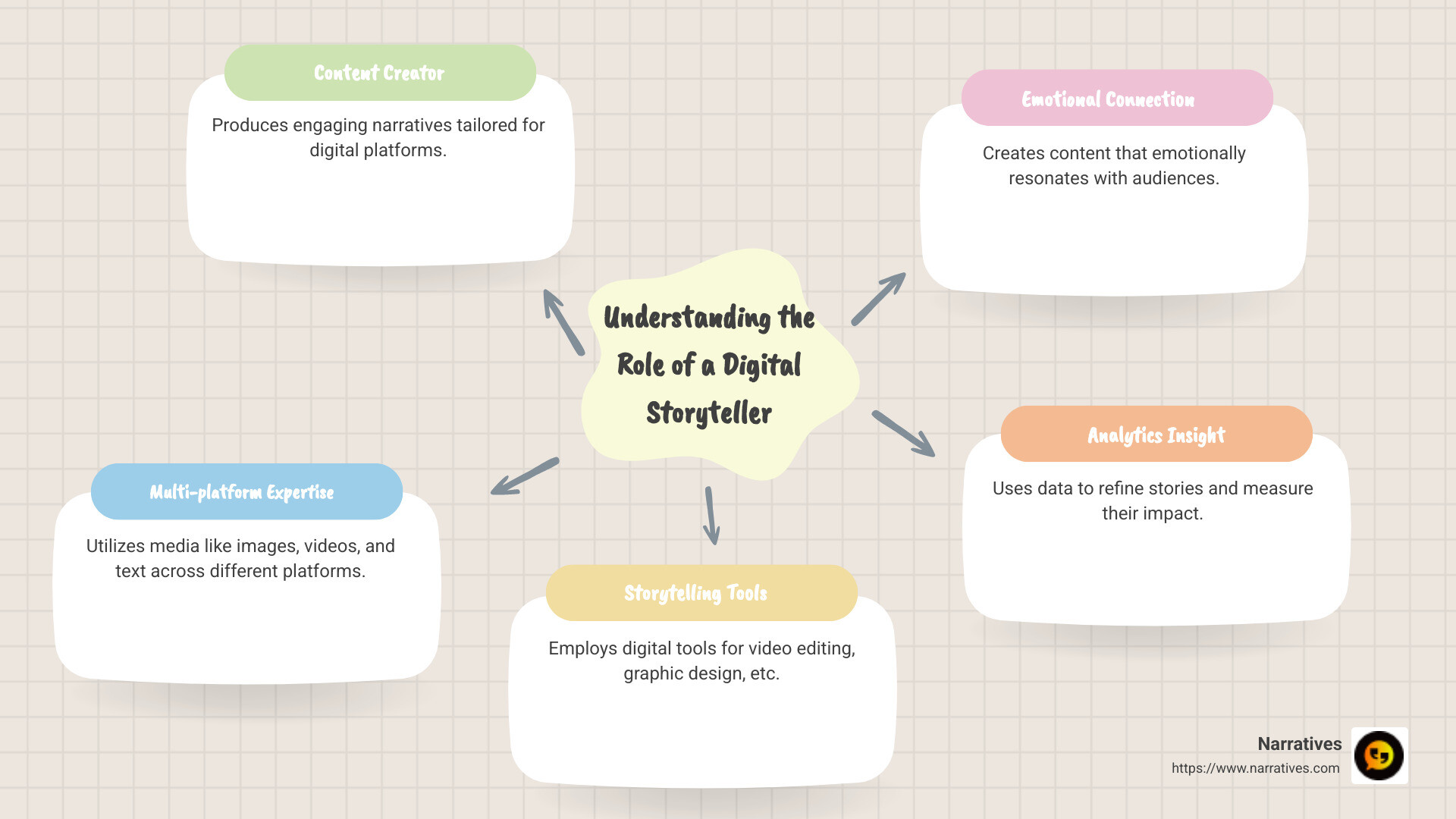
Here's what you need to know about a digital storyteller:
- Content Creator: Produces engaging narratives custom for digital platforms.
- Multi-platform Expertise: Uses various forms of media like images, videos, and text.
- Storytelling Tools: Employs digital tools for video editing, graphic design, and more.
- Emotional Connection: Focuses on creating content that resonates emotionally with the audience.
- Analytics Insight: Uses data to refine stories and measure their impact.
Digital storytelling is more than just advanced technology. It’s using storytelling tools to amplify voices and connect people globally. It is a powerful medium not just for businesses, but also crucial for non-profit organizations. These groups use storytelling to highlight their missions and impact effectively.
"Never underestimate the power of creativity and storytelling."
Kyle Los, a digital storyteller, echoes this sentiment. In the post-pandemic world, these stories can educate, inspire, and mobilize communities for various causes, from social justice to environmental advocacy.
To weave these digital narratives, a storyteller uses tools and knowledge that transform pixels into prose. As we explore this evolving domain, we unveil the potential digital storytelling holds for driving change.
Digital storyteller word guide:
The Evolution of Digital Storytelling
Digital storytelling has come a long way from traditional tales told around a campfire. Today, it's a dynamic fusion of digital reality and emerging technologies that allow stories to be more immersive and interactive than ever before.
Digital Reality
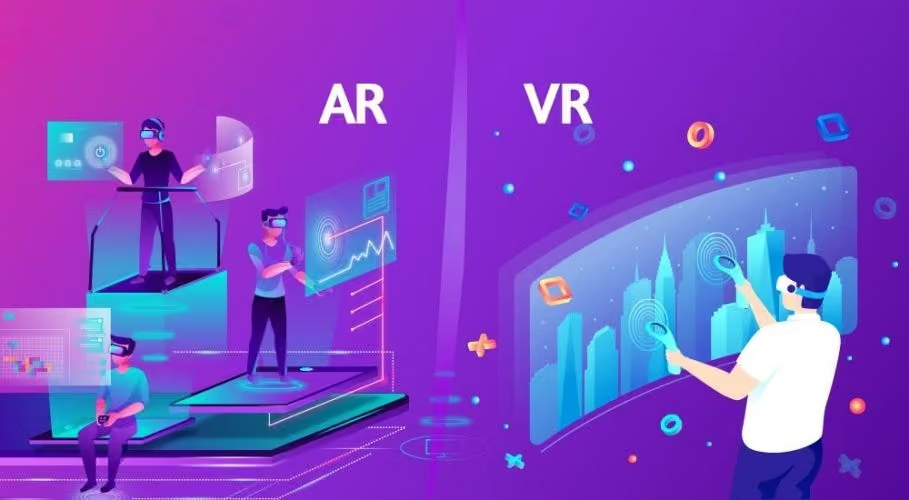
Digital reality is changing how we experience stories. With technologies like augmented reality (AR), virtual reality (VR), and mixed reality (MR), the line between the storyteller and the audience is blurring. These tools create immersive environments where the audience can engage directly with the story.
- Augmented Reality (AR): Improves the real world with digital elements. Imagine pointing your smartphone at a historical site and seeing scenes from the past unfold before your eyes.
- Virtual Reality (VR): Transports users to entirely new worlds. Think of exploring a distant planet or reliving a historical event in full 360-degree immersion.
- Mixed Reality (MR): Combines the real and virtual worlds, allowing users to interact with both simultaneously.
Emerging Technologies
The rapid advancement of technology has opened up new storytelling possibilities. From 360-degree videos to interactive web experiences, these technologies make stories more engaging and memorable.
- 360-Degree Videos: Allow viewers to explore a scene in all directions, offering a more complete and engaging experience.
- Interactive Web Experiences: Enable users to choose their path through a story, making each journey unique.
These technologies are not just for entertainment. They are powerful tools for education, training, and even therapy, providing experiences that are both informative and transformative.
Interactive Formats
Interactive formats are at the heart of digital storytelling. They allow audiences to become active participants rather than passive observers. This engagement improves emotional connections and makes stories more impactful.
- Choose-Your-Own-Trip Stories: Let users decide the direction of the narrative, creating a personalized experience.
- Gamified Storytelling: Incorporates game elements into stories, making them more engaging and fun.
The evolution of digital storytelling is not just about new tech. It's about creating deeper connections and more meaningful experiences. As technology continues to advance, the potential for digital storytelling to inspire, educate, and entertain will only grow.
This evolution invites us to rethink how we tell stories, pushing the boundaries of creativity and innovation.
The Role of a Digital Storyteller
A digital storyteller is a modern-day bard, weaving narratives across various digital platforms. They transform ideas into engaging content that resonates with audiences. But what does it take to be a successful digital storyteller? Let's break it down.
Skills Required for a Digital Storyteller
Creating compelling content requires a diverse skill set. Here are the key skills every digital storyteller should master:
Graphic Design: Visual elements are crucial in storytelling. A digital storyteller should be adept at using graphic design tools to create eye-catching visuals that complement their narratives.
Video Editing: Videos are a powerful medium for storytelling. Skills in video editing allow storytellers to craft seamless narratives that captivate viewers.
Voice-Over: The right voice can bring a story to life. Voice-over skills are essential for narrating stories in a way that is both engaging and emotive.
Digital storytellers must also have a knack for content creation. This involves understanding the audience and crafting messages that speak directly to them. The ultimate goal is to create multimedia content that not only informs but also entertains and inspires.
Tools and Technologies
A digital storyteller's toolbox is filled with computer-based tools that help bring stories to life. Here are some essential tools and technologies:
Digital Design Programs: Programs like Adobe Photoshop and Illustrator are staples for creating stunning visuals. These tools help storytellers design elements that improve the narrative.
Video Editing Software: Software such as Adobe Premiere Pro and Final Cut Pro are used to edit and produce high-quality video content. These programs offer a range of features that allow for creative storytelling.
Voice-Over Tools: Tools like Audacity and Adobe Audition are popular for recording and editing voice-overs. They help storytellers achieve the perfect sound quality for their narratives.

These tools are not just for creating content but also for analyzing it. By using analytics, digital storytellers can measure the success of their stories and refine their strategies for future projects.
A digital storyteller is a master of both art and technology. They blend creativity with technical skills to craft stories that are engaging, impactful, and memorable. As technology continues to evolve, so too will the role of the digital storyteller, pushing the boundaries of what's possible in the field of storytelling.
Digital Storytelling in Non-Profit Organizations
Elevating Underrepresented Voices
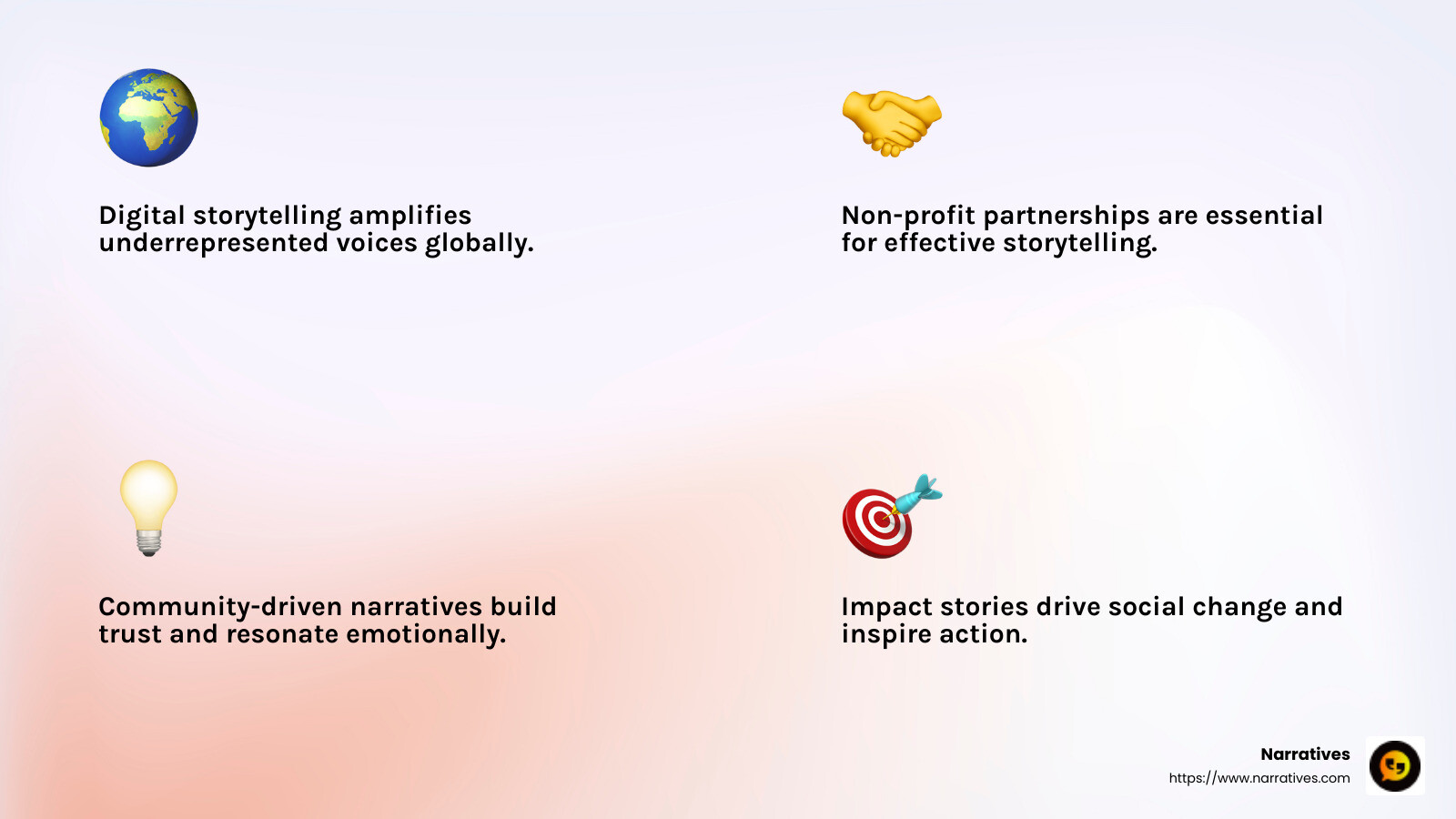
Digital storytelling has become a powerful tool for non-profit organizations, particularly in elevating the voices of underrepresented communities. By partnering with non-profits, digital storytellers help craft narratives that not only inform but also inspire action and foster empathy.
Non-profit partnerships play a crucial role in this process. Organizations like Narratives collaborate with non-profits to create content that highlights the communities they serve. These partnerships are vital for creating social impact by shedding light on the struggles and triumphs of marginalized groups.
Community-driven storytelling is at the heart of these efforts. By involving the community in the storytelling process, digital storytellers ensure that the narratives are authentic and resonate emotionally with audiences. This approach builds trust and emotional resonance with the audience, making the stories more impactful.
Impact stories are a powerful way to bring about change. They highlight personal experiences and challenges, allowing audiences to connect on a deeper level. As Deb Roy notes, storytelling can influence neural pathways, making it a potent tool for change.
Through digital storytelling, non-profits can lift underrepresented voices, build trust, and create narratives that inspire action and foster community support.
This storytelling approach not only benefits the communities involved but also improves the organization's ability to connect with a broader audience. By focusing on emotional resonance and authentic narratives, non-profits can effectively communicate their mission and drive meaningful social impact.
Frequently Asked Questions about Digital Storytelling
What is digital storytelling?
Digital storytelling is the art of using digital tools to tell stories. It allows people to share their experiences and ideas through various digital formats like videos, podcasts, and interactive media. This form of storytelling is accessible to everyone, thanks to the advent of user-friendly technologies. People can now share their stories on platforms such as YouTube and podcasts, reaching a global audience.
Digital storytelling isn't just about sharing personal stories. It also includes web-based stories, interactive narratives, and even narrative-driven video games. This approach has become popular in education, marketing, and non-profit sectors, allowing for innovative ways to engage audiences and convey messages.
How can digital storytelling benefit non-profits?
Non-profits can greatly benefit from digital storytelling by using it to highlight their causes and connect with their audiences. Through storytelling, non-profits can share impactful narratives that resonate emotionally with their supporters. This approach helps build trust and encourages community involvement.
Organizations like Narratives work with non-profits to create content that sheds light on the communities they serve. By focusing on the struggles and successes of underrepresented groups, non-profits can foster empathy and inspire action. Digital storytelling enables these organizations to communicate their missions effectively and drive meaningful social change.
What tools are essential for a digital storyteller?
A digital storyteller relies on several tools to create and share compelling narratives. Here are some essential tools:
- Graphic Design Software: Programs like Adobe Photoshop or Canva help create visually appealing content.
- Video Editing Software: Tools such as Adobe Premiere Pro or Final Cut Pro are vital for crafting engaging video stories.
- Audio Editing Tools: Software like Audacity or Adobe Audition is used for editing podcasts or voice-overs.
- Digital Design Programs: These tools are essential for creating interactive and multimedia content.
By mastering these tools, digital storytellers can produce high-quality content that captivates and informs their audience. These skills are crucial for anyone looking to make an impact through digital storytelling.
Conclusion
As we wrap up our exploration of digital storytelling, it's clear that this powerful medium is reshaping how stories are told and heard. At Narratives, we've positioned ourselves as the go-to partner for non-profits and purpose-driven organizations, focusing on elevating underrepresented voices. Our strategy centers on creating high-quality, emotionally resonant multimedia content that not only shares impactful stories but also inspires action.
Building Domain Authority
In the digital world, establishing domain authority is crucial. By owning broad and underused storytelling-related keywords, we aim to become a leading voice in the digital storytelling space. Our content strategy is designed to differentiate us from competitors by focusing on non-profit partnerships, social impact, and community-driven storytelling. This approach not only improves our authority but also builds trust with our audience.
Driving Inbound Lead Generation
Our blog content is a long-term investment. By targeting long-tail, high-intent, and location-specific keywords, we generate consistent, organic traffic. This strategy supports inbound lead generation and increases brand awareness. The more we share compelling stories, the more we connect with our audience, encouraging them to engage with our content and services.
The Future of Digital Storytelling
Digital storytelling is more than just a trend; it's a transformative way to communicate. By leveraging the right tools and technologies, digital storytellers can create narratives that resonate on a deeper level. As we continue to evolve and adapt, our goal is to help non-profits use storytelling to amplify their voices and drive meaningful change in their communities.
In conclusion, the role of a digital storyteller is pivotal in today's media landscape. By mastering the art and science of storytelling, we can create a more connected and empathetic world. If you're ready to start your digital storytelling journey, we invite you to partner with us at Narratives. Together, we can make a difference, one story at a time.

.avif)