Digital Storytelling Courses: Find the Right Fit for You

Digital storytelling course opportunities are rapidly expanding. They are pivotal for non-profits and purpose-driven organizations aiming to amplify their mission. Here's a quick guide to the essentials of finding the right course for your needs:
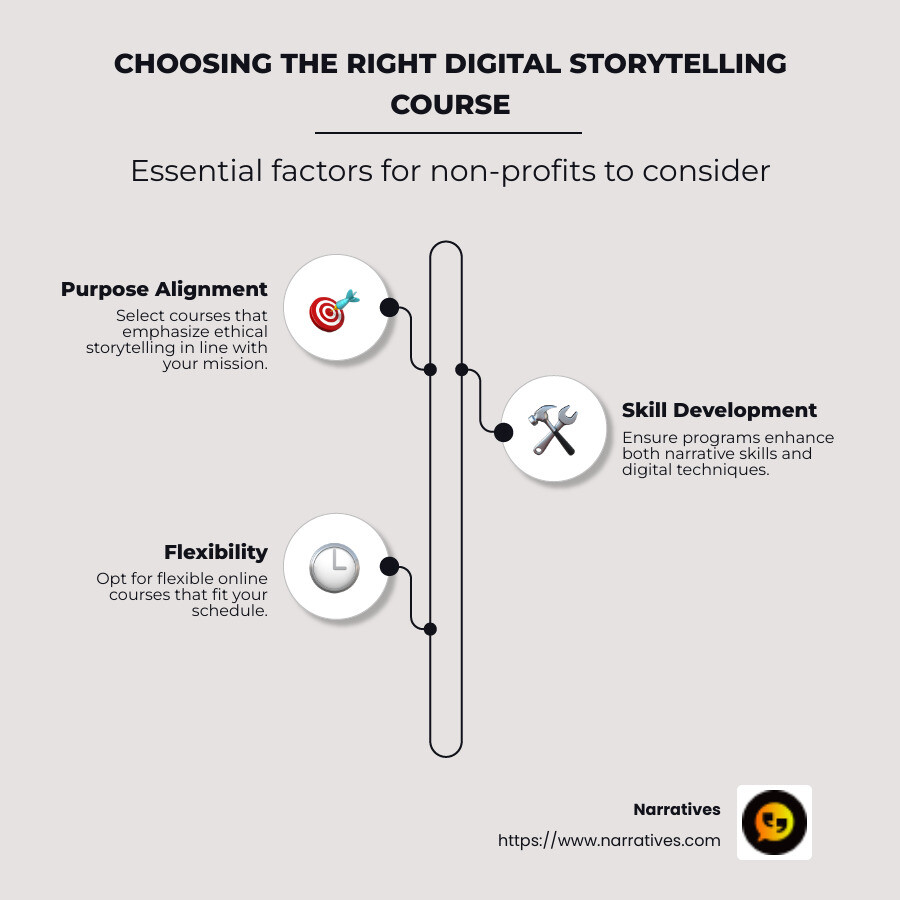
- Purpose Alignment: Choose courses that emphasize ethical storytelling and resonate with your mission.
- Skill Development: Look for programs that build both narrative skills and digital techniques.
- Flexibility: Opt for courses offering online, flexible learning to fit your schedule.
In an era where stories shape our identities and connections, digital storytelling serves as a vital tool for organizations with social missions. It's not just about sharing experiences; it's about creating an emotional bridge with audiences, inspiring action, and driving change. Whether you're a non-profit looking to tell impactful stories or a social impact organization wanting to lift your community's voice, the right course can empower you to craft narratives that truly matter.
Digital storytelling, with its deeply personal and creatively dynamic nature, is not just about technology. It's about human connection—changing how we share stories that make a difference.
Digital storytelling course terminology:
- digital storytelling guide for educators
- digital storytelling in education
- examples of digital storytelling in education
Understanding Digital Storytelling
Digital storytelling is a powerful blend of narrative skills, digital techniques, and multimedia content. It’s about weaving stories using digital tools to create engaging and impactful experiences. Let's break down what makes digital storytelling so effective.
Narrative Skills
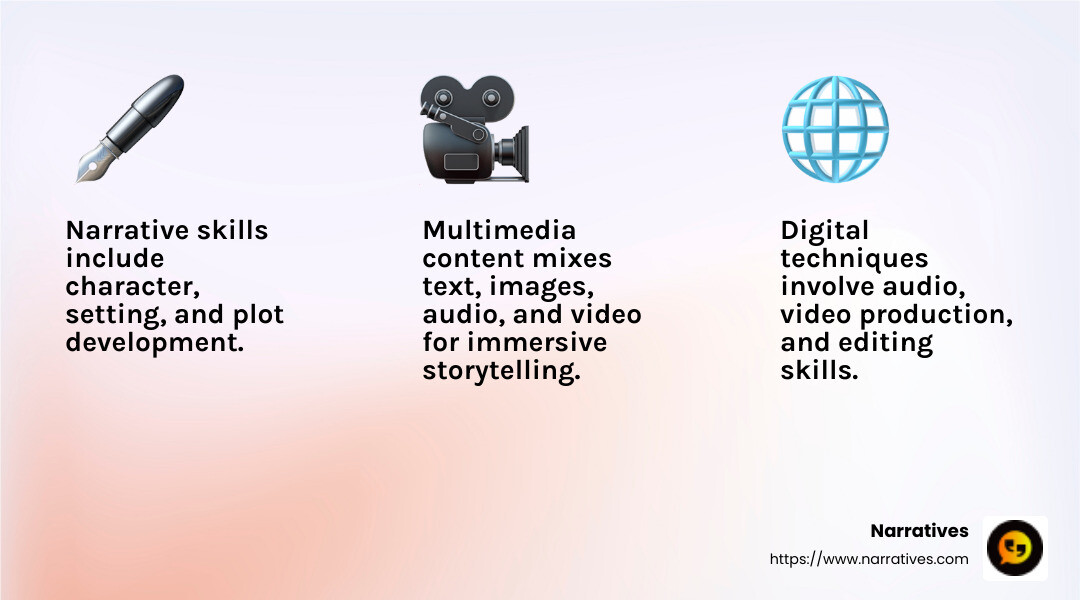
At the heart of every great story is a compelling narrative. Digital storytelling courses teach you how to craft these narratives. You'll learn to identify key elements like character, setting, and plot. These courses often include exercises in scripting and storyboarding, helping you map out your story before jumping into production.
Example: Professor Christopher Byrne, who teaches digital media at Cornell, emphasizes the importance of narrative structure in his courses. He guides students through writing and producing narratives that resonate with audiences.
Digital Techniques
Once the narrative is in place, digital techniques bring it to life. This includes audio recording, video production, and editing. Courses often cover a range of tools, from basic audio editing software to advanced video production platforms.
Case Study: The Digital Storytelling course by Lori Landay takes students through preproduction, production, and postproduction. Students learn to use various tools and techniques, regardless of their expertise level, to create polished digital stories.
Multimedia Content
Multimedia content is what sets digital storytelling apart from traditional storytelling. It combines text, images, audio, and video to create a richer, more immersive experience. This approach not only improves the story but also captures the audience's attention more effectively.
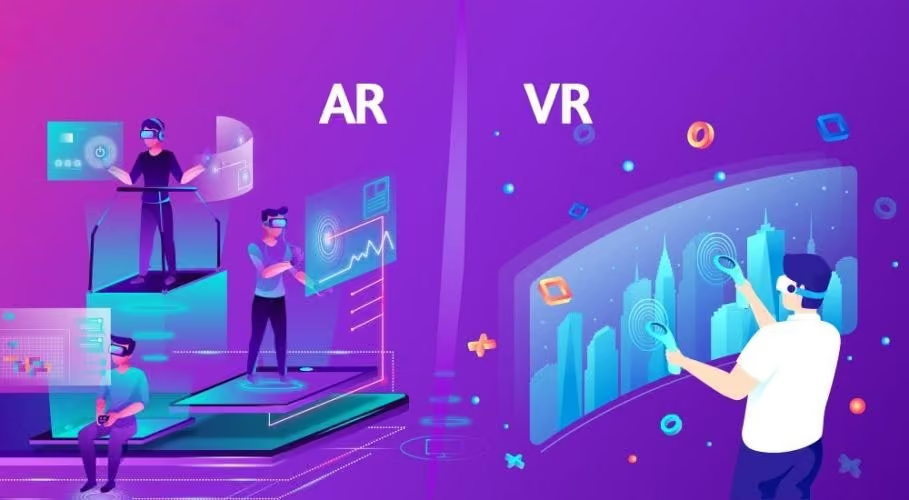
Did You Know? According to Deloitte Insights, digital reality technologies like augmented and virtual reality are changing storytelling by making it more immersive and interactive.
Digital storytelling is more than just a way to share information. It's a method to connect with audiences on a deeper level, using narrative skills, digital techniques, and multimedia content to create stories that stick. Whether you're a non-profit looking to tell stories that inspire change or an individual aiming to share personal experiences, mastering digital storytelling can amplify your voice in meaningful ways.
Top Digital Storytelling Courses
Finding the right digital storytelling course can be a game-changer for anyone looking to master the art of narrative in the digital age. With a variety of online courses, free options, and certificate programs available, there's something for everyone, whether you're a beginner or a seasoned storyteller.
Online Courses
Online courses offer flexibility and accessibility, making them a popular choice for busy individuals and organizations. Platforms like Coursera and edX host a range of digital storytelling courses from prestigious universities. For instance, the Powerful Tools for Teaching and Learning: Digital Storytelling course by the University of Houston is well-regarded for its comprehensive approach to digital storytelling.
These courses often include video lectures, interactive assignments, and peer reviews. They allow learners to progress at their own pace, fitting into their schedules seamlessly.
Free Courses
If budget constraints are a concern, free courses are an excellent way to dip your toes into digital storytelling. Many institutions and online platforms offer free introductory courses that cover the basics of storytelling, digital tools, and multimedia integration.
For example, StoryCenter offers free webinars that explore the fundamentals of digital storytelling, providing a gateway to further exploration of image, sound, and digital media.
Certificate Programs
For those looking to gain a recognized qualification, certificate programs are a solid choice. These programs are more in-depth and structured, often requiring the completion of several courses. The professional graduate certificate in digital storytelling, for instance, requires four 4-credit courses and can be completed online.
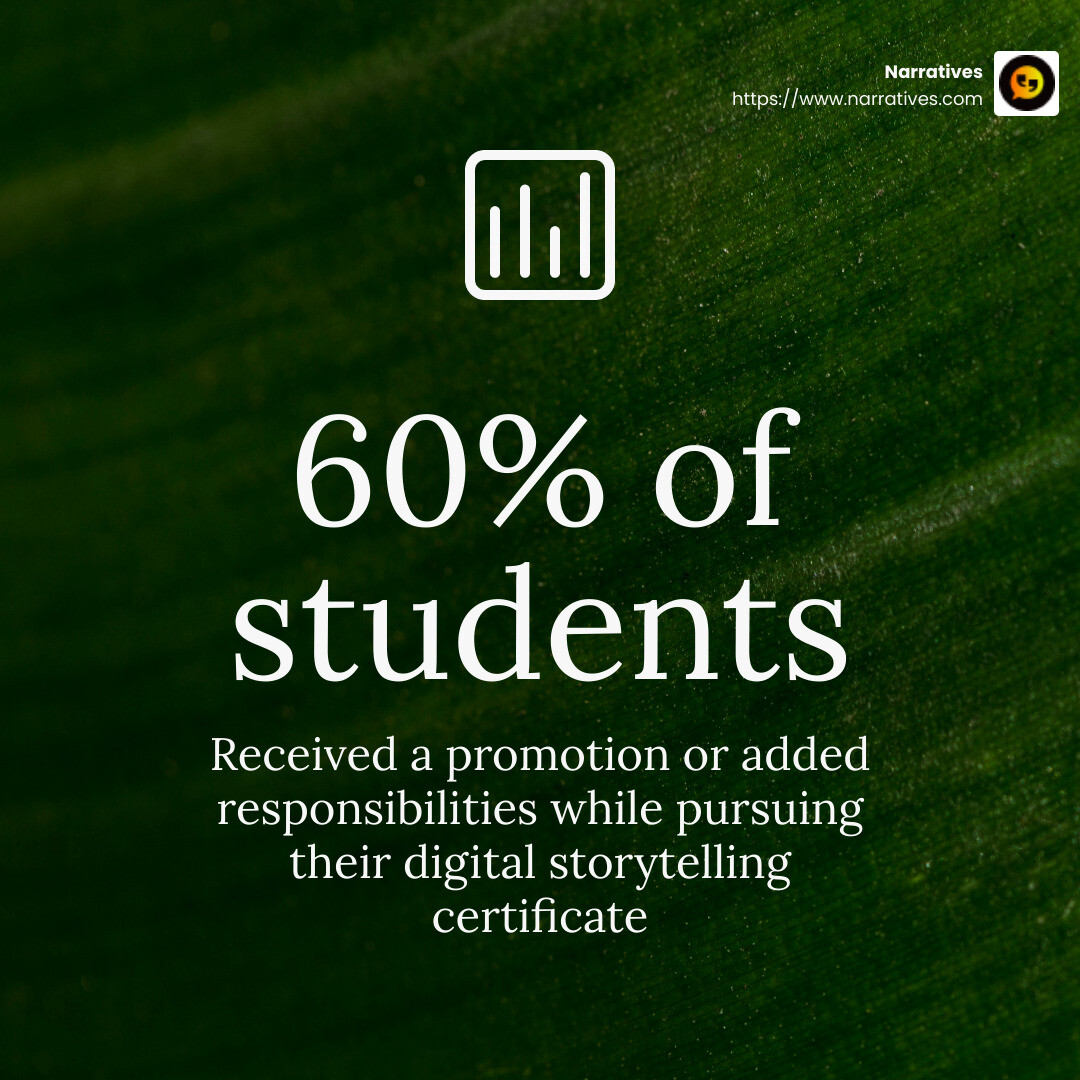
These programs not only equip you with the necessary skills but also provide credentials that can improve your professional profile. According to research, 60% of students pursuing such certificates received a promotion or added responsibilities during their studies, highlighting the career benefits of these programs.
Whether you're interested in online courses, free resources, or formal certificate programs, there's a digital storytelling course out there that can help you hone your skills and tell your stories more effectively.
Benefits of Digital Storytelling for Non-Profits
Digital storytelling is more than just a buzzword—it's a powerful tool for non-profits to connect and engage with their audience. Let's explore how it can make a difference.
Emotional Resonance
Stories have the power to move us. In the non-profit world, creating an emotional connection can inspire action and drive support. Digital storytelling amplifies this by combining visuals, sound, and narrative to create immersive experiences. According to research, stories that evoke emotions can change neural pathways in our brains, making them memorable and impactful.
Amplifying Underrepresented Voices
Non-profits often focus on communities that are overlooked or unheard. Digital storytelling provides a platform for these voices, allowing them to share their experiences and perspectives. This not only raises awareness but also fosters empathy and understanding. Janet Ferguson, an educator, emphasizes the importance of revisiting certain stories to open up understanding of ourselves and the world around us.
Showcasing Impact Stories
Impact stories are a critical component of any non-profit's communication strategy. They showcase the difference an organization is making in real people's lives. Digital storytelling enables non-profits to craft compelling narratives that highlight their achievements and challenges. By using multimedia elements, these stories become more engaging and relatable.
Incorporating digital storytelling into your non-profit's strategy can help you reach new audiences, strengthen your message, and ultimately, drive positive change. Whether it's through emotional resonance, giving a voice to the underrepresented, or showcasing your impact, the benefits are clear.
How to Choose the Right Digital Storytelling Course
Choosing the right digital storytelling course can be a game-changer for your non-profit. Here’s what to look for:
Course Elements
A great course should cover the essentials: narrative skills, digital tools, and multimedia content creation. Look for courses that offer hands-on practice with storytelling software and platforms. For instance, the StoryCenter offers workshops that guide you in crafting personal stories, which can be particularly useful for non-profits aiming to connect with their audience on a deeper level.
Writing Skills
Good storytelling starts with good writing. Courses that focus on developing writing skills can help you create compelling scripts and narratives. Christopher Byrne from Cornell teaches courses like “Writing and Producing the Narrative in Digital Media,” which emphasizes the importance of crafting a strong narrative. A course that includes scriptwriting and personal essay workshops can improve your ability to tell impactful stories.
Distribution Techniques
Once your story is ready, getting it out there is key. Look for courses that teach you how to effectively share your stories across different platforms. Understanding how to use social media, email campaigns, and websites to distribute your content can expand your reach. Courses like "The Strategy of Content Marketing" from the University of California, Davis, can provide insights into creating a distribution plan that aligns with your storytelling goals.
By focusing on these elements—course content, writing skills, and distribution techniques—you can select a course that not only teaches you how to tell a story but also how to share it effectively with the world. This will ensure your non-profit’s message is heard loud and clear, making a real impact.
Frequently Asked Questions about Digital Storytelling Courses
What is a digital storytelling course?
A digital storytelling course is designed to teach you how to create engaging stories using digital media. These courses combine traditional narrative techniques with modern technology, allowing you to craft stories using text, images, audio, and video. The goal is to help you tell stories that resonate emotionally and connect with audiences on digital platforms. Courses may cover everything from writing and editing to using digital tools like Canva or video editing software.
How can digital storytelling benefit non-profits?
Digital storytelling is a powerful tool for non-profits. It allows them to share impact stories that highlight their mission and the communities they serve. By using emotional resonance, non-profits can bring underrepresented voices to the forefront, fostering empathy and understanding among audiences. This storytelling approach helps non-profits attract both old and new supporters, increasing engagement and support for their causes. For instance, Narratives works with non-profits to create content that showcases community stories and encourages public support.
Are there free digital storytelling courses available?
Yes, there are free digital storytelling courses available. Many organizations and educational platforms offer introductory courses at no cost. For example, StoryCenter provides free webinars that introduce participants to the basics of digital storytelling, offering a gateway to further learning. These free resources can be a great starting point for non-profits looking to explore storytelling without a financial commitment. Additionally, platforms like Coursera may offer free access to certain courses, allowing you to learn at your own pace.
Conclusion
Storytelling has evolved into a dynamic blend of narrative and technology, bringing forth new opportunities for non-profits and purpose-driven organizations. Narratives stands at the forefront of this change, championing community-driven storytelling that emphasizes social impact.
Our mission is to lift underrepresented voices through high-quality multimedia content, helping non-profits share their stories in a way that inspires action and builds trust. By focusing on emotional resonance, we assist organizations in highlighting their impact stories, showcasing the real-life changes they bring to communities.
Community-driven storytelling is not just about telling a story; it's about creating a connection. It's about making sure every voice is heard and every story is seen. This approach not only increases visibility for non-profits but also fosters a deeper understanding and empathy among audiences.
Social impact storytelling is powerful. It transforms passive viewers into active participants, encouraging them to support causes that matter. By partnering with Narratives, non-profits can leverage our expertise to craft compelling stories that resonate with their audience, ultimately driving engagement and support.
Find how we can help your organization harness the power of digital storytelling for greater impact. Explore our services and learn more about how we can assist you in sharing your unique story with the world.

.avif)