Digital Storytelling Unveiled: Techniques to Transform Your Content

Digital storytelling techniques hold the key to changing your content into engaging narratives that captivate and inspire. These techniques allow storytellers to merge creativity with technology, crafting multimedia-rich experiences that resonate emotionally with audiences.
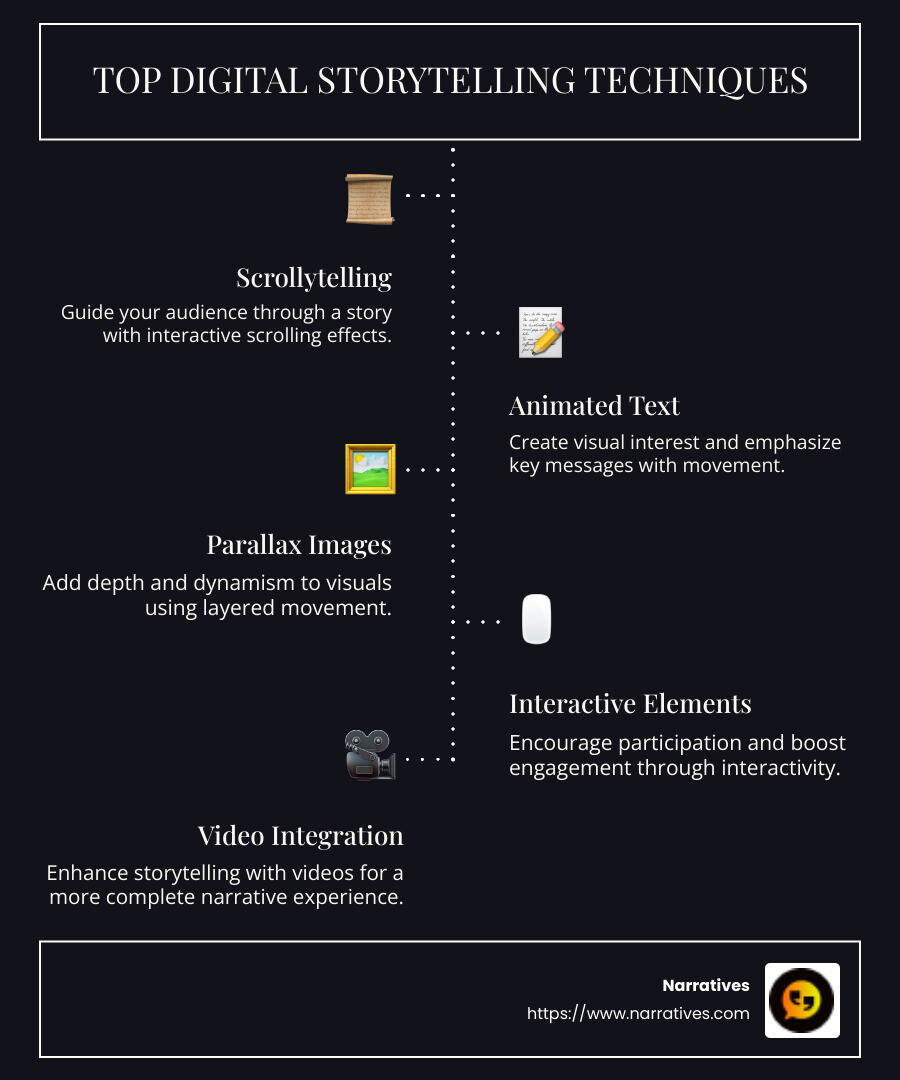
- Scrollytelling: Use scrolling effects to guide your audience through a story.
- Animated Text: Create visual interest and emphasize key messages.
- Parallax Images: Add depth and dynamism to your visuals.
- Interactive Elements: Encourage participation and engagement.
- Video Integration: Improve storytelling with moving pictures.
In today's digital age, simply conveying information is not enough. Effective digital storytelling lifts content creation by connecting with audiences on a deeper level, amplifying your mission and vision. Whether you're a non-profit aiming to drive social change or a brand aspiring to highlight your advocacy, mastering these techniques can make your content more impactful and memorable.
The landscape of storytelling has expanded beyond traditional boundaries, and embracing this digital evolution is crucial for anyone looking to make their story stand out. Your content becomes a journey that weaves together visuals, text, and sound, inviting your audience to become a part of your narrative.
Find more about Digital storytelling techniques:
Understanding Digital Storytelling
Digital storytelling is the art of weaving narratives using digital tools and techniques. It has transformed the way stories are told, allowing for a more immersive and interactive experience.
Definition
At its core, digital storytelling involves using computer-based tools to tell stories. Unlike traditional storytelling, digital storytelling leverages multimedia elements—like video, audio, and interactive graphics—to create rich, engaging narratives. This approach breaks free from static, linear formats, offering a dynamic way to connect with audiences.
Multimedia Tools
Digital storytelling thrives on the use of various multimedia tools. These tools enable storytellers to craft experiences that are not just seen, but felt. Here are some key tools:
- Video: Provides a visual and auditory experience that can convey emotions and stories more vividly than text alone.
- Audio: Adds depth to stories through music, voiceovers, and sound effects, enhancing the emotional impact.
- Animations: Bring stories to life with movement, making them more engaging and easier to understand.
- Interactive Elements: Allow audiences to interact with the story, providing a personalized experience.
Narrative Techniques
To effectively tell a digital story, certain narrative techniques are essential:
- Point of View: Determines who is telling the story and from what perspective. It shapes how the audience perceives and connects with the narrative.
- Emotional Content: Engages the audience by tapping into emotions, making the story memorable and impactful.
- Pacing: Involves the rhythm of the story. Good pacing keeps the audience engaged, guiding them through the narrative without overwhelming them.
- Personal Perspectives: Incorporating personal stories or viewpoints can make the narrative more relatable and authentic.
Digital storytelling is not just about the tools and techniques; it's about creating an experience that resonates with the audience. By combining multimedia tools with effective narrative techniques, you can craft stories that not only inform but also inspire and connect on a deeper level.
Essential Digital Storytelling Techniques
Point of View
The point of view in digital storytelling is the lens through which your audience experiences the story. It defines the storyteller's perspective and sets the tone for the entire narrative. Whether it's a first-person account that pulls viewers into a personal journey or a third-person perspective that offers a broader overview, the point of view shapes how the story unfolds and how it's perceived by the audience.
Emotional Content
Emotions are the heart of any compelling story. Effective digital storytelling taps into the audience's emotions, making the narrative not just heard, but felt. This emotional connection is crucial for engaging viewers and ensuring the story leaves a lasting impact. By weaving in universal themes—like love, loss, or triumph—you can make your story resonate with diverse audiences, inspiring empathy and action.
Multimedia Elements
In digital storytelling, multimedia elements are not just add-ons—they are central to the experience. These elements include:
- Video: Captures the essence of the story visually, allowing for a more dynamic presentation.
- Audio: Improves the narrative with music, sound effects, and voiceovers that add depth and emotion.
- Animations: Bring static images to life, making complex ideas more accessible and engaging.
- Interactive Graphics: Offer an immersive experience by letting the audience explore and interact with the story at their own pace.

Pacing
Pacing is the rhythm of your story. It controls how the narrative unfolds and keeps the audience engaged. A well-paced story captures attention from the start, builds momentum, and delivers a satisfying conclusion without overwhelming the viewer. Adjusting the pace around key moments can heighten suspense, emphasize important points, and maintain interest throughout the story.
Personal Perspectives
Incorporating personal perspectives makes stories relatable and authentic. By sharing individual experiences or viewpoints, storytellers can create a connection with the audience, making the narrative more impactful. Starting with a personal story can draw viewers in, while gradually expanding to broader themes ensures that the message resonates on a larger scale.
Digital storytelling is a powerful way to connect with audiences. By focusing on these essential techniques—point of view, emotional content, multimedia elements, pacing, and personal perspectives—you can transform your content into a rich, engaging experience that informs, inspires, and connects.
Strategies for Effective Digital Storytelling
Creating a captivating digital story involves more than just telling a tale. It requires strategic planning and execution to truly connect with your audience. Here are some key strategies to ensure your digital storytelling hits the mark:
Universal Concepts
To truly engage your audience, tap into universal concepts. These are themes or emotions that everyone can relate to, such as love, fear, or perseverance. Highlighting these universal experiences can evoke empathy and inspire action. For instance, if your story is about overcoming adversity, emphasize the shared human experience of facing challenges and the triumph of overcoming them.
Audience Engagement
Understanding your audience is crucial. You need to tailor your story to their interests and values. This involves knowing who they are, what they care about, and how they prefer to consume content. Use analytics to gain insights into audience behavior and preferences. Engaging your audience means making them feel like part of the story, encouraging them to share their own experiences or providing interactive elements that allow them to engage directly with the content.
Format Selection
Choosing the right format for your digital story is essential. Whether it's a video, podcast, interactive webpage, or social media post, the format should align with your message and audience preferences. For example, a short, visually engaging video might be perfect for platforms like TikTok or Instagram, while a detailed blog post could work better for LinkedIn. The format you choose will affect how your audience perceives and interacts with your story.
Storytelling Platforms
The platform you choose to deliver your story can greatly impact its reach and effectiveness. Each platform has its own strengths and audience nuances. For instance, using Instagram can be ideal for visually driven stories, while YouTube might be better for longer video content. Social media platforms can also be used to extend the reach of your story by encouraging user-generated content, which adds authenticity and broadens engagement.
By implementing these strategies—focusing on universal concepts, enhancing audience engagement, selecting the appropriate format, and utilizing the right storytelling platforms—you can craft digital stories that not only capture attention but also resonate deeply with your audience. This approach ensures that your storytelling efforts are both impactful and memorable, paving the way for meaningful connections and engagement.
Practical Applications and Benefits
Digital storytelling isn't just a tool; it's a transformative approach across various sectors. Let's explore how digital storytelling techniques are applied in education, business marketing, nonprofits, personal branding, and healthcare.
Education
In classrooms, digital storytelling turns complex topics into engaging narratives. Teachers use digital tools to simplify lessons, making learning interactive and fun. For students, creating their own digital stories fosters creativity and critical thinking. This method not only improves engagement but also makes challenging subjects more accessible.
- Benefits:
- Increases student motivation
- Encourages creative expression
- Simplifies complex topics
Business Marketing
Businesses leverage storytelling to forge emotional connections with customers. By sharing compelling brand stories and customer success tales, companies differentiate themselves in crowded markets. This approach not only attracts new customers but also builds lasting loyalty.
- Benefits:
- Creates emotional bonds with customers
- Differentiates the brand
- Improves customer retention
Nonprofits and Advocacy
Nonprofits use digital storytelling to humanize their causes and inspire action. By sharing personal stories of those they help, they connect with donors on a deeper level. This strategy builds trust and encourages donations or activism.
- Benefits:
- Inspires empathy and support
- Humanizes social causes
- Builds credibility
Personal Branding
Influencers and content creators share personal stories to build a loyal following. Through platforms like social media, they create relatable narratives that resonate with their audience, strengthening their personal brand.
- Benefits:
- Establishes a personal connection
- Builds authenticity and trust
- Strengthens personal branding
Healthcare
In healthcare, storytelling educates patients about medical conditions and treatments. Personal stories from patients and caregivers offer support and foster understanding within communities.
- Benefits:
- Educates and informs patients
- Builds supportive communities
- Fosters understanding and empathy
In each of these sectors, digital storytelling serves as a powerful tool to connect, educate, and inspire. By embracing this approach, organizations and individuals can create meaningful and impactful narratives that resonate with their audience.
Frequently Asked Questions about Digital Storytelling Techniques
What are digital storytelling techniques?
Digital storytelling techniques are creative methods used to craft compelling stories using digital tools. These techniques combine text, visuals, audio, and interactive elements to engage audiences in unique ways. Some popular techniques include:
Scrollytelling: This involves using scroll-triggered animations and effects to create an interactive narrative experience. It guides the audience through the story at their own pace, enhancing engagement.
Animation: Animations bring stories to life by adding movement to text and images. This technique grabs attention and highlights key points effectively.
Interactivity: By incorporating clickable elements and hover effects, stories become more immersive. This lets audiences explore content actively, increasing their involvement.
Audio: Sound can add depth to a story by creating ambiance or providing feedback during interactions. It can also include voiceovers to personalize the narrative.
These techniques help storytellers break free from traditional formats, allowing them to create dynamic and engaging digital experiences.
How can digital storytelling benefit nonprofits?
Nonprofits can greatly benefit from digital storytelling by using it to connect with their audience on an emotional level. Here's how:
Inspiring Empathy: By sharing personal stories of those they help, nonprofits can evoke empathy and compassion in their audience. This emotional connection encourages donations and support.
Humanizing Causes: Digital storytelling allows nonprofits to put a face to their causes. By highlighting individual stories, they make social issues more relatable and urgent.
Building Trust: Transparently sharing the impact of their work through stories builds credibility and trust with donors and supporters.
For instance, a nonprofit working with underserved communities might use digital storytelling to showcase the transformative impact of their programs, motivating others to get involved or donate.
What are some examples of digital storytelling in education?
In education, digital storytelling is a powerful tool that improves learning by making it more interactive and engaging. Here are some examples:
Interactive Lessons: Teachers use digital storytelling to explain complex topics through animated videos and interactive presentations. This makes learning more accessible and enjoyable for students.
Student-Created Stories: Students create their own digital stories as part of their assignments. This fosters creativity and helps them express their understanding of subjects in a fun and engaging way.
Virtual Field Trips: Digital storytelling can take students on virtual journeys to historical sites or scientific labs, providing immersive educational experiences without leaving the classroom.
These applications not only make learning more engaging but also encourage critical thinking and creativity among students.
Conclusion
Digital storytelling is more than just a way to share information—it's a powerful tool for creating narratives that drive social impact and foster community-driven storytelling. At Narratives, we believe in the transformative power of stories to lift underrepresented voices and inspire meaningful action.
Narratives are at the heart of what we do. By crafting stories that resonate on an emotional level, we help non-profits and purpose-driven organizations highlight their missions and the communities they serve. Our approach focuses on creating high-quality, emotionally resonant content that not only informs but also connects and engages.
Social impact is the ultimate goal of our storytelling efforts. By humanizing the challenges and triumphs of the communities we feature, we aim to inspire empathy and action. Digital storytelling techniques—like scrollytelling, animation, and interactive elements—allow us to weave together compelling narratives that motivate audiences to support causes and make a difference.
Community-driven storytelling is about giving a voice to those who are often unheard. By partnering with non-profits, we ensure that stories are told by the people who live them. This authenticity builds trust and fosters a sense of belonging among audiences, encouraging them to become advocates and supporters of the causes they care about.
By leveraging digital storytelling, we help non-profits amplify their impact and reach wider audiences. Our commitment to elevating stories that matter is what sets us apart. If you're interested in learning more about how we can help your organization share its story, visit Narratives to explore our services and see how we can collaborate to drive change.

.avif)