Documentary Storytelling: Techniques to Make Your Story Stand Out
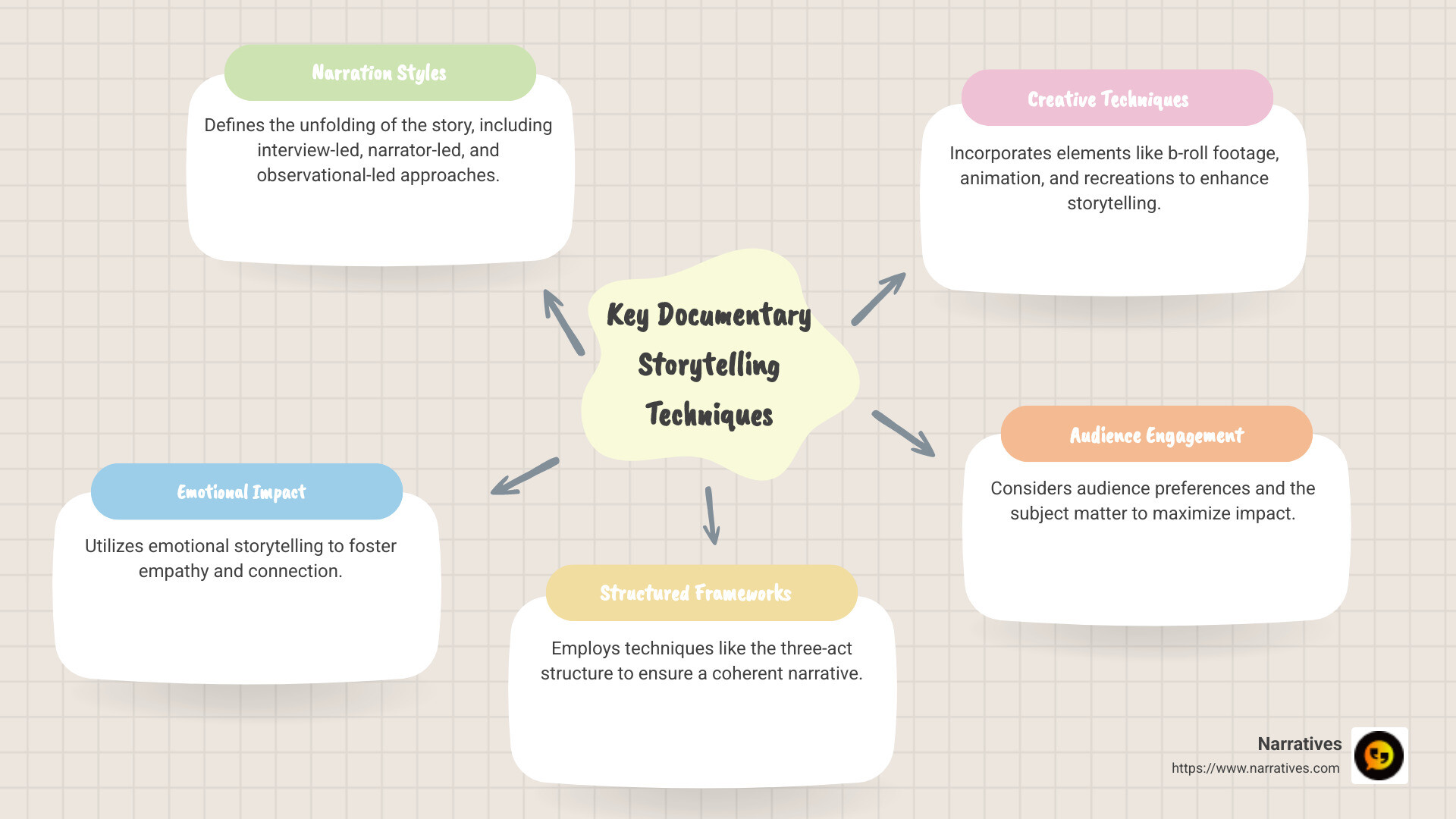
Documentary storytelling techniques are the bedrock of creating engaging and impactful stories. At their core, these techniques provide a foundation for filmmakers to craft narratives that resonate emotionally with audiences. There are several key techniques that can improve your documentary storytelling:
- Narration Styles: These define how your story will unfold—whether through interview-led insights, narrative voiceovers, presenter-guided storytelling, or observational, "fly-on-the-wall" footage.
- Emotional Impact: Through thoughtful storytelling, documentaries can evoke deep emotional responses, fostering empathy and connection with viewers.
- Structured Frameworks: Employ techniques like the three-act story structure to guide the narrative, ensuring a coherent and engaging journey.
Understanding the right documentary techniques not only amplifies the story but also directs the emotional journey of the audience, making it more memorable and transformative.
These elements help organizations—especially non-profits—translate their impactful missions into compelling content that stirs emotions and prompts action. Whether you're aiming to raise awareness, drive change, or increase donations, mastering these techniques is key to sharing powerful narratives.
Learn more about Documentary storytelling techniques:
Understanding Documentary Storytelling Techniques
Documentary storytelling is an art, and at its heart are narration styles and documentary modes that shape the way stories are told. To craft a compelling documentary, understanding these elements is crucial.
Narration Styles
Narration styles are the backbone of your documentary. They determine how the story is presented to the audience. Here are the key styles:
Interview-led: This style relies on interviews with subjects to drive the narrative. It's effective for capturing personal insights and emotions directly from those involved.
Narrator-led: A narrator guides the audience through the story, providing context and background information. This style gives filmmakers more control over the narrative flow.
Presenter-led: A presenter acts as the guide, interacting with subjects and environments, often adding a personal touch to the storytelling.
Observational: Also known as "fly-on-the-wall," this style immerses viewers in real-life situations without interference, allowing them to form their own interpretations.
Documentary Modes
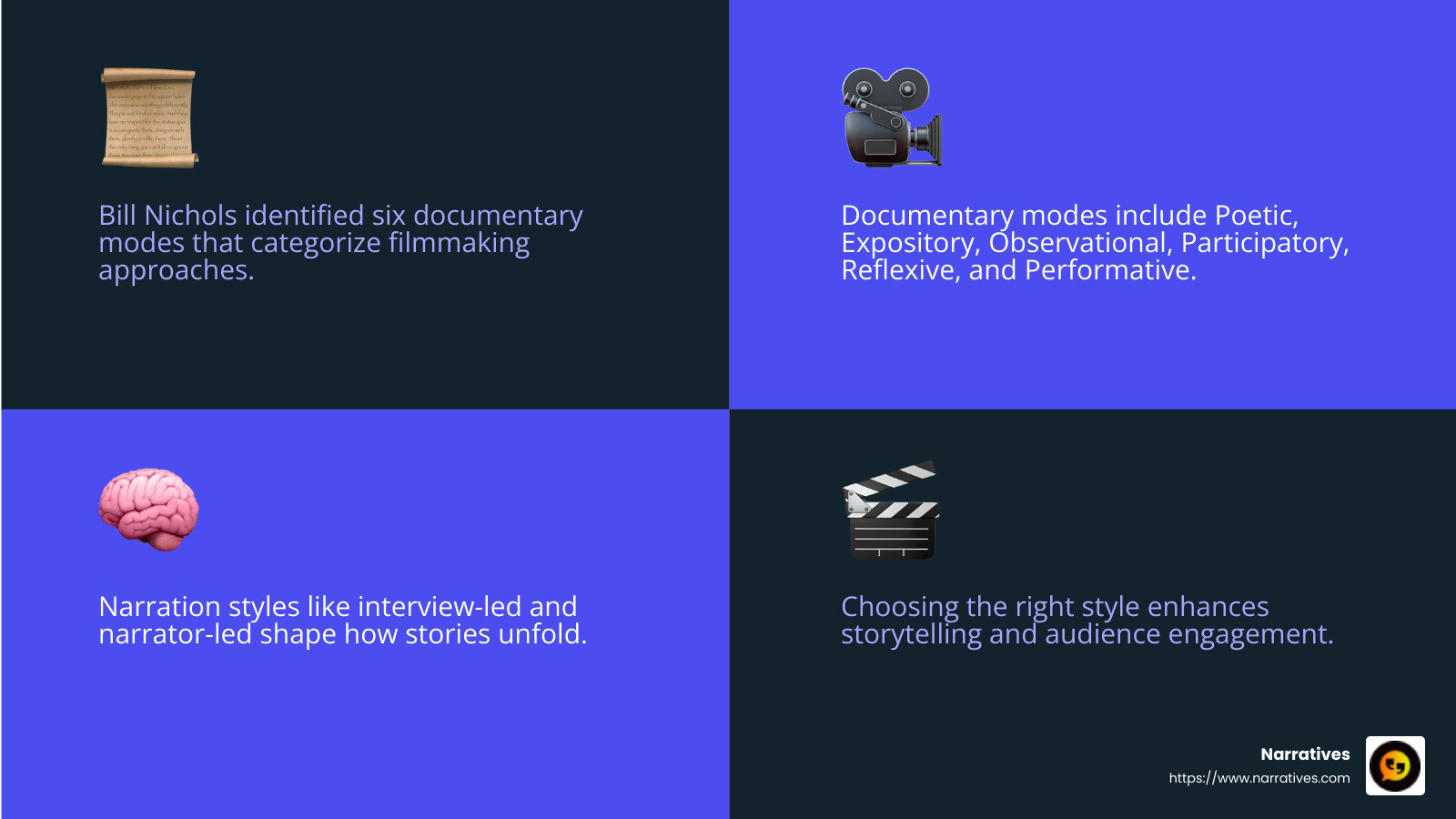
Film theorist Bill Nichols identified six documentary modes that help categorize and understand different approaches to documentary filmmaking. While there are many ways to categorize documentaries, Nichols' modes are foundational:
- Poetic: Focuses on mood and tone rather than straightforward storytelling.
- Expository: Uses a narrator to directly address the audience, often to convey facts and arguments.
- Observational: Captures events as they happen, with minimal interference.
- Participatory: The filmmaker interacts with the subjects, becoming part of the narrative.
- Reflexive: Examines the documentary process itself, questioning its authenticity.
- Performative: Emphasizes the filmmaker's personal engagement with the subject.
Bill Nichols' Influence
Bill Nichols' classification has been instrumental in helping filmmakers choose the right mode and style for their documentaries. His work provides a framework to understand how different styles can impact the storytelling process and the audience's experience.
Incorporating the right documentary storytelling techniques can make your film more engaging and impactful. Whether you're capturing raw emotion or providing a detailed analysis, understanding these techniques will help you create a narrative that stands out.
By leveraging these insights, filmmakers can craft documentaries that not only inform but also move audiences, creating lasting impressions.
Key Documentary Narration Styles
When crafting a documentary, the narration style you choose plays a pivotal role in shaping the audience's experience. Each style offers unique advantages and challenges, and understanding these can help you select the best approach for your story.
Interview-led Documentaries
In an interview-led documentary, the narrative is built around interviews with key subjects. This style is excellent for capturing personal insights and emotions directly from those involved in the story.
Pros: You get to hear directly from the people who matter, which can be very powerful. It allows for a deep dive into personal experiences and emotions.
Cons: The effectiveness depends heavily on the interviewee's ability to express themselves. If they're monotone or unexpressive, the film might lack energy.
Case Study: The documentary Virunga uses this style effectively. By combining interview-led and observational techniques, it creates a powerful narrative about protecting the last mountain gorillas.
Narrator-led Documentaries
This style features a narrator who guides the audience through the documentary, providing essential context and background information. It's a common choice for educational or historical documentaries.
Pros: Offers more control over the narrative flow. You can craft the script to ensure the audience understands the key points.
Cons: There's a risk of overwhelming the audience with too many facts or heavy-handed narration, which can detract from the visuals.
Example: The documentary March of the Penguins uses a narrator to bring the story of emperor penguins to life, combining stunning visuals with informative narration.
Presenter-led Documentaries
In this style, a presenter (often the filmmaker or a journalist) acts as the central guide, interacting with subjects and environments. This can add a personal touch to the story.
Pros: Provides a focused narrative and allows the presenter to guide the audience through complex topics.
Cons: The presenter can sometimes overshadow the story itself. Additionally, hiring a skilled presenter can increase production costs.
Example: The Social Dilemma features presenters who explain the impact of social media on mental health, blending expert interviews with presenter-led segments.
Observational-led Documentaries
Also known as "fly-on-the-wall," this style immerses the audience in real-life events without interference. The camera captures events as they unfold, allowing viewers to draw their own conclusions.
Pros: Offers an authentic and objective perspective, letting the audience experience events as they happen.
Cons: It's time-consuming and relies on capturing compelling events naturally, which can be unpredictable.
Example: Man on Wire uses observational techniques to document Philippe Petit's daring tightrope walk between the Twin Towers, offering an unfiltered look at his incredible feat.
Each of these documentary storytelling techniques has its place and can be combined to create a richer narrative. As a filmmaker, your choice of narration style should align with the story you want to tell and the emotions you wish to evoke in your audience.
Choosing the Right Style for Your Documentary
Selecting the right documentary storytelling techniques is crucial for effectively conveying your story. To make the best choice, consider three main factors: your audience, the subject matter, and the emotional engagement you want to achieve.
Audience Consideration
Understanding your audience is the first step in choosing a narration style. Different audiences resonate with different storytelling techniques. For instance, a documentary aimed at third graders might benefit from a narrator-led approach, using simple language and engaging visuals to explain complex topics. In contrast, a college audience might appreciate a more observational-led style, allowing them to draw their own conclusions.
- Example: The documentary Blackfish successfully targeted a broad audience by combining interview-led and narrator-led styles to address the serious issue of captive orcas.
Subject Matter
The subject of your documentary greatly influences the narration style. Topics like war might require a more serious, narrator-led style to provide context and historical background, while lighter subjects like adopting puppies might benefit from an interview-led approach, capturing heartfelt stories from pet owners.
- Example: March of the Penguins uses a narrator to beautifully convey the harsh realities and wonders of the emperor penguins' journey, perfectly matching the majestic subject matter.
Emotional Engagement
Decide how you want your audience to feel. Do you want them to feel empathy, curiosity, or outrage? The emotional tone you set will guide your choice of storytelling technique. Interview-led documentaries can evoke strong personal connections, while observational-led styles can immerse viewers in the raw emotion of unfolding events.
- Example: Virunga combines interview-led and observational-led styles to create an emotionally powerful narrative about the fight to save mountain gorillas, engaging the audience on a deep emotional level.
By considering these factors, you can choose a style that not only tells your story effectively but also resonates with your audience, aligns with your subject, and evokes the desired emotional response. This thoughtful approach will ensure your documentary stands out and leaves a lasting impact.
Enhancing Your Documentary with Creative Techniques
Once you've chosen the right style for your documentary, the next step is to improve your story with creative techniques. These tools can add depth, texture, and a unique flair to your narrative. Let's explore some of the most effective techniques: b-roll footage, observational filming, animation, and recreations.
B-Roll Footage
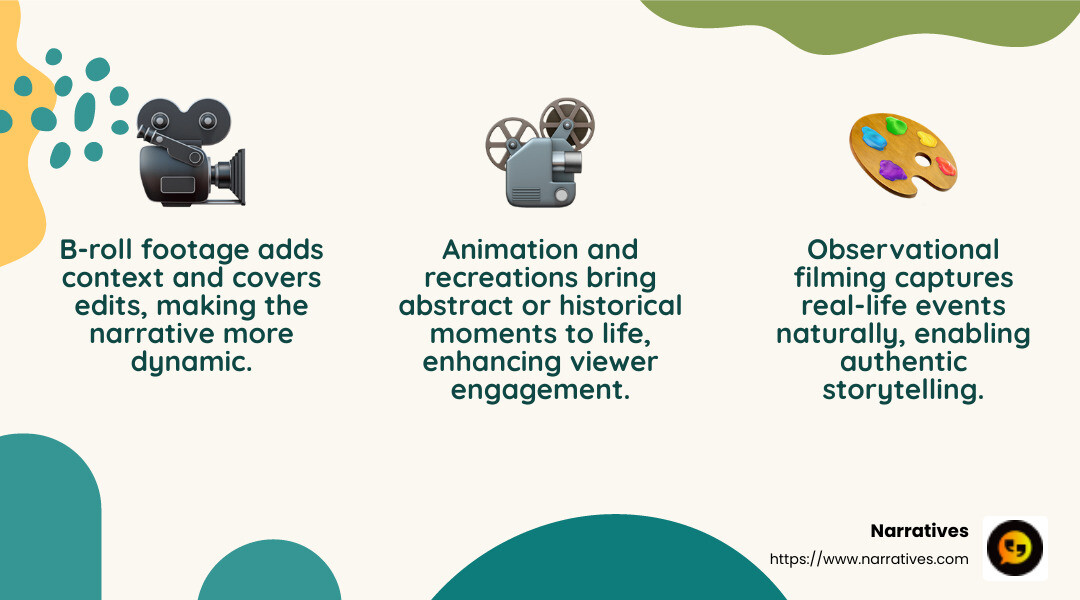
B-roll footage is the supplementary video that complements your main footage. It's essential for adding context, covering edits, and keeping the visual narrative engaging. Imagine a documentary about an artist's life. B-roll could include shots of the artist's studio, close-ups of their hands at work, or the busy city streets that inspire them.
- Tip: Always shoot more b-roll than you think you'll need. This gives you flexibility during editing to create a dynamic and visually appealing story.
Observational Filming
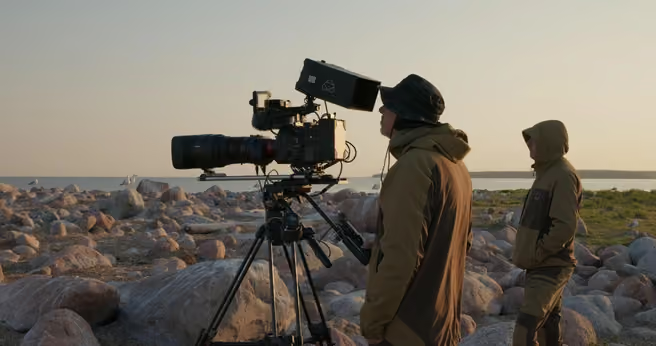
Observational filming is all about capturing reality as it happens, without interference. This technique allows viewers to become "flies on the wall," witnessing events unfold naturally. It's perfect for documentaries where authenticity and real-time emotion are crucial.
- Example: In a project filming at a barber shop, the camera was set up to simply capture the interactions and stories of customers, creating a rich mix of narratives without any narration or interviews.
Animation
Animation can be a powerful tool, especially when dealing with sensitive subjects or when visualizing abstract concepts. It offers creative freedom to tell parts of the story that might be difficult to capture on camera.
- Example: The documentary Operation Homecoming - Writing the Wartime Experience used drawings to depict soldiers' experiences, providing a poignant and imaginative layer to the narrative.
Recreations
Recreations involve re-staging events to illustrate key moments or fill gaps in the narrative. Done well, they can bring historical events to life or visualize stories that lack visual documentation.
- Example: Man on Wire expertly used recreations to depict Philippe Petit's daring tightrope walk between the Twin Towers, blending them seamlessly with actual footage and interviews.
By incorporating these techniques, you can craft a documentary that's not only informative but also visually captivating. Whether it's the subtlety of observational filming or the vivid imagery of animation, each technique can improve your story, making it memorable and impactful.
Frequently Asked Questions about Documentary Storytelling Techniques
What is the best narration style for documentaries?
The "best" narration style for a documentary depends on the story you want to tell and the emotions you wish to evoke. Interview-led documentaries are great for capturing personal stories and direct insights from subjects. If you want more control over the narrative, a narrator-led style might be better, as it allows you to guide the audience through the story with a crafted script. Presenter-led documentaries can offer a strong focal point, often blending personal insight with expert analysis. Lastly, observational-led documentaries provide an unfiltered look at events, letting the audience interpret the raw footage themselves.
Can you mix narration styles in a documentary?
Absolutely! In fact, many successful documentaries blend different narration styles to enrich their storytelling. For instance, the British documentary Virunga combines interview-led and observational-led styles to create a compelling narrative about conservation efforts. Mixing styles can add layers to your story, offer diverse perspectives, and keep the audience engaged.
How do you choose a documentary narration style?
Choosing the right narration style involves considering your audience, subject matter, and desired emotional impact. Think about who will watch your documentary and where it will be shown. A documentary for third graders might use a different style than one for adults. Consider the subject matter too; a documentary about war might benefit from a more serious tone, while a film about adopting puppies could be more lighthearted. The key is to create a narrative that resonates with your audience and keeps them engaged without overwhelming them.
Conclusion
In documentary storytelling techniques, the power of a well-told story cannot be overstated. At Narratives, we specialize in partnering with non-profits and purpose-driven organizations to lift underrepresented voices. Our focus is on creating emotionally resonant video and multimedia content that not only tells a story but also inspires action and builds trust.
By collaborating with non-profits, we help shine a light on their impactful work, amplifying their message to create social change. Our goal is to make their stories stand out, using creative techniques like b-roll footage, observational filming, and interviews to engage audiences deeply.
Social impact is at the heart of everything we do. We believe that storytelling is a powerful tool for change, and through our partnerships, we aim to increase visibility for causes that truly matter. By sharing these stories, we help build a community that is informed, empathetic, and ready to take action.
For more about how we can help your organization share its story, learn more about our services. Together, we can create content that not only informs but also transforms.

.avif)