Storytelling Success: Transforming Nonprofit Missions into Compelling Narratives

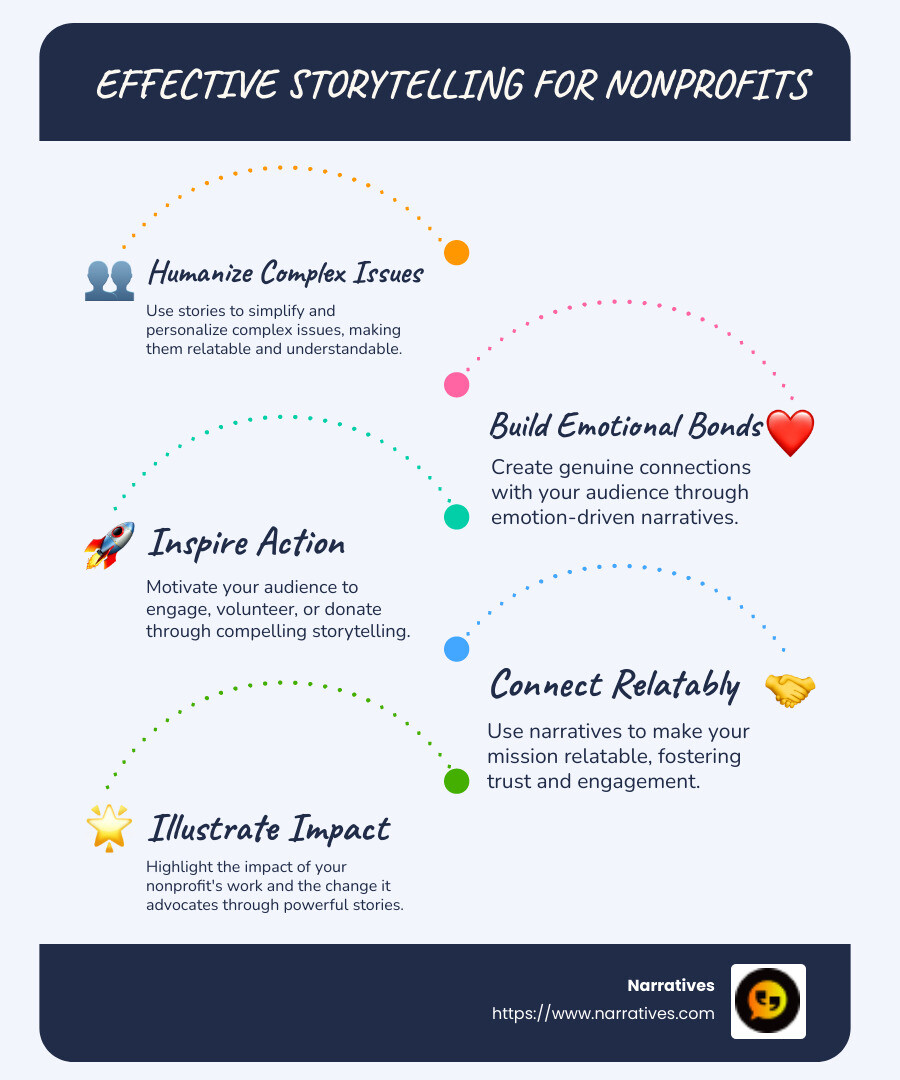
Effective storytelling for nonprofits is a game-changer, especially when the mission is about tackling some of the world's toughest problems. This storytelling can:
- Humanize complex issues.
- Build genuine emotional bonds.
- Inspire action, like donations or volunteer work.
Nonprofits need compelling stories to connect with supporters who can amplify their cause. Storytelling isn't just about sharing facts; it's about evoking emotions and creating connections. This makes supporters more likely to engage, volunteer, or donate.
The success of nonprofit missions often hinges on this ability to connect emotionally with an audience. Instead of dry statistics or desperate funding pleas, stories can breathe life into the mission. Whether it's through heartwarming anecdotes or transformative journeys of single characters, the power of a good story should never be underestimated. This approach not only highlights the impact of the nonprofit’s work but also illustrates the change being advocated.
A well-crafted narrative can make your mission relatable, encourage trust, and motivate your audience to become part of your journey. Storytelling is not just important—it's essential for driving awareness and attracting support.
Easy effective storytelling for nonprofits word list:
The Power of Effective Storytelling for Nonprofits
Effective storytelling for nonprofits is a powerful tool that can transform how organizations connect with their audiences. When done right, storytelling can humanize the work, build lasting connections, and inspire action.
Humanizes Work
Stories have the unique ability to put a human face on complex issues. Instead of overwhelming audiences with statistics, sharing a personal story about someone who benefited from your nonprofit's work can make the mission more relatable and real.
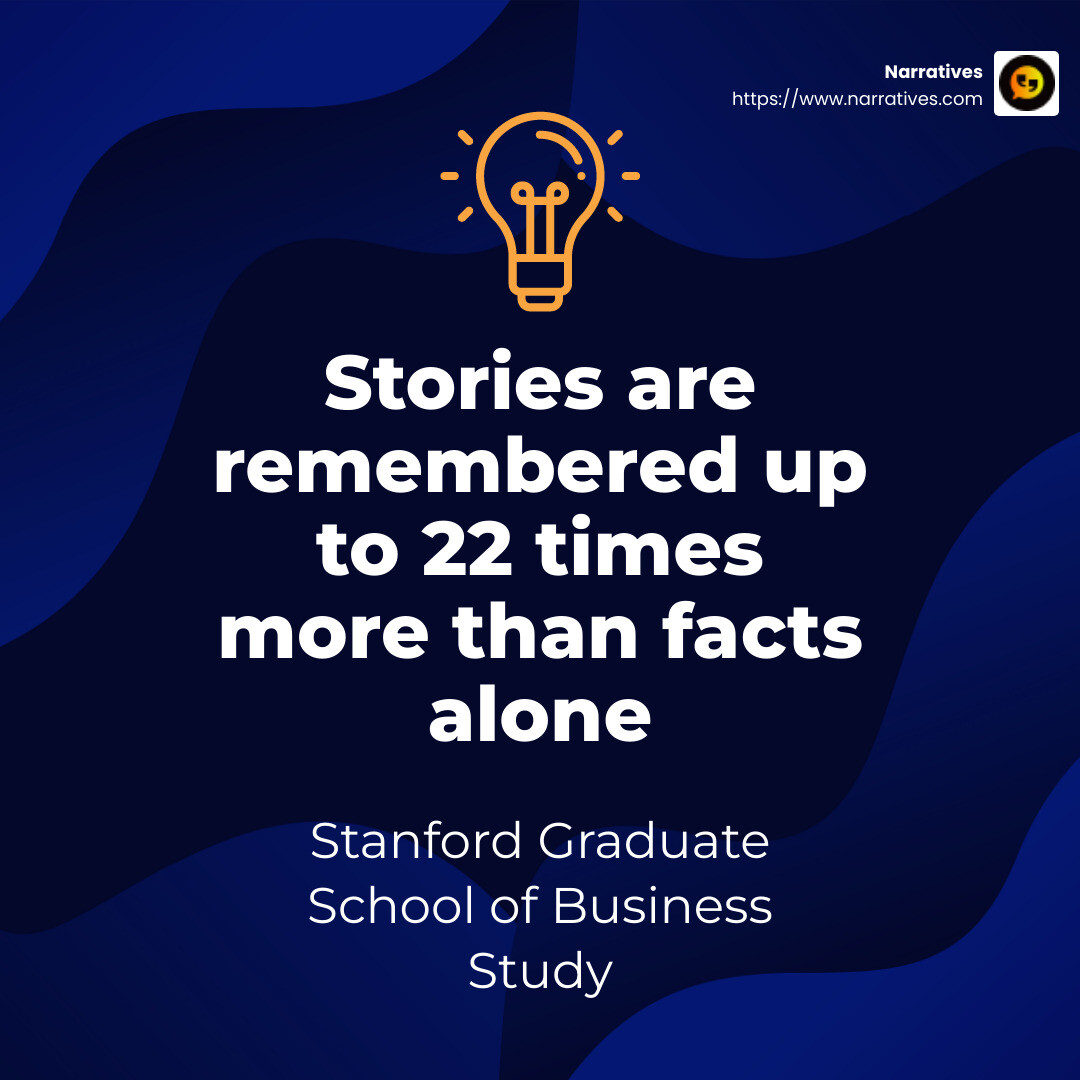
For example, a story about a local family overcoming job loss with the help of a food pantry can resonate more deeply than abstract data. According to a study by the Stanford Graduate School of Business, stories are remembered up to 22 times more than facts alone.
Builds Connections
Creating an emotional connection is key to engaging supporters. When people emotionally connect with your cause, they are more likely to support it. It's not just about what your organization does; it’s about why it matters.
By sharing stories that highlight the struggles and triumphs of real people, nonprofits can foster a sense of empathy and understanding. This connection makes it easier for supporters to see themselves as part of the solution.
Inspires Action
At the core, every nonprofit aims to inspire action—whether it's through donations, volunteering, or advocacy. Storytelling is a powerful motivator for action. When people feel emotionally involved, they are more likely to take the next step.
A compelling story can turn passive readers into active participants. It's about creating that emotional spark that drives individuals to want to make a difference. For example, by showcasing how donor contributions directly impact lives, nonprofits can increase donor trust and encourage continued support.
In conclusion, effective storytelling is not just a communication tool—it's a strategic asset that can lift a nonprofit’s mission, engage its audience, and inspire meaningful action.
Key Elements of Compelling Nonprofit Narratives
To craft compelling narratives, nonprofits must pay attention to three key elements: story structure, emotional depth, and visual content. These elements work together to make stories engaging and memorable, ultimately driving more support for the cause.
Story Structure
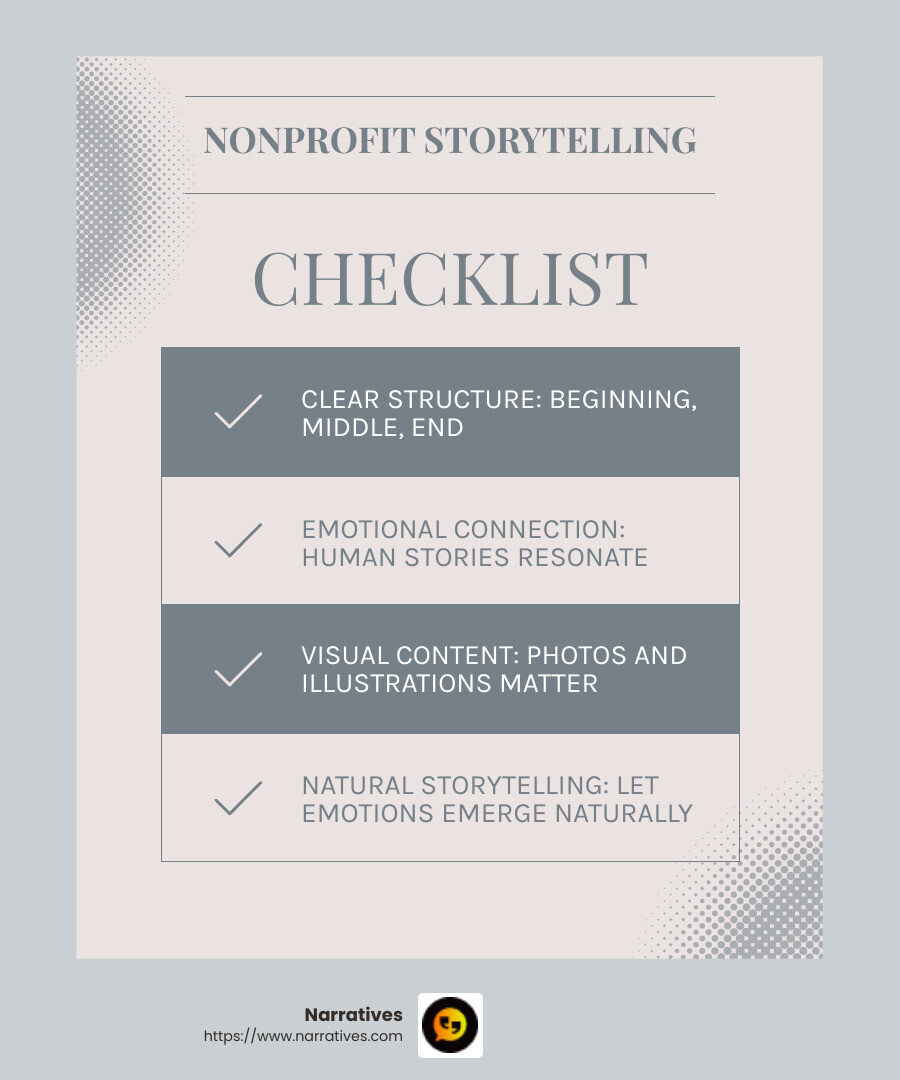
A well-structured story is the backbone of effective storytelling for nonprofits. Think of it as the framework that holds everything together. Every story should have a clear beginning, middle, and end. This classic structure helps guide the audience through the narrative, making it easy to follow and understand.
Beginning: Start by setting the scene. Introduce the main characters and the challenge they face. This sets the stage for what’s to come and grabs the audience's attention.
Middle: This is where you dig into the journey. Highlight the struggles, the turning points, and the actions taken by your nonprofit to address the issue. This part should build tension and keep the audience engaged.
End: Conclude with a resolution. Show the outcome of the journey and how your nonprofit made a difference. This is where you can tie back to your organization's mission and invite the audience to take action.
Emotional Depth
Emotional depth is what makes a story resonate. It’s about connecting on a human level and evoking emotions that compel the audience to care. But remember, use emotion carefully. Instead of overt emotional appeals, let the story naturally evoke feelings.
CAFOD’s campaign for drought-stricken Uganda is a great example. By starting with an illustrated first-person story and transitioning to real photographs, they demonstrated the reality of the situation. This approach creates a powerful emotional connection without being overly blunt.
Visual Content
Visual content is a critical component of compelling storytelling. In today’s digital age, people are drawn to visuals, whether it's photos, videos, or graphics. Visuals can make stories more immersive and help convey complex information quickly.
For instance, Habitat for Humanity's annual report uses videos and images to tell the stories of those they’ve helped. This not only keeps the audience engaged but also illustrates the impact of their work in a tangible way.
Visuals also play a crucial role in the United Nations Development Programme's story "A Tidal Wave of Plastic." By focusing on photos and interactive infographics, they effectively communicate the scale of plastic pollution and inspire action.
Incorporating these elements into your nonprofit's storytelling can transform your narratives from simple stories to powerful tools for engagement and change. Up next, we'll explore strategies for enhancing nonprofit storytelling to ensure your stories reach and resonate with your audience.
Strategies for Enhancing Nonprofit Storytelling
Enhancing nonprofit storytelling involves using data and imagery, maintaining transparency, and fostering audience engagement. These strategies can help transform your organization's mission into a compelling narrative that resonates with your audience.
Data and Imagery
Data and imagery are powerful allies in storytelling. They add credibility and make stories more engaging. When combined, they create a narrative that's both informative and emotional.
Use Data to Support Stories: Data gives weight to your stories. For example, CAFOD's campaign for Uganda used data to highlight the impact of donations. After sharing an emotional story, they backed it up with statistics showing the difference each donation level could make. This one-two punch of emotion and evidence can persuade more effectively.
Incorporate Visuals: Imagery, like photos and videos, can make abstract concepts tangible. The United Nations Development Programme's "A Tidal Wave of Plastic" used striking images of plastic pollution to underscore the urgency of the issue. Visuals can communicate complex problems quickly and can be more memorable than text alone.
Transparency
Transparency builds trust. When donors see where their money goes and the impact it has, they're more likely to continue supporting your cause.
Share Behind-the-Scenes Content: Let your audience see the inner workings of your nonprofit. Show them the challenges and triumphs of your team. This openness can humanize your organization and deepen connections.
Be Honest About Challenges: Not every story has a happy ending, and that's okay. Being upfront about the difficulties your nonprofit faces can foster empathy and motivate support. Honest storytelling can also demonstrate resilience and dedication to your mission.
Audience Engagement
Engaging your audience transforms passive listeners into active participants. This connection can inspire action and foster a community around your cause.
Interactive Narratives: Encourage your audience to interact with your stories. Habitat for Humanity's annual report used videos and personal stories to engage readers. Such interactive elements can make your audience feel part of the story.
Invite Audience Participation: Ask for feedback, share user-generated content, or create opportunities for your audience to share their own stories. This not only enriches your narrative but also strengthens the sense of community.
These strategies can improve your nonprofit's storytelling, making it more impactful and memorable. Up next, we'll dive into best practices for effective storytelling for nonprofits, including how to create interactive narratives and engage donors.
Effective Storytelling for Nonprofits: Best Practices
Creating effective storytelling for nonprofits requires more than just a good narrative. It involves crafting interactive experiences, engaging donors, and highlighting community impact. Let's explore these best practices.
Interactive Narratives
Interactive storytelling transforms passive audiences into active participants. It invites them to be part of the narrative, making the story more memorable and impactful.
Immersive Experiences: Use tools like videos, quizzes, or interactive maps to draw your audience in. For instance, Habitat for Humanity's report used videos and personal stories to engage readers, making them feel part of the mission.
Real-Time Engagement: Host live Q&A sessions or webinars where audiences can interact with storytellers. This creates a dynamic experience and strengthens the connection between the nonprofit and its supporters.
Donor Engagement
Engaging donors is crucial for sustaining support. Stories that resonate emotionally can inspire donors to contribute more and remain loyal to your cause.
Personalized Communication: Tailor your stories to address the interests and values of different donor segments. A personal touch can make donors feel valued and connected to your mission.
Showcase Impact: Highlight the tangible effects of donations through stories. CAFOD’s campaign, which illustrated the change of illustrated stories into real photographs, underscores the reality and urgency of the cause, compelling donors to act.
Community Impact
Stories that demonstrate the broader impact on the community can inspire action and foster a sense of collective achievement.
Highlight Success Stories: Share narratives that showcase how your nonprofit has made a difference. These stories can motivate others to get involved and support your mission.
Collective Narratives: Encourage community members to share their stories. This not only enriches your narrative but also builds a sense of belonging and shared purpose.
By implementing these best practices, nonprofits can create compelling stories that not only engage their audience but also drive meaningful action. Next, we'll answer some frequently asked questions about nonprofit storytelling, including how it can increase donations and the role of visual content.
Frequently Asked Questions about Nonprofit Storytelling
How can storytelling increase nonprofit donations?
Storytelling has the unique power to evoke emotional resonance. When a story connects emotionally, it can inspire donors to give generously. According to the Stanford Graduate School of Business, stories are remembered up to 22 times more than facts alone. This emotional connection builds donor trust, which is crucial for long-term support. Donors are more likely to contribute when they trust that their donations will make a real difference.
To increase donations through storytelling:
- Share Real-Life Stories: Highlight individuals or communities impacted by your work. For example, a story about a family overcoming food insecurity through your nonprofit’s support can be more impactful than statistics alone.
- Create Emotional Appeals: Use narratives that appeal to the heart, showing the challenges faced and the triumphs achieved with donor support.
What role does visual content play in nonprofit storytelling?
Visual content, like photos and videos, is essential for making stories more engaging and memorable. It helps to illustrate the narrative and bring it to life. As seen in Habitat for Humanity's reports, using videos and personal stories can draw readers in and make them feel part of the mission.
Graphic design also plays a significant role in storytelling. It improves the presentation of information, making complex data more accessible and compelling. For instance, the United Nations Development Programme uses interactive infographics to highlight environmental issues, effectively communicating urgency and hope.
Key points about visual content:
- Improves Engagement: Visuals capture attention and maintain interest, making it easier for audiences to understand and connect with your story.
- Supports Brand Identity: Consistent use of visuals and design elements can strengthen your nonprofit’s brand, as demonstrated by World Vision’s use of their signature color scheme.
How can nonprofits balance stories with data?
Balancing stories with data creates a persuasive narrative that appeals to both the heart and mind. While stories build emotional connections, data provides evidence that backs up claims and showcases the impact of your work.
To achieve this balance:
- Integrate Data Seamlessly: Use data to support your stories, not overshadow them. For example, after an emotional introduction, include statistics that demonstrate the scale of the issue and the positive impact of donations, as done by CAFOD.
- Use Visual Data: Present data visually through infographics or charts. This not only makes the information more digestible but also more persuasive.
By effectively combining storytelling with data, nonprofits can create a compelling narrative that inspires action and builds trust with their audience.
Conclusion
In the field of nonprofit missions, Narratives stands out as a dedicated digital storytelling partner, committed to elevating voices that often go unheard. Our mission is to transform the way nonprofits share their stories, helping them connect emotionally with their audience and inspire meaningful action.
Effective storytelling for nonprofits is not just about sharing facts; it's about humanizing the work, building connections, and fostering trust. At Narratives, we believe that every nonprofit has a powerful story to tell, and our role is to help bring that story to life through high-quality video and multimedia content.
By partnering with us, nonprofits can leverage our expertise to create narratives that not only showcase their impact but also engage and mobilize their supporters. Our approach focuses on creating emotionally resonant content that highlights the challenges faced by communities and the positive changes made possible through collective effort.
We understand the importance of visual storytelling. Through compelling visuals and strategic design, we ensure that each story is not only seen but felt. This approach not only improves engagement but also strengthens the nonprofit's brand identity, as consistent visual elements reinforce the mission and values of the organization.
Our commitment extends beyond storytelling. We aim to lift underrepresented voices, ensuring that the stories we help tell are authentic and impactful. By focusing on community-driven storytelling, we differentiate ourselves from others in the field, positioning Narratives as a leader in the digital storytelling space for purpose-driven organizations.
To learn more about how we can help your nonprofit share its story and make a greater impact, visit our service page. Together, let's transform missions into compelling narratives that inspire change and lift voices.


.avif)