Crafting Compelling Narratives: A Guide to Engaging Storytelling Techniques

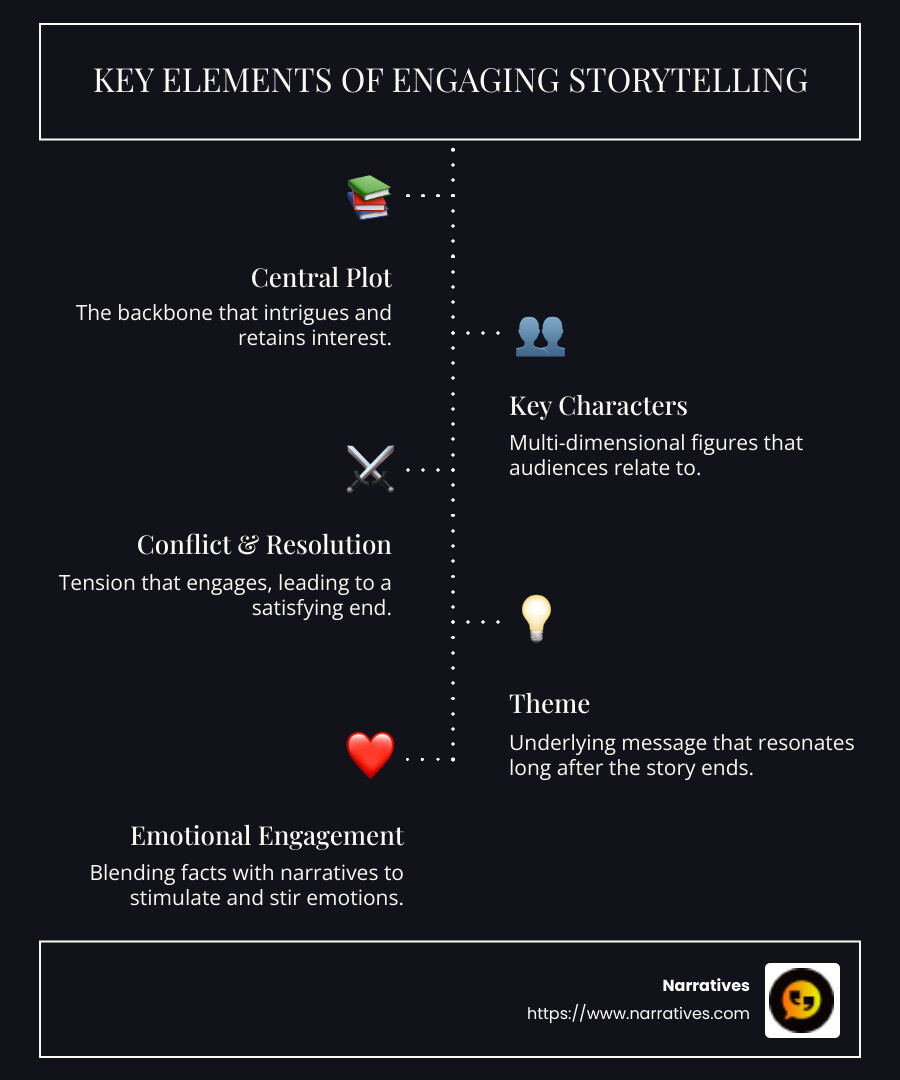 Engaging storytelling techniques are the secret ingredient to creating content that captivates and connects. Whether you're turning your nonprofit’s mission into a meaningful video or crafting compelling narratives for social change, understanding storytelling techniques is vital. Here’s a quick answer to what makes these techniques impactful:
- Central Plot: The story’s backbone that intrigues and retains interest.
- Key Characters: Multi-dimensional figures that audiences relate to and care about.
- Conflict and Resolution: The tension that keeps people engaged, leading to a satisfying end.
- Theme: The underlying message that resonates long after the story ends.
Mere statistics fall flat, while stories have the power to persuade. Professionals know how to blend facts with narratives, stimulating minds and stirring emotions. Just as TED talks demonstrate the power of a well-told tale, nonprofits can transform data into a relatable journey.
As Rand Fishkin would advocate, keep it simple and heartfelt. There’s a space where storytelling meets strategy, creating narratives that multiply impact and drive real change.
Understanding Engaging Storytelling Techniques
Engaging storytelling techniques can transform a simple story into an unforgettable experience. Let's explore some core techniques that help in crafting compelling narratives.
The Hero's Journey
The Hero's Journey is a timeless narrative arc that takes the protagonist on a transformative trip. This structure is about growth and self-discovery. It starts with a call to adventure, followed by trials, and ends with a heroic return.
Think of stories like The Lord of the Rings or Harry Potter. These narratives capture our imagination because they echo universal themes of resilience and triumph over adversity. By using the Hero's Journey, storytellers can create emotional roller-coasters that deeply resonate with audiences.
Personal Story
Starting with a personal story can instantly connect the audience to the narrative. Sharing personal experiences invites authenticity and relatability, making the audience feel a part of the journey.
Consider a fundraising campaign where the storyteller shares their personal connection to the cause. This approach not only humanizes the narrative but also fosters a stronger emotional connection. People are more likely to engage when they see the storyteller's genuine passion and vulnerability.
Audience Engagement
Keeping your audience engaged is crucial. Here are a few tips:
- Use a Hook: Start with something intriguing to grab attention immediately.
- Create Suspense: Build anticipation and keep the audience guessing.
- Be Concise: Avoid unnecessary details. Get to the point to maintain interest.
A great example is how TED Talks captivate audiences. Speakers often start with a hook, share personal anecdotes, and keep their messages clear and concise. This formula keeps the audience invested from start to finish.
By understanding and implementing these techniques, storytellers can craft narratives that not only capture attention but also foster meaningful connections.
Classic Storytelling Structures
Crafting narratives that captivate audiences often involves using classic storytelling structures. These frameworks help in organizing ideas, building tension, and delivering a memorable message.
Monomyth
The Monomyth, or Hero's Journey, is a universal story structure involving a hero who starts on an trip, faces a crisis, and returns transformed. This framework is perfect for presentations that aim to share newfound wisdom or illustrate the benefits of taking risks.
For example, the journey of Japanese yo-yo champion BLACK shows how passion and perseverance can lead to extraordinary achievements, resonating with audiences worldwide.
Mountain
The Mountain structure builds tension gradually through a series of challenges leading to a climax. Unlike the monomyth, it doesn't always promise a happy ending, making it ideal for stories of overcoming adversity.
Aimee Mullins, an athlete and actress born without fibula bones, uses this structure to tell her inspiring story of triumph over physical challenges.
Nested Loops
Nested Loops involve layering stories within stories to highlight a central message. This technique is effective for demonstrating interconnected ideas or historical developments.
Steven Johnson’s TED talk on innovation showcases how collaboration has driven some of history’s greatest ideas, using nested loops to weave together multiple narratives.
Sparklines
Sparklines contrast the current reality with an ideal world, motivating audiences to strive for change. This method is highly emotional and effective for inspiring action.
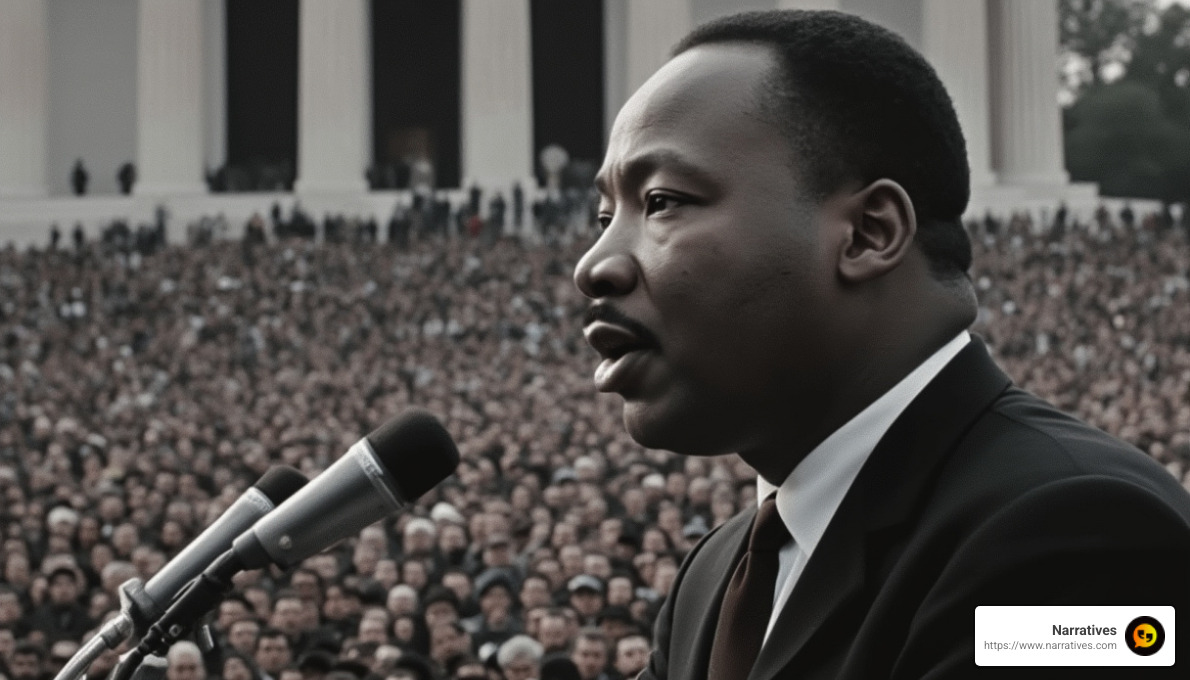
Martin Luther King Jr.’s famous speech exemplifies this by contrasting a segregated society with a vision of racial equality.
In Media Res
In Media Res drops the audience directly into the action, then backtracks to explain how events unfolded. This technique is great for grabbing attention from the start and keeping the audience engaged.
Zak Ebrahim’s talk begins with the shocking revelation of his father’s involvement in the 1993 World Trade Centre bombing, instantly captivating listeners.
Converging Ideas
Converging Ideas show how different thoughts or stories come together to form a single idea or product. This structure is excellent for illustrating collaborations or the birth of movements.
The story of Google’s founders, Larry Page and Sergey Brin, illustrates how their initially challenging partnership led to groundbreaking innovation.
False Start
A False Start begins with a predictable story, then disrupts expectations by starting over. This technique is ideal for illustrating lessons learned from failure and encourages flexibility.
J.K. Rowling’s Harvard speech starts with her university days, only to shift focus to a period she describes as her greatest failure, offering an unexpected and inspirational narrative.
Petal Structure
The Petal Structure organizes multiple stories around a central theme, with each story reinforcing the main message. This approach is perfect for presentations with multiple speakers or stories that seem unrelated.
Simon Sinek’s talks often use this structure, layering stories to strengthen his central ideas.
By employing these classic storytelling structures, you can improve your narrative skills and create compelling presentations that resonate with your audience.
The Role of Storytelling in Non-Profit and Purpose-Driven Organizations
In non-profits and purpose-driven organizations, storytelling isn't just a tool—it's a necessity. It plays a crucial role in building connections, driving social impact, and fostering emotional resonance with audiences.
Social Impact
Storytelling is a powerful catalyst for social change. By sharing compelling narratives, non-profits can highlight issues that need attention and inspire action. Take the example of the Pars Equality Center. Their stories about Persian-speaking immigrants not only raise awareness but also drive support for their initiatives. By sharing these stories, they help communities understand the struggles and triumphs of immigrants, encouraging a more inclusive society.
Community-Driven Storytelling
Community-driven storytelling involves amplifying the voices of those directly impacted by an organization's mission. This approach ensures that the stories are authentic and resonate deeply with the audience. Narratives, a content agency, excels in this by working with underrepresented storytellers. They create content that highlights community stories, making them relatable and impactful.
Emotional Resonance
Emotional resonance is what makes a story stick. It's the emotional connection that compels people to care and act. Research shows that when we hear a story, our brains activate as if we are experiencing the events ourselves. This emotional engagement is crucial for non-profits, as it transforms passive listeners into active supporters. By crafting stories that evoke empathy and understanding, organizations can inspire lasting change.
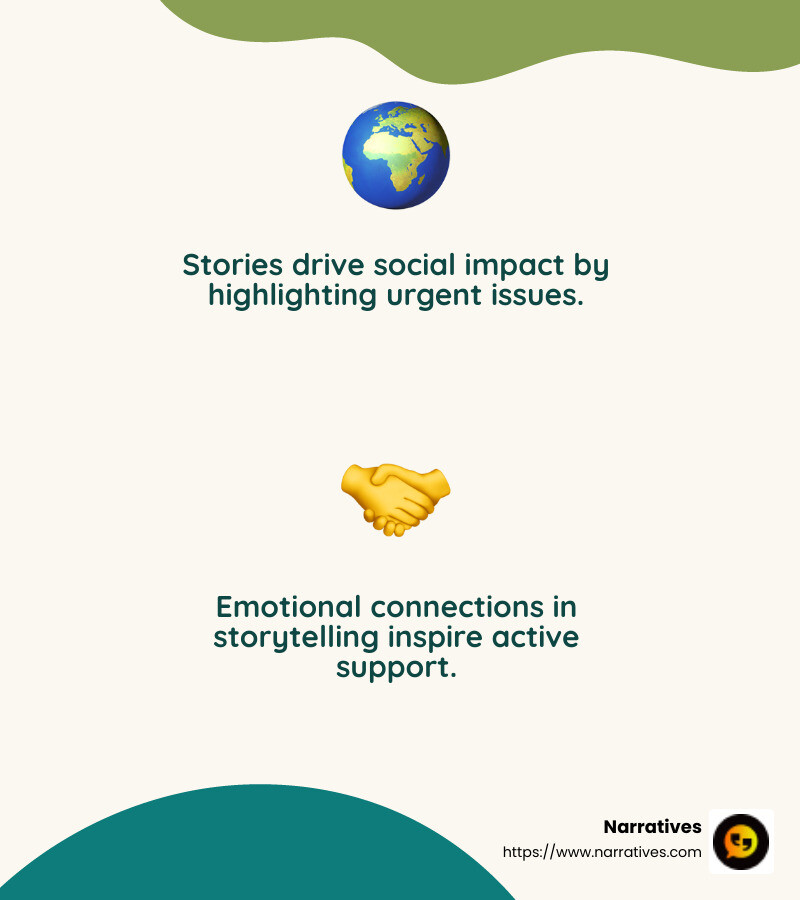
In summary, storytelling in non-profits and purpose-driven organizations is about more than sharing information. It's about creating a narrative that connects, inspires, and drives change. By focusing on social impact, community involvement, and emotional resonance, organizations can harness the full power of storytelling to make a difference.
Tips for Becoming a Better Storyteller
Know Your Audience
Understanding your audience is crucial for effective storytelling. Before crafting your narrative, think about who will be listening. What are their interests, values, and expectations? For example, a comedian at a club might adjust jokes based on audience reactions. You should do the same with your stories. Tailoring your narrative to your audience ensures it resonates and engages them.
Use a Hook
A good story grabs attention right from the start. This is where the "hook" comes in. It's the intriguing opening that piques curiosity and makes people want to hear more. Think of it as the first impression of your story. A powerful hook might be a surprising fact, a provocative question, or a vivid image that draws the audience in.
Be Clear and Concise
Nobody likes a long-winded story that drags on. Keep your narrative clear and to the point. Focus on essential details that move the story forward. Ask yourself what the audience needs to know and trim away the rest. This clarity helps maintain interest and makes your story more impactful.
Get Personal
Sharing personal experiences can make your story more relatable and authentic. When you open up about your own life, you invite your audience to connect on a deeper level. For instance, fundraising for a cause becomes more compelling when you share why it's important to you personally. This vulnerability can foster trust and engagement.
Practice Often
Like any skill, storytelling improves with practice. Don't be afraid to experiment and make mistakes. Each attempt is a chance to learn and refine your technique. Try out different stories and see how they land. Practice helps you find your voice and build confidence in your storytelling abilities.
By knowing your audience, using a strong hook, keeping it concise, getting personal, and practicing regularly, you can become a better storyteller. These tips will help you craft narratives that captivate and inspire.
Frequently Asked Questions about Engaging Storytelling Techniques
What makes a great storyteller?
Enthusiasm, energy, and confidence are key traits of a great storyteller. Imagine a speaker who tells a tale with lively gestures and a dynamic voice. Their enthusiasm is contagious, drawing the audience in. Confidence in delivery makes the story more believable and engaging.
A great storyteller also listens and interacts with the audience. By observing reactions and adjusting the narrative, they create a shared experience. This interaction makes the audience feel part of the story, enhancing engagement.
How can storytelling drive behavior change?
Storytelling is a powerful tool for creating connection and emotional impact. A well-told story can transport listeners, making them feel the emotions and experiences of the characters. This emotional journey can inspire change in beliefs or behaviors.
Consider Maggie Doyne’s book Between the Mountain and the Sky. Her story about starting a community in Nepal moved readers, illustrating the human capacity for good. Such stories can motivate people to take action or support a cause, showing the transformative power of storytelling.
Why is storytelling important for non-profits?
For non-profits, storytelling is crucial for trust-building and increasing visibility. By sharing authentic stories, organizations can connect with their audience on a personal level, fostering trust and credibility.
Storytelling can also be action-inspiring. When people hear compelling stories about a cause, they are more likely to get involved. This could mean donating, volunteering, or spreading the word. Stories make the mission of non-profits relatable and urgent, encouraging people to act.
Engaging storytelling techniques help non-profits build connections, inspire action, and improve their impact.
Conclusion
At Narratives, we understand the power of storytelling, especially for non-profits and purpose-driven organizations. By using engaging storytelling techniques, we help lift underrepresented voices and create content that resonates with audiences. Our approach focuses on crafting narratives that not only inform but also inspire action and build trust.
Building Domain Authority: Our commitment to storytelling excellence is about more than just telling stories. It's about establishing ourselves as a trusted authority in the field of digital storytelling. By focusing on underused storytelling keywords, we aim to create content that ranks well and provides lasting value. This strategy helps us connect with organizations that need our expertise, enhancing our visibility and credibility in the digital space.
Non-Profit Partnerships: Working closely with non-profits, we tailor our storytelling strategies to amplify their impact. Our stories are not just narratives; they are tools for change, designed to highlight the social impact and community-driven missions of the organizations we partner with. By sharing these impactful stories, we help non-profits reach wider audiences and inspire more people to get involved.
In conclusion, Narratives is dedicated to making a difference through storytelling. We strive to be the go-to partner for non-profits looking to share their stories in a meaningful way. By doing so, we not only strengthen our domain authority but also help build a more empathetic and connected world.
For more on how we can help your organization tell its story, learn more about our services.


.avif)