A Comprehensive Guide to Environmental Storytelling Strategies

Environmental storytelling strategies are an essential tool for organizations aiming to connect with their audience on a deeper level while promoting sustainability. At its core, environmental storytelling involves using narratives to educate, engage, and inspire action around environmental issues.
In this guide, you'll find:
- Definition: Understanding the meaning and components of environmental storytelling.
- Purpose: Learning why organizations use storytelling to communicate environmental messages.
- Impact: Exploring how impactful stories can lead to positive change.
Definition: Environmental storytelling is the skillful use of narratives to convey the importance of environmental conservation and awareness. This involves integrating real-world data and insights into compelling stories that resonate with audiences.
Purpose: The main aim is to make complex, data-driven environmental issues more relatable. By weaving facts into engaging stories, organizations can harness the emotional power of storytelling to drive awareness and motivate action.
Impact: Effective environmental storytelling can lead to increased public engagement, influencing perceptions and inspiring both policy change and grassroots action. Stories like those used by Patagonia in their "Don’t Buy This Jacket" campaign or Oxfam Ireland’s interactive reports exemplify how storytelling can improve understanding and drive sustainable behavior.
Learn how to master this art and craft influential narratives that affect change.
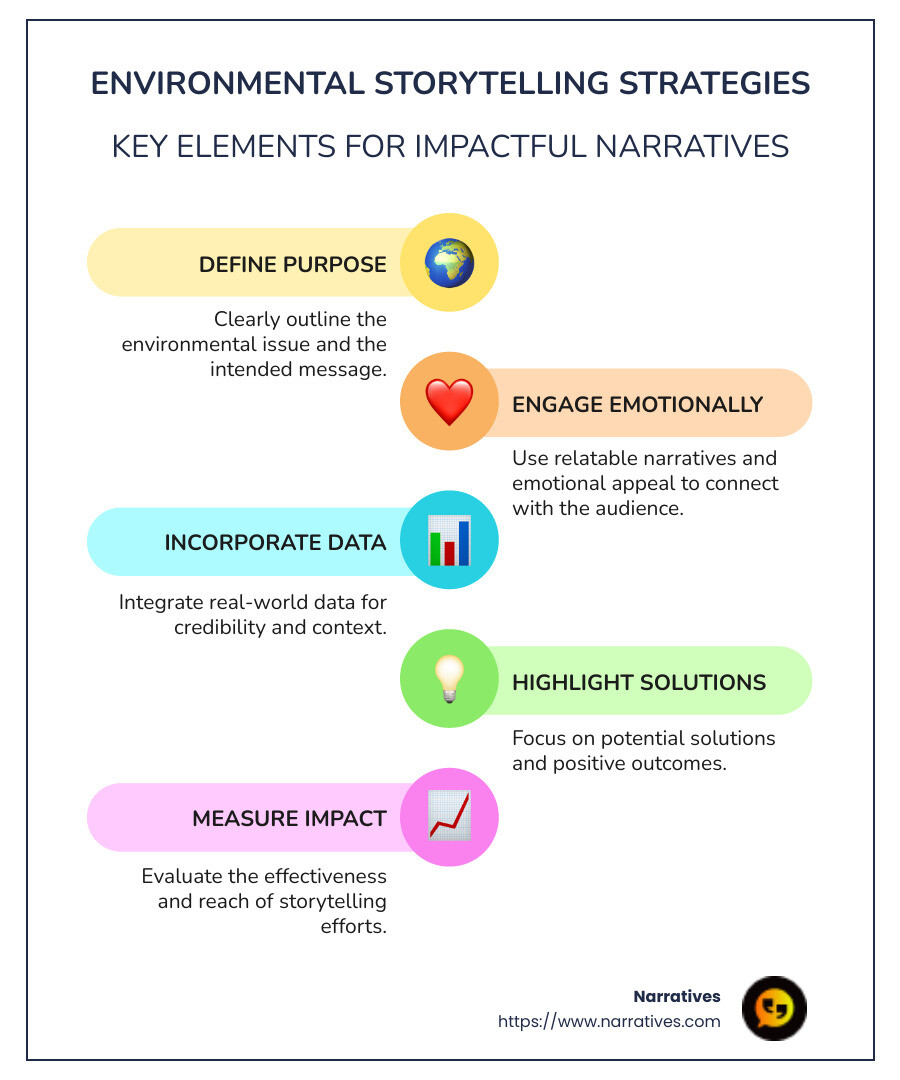
Understanding Environmental Storytelling
Environmental storytelling is more than just sharing facts or figures. It's about weaving those facts into a narrative arc that captivates and educates. Think of it as a journey, where the audience is taken from the problem, through the challenges, to a hopeful resolution. This arc helps make complex environmental issues feel personal and urgent.
Narrative Arc
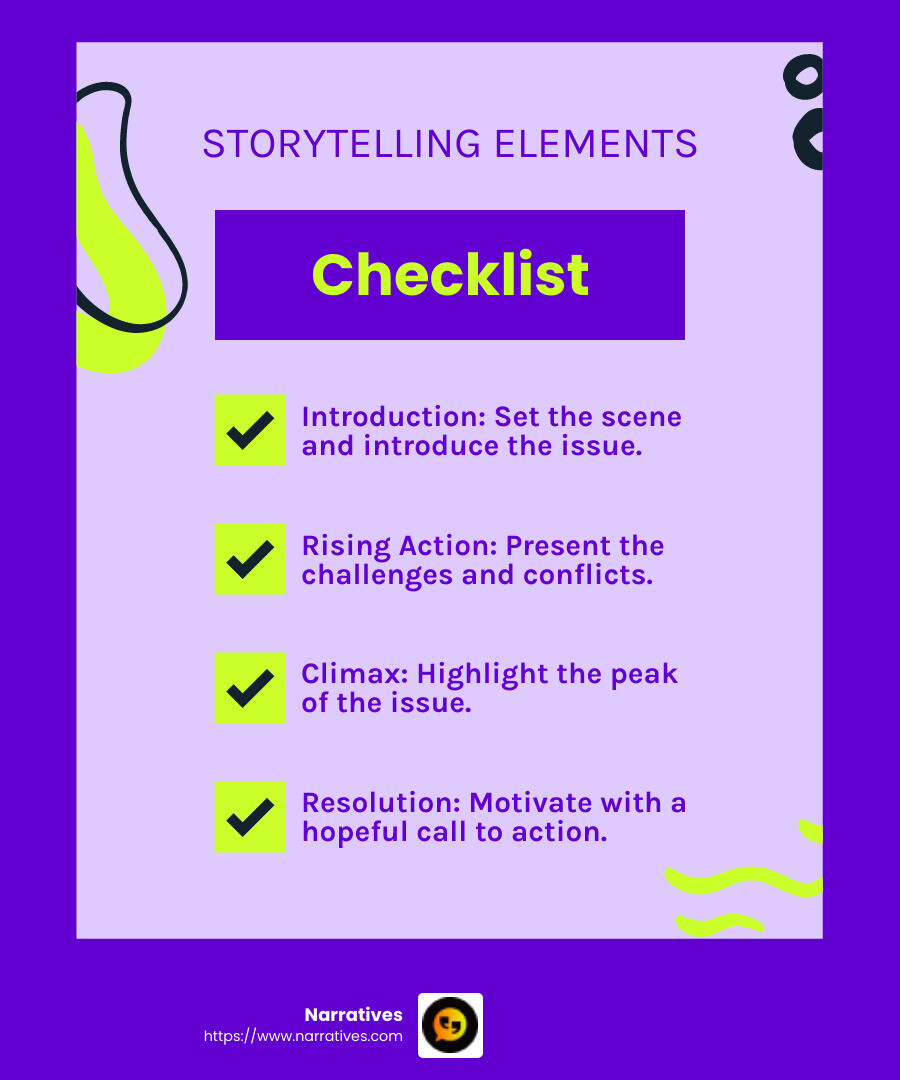
The narrative arc is the backbone of any compelling story. It typically includes:
- Introduction: Set the scene and introduce the environmental issue.
- Rising Action: Present the challenges and conflicts.
- Climax: Reach the peak of the story where the issue is most critical.
- Falling Action: Show the steps being taken to address the issue.
- Resolution: Offer a hopeful or urgent call to action.
By following this structure, storytellers can guide audiences through an emotional and informative journey, making the story both engaging and impactful.
Storytelling
Storytelling is the art of crafting a narrative that connects emotionally with the audience. It’s about using characters, settings, and plots to make the story relatable.
For example, Ami Vitale's work highlights how solution-based narratives can inspire action. By focusing on the positive outcomes of conservation efforts, Vitale's stories offer hope and motivate people to get involved.
Designed Space
Designed space refers to the physical or digital environments where stories unfold. In games, museums, or interactive websites, the space itself tells part of the story.
Consider how video games like "The Last of Us" use their environments to convey narrative elements without words. The abandoned cities and overgrown landscapes tell a story of a world changed by catastrophe. This use of space improves the storytelling by immersing the player in the world and its challenges.
In digital storytelling, designed spaces can be interactive websites or virtual reality experiences. These platforms allow audiences to explore environmental issues in an engaging way, often leading to deeper understanding and empathy.
By understanding the narrative arc, storytelling techniques, and the role of designed spaces, you can create environmental storytelling strategies that resonate and inspire action. This approach not only informs but also empowers audiences to become part of the solution.
Key Environmental Storytelling Strategies
Strategic storytelling is a powerful tool for conveying environmental messages. It involves crafting narratives that align with an organization's goals and values, while also connecting emotionally with the audience. This approach ensures that stories are not just informative but also drive engagement and action.
Strategic Storytelling
Strategic storytelling is about aligning your narrative with broader goals. It's not just about telling any story, but telling the right story that fits your mission. For example, Patagonia's "Don't Buy This Jacket" campaign used strategic storytelling to highlight the environmental impact of consumerism, urging people to buy less and think more about sustainability. This kind of storytelling not only reinforces a brand's commitment to environmental values but also resonates deeply with eco-conscious consumers.
Narrative Analysis
Narrative analysis involves examining stories to understand how they shape perceptions and influence behavior. By analyzing narratives, communicators can identify the elements that make a story effective or ineffective. This analysis helps in crafting stories that are more likely to motivate action.
A quote from Salman Rushdie encapsulates the power of narrative:
"Those who do not have power over the story that dominates their lives...truly are powerless, because they cannot think new thoughts."
This highlights the importance of narrative analysis in empowering audiences by giving them new perspectives.
Story-Based Strategy
Story-based strategy links storytelling with social change. As described in Re:Imagining Change by Patrick Reinsborough and Doyle Canning, this strategy places storytelling at the center of social movements. It uses the power of narrative to challenge dominant stories and offer new, transformative ones.
For example, the Marine Stewardship Council (MSC) uses story-based strategies to promote ocean literacy. Their stories, like "How My Dad Fishes for the Future," combine scientific data with personal narratives to create a compelling and hopeful message. This approach not only informs but also inspires audiences to take action for ocean conservation.
By integrating strategic storytelling, narrative analysis, and story-based strategy, you can develop environmental storytelling strategies that are both impactful and transformative. This multi-faceted approach ensures that your stories not only inform but also inspire change and foster a deeper connection with the audience.
Crafting Compelling Environmental Narratives
Crafting compelling environmental narratives involves more than just telling a story. It requires a thoughtful approach to solution-based narratives, narrative power analysis, and framing. These elements help create stories that resonate with audiences and drive meaningful action.
Solution-Based Narratives
Solution-based narratives focus on showcasing successful solutions to environmental challenges. These stories provide hope and inspire action by highlighting positive outcomes and the steps taken to achieve them.
Ami Vitale, a renowned photographer and storyteller, emphasizes the power of solution-based storytelling. She believes that when people see successful examples of environmental conservation, they are more likely to engage and support similar efforts. Her work with Vital Impacts aims to bring more of these hopeful stories to the forefront, encouraging audiences to believe in the possibility of positive change.
Narrative Power Analysis
Narrative power analysis is a tool used to understand the influence of stories. It examines how narratives shape perceptions and drive behavior. By analyzing the power dynamics within stories, communicators can craft narratives that empower audiences and challenge dominant narratives.
Patrick Reinsborough and Doyle Canning, in their book Re:Imagining Change, describe narrative power analysis as looking at social change through the lens of storytelling. This approach helps identify which stories hold power and how new narratives can disrupt existing power structures to promote environmental change.
Framing
Framing involves presenting information in a way that influences how it is perceived. It's about setting the context and highlighting certain aspects of a story to guide the audience's interpretation.
For example, the documentary Seaspiracy uses framing to spotlight the urgent issue of ocean depletion. By presenting compelling visuals and stories, it frames the narrative in a way that emphasizes the severity of the problem and the need for immediate action. This strategic framing helps engage audiences emotionally and intellectually, driving awareness and advocacy.
By integrating these techniques, you can create environmental storytelling strategies that not only inform but also inspire and empower audiences. These strategies ensure that your narratives are impactful, driving both awareness and action in the fight for a sustainable future.
Examples of Effective Environmental Storytelling
Great environmental storytelling can inspire, educate, and drive change. Let's look at some standout examples and explore how they use innovative techniques to engage audiences.
Ami Vitale: A Master of Solution-Based Storytelling
Ami Vitale is a renowned photographer and storyteller who has shifted her focus from conflict zones to conservation. Her work underscores the power of solution-based narratives. Instead of dwelling on environmental doom and gloom, Vitale highlights successful conservation efforts, like the inspiring story of the Reteti Elephant Sanctuary in Kenya.
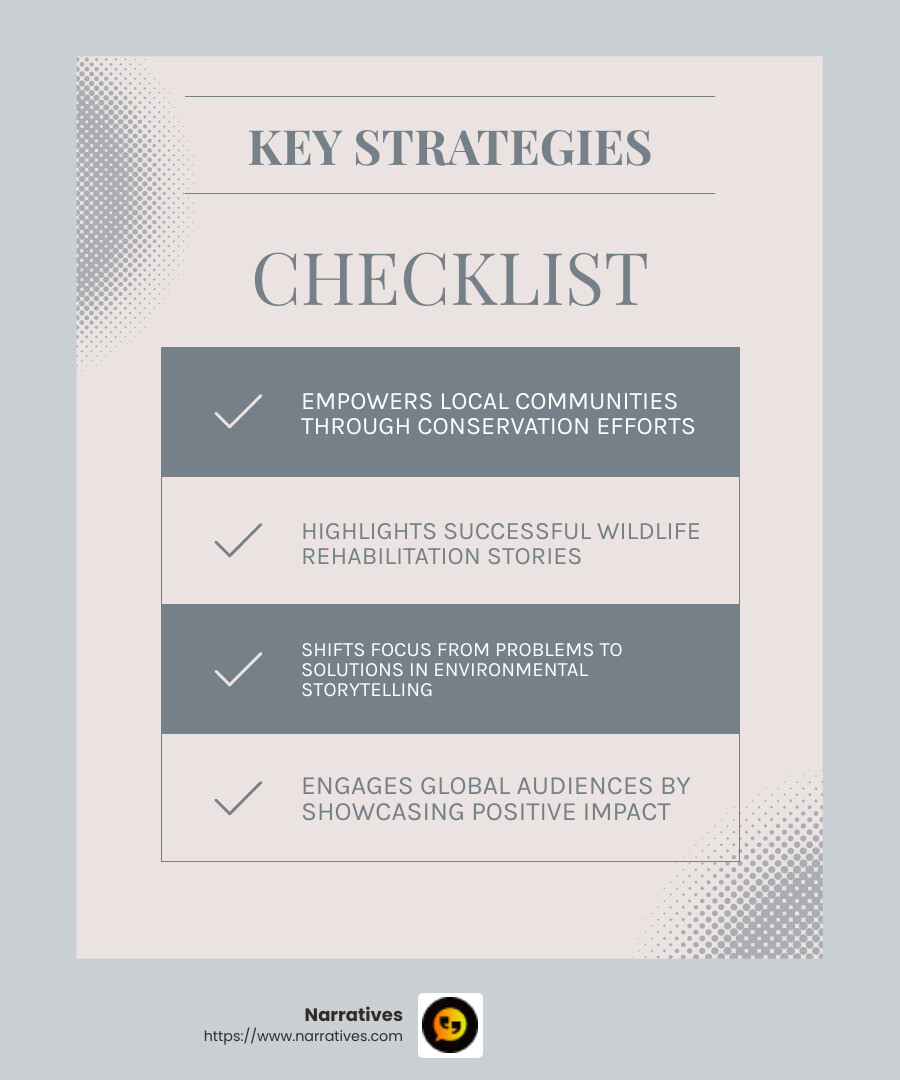
The sanctuary, run by the Indigenous Samburu community, rehabilitates orphaned elephants and reintroduces them to the wild. By showcasing the community's resilience and innovation, Vitale’s storytelling not only raises awareness but also encourages others to believe in the possibility of positive change.
Digital Reality Storytelling: Immersive Experiences
Digital reality storytelling uses technology to create immersive experiences that engage audiences deeply. This approach goes beyond traditional storytelling by incorporating virtual and augmented reality to bring environmental stories to life.
For instance, the Marine Stewardship Council's digital stories use interactive elements and powerful visuals to educate the public about sustainable fishing. By immersing viewers in the ocean's depths, these stories make the data relatable and compelling, fostering a deeper understanding of conservation challenges.
Good Examples of Environmental Storytelling
Several organizations have mastered the art of environmental storytelling by blending emotion with information. For example:
Patagonia: Known for its commitment to sustainability, Patagonia uses human-centric stories to connect with eco-conscious consumers. Their "Don't Buy This Jacket" campaign cleverly communicated the environmental costs of consumerism, encouraging thoughtful purchasing decisions.
Oxfam Ireland: Their annual impact report blends data with personal stories to showcase their work. By using infographics and interactive maps, they make complex information accessible and engaging, illustrating the impact of their initiatives.
These examples demonstrate the effectiveness of strategic storytelling. They show that when stories are crafted thoughtfully, they can motivate audiences to take action and support environmental causes.
By learning from these examples, you can develop environmental storytelling strategies that resonate with your audience and drive meaningful change. This approach ensures that your narratives are not only informative but also inspiring and empowering, paving the way for a more sustainable future.
Frequently Asked Questions about Environmental Storytelling Strategies
What is environmental storytelling?
Environmental storytelling is the art of using stories to teach people about the natural world, how it works, and how we can care for it. These stories often explain aspects of nature or convey ecological lessons. For example, traditional "why" stories like "Why Bear Has A Short Tail" from Norway, offer insights into animal behaviors and natural phenomena, making them relatable and memorable.
How can storytelling drive sustainability?
Storytelling can drive sustainability by making complex environmental issues easier to understand and more relatable. According to cognitive experts, people are 22 times more likely to remember a story than just facts. This is because stories engage multiple parts of the brain, including those responsible for emotions and empathy. By combining data with narratives, storytelling can connect with audiences on an emotional level, encouraging them to take meaningful actions towards sustainability.
For instance, the Netflix documentary Seaspiracy uses compelling storytelling to highlight the threats to marine life, prompting viewers to rethink their seafood consumption. Similarly, Ami Vitale's solution-based narratives showcase successful conservation efforts, inspiring hope and action rather than despair.
What makes a good environmental story?
A good environmental story is one that captivates and educates its audience. Here are some key elements:
Passion: You must love the story you are telling. This passion will be contagious and engage your audience.
Surprise: Offer new insights about nature in a surprising way. This keeps the audience curious and engaged.
Connection: Use the story as a lead-in to discuss the science behind it. This helps bridge the gap between narrative and factual information.
Relevance: Make the story relatable by connecting it to real-world experiences. For example, instead of just stating carbon reduction numbers, share how these efforts have benefited local communities.
By incorporating these elements, environmental storytelling can become a powerful tool in promoting sustainability and inspiring positive change.
Conclusion
Narratives play a crucial role in shaping how we perceive the world around us. At Narratives, we believe in the power of storytelling to drive meaningful change. Our focus is on crafting high-quality, emotionally resonant content that lifts underrepresented voices and highlights the impact of non-profits and purpose-driven organizations. By sharing these powerful stories, we aim to inspire action, build trust, and increase visibility for the causes that matter most.
Non-profit partnerships are at the heart of our storytelling approach. We work closely with organizations to understand their unique missions and challenges. This collaboration allows us to create narratives that truly reflect their values and goals. By partnering with non-profits, we help them share their impact stories in a way that resonates with their audience and encourages community support.
Social impact is the ultimate goal of our storytelling strategies. By focusing on real-world issues and solutions, we aim to drive positive change in communities and beyond. Our stories not only inform and educate but also inspire individuals to take action and become part of the solution. Through strategic storytelling, we help amplify the voices of those making a difference, ensuring their stories reach a wider audience and create lasting impact.
In conclusion, environmental storytelling is more than just sharing stories about nature. It's about connecting with people on an emotional level and motivating them to take action. At Narratives, we're committed to using storytelling as a powerful tool for social impact, helping non-profits and purpose-driven organizations make their mark on the world.


.avif)