The Ethical Lens: A Guide to Multimedia Content Creation

Navigating Media Ethics in Multimedia Content Creation
Creating ethical multimedia content is a crucial responsibility for anyone engaging in digital storytelling, particularly for non-profits and social impact organizations. To put it simply, it involves respecting moral principles and adhering to laws when producing and sharing videos, graphics, audio, and any other multimedia formats. With the rise of the internet, social media, and artificial intelligence, ensuring content is both authentic and ethical has become more complex but also more important.
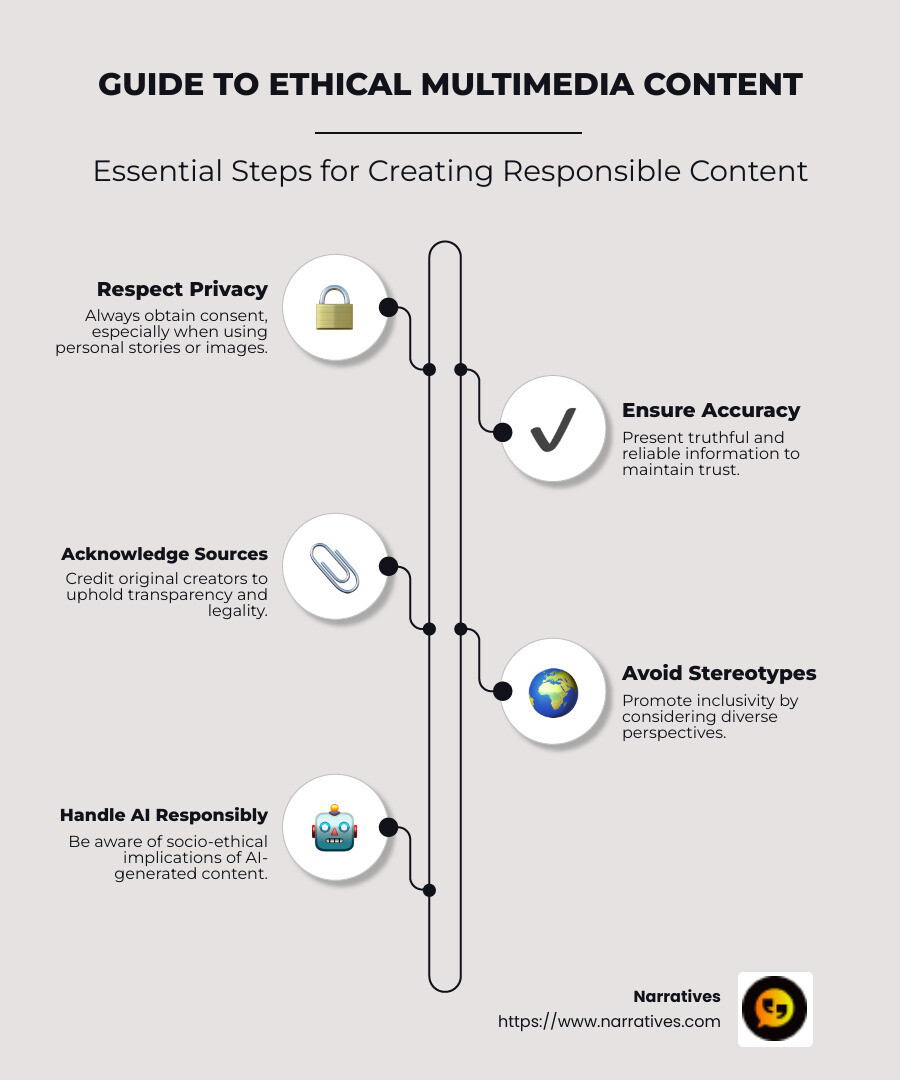
Here’s a quick guide to ethical multimedia content:
- Respect Privacy: Always seek consent, especially when using images or stories from private individuals.
- Be Accurate: Misleading or false information can harm credibility and trust.
- Acknowledge Sources: Give credit where credit is due to uphold transparency and legality.
- Avoid Harmful Stereotypes: Be conscious of diverse perspectives to foster inclusivity.
The landscape of media ethics is vast and intertwined with legal and social considerations. It includes issues of fairness, such as ensuring content does not inadvertently skew public perception. It also tackles pressing matters like how AI-driven content should be handled responsibly.
For organizations focused on advocacy and justice, producing ethical multimedia content isn’t just about following rules; it’s about elevating truth and empowering communities through storytelling. This creates a positive ripple effect, which aligns beautifully with the mission-driven goals of social impact entities.
Understanding Ethical Multimedia Content
When we talk about ethical multimedia content, we're diving into media ethics, copyright, and Creative Commons. These concepts are essential for anyone involved in creating or sharing multimedia content. Let's break them down.
Media Ethics
Media ethics is all about applying moral principles to the content we create and share. It covers everything from ensuring accuracy to avoiding bias and respecting privacy. In multimedia, this means being mindful of the messages we convey through images, videos, and audio.
For instance, a news outlet must ensure that their coverage is impartial and objective, avoiding stereotypes and respecting the privacy of individuals. This is not just about legal compliance—it's about building trust and credibility with your audience.
Copyright
Copyright is a legal framework that protects the rights of creators. If you use someone else's work—be it an image, a song, or a video—you need to be aware of copyright laws. This means either seeking permission or ensuring your use falls under "fair use," which can be tricky to steer.
For educational purposes, fair use might allow limited use of copyrighted material, but it's not a free pass. Always evaluate your intended use and, when in doubt, seek permission. This respect for copyright not only keeps you on the right side of the law but also shows respect for the original creators.
Creative Commons
Creative Commons licenses offer a flexible range of protections and freedoms for authors and users. These licenses allow creators to specify how others can use their work. For example, some might allow their photos to be used freely, as long as they're credited. Others might restrict commercial use or modifications.
Using Creative Commons resources can be a great way to ensure you're respecting copyright while still accessing a wealth of creative material. Always check the specific license to understand what is allowed.
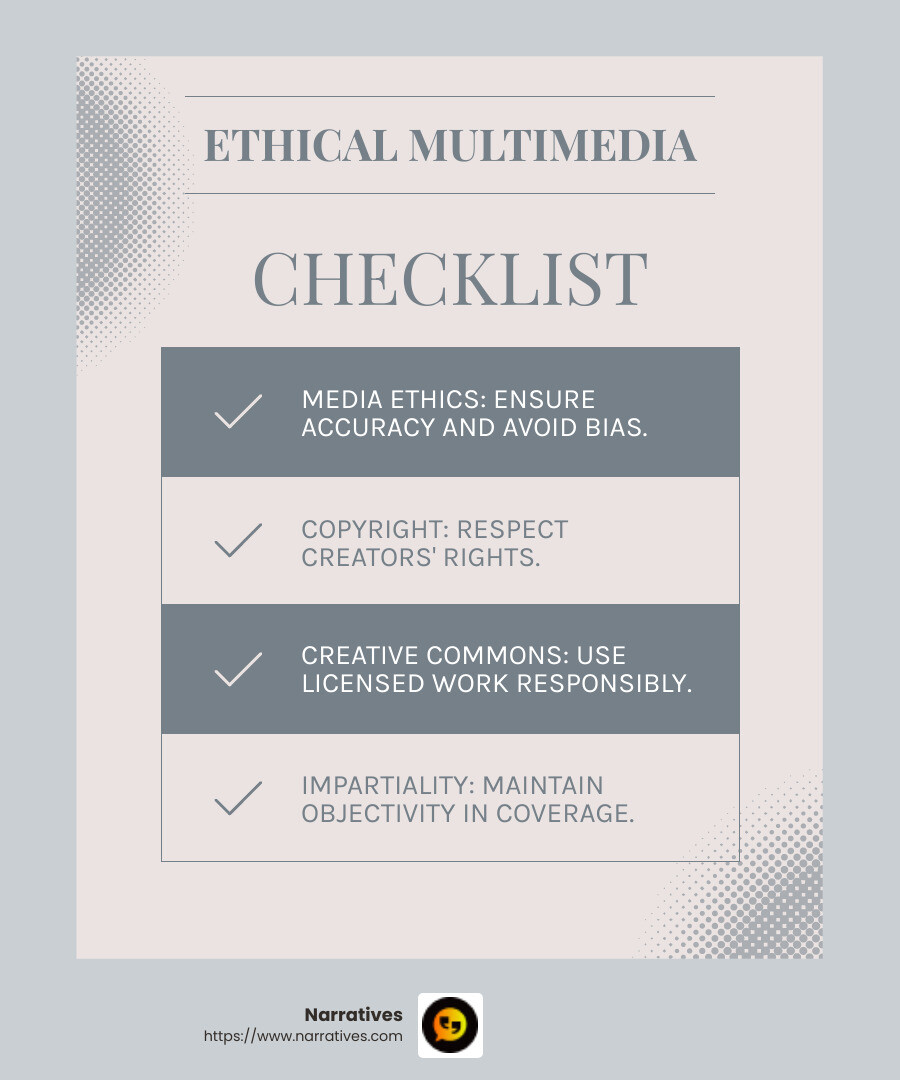
By understanding media ethics, copyright, and Creative Commons, you can create and share multimedia content that is not only compelling but also ethical and respectful of others' rights. This knowledge is crucial for anyone looking to make a positive impact through digital storytelling.
Key Ethical Considerations in Multimedia Content Creation
When creating multimedia content, there are several ethical considerations to keep in mind. These include originality, the rights of copyright holders, and the integration of scientific knowledge.
Originality
Originality is the backbone of ethical multimedia content. Creating unique content not only sets you apart but also respects the creative work of others. When you produce original work, you're contributing new ideas and perspectives to the world, which is invaluable in a sea of repetitive content.
Why is originality important?
- Builds Trust: Audiences are more likely to trust and engage with content that is fresh and unique.
- Avoids Legal Issues: By ensuring your work is original, you reduce the risk of copyright infringement.
Copyright Holder's Rights
Respecting the rights of copyright holders is crucial. When you use someone else's work, it's important to either get permission or ensure your use qualifies as "fair use." This is not just a legal necessity but an ethical obligation.
Consider these points:
- Seek Permission: Always ask for permission if you plan to use copyrighted material. This is a sign of respect for the creator's rights.
- Understand Fair Use: While fair use allows limited use of copyrighted work, understand its limitations.
Scientific Knowledge
Incorporating scientific knowledge into multimedia content requires accuracy and responsibility. When presenting scientific information, ensure that it is based on credible sources and is presented accurately.
Why is scientific accuracy vital?
- Prevents Misinformation: Accurate scientific content helps prevent the spread of misinformation, which is especially important in today's digital age.
- Improves Credibility: Content that is scientifically accurate is more likely to be trusted by audiences.
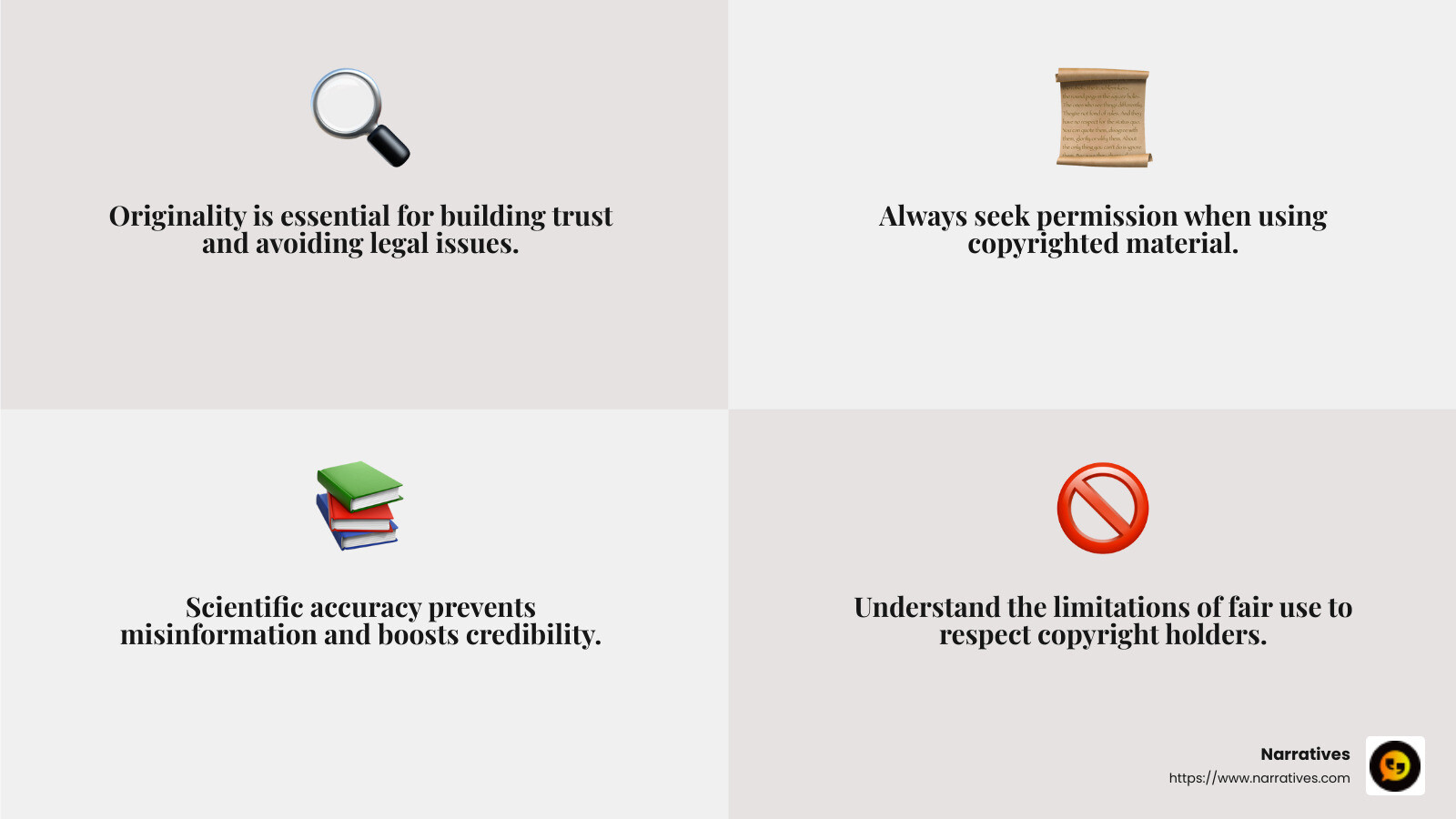
By focusing on originality, respecting copyright holder's rights, and accurately presenting scientific knowledge, you can create multimedia content that is ethical, credible, and impactful. This approach not only benefits your audience but also supports a fair and respectful digital ecosystem.
The Role of AI in Ethical Multimedia Content
Artificial Intelligence (AI) is revolutionizing the way we create and consume multimedia content. But with this power comes significant ethical responsibilities.
AI-Generated Content
AI can produce text, images, and even videos quickly. This speed and efficiency can be a double-edged sword. While it offers incredible opportunities for content creators, it also raises ethical concerns.
Key Concerns with AI-Generated Content:
Bias in AI Models: AI systems often reflect the biases present in their training data. This can lead to content that perpetuates stereotypes or presents skewed perspectives. According to F Shahbodin et al., ethical considerations must be integrated into AI models to ensure fairness.
Misinformation: AI's ability to generate realistic content can lead to the spread of misinformation. This is particularly concerning when AI-generated content is used in news and media, as it can blur the lines between fact and fiction.
Accountability: When AI-generated content causes harm, it's often unclear who is responsible. Is it the developers, the users, or the AI itself? This lack of accountability poses significant ethical challenges.
Socio-Ethical Implications
The socio-ethical implications of AI in multimedia content are vast. AI can influence public opinion, shape cultural narratives, and even impact democracy.
Consider These Implications:
Influence on Public Opinion: AI-generated content is often designed to be engaging and shareable. However, this can lead to the rapid spread of misleading information, impacting public opinion and societal norms.
Cultural Narratives: AI can both preserve and distort cultural narratives. While it can help in documenting and sharing diverse stories, it can also homogenize cultures by prioritizing content that aligns with prevailing biases.
Democratic Impact: In democratic societies, media plays a crucial role in ensuring transparency and accountability. The use of AI in media must be carefully managed to prevent manipulation and ensure that it supports democratic values.
AI's role in multimedia content creation is undeniable, but it must be approached with caution and responsibility. By understanding and addressing the ethical challenges of AI-generated content, we can harness its potential while safeguarding societal values.
Best Practices for Ethical Multimedia Content in Non-Profit Storytelling
Creating ethical multimedia content for non-profit storytelling involves more than just sharing a message. It's about building partnerships, making a social impact, and ensuring the community's voice is at the center.
Non-Profit Partnerships
Non-profits often partner with media creators to amplify their stories. But these partnerships need to be built on trust and shared values.
Align on Mission: Ensure that your partner's mission aligns with your non-profit's goals. This alignment helps in creating content that is authentic and impactful.
Transparency: Be clear about the goals and expectations from the outset. Transparency builds trust and ensures that all parties are on the same page.
Mutual Benefit: The partnership should benefit both parties. For the non-profit, it's about reaching a wider audience. For the media creator, it's about creating meaningful content that resonates.
Social Impact
The ultimate goal of non-profit storytelling is to drive social change.
Focus on Positive Change: Highlight the positive impact your non-profit is making. Share success stories that inspire and motivate others to get involved.
Call to Action: Encourage viewers to take action. Whether it's volunteering, donating, or spreading the word, a clear call to action can amplify your impact.
Measure Impact: Use metrics to assess the effectiveness of your content. This can include engagement rates, donations, or volunteer sign-ups. Measuring impact helps in refining your strategy and increasing effectiveness.
Community-Driven Storytelling
Community-driven storytelling ensures that the stories being told are authentic and representative of those affected.
Involve the Community: Engage community members in the storytelling process. This can include interviews, testimonials, or even co-creating content. Their involvement ensures that the story is authentic and resonates with the audience.
Respect and Sensitivity: Be respectful and sensitive to the community's needs and perspectives. Avoid sensationalism and focus on telling stories that are honest and respectful.
Empowerment: Use storytelling as a tool to empower the community. Highlight their strengths, resilience, and achievements. Empowerment fosters a sense of ownership and pride.
By focusing on partnerships, social impact, and community-driven storytelling, non-profits can create ethical multimedia content that not only informs but also inspires and brings about meaningful change.
Frequently Asked Questions about Ethical Multimedia Content
What are the main ethical issues in multimedia content?
Creating ethical multimedia content comes with several challenges. One major issue is news manipulation. Governments and corporations might try to sway public opinion by altering news. This can be done through censorship or by controlling media outlets. Such manipulation can be subtle, and sometimes, the audience may not even realize it's happening.
Privacy is another concern. While media often reveals details about public figures, it's crucial to balance this with the right to privacy. Just because something is true doesn't mean it should be shared.
Lastly, there's the conflict with the law. Journalists might face ethical dilemmas when protecting sources or obtaining information. Sometimes, they might break the law to uncover a story, raising questions about where to draw the line.
How can AI impact the ethics of multimedia content?
AI is changing how we create and consume media, but it also brings ethical challenges. AI-generated content, such as deepfakes, can blur the line between reality and fiction, leading to socio-ethical implications. For example, AI can create highly realistic but false images or videos, which can mislead audiences.
Moreover, AI can perpetuate biases. If the data used to train AI models is biased, the output will be too. This can lead to unfair representations and decisions, affecting people's lives and reputations.
The black box nature of AI also poses a problem. Often, we don't understand how AI reaches its conclusions, making it hard to trust its outputs. This lack of transparency can undermine the credibility of AI-generated content.
What role does copyright play in multimedia content creation?
Copyright is crucial in protecting the rights of creators. When using multimedia content like images, music, or videos, it's important to respect the copyright holder's rights. This means seeking permission or paying for the use of such materials, even in academic settings.
Creative Commons licenses offer a way to legally share and use creative works. They provide a framework for creators to specify how others can use their content, promoting ethical sharing and collaboration.
Ignoring copyright can lead to legal issues and damage a creator's reputation. It's always best to evaluate the intended use of content and ensure compliance with copyright laws to maintain ethical standards in multimedia content creation.
Conclusion
At Narratives, we believe in the power of digital storytelling to transform communities and lift the voices that often go unheard. Our mission is to partner with non-profits and purpose-driven organizations to create ethical multimedia content that not only tells a story but inspires action and change.
In today's digital world, it's easy for underrepresented voices to get lost. Our focus is on bringing these stories to the forefront. By using high-quality, emotionally resonant multimedia, we help non-profits share their impact in a way that builds trust and increases visibility.
Underrepresented voices are crucial to creating a holistic narrative of our world. They provide diverse perspectives that challenge the status quo and encourage empathy and understanding. At Narratives, we are committed to ensuring these voices are not just heard but amplified.
In the field of digital storytelling, maintain ethical standards. This includes respecting copyright laws, ensuring content originality, and being mindful of the socio-ethical implications of AI-generated content. By adhering to these principles, we can create stories that are not only impactful but also responsible.
As we continue to build our brand, we aim to establish ourselves as the go-to partner for non-profits seeking to make a difference through storytelling. Our strategy includes leveraging broad, storytelling-related keywords to improve our online presence and support our mission of bringing about social impact through community-driven narratives.
In conclusion, ethical multimedia content is not just about avoiding pitfalls; it's about actively choosing to create content that uplifts and empowers. At Narratives, we're not just telling stories; we're changing lives.

.avif)