The Code of Ethics: Video Production's Moral Compass

Ethical video production isn't just a buzzword; it's the cornerstone of responsible storytelling. When creating videos, it's crucial to prioritize honesty, respect, and integrity. Here’s a quick guide to ensure ethical practices in video production:
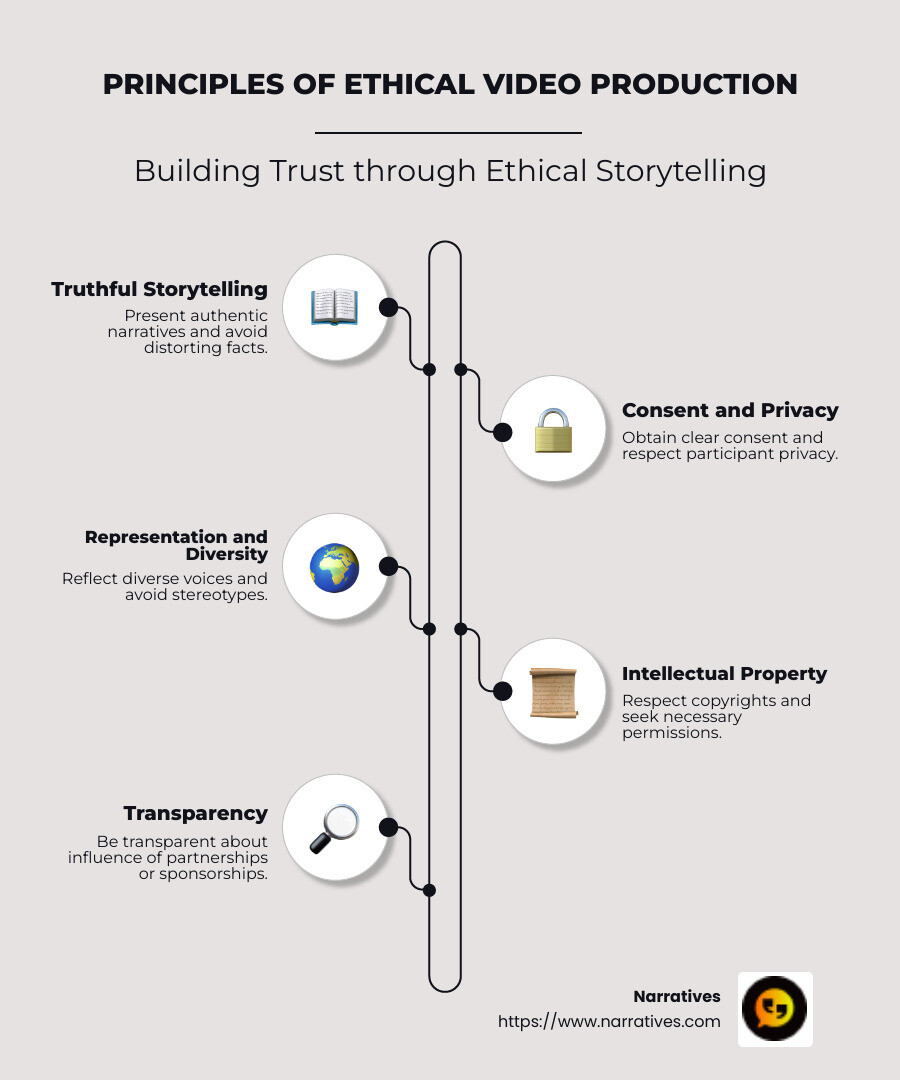
- Truthful Storytelling: Always present authentic stories without distorting facts.
- Consent and Privacy: Obtain clear consent from participants and respect their privacy.
- Representation and Diversity: Ensure your content reflects diverse voices and avoids stereotypes.
- Intellectual Property: Respect copyrights and seek permissions for any content used.
- Transparency: Be open about partnerships or sponsorships influencing your narrative.
In the field of video production, the power of storytelling cannot be overstated. Engaging and ethical content has the potential to foster understanding, spark change, and amplify voices that need to be heard. While today's digital tools make it easy to edit and modify footage, maintaining ethical standards is essential to build trust with your audience.
Every frame, every soundbite, and every choice made in video production carries significant ethical weight. This power demands a commitment to ethical storytelling. By focusing on these principles, we can create video content that not only informs and entertains but also uplifts and inspires.
Ethical Video Production: The Foundation
In video production, ethics form the bedrock of all creative endeavors. Let's explore three core principles: truthful storytelling, respect for intellectual property, and protecting personal privacy. These guide us in crafting content that resonates with integrity and respect.
Truthful Storytelling
The essence of any compelling video is its story. But with storytelling comes responsibility. Truthful storytelling means presenting facts as they are, without distortion or embellishment.
Think about it: when you watch a video, you're trusting the creator to show you reality. But with advanced editing tools, it's tempting to tweak the narrative. Just because you can doesn't mean you should. Authenticity builds trust. It's what keeps audiences coming back.
Respect for Intellectual Property
It's easier than ever to "borrow" a clip or a song. But ethical production demands respect for intellectual property. This means obtaining permissions or licenses for any copyrighted material you want to use.
Here's a simple rule: if you didn't create it, don't use it without permission. Getting this wrong can lead to legal troubles and damage your reputation. So, always do your due diligence.
Protecting Personal Privacy
With cameras everywhere, capturing spontaneous moments is simple. But there's a fine line between documenting reality and invading privacy. Before filming, especially in private settings, ensure you have consent. This means being clear about how and where the footage will be used.
Respecting privacy isn't just ethical—it's legal. And it's crucial for building trust with your subjects and your audience. Always ask: Would I be okay with this if it were me?
By embedding these principles into your work, you lay a strong foundation for ethical video production. This isn't just about avoiding pitfalls—it's about elevating your storytelling to create content that truly matters.
Navigating Consent and Privacy
Navigating the fields of consent and privacy is crucial in ethical video production. It’s not just about following the law; it’s about respecting the individuals who share their stories with us.
Informed Consent
Informed consent is more than just a signature on a form. It's about ensuring that everyone involved in your video production fully understands how their image, voice, or story will be used.
Imagine you’re filming a documentary. Before you hit record, have a conversation with your subjects. Explain the purpose of the project, where it will be shown, and how it might impact them. This transparency builds trust and ensures that participants are comfortable with the process.
When content can quickly go viral, informed consent isn't just ethical—it's essential. It protects both the subject and the producer from potential misunderstandings or legal issues down the road.
Privacy Protection
Privacy protection is about safeguarding the personal information and dignity of your subjects. When filming in private settings, always get explicit permission. Use release forms to document consent, detailing how the footage will be used and distributed.
Consider the story of a filmmaker who captured candid footage in a public space. Even in public areas, it's wise to notify people that filming is taking place and offer the chance to opt-out.
Incorporating privacy protection measures shows respect for your subjects and helps avoid potential legal repercussions. It’s about asking yourself: Am I respecting their privacy as I would want mine respected?
By prioritizing informed consent and privacy protection, video producers can create content that respects individual rights and fosters trust with audiences. This approach not only upholds ethical standards but also improves the credibility and integrity of the production.
Representation and Diversity in Storytelling
In ethical video production, fair representation and cultural sensitivity are key elements that lift storytelling. They ensure that all voices are heard and respected, creating content that resonates with diverse audiences.
Fair Representation
Fair representation means portraying individuals and groups accurately and respectfully, without resorting to stereotypes or clichés. This is crucial in a world where audiences are increasingly diverse and discerning.
Consider how marketing can sometimes go wrong, like the Balenciaga scandal where many felt children were exploited, causing a social uproar. Such controversies highlight the importance of avoiding harmful stereotypes and ensuring that marketing messages are backed by thorough research and genuine understanding.
To achieve fair representation, video producers should:
Include diverse voices: Make sure your content reflects the variety of experiences and perspectives in society. This means going beyond tokenism and genuinely including different backgrounds, races, genders, and more.
Avoid stereotypes: Stereotypes can be damaging and misleading. Instead, focus on authentic stories that reflect the true nature of the individuals and communities you are portraying.
Conduct research: Before creating content, understand the demographics and cultural nuances of your audience. This helps in crafting messages that resonate and respect their identity.
Cultural Sensitivity
Cultural sensitivity involves being aware of and respectful towards the cultural differences and nuances of the people and communities you are portraying. It’s about understanding and appreciating the context in which your stories exist.
For instance, when working with non-profits like Pars Equality Center, which supports Persian-speaking immigrants, it’s essential to portray their stories with dignity and respect. This means highlighting their challenges and achievements without reducing them to mere subjects of sympathy.
Here are some practices to ensure cultural sensitivity:
Engage with communities: Work closely with the communities you’re featuring to understand their stories and perspectives. This collaboration helps in creating content that is both accurate and respectful.
Educate your team: Ensure your production team is aware of cultural sensitivities and trained to approach subjects with respect and understanding.
Seek feedback: Before finalizing content, seek feedback from representatives of the communities portrayed. This helps in identifying any potential issues and ensuring the content aligns with their perspective.
By prioritizing fair representation and cultural sensitivity, video producers can craft stories that not only entertain but also educate and inspire. This approach fosters a deeper connection with audiences and improves the social impact of the content.

In the next section, we will explore the role of technology in ethical video production and how tools like AI can be used responsibly to improve storytelling.
The Role of Technology in Ethical Video Production
Technology is a double-edged sword in the field of ethical video production. It offers powerful tools that can improve storytelling, but it also presents new ethical challenges, especially with the rise of AI and deepfake technologies.
AI in Editing
AI has transformed video editing by automating repetitive tasks like color correction and sound leveling. This allows editors to focus more on the creative aspects of their work. AI tools can quickly analyze footage, identify patterns, and suggest edits that save time and improve the final product's quality.
However, while AI can handle technical tasks efficiently, it lacks the human touch. It doesn't understand context or cultural nuances, which are crucial for ethical storytelling.
Human oversight is essential to ensure that AI-generated content aligns with ethical standards. Editors should use AI as a tool to assist, not replace, their creative judgment.
Deepfakes and Ethical Concerns
Deepfakes are perhaps the most controversial aspect of AI in video production. They use algorithms to create hyper-realistic videos where people appear to say or do things they didn't. While this technology has exciting applications in film and education, it poses significant ethical risks.
The misuse of deepfakes in spreading misinformation or creating explicit content without consent is a growing concern. Video producers must be vigilant and responsible in their use of this technology to prevent harm and maintain public trust.
Balancing Innovation and Ethics
The key to integrating technology into ethical video production is balance. While AI and deepfakes offer incredible possibilities, they must be used with caution and integrity. Here are some best practices:
Maintain human oversight: Always have a human editor review AI-generated content to ensure it is contextually and culturally appropriate.
Be transparent: If AI or deepfakes are used in a production, disclose this to your audience. Transparency builds trust.
Prioritize authenticity: Use technology to improve, not distort, reality. Authentic storytelling is the cornerstone of ethical video production.
By embracing these practices, video producers can harness technology's power while upholding the integrity and trust that ethical storytelling demands.
In the next section, we will address frequently asked questions about ethical video production, providing insights into key practices and the role of AI in ensuring authenticity and integrity.
Frequently Asked Questions about Ethical Video Production
What are the key ethical practices in video production?
Truth, representation, and consent form the backbone of ethical video production.
Truth: It's vital to present information accurately and avoid misleading your audience. This means resisting the urge to manipulate footage to fit a narrative that distorts reality. As stated, "just because you can, doesn't mean you should."
Representation: Fair representation ensures that diverse voices are heard and stereotypes are avoided. This is crucial in today's multicultural world, where audiences crave content that reflects their experiences and identities.
Consent: Always obtain informed consent from individuals who appear in your videos. This involves being clear about how their image and voice will be used, respecting their privacy, and honoring their right to withdraw consent at any time.
How can video production companies ensure ethical storytelling?
Ensuring ethical storytelling involves a commitment to authenticity and integrity.
Authenticity: This means staying true to the story and the people involved. Authentic storytelling resonates more deeply with audiences because it reflects genuine experiences and emotions.
Integrity: Uphold strong moral principles by being transparent about sponsorships, avoiding exploitation, and considering the broader impacts of your work. Reflecting on potential consequences before releasing content can prevent misunderstandings and controversies.
What role does AI play in ethical video production?
AI offers significant benefits but also requires careful human judgment.
AI Benefits: AI tools can streamline editing processes, such as automating color correction and sound leveling, freeing editors to focus on creative storytelling. AI can also analyze data to provide insights that improve production quality and efficiency.
Human Judgment: Despite its capabilities, AI lacks the ability to understand cultural nuances or ethical implications. Human oversight is essential to ensure AI-generated content adheres to ethical standards. Editors should use AI to assist their work, not replace their creative decision-making.
By combining the strengths of AI with human insight, video producers can create content that is both innovative and ethically sound.
In the next section, we will dig into how Narratives leverages these principles to create impactful, community-driven storytelling.
Conclusion
At Narratives, we believe that ethical video production is more than just a guideline—it's our moral compass. Our mission is to harness the power of storytelling to make a real difference in the world. By focusing on social impact and community-driven storytelling, we lift voices that often go unheard, particularly in underrepresented communities.
Social impact is at the heart of what we do. We strive to create content that not only informs but also inspires action. By partnering with non-profits and purpose-driven organizations, we highlight the incredible work being done to improve communities. Our videos are designed to build trust and visibility, encouraging audiences to engage and support these vital causes.
One of our core strategies is to focus on community-driven storytelling. This means collaborating closely with the communities we feature, ensuring their stories are told authentically and respectfully. We prioritize fair representation and cultural sensitivity, understanding that these elements are crucial for creating content that resonates on a deeper level.
We also recognize the role of technology in enhancing storytelling. While tools like AI can streamline production, we ensure that human oversight remains central to our process. This balance allows us to maintain high ethical standards while exploring innovative ways to tell stories.
Our commitment to ethical video production shapes everything we do. By staying true to our values of truth, representation, and consent, we aim to build a legacy of trust and excellence. Together with our partners, we're not just telling stories—we're creating a more empathetic and connected world.


.avif)