From First Gift to Forever: Mastering Donor Retention

How to increase donor retention is one of the big questions every nonprofit seeks to answer. To put it simply, donor retention is about keeping the donors you've already engaged, supporting your cause year after year. Retaining donors is crucial for a nonprofit's financial health and sustainability. Consider this: it's much cheaper to keep a donor than to constantly look for new ones. And when your donors stay with you for the long haul, they often contribute more over time.
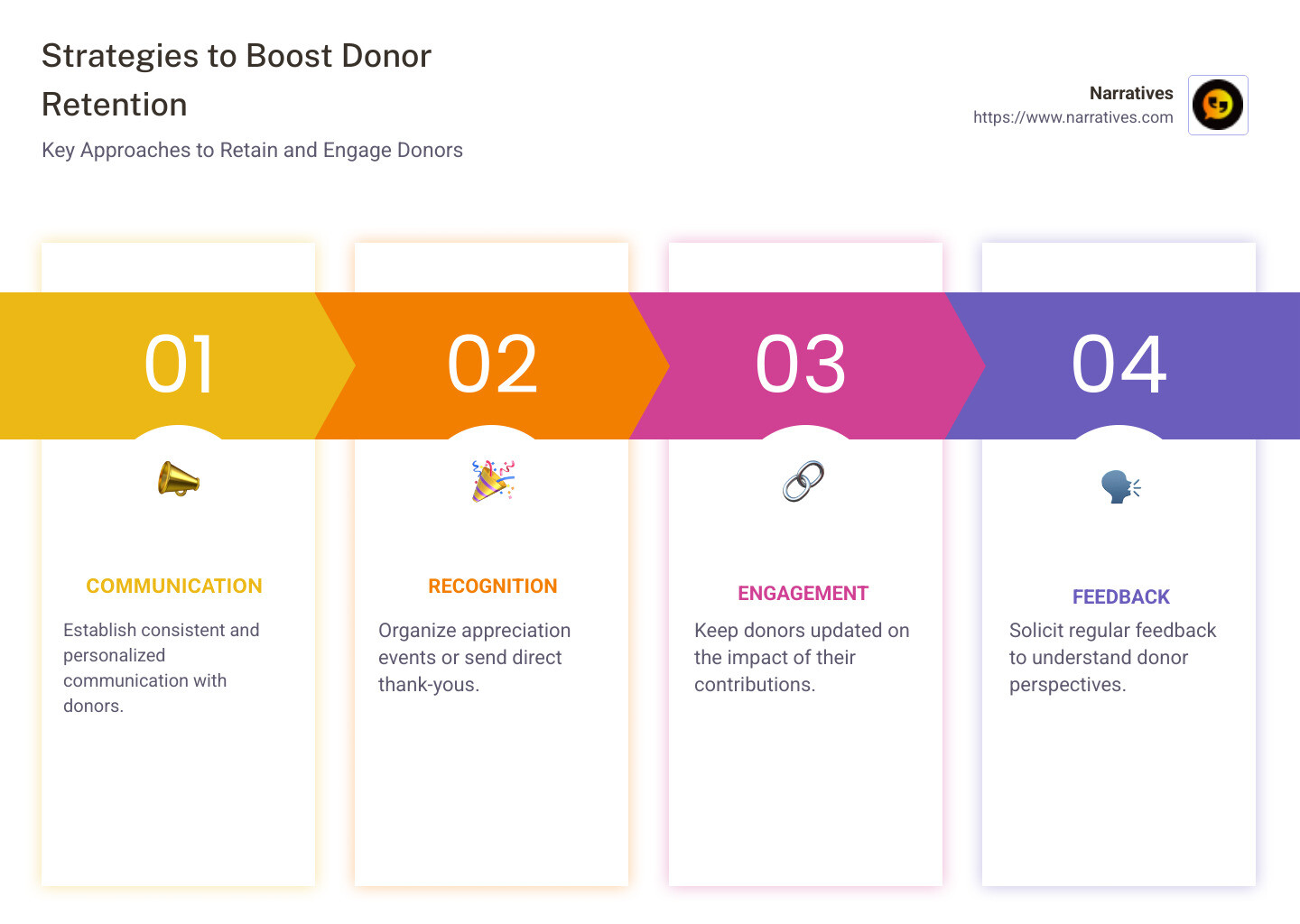
Here are some standout ways to boost your donor retention:
- Communication: Create personalized and consistent communication.
- Recognition: Honor your donors with appreciation events or direct thank-yous.
- Engagement: Keep donors informed about how their contributions are making a difference.
- Feedback: Regularly ask donors for feedback and insights.
Emphasizing these strategies not only helps retain donors but also transforms them into ambassadors for your mission. By fostering strong relationships, nonprofits build credibility and financial stability.
Understanding Donor Retention
Donor retention is the art and science of keeping your existing donors engaged and committed to your cause over time. It's not just about getting that first donation; it's about nurturing a relationship that transforms a one-time giver into a lifelong supporter.
Key Metrics for Donor Retention
To truly understand donor retention, you need to keep an eye on a few important metrics:
Donor Retention Rate: This is the percentage of donors who continue to give to your organization over a certain period. It’s a simple yet powerful indicator of loyalty.
Donor Attrition Rate: This metric tells you how many donors you've lost over a specific time frame. A high attrition rate can signal the need for better engagement strategies.
Donor Lifetime Value (DLV): This calculates the total value a donor is expected to contribute over their lifetime. It helps you identify high-value donors and tailor your strategies to encourage more giving.
The Donor Lifecycle
Understanding the donor lifecycle is crucial for effective retention strategies. Here’s a quick rundown:
Acquisition: This is where you first engage a donor. It’s important to make a strong, positive impression.
Engagement: After the initial donation, keep the conversation going. Share updates, success stories, and show the impact of their contributions.
Retention: This is the heart of donor retention. It involves building trust and making donors feel valued. Regular communication and personalized interactions are key here.
Upgrade: Encourage donors to increase their contributions over time. This can be through recurring donations, matching gifts, or special campaigns.
Loyalty: The ultimate goal is to have donors who are not just contributors but advocates for your cause. They attend events, bring in new donors, and are passionate about your mission.
By focusing on these metrics and understanding the donor lifecycle, nonprofits can create targeted strategies that not only retain donors but also deepen their commitment to the cause.
In the next section, we'll explore Top Strategies for Donor Retention, diving into personalization, communication, and more.
How to Increase Donor Retention
Increasing donor retention is essential for any nonprofit aiming for long-term success. Let's explore why it's crucial and how it can be achieved through cost-effectiveness, sustainable funding, and enhancing donor lifetime value.
Cost-Effectiveness
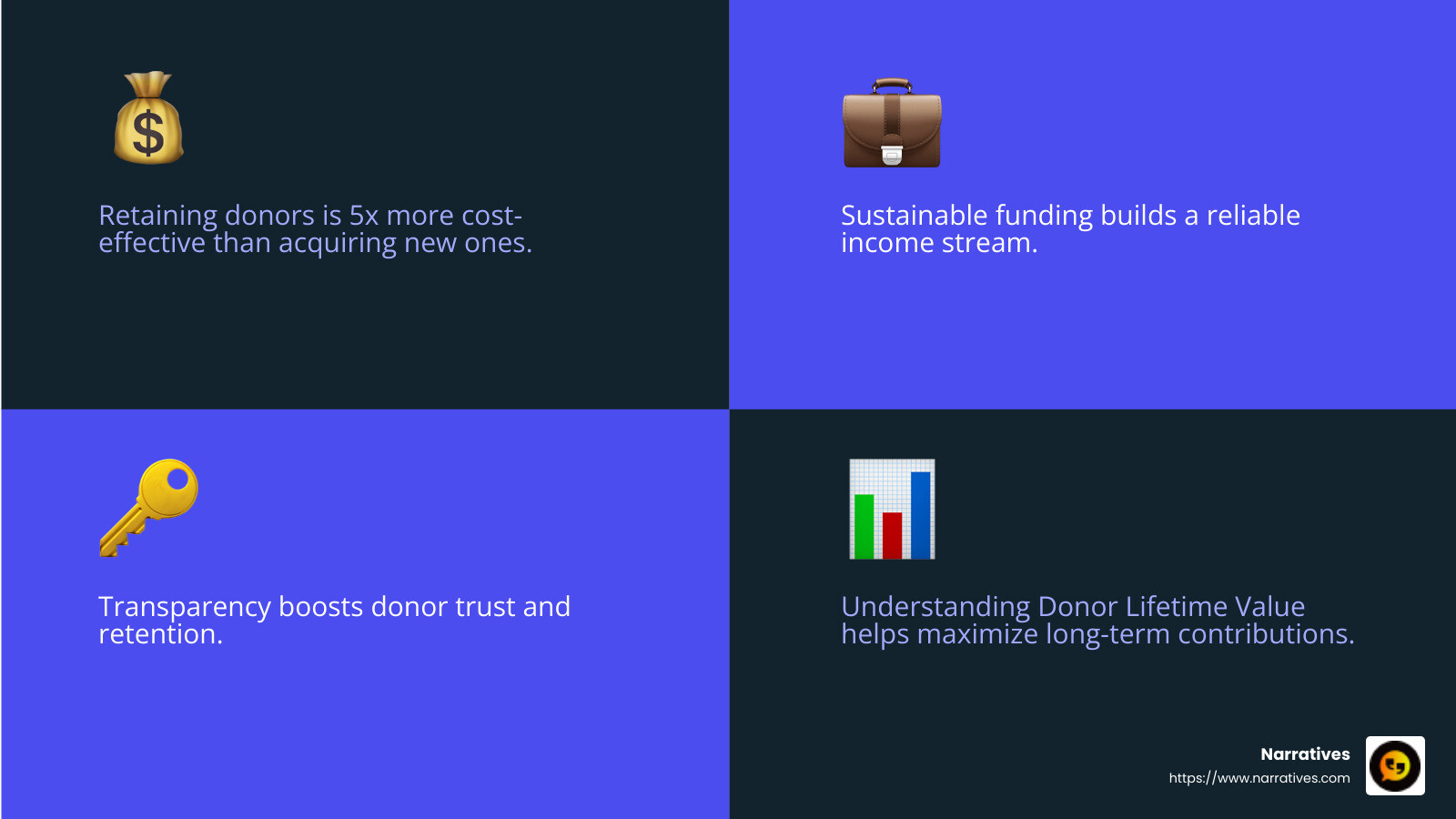
Retaining donors is much more cost-effective than acquiring new ones. Think about all the resources you pour into attracting a new donor—advertising, events, and outreach. When you focus on keeping your current donors happy, you save money and time. This allows you to allocate more resources directly to your mission.
Sustainable Funding
When donors feel valued and see the impact of their contributions, they're more likely to continue supporting your cause. This creates a steady and reliable stream of income. Sustainable funding is not just about financial stability; it's about building a community of committed supporters who believe in your mission.
Regular updates and transparency about how funds are used can reinforce this trust. For example, showing donors the tangible outcomes of their contributions—like the number of meals served or animals rescued—can encourage continued support.
Donor Lifetime Value
Donor Lifetime Value (DLV) is a critical metric that helps you understand the long-term financial contributions of a donor. By focusing on increasing DLV, you can tailor strategies to encourage more significant and frequent donations over time.
Consider segmenting your donor base to identify high-value donors. Personalize your communication and engagement strategies to cater to their interests and capacity to give. For instance, offering exclusive updates or invitations to special events can make them feel valued and more connected to your cause.
By implementing these strategies, nonprofits can increase donor retention, ensuring a more sustainable and impactful future. In the next section, we'll explore Top Strategies for Donor Retention, focusing on personalization, communication, and engagement.
Top Strategies for Donor Retention
Personalization
Personalization is key to making donors feel special and valued. Use their preferred names in all communications. This simple act can make a big difference. According to research, addressing donors by their preferred name in thank-you emails or letters can improve their connection to your cause.
Another way to personalize is by specifying each contribution’s impact. Tell donors exactly how their gifts make a difference. For instance, if a donor contributes to a food bank, inform them about the number of families fed with their help. This specificity can deepen their emotional connection to your mission.
Communication
Clear and consistent communication is crucial for keeping donors engaged. Use engaging visuals like infographics and photos to show the impact of their donations. If a donor loves dogs, send them stories and pictures of dogs helped by your organization. This makes your thank-you messages more meaningful and memorable.
Segmentation can make communication easier. Divide donors into groups based on shared characteristics. For example, new donors might receive welcome messages, while recurring donors get updates on new opportunities or past events. This custom approach can boost engagement and retention.
Engagement
Engagement goes beyond just asking for donations. It's about building a relationship with your donors. Implement self-service donor tools to empower donors to manage their contact information and giving preferences. This not only saves your team time but also makes donors feel in control.
Regularly analyze donor data to refine your strategies. Identify at-risk donors by looking for signs like reduced engagement or decreased giving. When reaching out to these donors, focus on their importance to your cause and invite them to get involved in other ways.
Lastly, don't forget to ask for feedback. Your donors can provide insights into how you can improve their experience. Send short surveys and consider their suggestions to improve your engagement strategies.
By focusing on personalization, communication, and engagement, nonprofits can create a more connected and committed donor base. In the next section, we'll explore how to measure success in donor retention, focusing on key metrics like retention rate and donor lifetime value.
Measuring Success in Donor Retention
To truly master donor retention, it's crucial to measure your success with the right metrics. Tracking these key indicators helps you understand how well you're doing and where you need to improve. Let's explore the essential metrics: retention rate, lifetime value, and attrition rate.
Retention Rate
The retention rate is the percentage of donors who continue to support your organization over time. It's a simple yet powerful metric. To calculate it, divide the number of donors who gave again this year by the number of donors from last year, then multiply by 100.
For example, if you had 200 donors last year and 150 of them donated again this year, your retention rate is 75%. A high retention rate indicates strong donor relationships and effective engagement strategies.
Donor Lifetime Value
Donor Lifetime Value (DLV) is all about understanding the long-term worth of each donor. It estimates how much a donor will contribute to your organization over their entire relationship with you. To calculate DLV, multiply the annual donation amount by the length of the donor relationship.
For instance, if a donor gives $100 every year for five years, their lifetime value is $500. Knowing this helps you identify high-value donors and tailor your strategies to encourage more substantial and frequent giving.
Attrition Rate
The attrition rate measures the percentage of donors lost over a specific period. It's the flip side of retention. To calculate it, subtract the number of donors this year from the number last year, divide by the number of donors from last year, and multiply by 100.
For example, if you had 200 donors last year and only 180 this year, your attrition rate is 10%. A high attrition rate signals that you need to improve your retention strategies, as losing donors can be costly and hinder growth.
By focusing on these metrics—retention rate, donor lifetime value, and attrition rate—you can gain valuable insights into your donor retention efforts. This data-driven approach allows you to refine your strategies and build a more loyal and supportive donor base.
In the next section, we'll address frequently asked questions about donor retention, including what constitutes a good retention rate and why it's essential for your nonprofit’s success.
Frequently Asked Questions about Donor Retention
What is a good donor retention rate?
A good donor retention rate is typically around 45%. This means that nearly half of your donors continue to support your organization year after year. However, the goal should always be to improve this rate. Nonprofits with higher retention rates tend to be more stable and sustainable, allowing them to grow and take on new projects.
Why is donor retention important?
Donor retention is crucial because it ensures sustainable funding for your nonprofit. When donors stick around, they provide a steady stream of support, which is more cost-effective than constantly acquiring new donors. Retained donors also tend to give more over time, boosting their lifetime value to your organization. This loyalty allows you to focus on your mission rather than fundraising constantly.
How to calculate donor retention rate?
Calculating your donor retention rate is straightforward. Use this formula:
[ \text{Donor Retention Rate} = \left( \frac{\text{Number of Repeat Donors This Year}}{\text{Number of Donors Last Year}} \right) \times 100 ]
For example, if you had 300 donors last year and 150 of them donated again this year, your retention rate is 50%. Regularly calculating and monitoring this rate helps you gauge the effectiveness of your retention strategies and make necessary adjustments.
Understanding these key aspects of donor retention helps you build a stronger, more committed donor base. In the next section, we'll explore top strategies to improve donor retention through personalization, communication, and engagement.
Conclusion
At Narratives, we believe that storytelling is the heartbeat of effective donor retention. How to increase donor retention isn't just about numbers and metrics; it's about creating a mix of stories that resonate with your supporters on a personal level.
Narratives excels in changing these stories into compelling multimedia content. We help nonprofits not only share their impact but do so in a way that inspires action and builds lasting trust. By elevating underrepresented voices through high-quality, emotionally resonant video and multimedia content, we help organizations connect deeply with their donors.
The impact of storytelling is profound. When donors see and hear the real stories of those they help, it fosters a connection that goes beyond transactional giving. It turns casual supporters into passionate advocates. This connection is what drives donor retention, ensuring a sustainable future for your nonprofit.
Through our digital storytelling expertise, we empower nonprofits to highlight their mission and achievements in a way that captivates and retains their audience. If you're ready to take your donor retention strategies to the next level, explore our community impact multimedia services and find how we can help your organization thrive through the power of storytelling.


.avif)