How to Produce Social Impact Films on a Budget
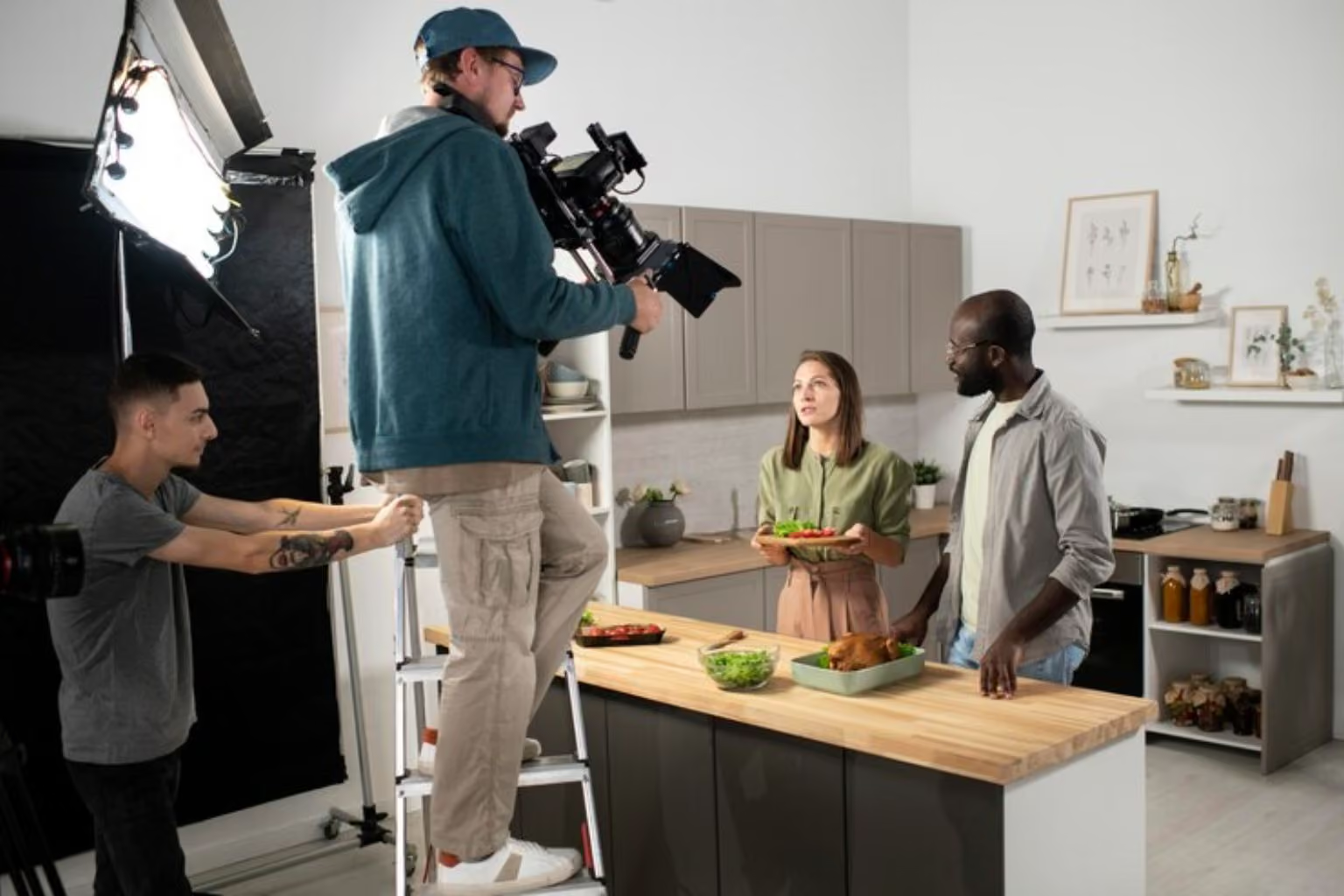
Walk into almost any nonprofit office or independent production meeting, and you will hear a familiar concern. The story matters. The mission is urgent. The budget is limited. That tension sits at the center of modern social impact film production, and it is not necessarily a weakness. In many cases, it is the reason these films connect at all.
Social impact films differ from marketing videos in one essential way. They are not designed to persuade through polish. They aim to move people through recognition. A face, a pause, a voice that feels unguarded. When resources are limited, filmmakers are often forced to strip away distractions and focus on what actually drives action. That focus can outperform larger productions, both in engagement and in trust.
Why budget impact films matter more than ever
The psychology behind effective social storytelling is not mysterious, though it is often misunderstood. Empathy tends to form when audiences recognize a specific human experience rather than an abstract cause. Research in behavioral science suggests that audiences respond more strongly to a single identifiable person than to broad statistics. This appears to be why modest films, when done well, can trigger measurable action.
Consider widely cited examples like Charity: Water’s early campaigns or Kony 2012. Despite very different outcomes and later critiques, both demonstrated how emotionally direct narratives could mobilize attention at scale without relying on traditional production budgets. The lesson is not to copy the style. It is to recognize that emotional clarity often matters more than cinematic perfection in social impact film production.
High budgets can sometimes flatten urgency. Lean projects rarely have that luxury. They tend to make sharper choices, even if those choices feel uncomfortable.
Pre-production decisions that protect your budget
Pre-production is where most budget mistakes quietly begin. Equipment usually gets the blame later, but the real cost overruns come from unclear goals and unfocused stories.
Before any camera comes out, define what success looks like. Views alone are rarely meaningful. For nonprofit video production, engagement depth, click through to a donation page, or volunteer signups often tell a clearer story. It may feel restrictive to narrow objectives early, yet this discipline prevents wasted shooting days and unnecessary edits.
Story sourcing does not require paid access or elaborate research. Many of the strongest social impact film production projects come from existing relationships. Program participants, frontline staff, and community advocates. One person, one moment of change. That model keeps scope manageable while preserving emotional weight.
Writing an impact arc helps, even if it never becomes a formal script. It starts with tension, moves through a moment of decision, and leads to change, not necessarily resolution, just movement. Shot lists and simple storyboards can live in shared documents. Fancy software is optional. Clarity is not.
Tools and gear you actually need
The conversation around gear often distracts from craft. For low-budget filmmaking, the essentials are surprisingly few.
Modern smartphones can handle most documentary scenarios when paired with thoughtful lighting and clean audio. Audio, in particular, is where audiences tend to disengage first. A basic lavalier microphone or small shotgun mic often matters more than camera upgrades.
Stabilization can be improvised. Affordable tripods, DIY rigs, or even careful handheld techniques work when used deliberately. Lighting does not require a truck. Window light, reflectors, and inexpensive LED panels can shape interviews effectively.
Editing tools also do not need to break the budget. Free or low-cost software can manage full workflows if expectations are realistic. What matters more is editorial judgment. The decision to linger on a breath or cut early often defines emotional impact.
Filming techniques that stretch limited resources
Production days should feel intentional, not rushed. A simple interview setup, consistent background, and controlled sound environment reduce editing complexity later. Silence between answers can be valuable. Resist the urge to fill it.
B-roll should serve emotion, not coverage quotas. Hands at work, small environmental details, moments of stillness. These images ground the narrative and reduce reliance on exposition.
Guerrilla filmmaking techniques can help when access is limited. Lightweight crews draw less attention and allow subjects to remain natural. Volunteers and film students often contribute enthusiastically when expectations are clear. It is important, though, to respect their time and skill. Even unpaid collaboration deserves structure.
Editing for empathy rather than speed
Editing is where social impact film production either sharpens or loses its purpose. Fast cuts and dramatic music can overwhelm quieter truths. Emotion-first editing often means removing more than adding.
Begin with the spine of the story: one voice, one progression. Secondary elements should support that core, not compete with it. Check pacing by watching without sound, then without visuals. If the emotion still reads, the structure likely holds.
Free plugins and basic color correction tools are usually enough. Over-processing can distance viewers. A slightly imperfect frame often feels more honest than a polished one.
Distribution without paid advertising
Distribution is often treated as an afterthought, which is costly in a different way. Organic reach requires planning. Platform-specific formatting matters, even for nonprofit video production.
YouTube rewards clarity and consistency. Short-form platforms prioritize immediacy. Cross-posting is useful, but blind duplication rarely works. Adjust titles, captions, and lengths with intention.
Email lists and partner channels often outperform social algorithms for early traction. Encourage sharing, but do not beg for it. A clear call to action embedded naturally in the story tends to perform better.
If you are producing multiple projects, document what works. Patterns emerge faster than expected.
Measuring impact and iterating responsibly
Metrics should inform, not dominate. Watch time often reveals more than views. Click behavior signals genuine interest. Donation uplift, when trackable, provides context but not the full picture.
A/B testing thumbnails or titles can refine distribution without altering the film itself. Avoid changing narratives purely to chase numbers. Social impact film production carries ethical weight. Iteration should respect subjects as much as audiences.
Why the Right Collaboration Protects the Story
At a certain point, internal teams and independent filmmakers benefit from an external perspective. Organizations like Narratives Inc. approach social impact film production through empathy-driven collaboration, working alongside nonprofits rather than treating stories as assets. The value often lies not in equipment, but in editorial restraint and audience understanding.
Exploring collaborative models can help teams avoid common pitfalls while preserving authenticity. If you are planning multiple projects or a longer documentary, that support may pay for itself in clarity alone.
Explore how empathy-driven collaboration can bring clarity to complex stories.
Moving forward with intention
Producing meaningful work on limited budgets is not about shortcuts. It is about alignment. When story, process, and purpose reinforce each other, audiences notice.
If you are preparing your next project, consider mapping your goals before touching gear. Small decisions made early tend to echo through the entire production.
For teams seeking practical templates or guidance, exploring structured resources can save time and protect focus. Start there, then let the story lead.
The most effective social impact film production efforts rarely feel finished. They feel honest, specific, and slightly unresolved. That may be the point.
FAQs
What defines a social impact film compared to a promo video?
A social impact film centers on human experience first, with action emerging organically rather than through overt messaging.
Can smartphones really support serious productions?
In many cases, yes. Audio quality and storytelling choices matter more than camera specifications.
How long should a low-budget impact film be?
Length depends on platform and goal. Shorter films often perform better for initial engagement.
Is volunteer labor ethical in nonprofit video production?
It can be, when expectations are clear, credit is given, and learning opportunities are real.
How often should impact be measured after release?
Initial data within the first weeks is useful, followed by periodic review tied to campaign goals.

.avif)