Immersive Storytelling: Techniques to Mesmerize Your Audience
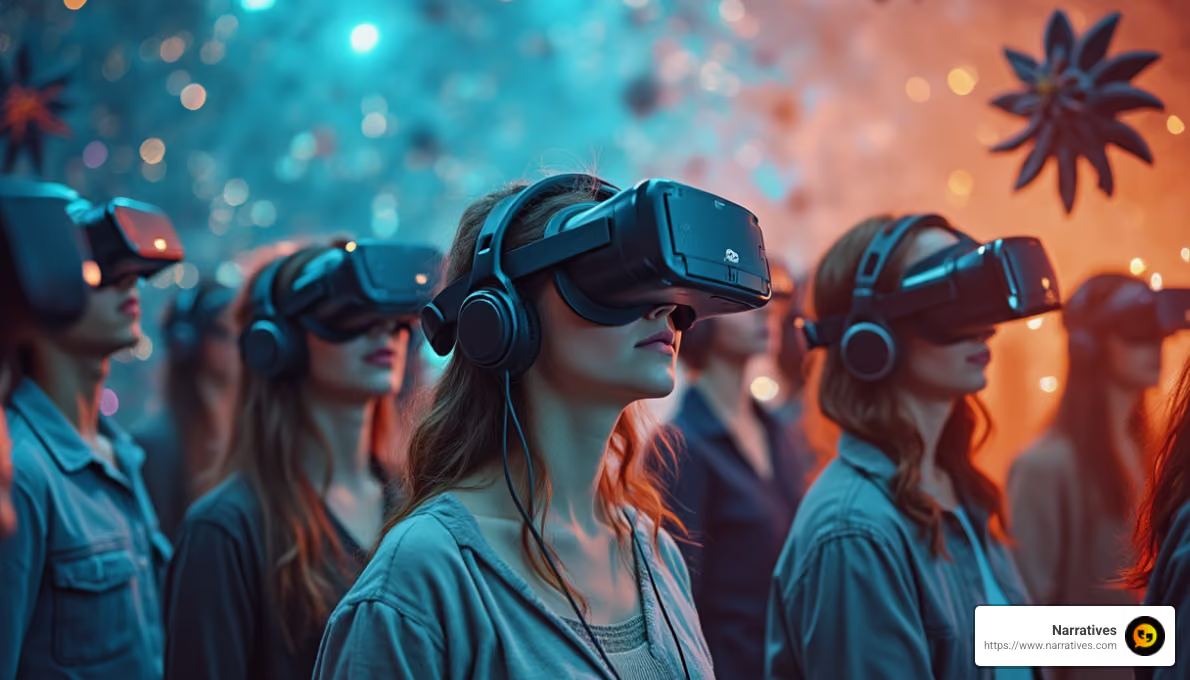
Immersive storytelling techniques have transformed the way stories are shared and experienced. By integrating digital narratives with interactive elements, these techniques bring stories to life, captivating audiences in unprecedented ways. Whether leveraged through virtual reality, interactive fiction, or augmented reality, immersive storytelling creates powerful and engaging experiences that resonate deeply.
Why focus on immersive storytelling techniques?
Improved Engagement: Interactive elements involve the audience actively, fostering a deeper connection.
Emotional Investment: The personal nature of immersive experiences makes stories more memorable.
Contextual Relevance: They provide context that aids understanding and learning.
Personalization: Custom experiences allowing users to explore narratives at their own pace.
As we dig deeper into this article, we will unpack the key elements and benefits of immersive storytelling to harness its full potential for advocacy, education, and social change.
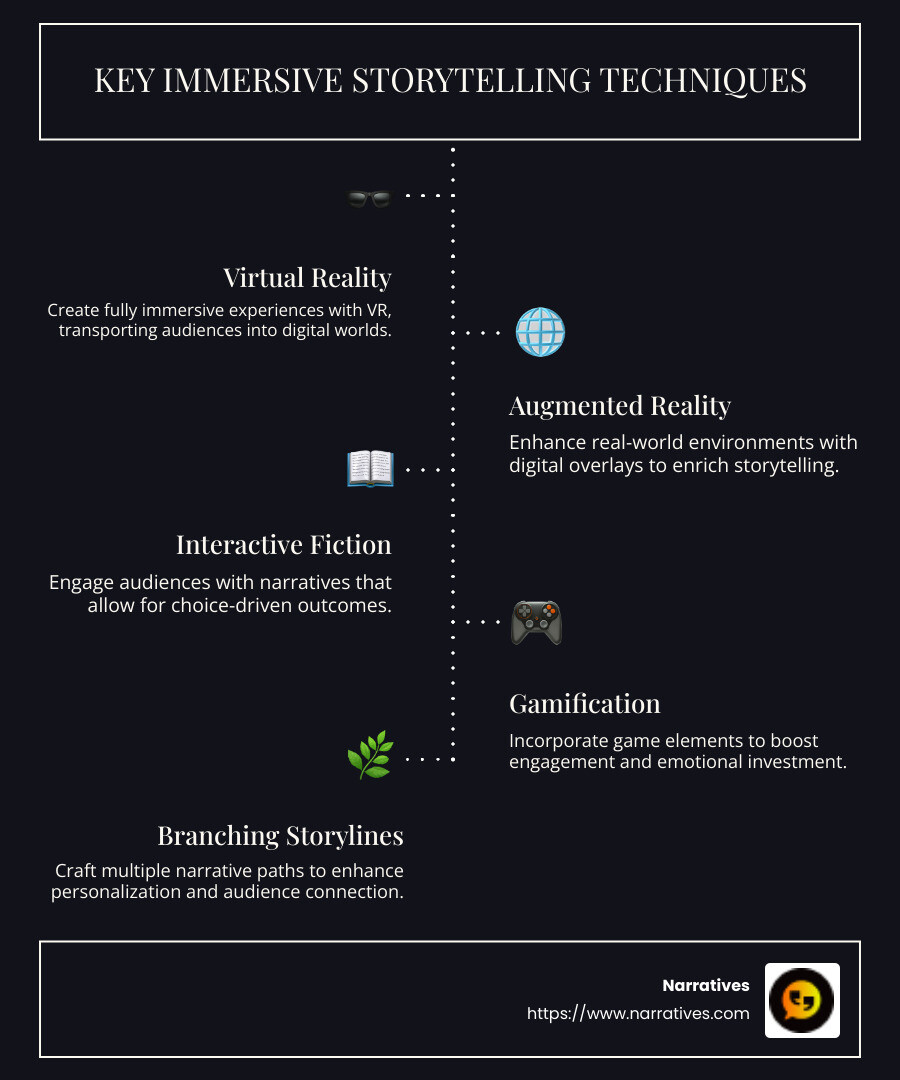
Key immersive storytelling techniques vocabulary:
Understanding Immersive Storytelling
Immersive storytelling goes beyond traditional narratives by inviting the audience to be part of the story. This approach leverages interactive fiction, emotional connections, and narrative engagement to create a memorable experience.
Interactive Fiction
Interactive fiction is a unique storytelling technique where the audience's choices shape the narrative. Unlike passive reading or watching, interactive fiction lets you decide what happens next. This choice-driven model increases engagement by making the audience active participants in the story.
Examples of interactive fiction include video games and digital narratives where decisions lead to different outcomes. This technique not only entertains but also develops critical thinking and problem-solving skills.
Emotional Connection
A strong emotional connection is the cornerstone of effective storytelling. Immersive storytelling techniques create this connection by placing the audience in the shoes of the characters, allowing them to feel the emotions firsthand.
This emotional investment makes the story more impactful and the lessons more memorable. When people care about the characters and the outcomes, they are more likely to remember and act upon the story's message.

Narrative Engagement
Engaging narratives are essential for keeping the audience interested. Immersive storytelling techniques use dynamic plots, relatable characters, and compelling conflicts to hold attention. By weaving in elements like suspense and surprise, these stories keep audiences on the edge of their seats.
Narrative engagement is further improved by the use of multimedia elements such as images, sounds, and animations, which add depth to the storytelling experience. These elements work together to create a rich mix that pulls the audience into the story world.
By understanding these key aspects of immersive storytelling, creators can craft experiences that not only entertain but also educate and inspire. Next, we will explore the specific techniques that make these stories come to life.
Immersive Storytelling Techniques
In immersive storytelling, three key technologies stand out: virtual reality (VR), augmented reality (AR), and artificial intelligence (AI). These tools transform stories from static narratives into dynamic experiences that captivate audiences.
Virtual Reality (VR)
Virtual reality immerses users in a fully digital environment, offering a 360-degree experience that places them right at the heart of the story. Imagine standing in the middle of a busy city or exploring an alien landscape—VR makes it possible.
VR's power lies in its ability to create a sense of presence. Users can interact with the environment and characters, making choices that affect the narrative. This interactivity not only improves engagement but also deepens emotional connections with the story.

Augmented Reality (AR)
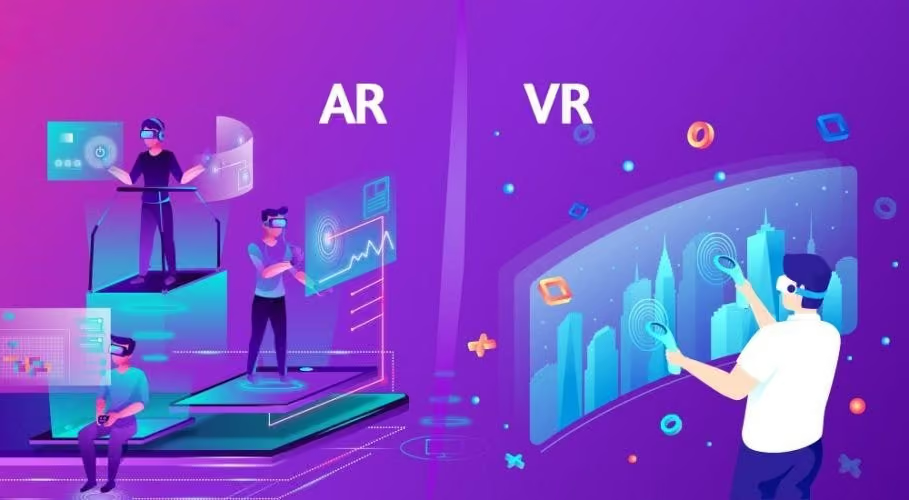
While VR builds a new world, augmented reality overlays digital elements onto the real world. This blend allows users to see and interact with both their physical surroundings and digital improvements.
For example, imagine walking through a historic site and seeing digital reconstructions of ancient structures overlaying the ruins. AR enriches the learning experience by providing context and additional information in real time. It's like having a virtual tour guide in your pocket.
Artificial Intelligence (AI)
Artificial intelligence adds a layer of personalization to immersive storytelling. AI can adapt stories based on user choices, creating unique experiences for each person. This dynamic storytelling allows for multiple endings, keeping audiences engaged as they explore different paths.
AI-powered characters can also interact naturally with users, responding to questions and actions. This makes the narrative more authentic and relatable, as if you're conversing with real people.
AI isn't just about dialogue. It can also generate custom content, such as music or images, tailoring the experience to the user's preferences and making each story truly unique.
By leveraging these immersive storytelling techniques, creators can craft experiences that are not only engaging but also deeply personal and memorable. Next, we will dig into the benefits these techniques bring to storytelling and learning.
Benefits of Immersive Storytelling
Immersive storytelling techniques bring a treasure trove of benefits to the table, changing how we engage with and retain information. Let's explore why these techniques are so powerful.
Increased Engagement
Immersive storytelling captivates audiences by pulling them into a narrative they can interact with. Think of it as the difference between watching a movie and being part of it. This engagement isn't just about entertainment—it's a key driver in making the learning process more enjoyable and effective.
When learners are part of the story, they form emotional connections that keep them invested. For example, interactive fiction allows users to make choices that influence the story's outcome, enhancing their involvement and interest.
Improved Retention
When you're emotionally involved in a story, you're more likely to remember it. This is a core benefit of immersive storytelling. By creating a compelling narrative, these techniques help learners retain information better.
Studies show that when learners are engaged with content on an emotional level, they can recall details more accurately. This is because the emotional connection helps to encode information into long-term memory.
Contextual Learning
Immersive storytelling places learners in realistic scenarios, providing context that makes the information relevant. This approach is especially effective in fields like health and safety training or ethics education, where real-world application is crucial.
For instance, augmented reality can overlay digital information onto real-world settings, offering a richer learning context. Imagine seeing historical events unfold right in front of you as you walk through a museum. This context helps learners understand the material better and apply it to real-life situations.
By leveraging the power of immersive storytelling techniques, we can create learning experiences that are not only engaging but also memorable and meaningful. Next, we'll explore specific techniques like virtual reality and gamification that make this possible.
Techniques for Immersive Storytelling
Virtual Reality and Augmented Reality
Virtual Reality (VR) experiences immerse learners in a fully digital environment, allowing them to interact with the story world as if they were actually there. Imagine stepping into a historical event or exploring the human body from the inside. In a recent VR exhibition at the Museum of Moving Image, participants faced critical decisions under the threat of nuclear violence, showcasing how VR can create intense, memorable experiences.
Augmented Reality (AR) overlays add digital elements to the real world, enhancing the learning experience without completely replacing reality. For instance, in medical training, AR can project interactive instructions onto surgical equipment, providing real-time guidance and context. By merging the digital and physical worlds, AR makes learning more dynamic and accessible.
Gamification and Interactive Simulations
Gamification uses game elements like points, badges, and leaderboards to make learning more engaging. These elements tap into our intrinsic motivation, encouraging us to progress and achieve goals. By incorporating challenges and rewards, gamification transforms mundane topics into exciting trips.
Interactive simulations provide learners with realistic scenarios where they can apply their knowledge and skills. For example, flight simulators allow pilots to practice in a risk-free environment. These simulations enable learners to learn from mistakes, gain confidence, and develop critical thinking skills.
Interactive Narrative and Branching Storylines
Interactive narrative allows learners to shape the story through their choices. By engaging with characters and exploring different paths, learners become active participants in the narrative. This technique is particularly effective for developing empathy and problem-solving skills.
Branching storylines offer multiple endings based on user choices, encouraging critical thinking and reflection. Learners can explore various outcomes, understanding the consequences of their decisions. This approach is ideal for scenarios like leadership development or conflict resolution training.
By integrating these immersive storytelling techniques, we can craft engaging and effective learning experiences. Next, let's explore how to improve engagement with elements like scroll-based animation and rich media.
Enhancing Engagement with Immersive Storytelling
To truly captivate your audience, immersive storytelling techniques must go beyond traditional narratives. Let's explore how elements like scroll-based animation, rich media, and responsive design can lift your storytelling.
Scroll-based Animation
Scroll-based animations are a dynamic tool for guiding users through a story. As users scroll, animations unfold, highlighting key points and providing visual cues. This technique not only makes the content more engaging but also reinforces user actions, creating a sense of interaction and control. For example, as users scroll through a webpage, animations can emphasize critical information or reveal hidden content, keeping the audience engaged and curious.
Rich Media
Incorporating rich media—high-resolution images, videos, and interactive elements—can transform a static story into an immersive experience. Rich media captures attention and evokes emotional responses, making stories more memorable. For instance, digital stories that tackle social issues often use impactful videos and images to create a "shock effect," compelling the audience to reflect and act. The use of transitions and effects like glitching, influenced by digital trends, can further improve the storytelling by adding depth and texture.
Responsive Design
Responsive design ensures that your story is accessible and engaging across all devices, whether it's a smartphone, tablet, or desktop. A responsive layout adapts to different screen sizes, maintaining usability and aesthetics. This is crucial because an unresponsive design can lead to frustration and disengagement. By prioritizing responsiveness, you ensure that the audience can seamlessly interact with the story, regardless of their device. This approach not only improves user satisfaction but also increases retention and engagement.
By integrating these elements, you can create a storytelling experience that is both visually appealing and highly interactive. Next, let's answer some frequently asked questions about immersive storytelling techniques.
Frequently Asked Questions about Immersive Storytelling Techniques
What are immersive storytelling techniques?
Immersive storytelling techniques are methods that combine traditional storytelling with interactive elements to create engaging experiences. These techniques draw the audience into the narrative, making them active participants rather than passive listeners. By using tools like virtual reality and augmented reality, stories become more vivid and memorable.
Interactive fiction is a classic example. It allows users to make choices that influence the story's outcome, enhancing engagement and fostering critical thinking.
How do immersive storytelling techniques improve learning?
Immersive storytelling techniques improve learning by making it more engaging and memorable. When learners are part of a story, they are more likely to retain information. This emotional connection helps in encoding and recalling knowledge.
These techniques also place learners in realistic scenarios, providing context and relevance. This makes it easier for them to understand and apply what they learn in real-world situations. Moreover, by encouraging decision-making and problem-solving, these techniques promote critical thinking skills.
What technologies are used in immersive storytelling?
Immersive storytelling relies on several cutting-edge technologies:
- Virtual Reality (VR): Creates fully immersive environments, blocking out the physical world and placing users in a computer-generated setting.
- Augmented Reality (AR): Overlays digital information onto the real world, enhancing the user's perception of their surroundings.
- Artificial Intelligence (AI): Powers interactive elements, enabling stories to adapt based on user interactions.
- Gamification: Integrates game elements into stories to motivate and engage users.
These technologies work together to create dynamic and personalized storytelling experiences, making them effective tools for education and engagement.
By understanding these techniques and technologies, you can create immersive stories that captivate and educate your audience. Stay tuned as we explore more on how these methods can be applied to create impactful narratives.
Conclusion
Immersive storytelling techniques are changing the way we connect with audiences, especially in the non-profit sector. At Narratives, we understand the power of storytelling to drive social impact. By elevating underrepresented voices and crafting emotionally resonant content, we help non-profits share their stories in ways that inspire action and build trust.
Non-profit storytelling is about more than just sharing facts. It's about creating a narrative that resonates with people's values and emotions. Through immersive storytelling, we can transport audiences into the heart of the issues non-profits are tackling, making the challenges and triumphs feel personal and urgent.
The social impact of effective storytelling is profound. When people feel connected to a cause, they're more likely to support it. This connection can lead to increased visibility for important issues, more robust community engagement, and ultimately, meaningful change.
By leveraging technologies like virtual reality and interactive narratives, we create experiences that are not only engaging but also memorable. These stories do more than inform; they inspire. They encourage audiences to become advocates, volunteers, and donors.
At Narratives, we are committed to using immersive storytelling to amplify the voices that need to be heard. We invite you to learn more about how we can help your organization tell its story. Together, we can create narratives that not only captivate but also make a difference.

.avif)