Amplifying Voices: The Role of Impacted Communities in Campaigns
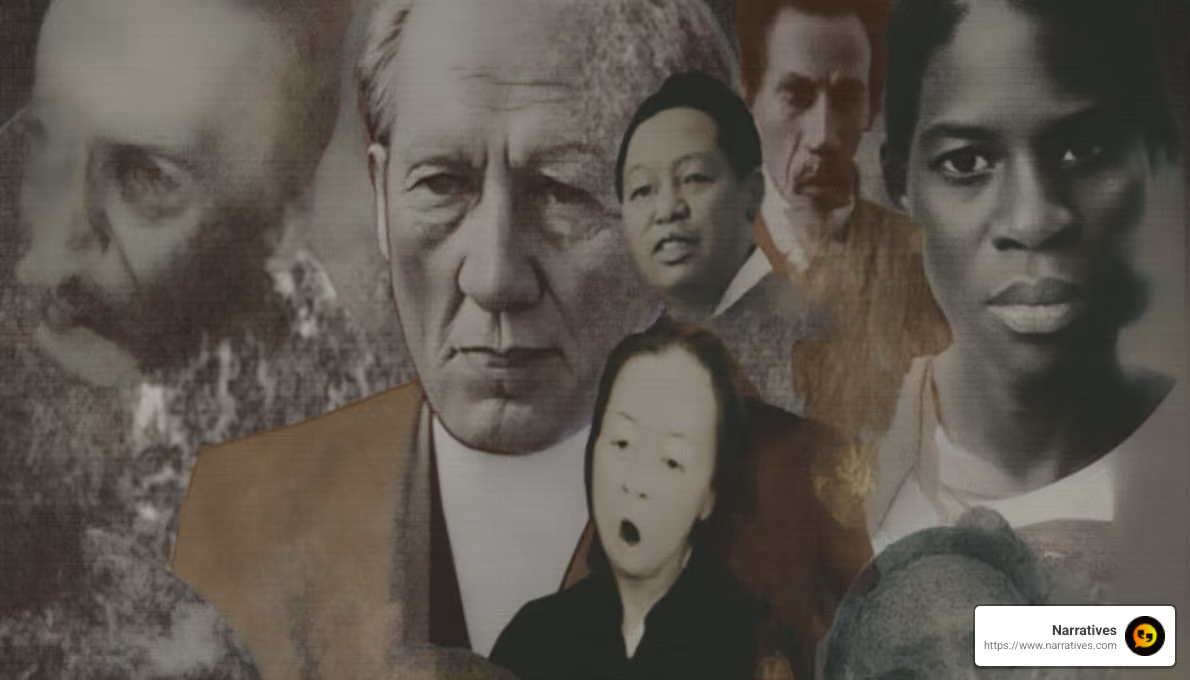
The importance of hearing from impacted communities poor people's campaign cannot be overstated. This grassroots initiative reveals the power and necessity of listening to those who live the reality of systemic issues every day. It reminds us that meaningful change begins with understanding and amplifying these voices, which are often marginalized or ignored.
Key reasons to hear from impacted communities in the Poor People's Campaign:
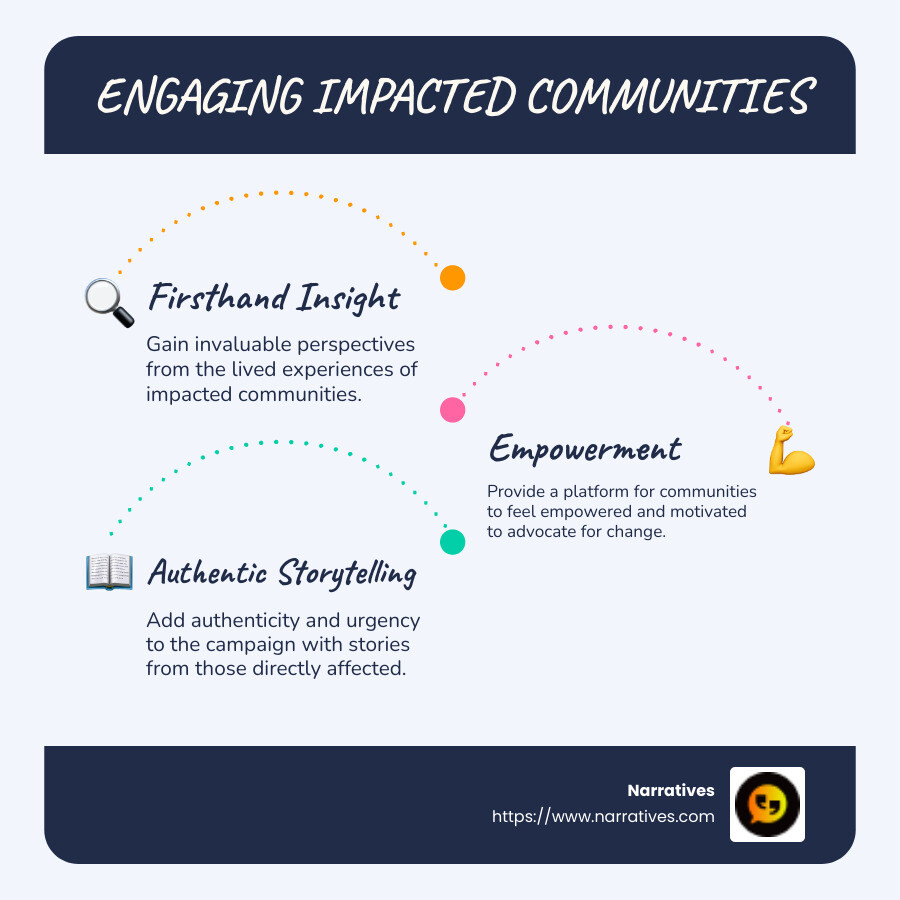
- Firsthand Insight: Impacted communities share experiences, offering invaluable perspectives that shape the campaign's priorities and strategies.
- Empowerment: By giving these communities a platform, they feel empowered and motivated to continue advocating for change.
- Authentic Storytelling: Stories from those directly affected add authenticity and urgency to the campaign's narrative.
- Effective Solutions: Solutions are more effective when they're informed by those who understand the problems best.
The Poor People's Campaign seeks to revive the fight against systemic racism, poverty, and ecological devastation, echoing the historical call for a moral revival. Leaders like Rev. Dr. William J. Barber II and Rev. Dr. Liz Theoharis emphasize the critical role of impacted communities in driving this moral agenda forward. These voices are crucial in challenging unjust systems and crafting policies that genuinely address the needs of the most vulnerable.
"Being poor isn’t a sin. Systems that keep people in poverty are a sin." – Rev. Dr. William J. Barber II
The movement's success hinges on this ethos, as it builds a diverse coalition to fight interlocking injustices at the national and local levels.
Historical Context of the Poor People's Campaign
The Poor People's Campaign was originally envisioned by Rev. Dr. Martin Luther King Jr. in 1968. It aimed to address the interconnected issues of systemic racism and poverty that plagued the United States. King sought to unify poor and marginalized communities across racial lines, calling for a "revolution of values" in America. This campaign was a bold step toward confronting entrenched social injustices and demanding economic equality.
The 1968 Campaign
In the late 1960s, America was a nation divided by race and class. The civil rights movement had achieved significant legal victories, but systemic racism persisted. Jim Crow laws, which enforced segregation and disenfranchised Black Americans, continued to deny millions of people basic human rights. Economic inequality was rampant, with poverty disproportionately affecting communities of color.
King's vision for the Poor People's Campaign was to bring these issues to the forefront of national consciousness. The plan was to gather a diverse group of poor Americans in Washington, D.C., to demand an end to poverty and racism. Tragically, King was assassinated before he could see this vision come to fruition.
Systemic Racism and Poverty
Systemic racism and poverty are deeply intertwined. The Poor People's Campaign highlighted how policies and practices have historically marginalized Black communities and other people of color. From discriminatory housing policies to unequal access to education and healthcare, systemic barriers have perpetuated cycles of poverty.
The 1968 campaign sought to expose these injustices and demand systemic change. It called for fair wages, better job opportunities, and access to quality education and healthcare for all Americans.
A Legacy of Moral Revival
Though the original Poor People's Campaign faced challenges, its legacy lives on. Today, the movement has been revived by leaders like Rev. Dr. William J. Barber II and Rev. Dr. Liz Theoharis. They continue to fight against the interlocking injustices of systemic racism, poverty, and ecological devastation.
The importance of hearing from impacted communities remains central to the campaign's mission. By amplifying the voices of those who experience these injustices firsthand, the movement seeks to create a more just and equitable society for all.
Importance of Hearing from Impacted Communities in the Poor People's Campaign
The importance of hearing from impacted communities cannot be overstated in the Poor People's Campaign. This movement thrives on the voices of those who experience systemic issues firsthand.
Amplifying Underrepresented Voices
Grassroots organizing is at the heart of the campaign. It's about bringing together people who are directly affected by poverty and systemic racism. These individuals share their stories, providing a human face to the statistics and policies that often go unnoticed.
Rev. Dr. William J. Barber II and Rev. Dr. Liz Theoharis have emphasized the need for moral leaders to rise from within these communities. They believe that those who have lived through these injustices have the moral authority to lead the charge for change.

Community stories are powerful tools for change. By sharing their experiences, individuals can highlight the real-life impact of policies and practices that perpetuate inequality. This storytelling not only raises awareness but also fosters empathy and understanding.
Building a Moral Fusion Movement
The Poor People's Campaign aims to build a moral fusion movement that addresses interlocking injustices such as systemic racism, poverty, and ecological devastation. These issues are not isolated; they are interconnected and must be tackled together.
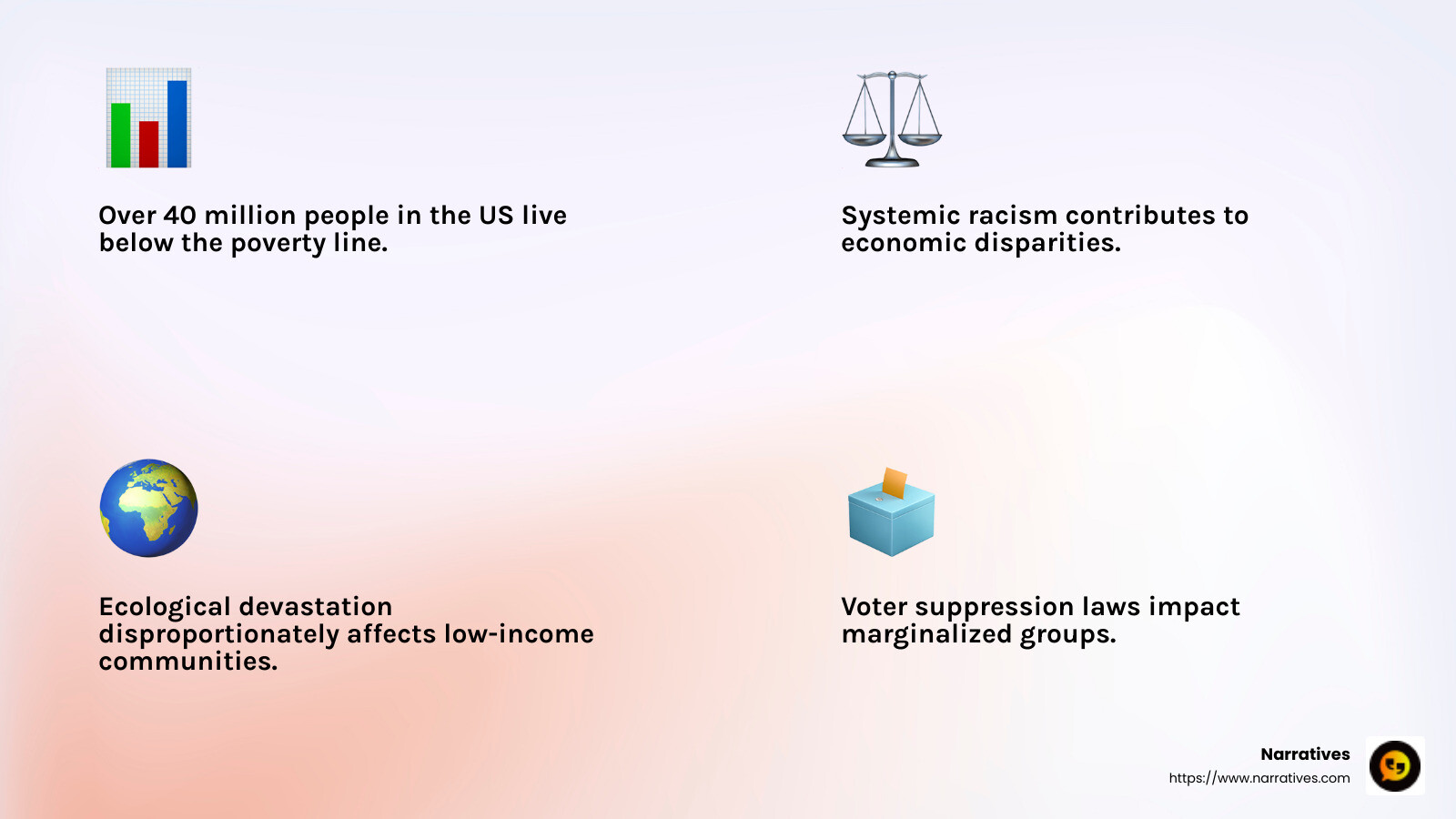
Systemic racism manifests in various forms, from voter suppression laws to unequal access to healthcare and education. These injustices are compounded by ecological devastation, which disproportionately affects marginalized communities. The campaign seeks to address these issues by advocating for policies that promote equity and justice.
By amplifying underrepresented voices and building a coalition of moral leaders, the Poor People's Campaign is working towards a more equitable and just society. The movement's strength lies in its ability to unite people across racial, economic, and geographic lines, creating a powerful force for change.
Strategies for Effective Community Engagement
Engaging with communities effectively is crucial for the success of the Poor People's Campaign. Here, we'll explore some strategies that have proven effective, particularly in amplifying the voices of those most impacted by systemic issues.
Role of Arts and Culture
Arts and culture play a vital role in community engagement. Storytelling through cultural events and community conversations allows people to share their experiences in a relatable way. These stories can highlight the struggles and resilience of impacted communities, bringing their realities to the forefront.
Cultural events provide a platform for community members to express themselves creatively and connect with others who share similar experiences. These gatherings can foster a sense of solidarity and inspire collective action.
Digital Storytelling and Multimedia Content
Digital storytelling and multimedia content are powerful tools for reaching a broader audience. Organizations like Narratives use video content to create an emotional resonance that text alone often cannot achieve.
Videos can capture the raw emotion and urgency of the issues at hand, making them more relatable to viewers. This approach helps to humanize the statistics and policies, encouraging empathy and understanding.
Listening Tours, Direct Action, and Voter Mobilization
Listening tours are an essential strategy for understanding the needs and concerns of impacted communities. By visiting different areas and speaking directly with residents, campaign leaders can gain valuable insights into the unique challenges each community faces.
Direct action is another critical component of community engagement. By organizing protests, marches, and other forms of activism, the campaign can draw attention to systemic injustices and demand change.
Voter mobilization is vital for ensuring that the voices of marginalized communities are heard in the political arena. The campaign focuses on registering voters, educating them about their rights, and encouraging them to participate in elections.
In conclusion, these strategies—listening tours, direct action, voter mobilization, and the use of arts and digital storytelling—are all crucial for effective community engagement. They help to amplify the voices of those most affected by systemic issues, fostering a movement that is truly driven by the people.
Frequently Asked Questions about the Poor People's Campaign
Was the Poor People's Campaign successful?
The Poor People's Campaign has been a significant force in raising awareness about systemic issues like poverty and racism. While success can be measured in various ways, the campaign has achieved several key outcomes:
Amplification of Voices: The campaign has highlighted the experiences and demands of poor communities, making their struggles visible to a wider audience.
Policy Influence: It has pushed for changes in policies related to voting rights, healthcare, and economic justice, although these battles are ongoing.
Community Mobilization: By organizing mass meetings and direct actions, the campaign has brought together a diverse coalition of individuals and organizations committed to social justice.
Why did the Poor People's Campaign start?
The Poor People's Campaign began as a response to the intertwined issues of systemic racism, poverty, and inequality. Originally launched by Martin Luther King Jr. in 1968, the campaign sought to address the economic injustices faced by marginalized communities.
The modern revival of the campaign continues this mission by focusing on:
Moral Revival: Calling for a moral awakening to address the systemic issues that perpetuate poverty and inequality.
Grassroots Organizing: Empowering those most affected by these issues to lead the movement and advocate for their rights.
What did the Poor People's Campaign achieve?
The Poor People's Campaign has achieved several notable milestones:
National Awareness: It has brought national attention to the "interlocking injustices" of poverty, racism, ecological devastation, and militarism.
Policy Advocacy: The campaign has been instrumental in advocating for policies that promote economic and social justice, such as living wages and healthcare access.
Community Building: Through grassroots organizing and cultural events, the campaign has fostered a sense of solidarity among diverse communities, encouraging collective action for systemic change.
The campaign's ongoing efforts continue to inspire and mobilize communities across the United States, emphasizing the importance of hearing from impacted communities to drive meaningful change.
Conclusion
Community-driven storytelling is more important than ever. Narratives, like those shared through the Poor People's Campaign, play a crucial role in highlighting the voices of underrepresented communities. By focusing on the real stories of people affected by systemic issues, we can inspire action and create meaningful social impact.
Narratives is committed to amplifying these voices through high-quality, emotionally resonant multimedia content. Our mission is to help non-profits and purpose-driven organizations share their impact stories in a way that builds trust and increases visibility. We believe that when stories are told with empathy and authenticity, they have the power to change minds and drive social change.
The Poor People's Campaign demonstrates the importance of hearing from impacted communities. By listening to those who experience poverty, racism, and ecological devastation firsthand, we are better equipped to address these systemic issues. This approach not only raises awareness but also fosters a sense of solidarity and collective action.
Through storytelling, we can shine a light on the struggles and triumphs of those who are often overlooked. By doing so, we can help build a more just and equitable society where every voice is heard and valued.
To learn more about how Narratives can support your organization's storytelling efforts, click here. Let's work together to create stories that inspire change and make a difference.


.avif)