Crafting Narratives that Move: Inspire Action Through Storytelling

Inspire action with storytelling by creating deep connections and fostering empathy. This powerful tool transforms how individuals and organizations communicate their mission and values.
Here's a quick overview:
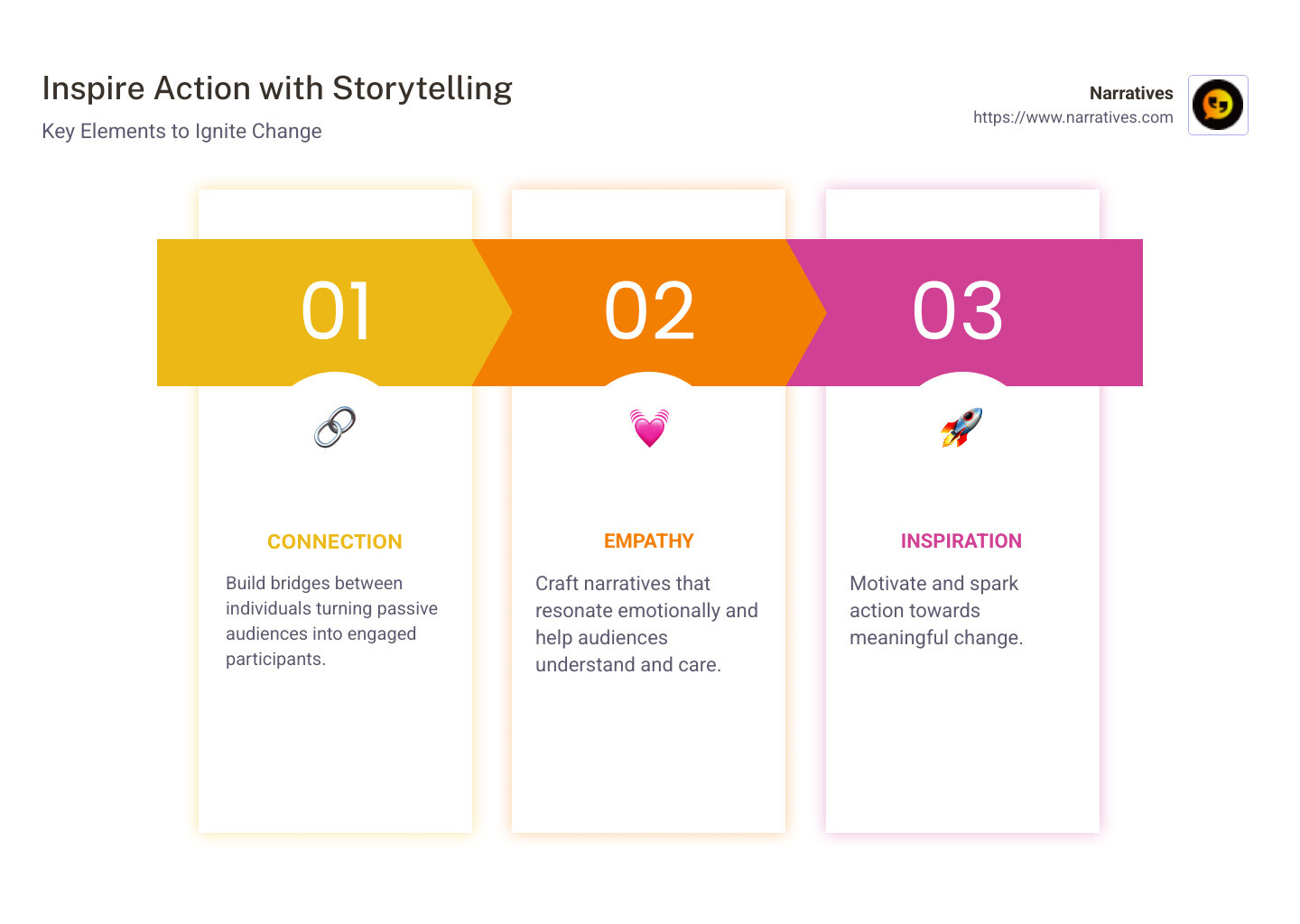
- Connection: Stories build bridges between people, turning passive audiences into engaged participants.
- Empathy: Engaging narratives resonate emotionally, helping audiences understand and care about the story's core message.
- Inspire Action: Well-crafted stories don't just inform—they motivate audiences to take purposeful steps toward change.
For organizations like nonprofits, this means translating mission-driven work into compelling content that resonates and mobilizes support.
In today's world, a well-told story can cut through the noise, grab attention, and spark the necessary actions for meaningful impact.
Quick look at inspire action with storytelling:
The Power of Storytelling
Storytelling is a superpower. It has the unique ability to move people emotionally, engage them deeply, and leave a lasting impression.
Emotional Impact
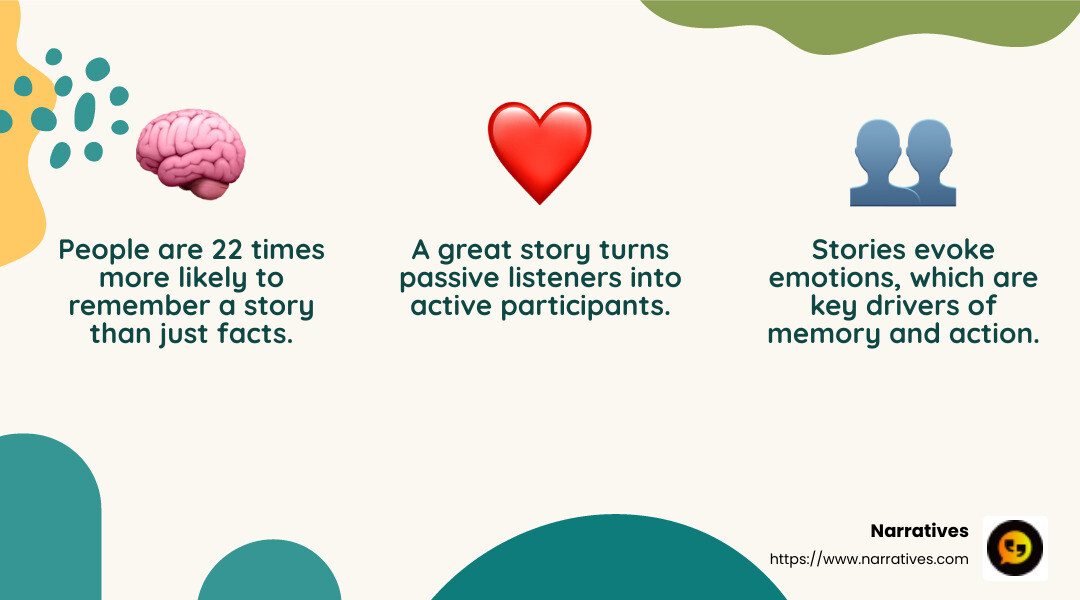
Stories touch our hearts and minds in ways that facts alone cannot. According to research, people are 22 times more likely to remember a story than just facts. This is because stories evoke emotions, which are key drivers of memory and action.
Imagine a nonprofit sharing a heartfelt testimonial about a family whose life was transformed by their services. This story doesn't just inform; it connects emotionally, making the audience feel the impact and importance of the work.
Audience Engagement
Engaging your audience is crucial for any storyteller. A great story draws people in and keeps them interested. It turns passive listeners into active participants.
Consider a narrative where the audience is placed at the center, reflecting their challenges and aspirations. This approach makes them feel seen and understood, encouraging them to engage more deeply with the content.
Memorable Narratives
A memorable story sticks with you long after it's been told. It has a clear purpose, relatable characters, and a satisfying conclusion.
For instance, a business leader might share a story about overcoming a major hurdle through teamwork and innovation. This narrative not only highlights the problem and solution but also inspires others to adopt similar values and actions.
In crafting memorable narratives, remember to:
- Start with a clear purpose: Know what you want your audience to feel or do.
- Put your audience at the center: Make it about them and their journey.
- Lead with a problem, end with a solution: Show change and inspire action.
In summary, the power of storytelling lies in its ability to create emotional connections, engage audiences, and craft memorable narratives. This is the foundation for inspiring action and driving change.
Inspire Action with Storytelling
To inspire action with storytelling, weave persuasive narratives that resonate emotionally and conclude with a compelling call to action. This approach transforms storytelling from mere entertainment into a powerful tool for change.
Persuasive Storytelling
Persuasive storytelling is about more than just sharing a tale; it's about driving change. It involves crafting narratives that not only engage but also persuade audiences to think, feel, and act differently. A well-crafted story can transform a passive listener into an active participant. For instance, when a leader shares a story of overcoming adversity through teamwork, it doesn't just highlight a problem and solution. It also inspires others to accept similar values and take action.
Emotional Resonance
The heart of any compelling story is its emotional resonance. Emotion is the engine that drives action. When a story taps into feelings of hope, empathy, or urgency, it becomes more than just a narrative—it becomes a catalyst for change. Consider the impact of a nonprofit's story about a family whose life was transformed by their services. This kind of storytelling not only informs but also connects on a deep emotional level, making the audience feel the significance of the work.
Call to Action
Every powerful story concludes with a clear and motivating call to action. This is where inspiration turns into tangible results. A strong call to action provides the audience with a specific next step, whether it's joining a cause, adopting a mindset, or trying a new approach. For example, a story might end with, "Now it’s your turn. What small step can you take today to move closer to your goal?" This not only provides clarity but also motivates the audience to act.
In summary, to truly inspire action with storytelling, focus on creating persuasive narratives with emotional resonance and a clear call to action. This approach not only engages and moves your audience but also drives them to take meaningful actions.
Techniques for Effective Storytelling
Crafting stories that move people to act requires more than just a good plot. It demands a strategic approach that considers the audience, context, and desired outcomes. Let's explore these key techniques.
Audience-Specific
Understanding your audience is crucial. Tailor your story to the people you want to reach. Consider their preferences, emotions, and motivations. For instance, when speaking to potential donors, highlight the tangible impact of their contributions. For volunteers, focus on personal success stories that resonate with their desire to make a difference.
Contextualize
Every story needs context. Set the scene by providing background information that helps the audience understand the situation. This involves explaining the who, what, where, and why of your narrative. For example, if you're advocating for a policy change, explain the current landscape and the necessity for action. A well-contextualized story makes it easier for listeners to grasp the significance and urgency of the issue.
Humanize
Humanizing your narrative means making it relatable. Use real-life examples and personal anecdotes to bridge the gap between abstract ideas and the audience's everyday experiences. A story about a cancer survivor's journey, for instance, can powerfully illustrate the need for better healthcare policies. By putting a face to the story, you create empathy and a deeper connection with your audience.
Action-Oriented
To truly inspire action with storytelling, your narrative must be action-oriented. Clearly articulate what you want your audience to do after hearing your story. Whether it's signing a petition, volunteering, or simply changing their perspective, provide a specific and achievable call to action. This not only gives your audience direction but also empowers them to become part of the solution.
By focusing on these techniques—being audience-specific, providing context, humanizing the story, and including a clear call to action—you can create compelling narratives that not only engage but also inspire meaningful change.
Inspire Action with Storytelling: Nonprofit Focus
Storytelling is a powerful tool for nonprofits, helping to build community, engage donors, and motivate volunteers. Let's explore how nonprofits can harness storytelling to inspire action and drive their mission forward.
Community Building
Nonprofits thrive on community. Stories can create a sense of belonging and shared purpose. By sharing narratives that highlight community efforts and achievements, nonprofits can strengthen bonds among supporters. For example, a story about a neighborhood coming together to build a community garden can illustrate the power of collective action. This not only showcases the nonprofit’s role but also emphasizes the impact of community collaboration.
Donor Engagement
Donors want to see the impact of their contributions. Storytelling can bridge the gap between donations and real-world change. Highlighting personal stories of individuals or communities that have benefited from donations can make the impact tangible. For instance, sharing a story about a student who received a scholarship thanks to donor support can create a compelling narrative. According to research, people are 22 times more likely to remember a story than facts alone. By focusing on real-life impact, nonprofits can deepen donor relationships and encourage continued support.
Volunteer Motivation
Volunteers are the backbone of many nonprofits. To keep them motivated, stories that resonate with their values and aspirations are essential. Sharing success stories of volunteers making a difference can inspire others to get involved. For example, a narrative about a volunteer who helped transform a local shelter can motivate others to contribute their time and skills. When volunteers see the tangible results of their efforts, they feel more connected to the cause and are more likely to stay engaged.
By focusing on these areas—community building, donor engagement, and volunteer motivation—nonprofits can craft stories that not only inform but also drive action and foster a sense of unity around their mission.
Visual Storytelling and Digital Platforms
Visual storytelling is a game-changer. It combines images, videos, and graphics to tell compelling stories that capture attention and inspire action. Let's explore how visual elements, social media, and multimedia content can amplify your storytelling efforts.
Visual Elements
Images and videos are more than just eye candy. They are powerful tools that can evoke emotions and create lasting impressions. For instance, a simple image of a red envelope on a pillow can evoke feelings of love and curiosity, prompting viewers to engage further with the content. Visuals make stories more relatable and memorable. They help bridge the gap between words and emotions, allowing audiences to see and feel the narrative.
Social Media
Social media platforms are perfect for sharing visual stories. They allow nonprofits and organizations to reach a wider audience quickly. Platforms like Instagram and Facebook thrive on visual content, offering features like stories, reels, and live videos to engage users. According to research, posts with images are shared and liked more often than those without. By crafting visually engaging stories, you can increase your reach and impact.
Multimedia Content
Multimedia content includes a mix of text, images, audio, and video. This combination improves storytelling by catering to different learning styles and preferences. For example, a short video showcasing a community project, accompanied by a compelling narrative, can create a powerful emotional connection. Multimedia content not only captures attention but also keeps audiences engaged. It provides various entry points for engagement, whether someone prefers watching a video, listening to a podcast, or reading an article.
By leveraging visual elements, social media, and multimedia content, you can craft stories that captivate and motivate your audience to take action. Whether you're aiming to engage donors, motivate volunteers, or build community, these tools can amplify your message and drive your mission forward.
Frequently Asked Questions about Storytelling
Why is storytelling so important?
Storytelling is vital because it creates empathy and fosters connection. From ancient cave paintings to Shakespeare, stories have always been a way to connect people. They allow us to share experiences and understand each other's perspectives.
Stories are memorable. Research shows people are 22 times more likely to remember a story than just facts. This is because stories tap into our emotions and help us see the world from different angles.
How can storytelling inspire action?
To inspire action with storytelling, focus on emotion and clarity. A well-told story doesn't just inform; it moves people to act.
Consider how a personal story from a cancer survivor can raise awareness and push for policy changes. It's not about being an expert but sharing a genuine experience that resonates with others.
A powerful story has a clear call to action. It tells the audience what they can do next, whether it's donating, volunteering, or advocating for change.
What are the key elements of a great story?
Every great story has three key elements: context, conflict, and outcome.
Context sets the stage. It gives background information and introduces the characters and setting.
Conflict is the heart of the story. It's the challenge or problem that needs to be resolved. This keeps the audience engaged and invested in the outcome.
Outcome is the resolution. It shows how the conflict is resolved and provides a takeaway or lesson for the audience.
By weaving these elements together, you create a narrative that is not only engaging but also meaningful. It leaves a lasting impression and encourages your audience to act.
Conclusion
In storytelling, Narratives stands as a guide for those seeking to lift voices and create meaningful social impact. We believe that stories are more than just words; they are powerful tools for change. Our mission is to lift underrepresented voices through high-quality, emotionally resonant content that inspires action.
By partnering with non-profits and purpose-driven organizations, we help share their impact stories in a way that builds trust and increases visibility. Whether it's a video highlighting community resilience or a multimedia campaign promoting environmental sustainability, our stories are crafted to move hearts and minds.
Lifting voices isn't just about sharing stories; it's about amplifying the messages that matter. We focus on creating content that resonates with diverse audiences, sparking conversations and driving change. It's about giving a platform to those who might not otherwise be heard and ensuring their stories reach the right ears.
The social impact of storytelling is profound. When done right, it can unite communities, rally support, and even reshape policies. By focusing on empathy and connection, we create narratives that not only inform but also inspire. Our stories encourage people to see the world differently and take action to make it better.
As we continue to craft narratives that move, we invite you to join us in our mission. Together, we can harness the power of storytelling to create a more just and equitable world. To learn more about how we can help your organization share its story, click here.


.avif)