Multimedia Storytelling: 15 Examples to Spark Your Creativity

Multimedia storytelling examples can be a real game-changer, especially if you're looking to create engaging and dynamic content that resonates with your audience. Imagine combining videos, audio, animations, and interactive elements to form a gripping narrative. Sounds intriguing, right?
Here's a quick look at some standout multimedia storytelling examples that could ignite your creativity:
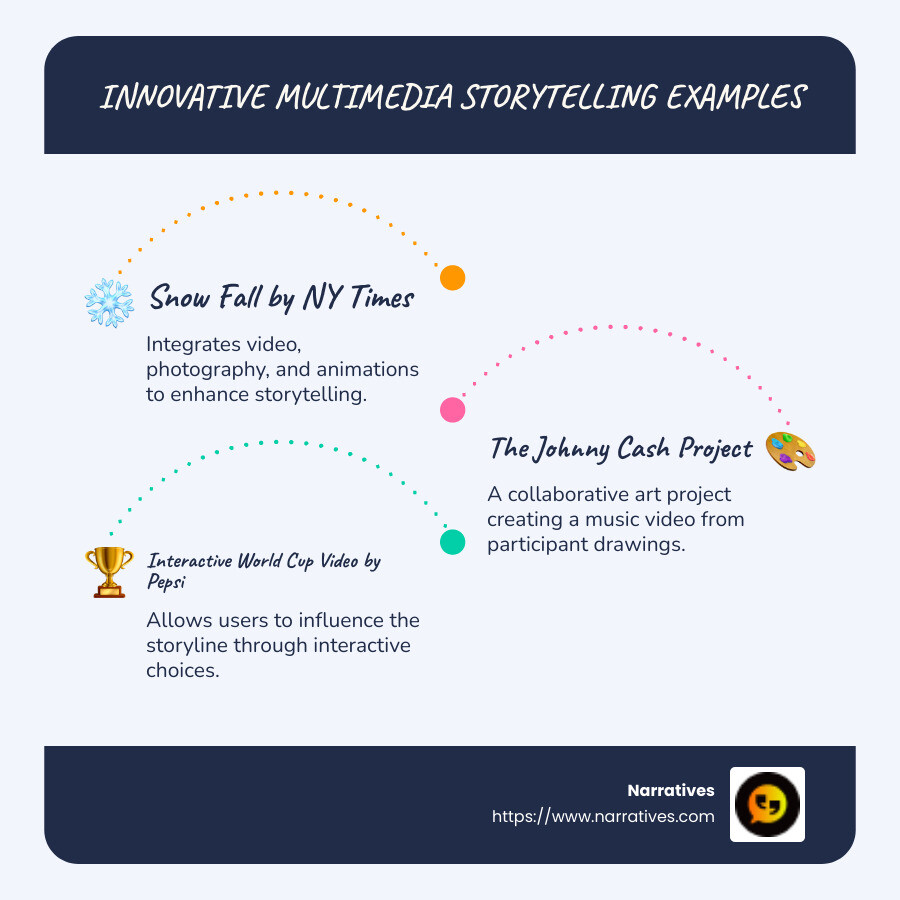
- Snow Fall by the New York Times: A blend of video clips, photography, and scroll-based animations to create a stunning narrative.
- The Johnny Cash Project: A communal art initiative where participants contributed unique drawings to form a music video.
- Interactive World Cup Video by Pepsi: Engage users by letting them influence the progression of the story.
Multimedia content is revolutionizing the way stories are told, going beyond traditional text and static imagery. It's about crafting experiences that invite the audience to participate, interact, and connect emotionally with the story. This creative approach invites viewers to become engagers and interactors, amplifying the impact of your message.
For non-profits, social impact organizations, and story-driven brands, embracing multimedia storytelling opens up new opportunities. You can narrate complex issues — like climate change or social justice — in a way that is not just informative but transformative.
Simple Multimedia storytelling examples glossary:
What is Multimedia Storytelling?
Multimedia storytelling is a method of weaving together various forms of digital media to craft a narrative that is both engaging and compelling. It goes beyond the traditional text and image combination, incorporating videos, audio, animations, and interactive elements to create an immersive experience for the audience.
Digital Storytelling
At its core, digital storytelling allows creators to break free from the constraints of traditional media. By leveraging dynamic digital elements, such as videos and illustrations, storytellers can create narratives that are not only visually appealing but also interactive. This method transforms the way stories are consumed, making them more engaging and memorable.
One famous example of digital storytelling is the New York Times' Snow Fall, which combines video clips, photography, and scroll-based animations. This project set a benchmark in the industry, showcasing how multimedia elements can improve the storytelling experience.
Interactive Content
Interactive content is a key component of multimedia storytelling. It involves creating elements that invite the audience to participate actively in the narrative. This could be through clickable elements, scroll-triggered animations, or interactive maps.
For instance, the Interactive World Cup Video by Pepsi allowed users to influence the progression of the story, making them feel like a part of the narrative. This level of engagement helps in capturing the audience's attention and keeping them invested in the story.
Immersive Experiences
Immersive experiences are about fully engaging the audience's senses to create a memorable storytelling experience. They often involve a combination of visual and auditory elements, designed to transport the audience into the story's world.
Projects like Hearing Birdsong exemplify this by turning a simple hearing test into an exploration of nature, using animation and sound to immerse the audience fully. By creating such experiences, storytellers can evoke stronger emotional responses, making the stories more impactful and memorable.
In summary, multimedia storytelling is about crafting narratives that are not just seen or read but experienced. It invites audiences to be part of the story, creating a deeper connection and leaving a lasting impression. As digital tools continue to evolve, the possibilities for creating rich, interactive, and immersive storytelling experiences are endless.
15 Inspiring Multimedia Storytelling Examples
Savoir Flair + Gucci
Luxury storytelling takes center stage with the collaboration between Savoir Flair and Gucci. This digital story captivates audiences with its blend of surreal videos and stunning photography. By showcasing Gucci's luxury product line in a visually appealing manner, it sets a high bar for visual storytelling. The use of multimedia elements not only highlights the brand's elegance but also creates an immersive experience that draws readers into high fashion.
NBC News
NBC News tackles personal stories of anti-discrimination with a poignant collection featuring Asian Americans and Pacific Islanders. This piece is neatly designed to keep readers engaged, providing mini-portraits of lives affected by discrimination. By weaving together personal narratives with compelling visuals, NBC News creates a powerful multimedia story that resonates deeply with its audience.
Imperial College London
The COVID-19 pandemic inspired some of the most impactful storytelling in recent years. Imperial College London's pandemic storytelling stands out with its stunning timeline narrative. By carefully documenting the first six months of the pandemic, this digital story offers an insightful look into a global crisis, combining data-driven visuals with a compelling narrative to inform and engage.
Adweek
Adweek showcases the potential of content marketing through social media storytelling. By focusing on creative powerhouse Mara Lecocq's use of Pinterest, this story demonstrates how brands can leverage multimedia elements to captivate audiences. The use of pastel colors and short videos makes the narrative not only informative but also visually delightful.
AHPSR and WHO
The Association for Health Policy and Systems Research and the World Health Organisation's report exemplifies interactive storytelling in the health sector. This beautifully designed report highlights the importance of research in health systems with clear navigation and effective data presentation. It's a prime example of how multimedia storytelling can improve understanding and engagement in complex topics.
Sky News: Brexit by Numbers
Sky News' Brexit by Numbers is an exceptional piece of data journalism. By using compelling illustrations and clear explanations, it manages to simplify the complex topic of Brexit. The story strikes the perfect balance, making it accessible without oversimplifying—a testament to effective explainer content.
Christies
Christies' brand storytelling shines through in their narrative about an auction for Lunar and Rare Meteorites. With impactful illustrations and videos, the story captures the excitement and rarity of the auction. This approach not only educates but also entertains, showcasing the power of multimedia in brand narratives.
The Football Association
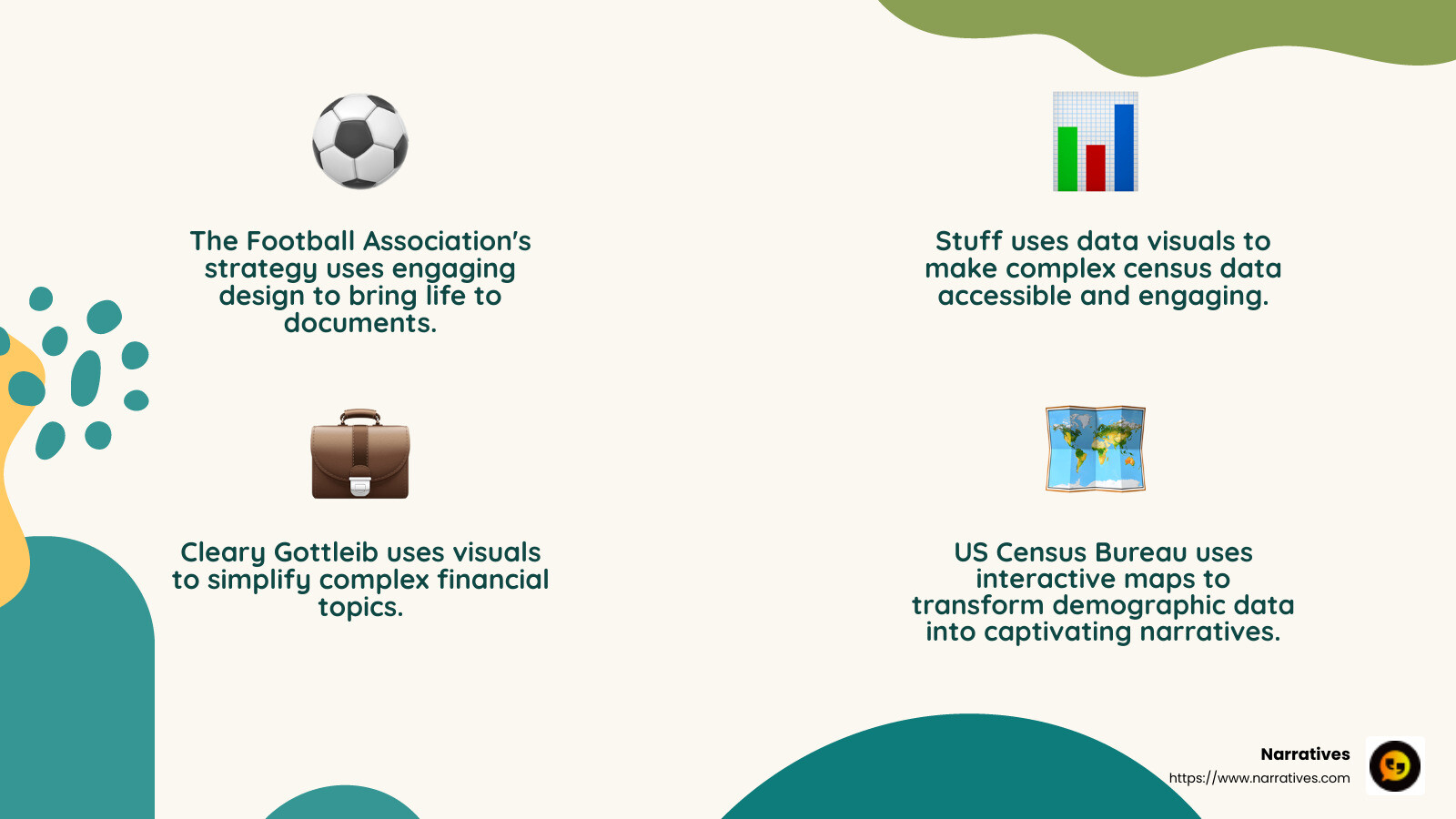
The Football Association's 2020-2024 strategy document defies the norm with its engaging design. By incorporating pull-quotes and data visuals, it transforms a typically dry document into an engaging overview of English football's future. This example highlights how multimedia storytelling can breathe life into strategy documents.
Stuff
New Zealand media company Stuff excels in data-driven storytelling with their visual representation of census data. By using charts and graphs, they effectively capture changes in New Zealand's economy and demography. This approach makes complex data accessible and engaging, demonstrating the power of multimedia in storytelling.
Cleary Gottleib
Cleary Gottleib sets a new standard for financial storytelling with their Spotlight on Healthcare. Despite the specialist subject matter, the story's visual elements make it accessible and engaging. This example underscores the importance of multimedia storytelling in making complex topics understandable.
University of Utah Health
The University of Utah Health's introduction to their Burn Centre is a moving example of healthcare storytelling. Featuring powerful portraits of burn survivors, this narrative balances immersive text with striking visuals. It highlights the emotional depth that multimedia storytelling can bring to healthcare topics.
US Census Bureau
The US Census Bureau employs census storytelling to make demographic data engaging. By using interactive maps and visuals, they transform raw data into a narrative that informs and captivates. This approach demonstrates how multimedia storytelling can improve understanding of demographic trends.
The Barbican
The Barbican's exploration of creative radio and podcasting showcases the versatility of multimedia storytelling. By combining audio elements with visual storytelling, they create an immersive experience that highlights the power of sound in digital narratives.
The Council for the European Union
The Council for the European Union uses climate storytelling to engage audiences in environmental topics. Through scrollytelling techniques, they create a dynamic narrative that captures the urgency and importance of climate action.
The King's Fund
The King's Fund tackles healthcare storytelling with a focus on racism and discrimination. By combining personal stories with data visuals, they create a compelling narrative that highlights systemic issues in healthcare. This example demonstrates the potential of multimedia storytelling to drive social impact and awareness.
These multimedia storytelling examples showcase the diverse ways digital elements can improve narratives across various industries. From luxury brands to healthcare, the power of multimedia storytelling lies in its ability to engage, inform, and inspire.
Benefits of Multimedia Storytelling for Non-Profits
Multimedia storytelling is a powerful tool for non-profits. It’s not just about sharing information; it’s about creating an emotional connection, personalizing experiences, providing real-time updates, and using data to tell compelling stories. Let's explore how these benefits can transform your non-profit's narrative.
Emotional Connection
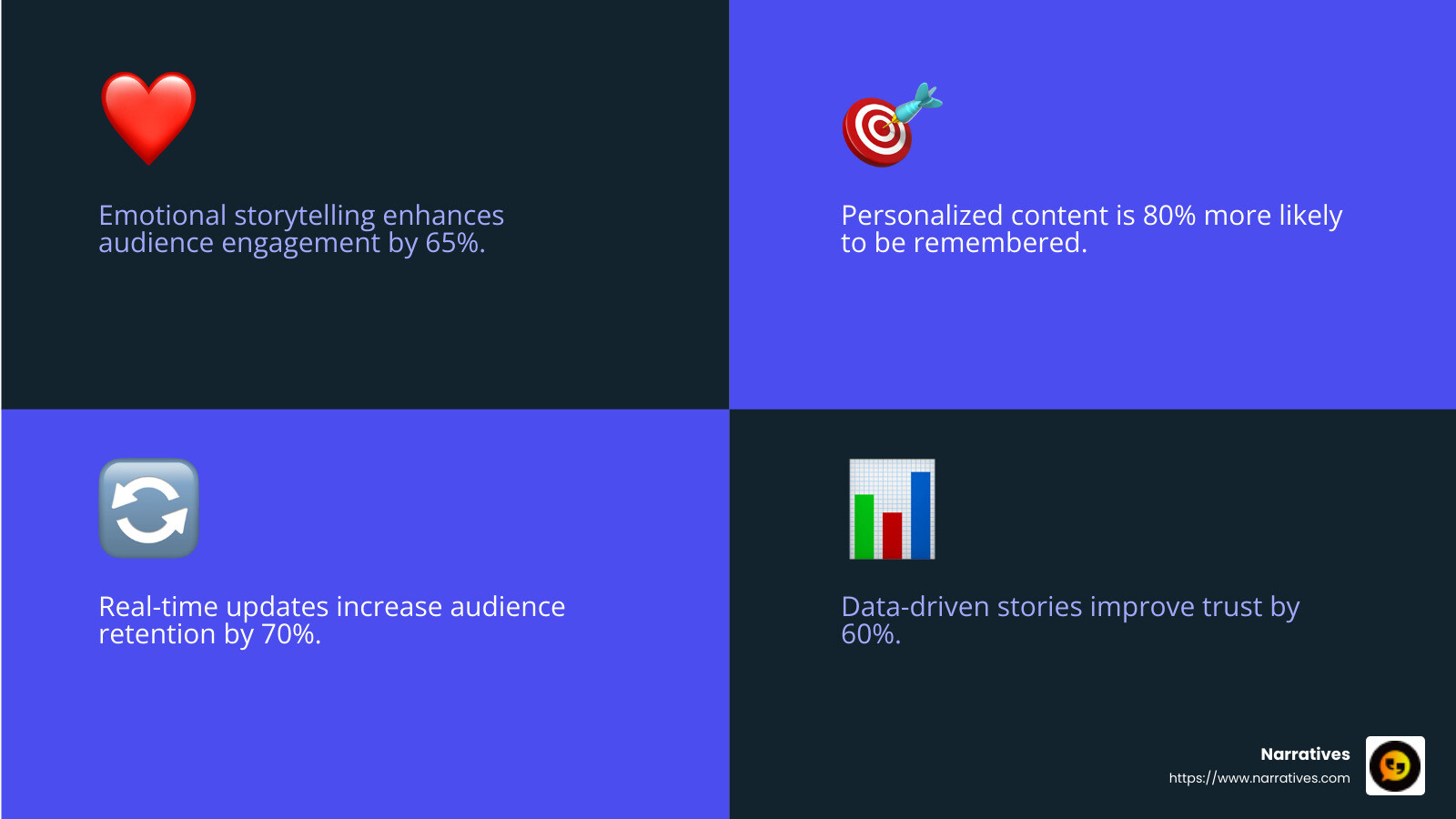
Stories that tug at the heartstrings are memorable. By using multimedia elements like videos and images, non-profits can create deep emotional bonds with their audience. This connection improves message retention and fosters brand loyalty. For instance, the University of Utah Health uses powerful portraits of burn survivors to tell their story, highlighting the emotional depth that multimedia storytelling can bring to healthcare topics.
Personalization
Crafting stories that resonate with specific audiences is crucial. Multimedia storytelling allows non-profits to tailor their narratives for different groups. This personalization ensures a more impactful connection. By focusing on the unique needs and interests of their audience, non-profits can make their stories more relevant and engaging.
Real-Time Updates
In today's world, keeping your audience informed is key. Multimedia storytelling allows non-profits to provide real-time updates on their initiatives. Whether it's through live video feeds or social media, these updates keep the audience engaged and informed about unfolding events. This responsiveness can be crucial in maintaining interest and support.
Interactive Experiences
Interactive content invites audiences to engage with a story actively. By incorporating elements like quizzes, polls, and virtual reality, non-profits can create immersive experiences that encourage participation. This kind of engagement can lead to a deeper understanding and connection to the narrative. For example, the Council for the European Union uses scrollytelling techniques to create dynamic narratives about climate action, making the content more engaging.
Data-Driven Storytelling
Data can add credibility to a story and help tailor communication to the target audience. By integrating data into their narratives, non-profits can build trust and demonstrate the tangible value of their efforts. The US Census Bureau, for instance, uses interactive maps and visuals to transform raw data into engaging narratives, making demographic trends more understandable.
These benefits highlight the transformative power of multimedia storytelling for non-profits. By leveraging these elements, non-profits can not only tell better stories but also drive meaningful engagement and impact.
Frequently Asked Questions about Multimedia Storytelling
What are the types of multimedia storytelling?
Multimedia storytelling comes in various forms, each offering unique ways to engage and inform audiences. Here are some common types:
Visual Storytelling: This includes images, videos, and infographics to convey messages quickly and powerfully. For example, Christies uses visual storytelling to improve their auction narratives, making them more appealing and memorable.
Interactive Content: This involves elements like quizzes, polls, and interactive maps that require audience participation. The Council for the European Union effectively uses scrollytelling to engage audiences in climate storytelling.
Data-Driven Stories: These stories use data visualizations to add depth and credibility. The US Census Bureau transforms demographic data into engaging narratives through interactive maps and visuals.
Podcasting and Creative Radio: Audio storytelling provides an intimate way to connect with audiences, as seen with The Barbican's creative radio projects.
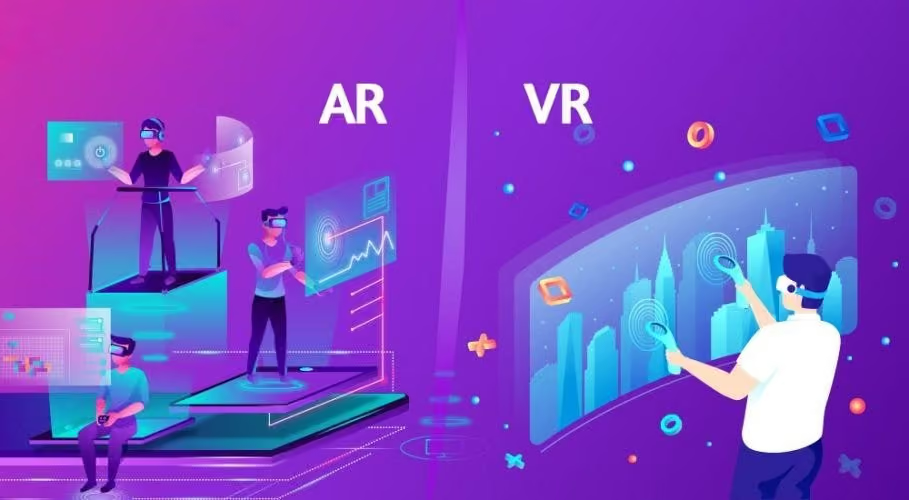
Virtual Reality (VR) and Augmented Reality (AR): These technologies create immersive experiences that transport audiences to different worlds, enhancing the storytelling experience.
How does multimedia storytelling improve engagement?
Multimedia storytelling improves engagement by making content more dynamic and interactive. Here’s how:
Emotional Resonance: By combining visuals, sound, and narrative, multimedia stories can evoke stronger emotions, making them more memorable. The University of Utah Health leverages this by using multimedia to tell compelling stories of burn survivors.
Interactivity: Interactive elements like quizzes and polls invite audiences to participate, fostering a deeper connection. This active engagement helps maintain interest and encourages audiences to explore content further.
Personalization: Tailoring stories to specific audience segments increases relevance and resonance. This personalization ensures that the content speaks directly to the audience's interests and needs.
Real-Time Updates: Providing live updates keeps audiences engaged and informed, creating a sense of immediacy and relevance.
Why is multimedia storytelling important for non-profits?
Multimedia storytelling is crucial for non-profits because it improves their ability to communicate complex issues and engage supporters. Here’s why it matters:
Building Emotional Connections: Non-profits can use multimedia to create stories that resonate emotionally, fostering empathy and support. This emotional connection can lead to increased donations and volunteerism.
Effective Communication: Multimedia allows non-profits to convey complex information in an accessible and engaging way. For instance, the AHPSR and WHO use interactive reports to communicate health system information effectively.
Broadened Reach: By using various multimedia formats, non-profits can reach diverse audiences across different platforms, increasing their impact and visibility.
Storytelling with Impact: Multimedia storytelling helps non-profits tell stories that not only inform but also inspire action, driving change and highlighting their mission's importance.
These aspects show how multimedia storytelling can be a game-changer for non-profits, enabling them to tell powerful stories that resonate with their audiences and amplify their impact.
Conclusion
In today's digital world, Narratives stands out as a guide for non-profits seeking to tell their stories in compelling and impactful ways. We understand that at the heart of every non-profit lies a mission to drive social change and make a difference. Multimedia storytelling is a powerful tool in this endeavor, allowing organizations to communicate their message more effectively and emotionally.
By weaving together visuals, audio, and interactive elements, non-profits can create immersive experiences that resonate deeply with their audience. This approach not only improves the storytelling experience but also fosters an emotional connection that can inspire action and support. Whether it's through a heartwarming video, an interactive infographic, or a rich audio narrative, multimedia storytelling has the potential to amplify a non-profit's impact.
At Narratives, we specialize in partnering with purpose-driven organizations to lift underrepresented voices and share their stories with the world. Our expertise in creating high-quality multimedia content ensures that your story is not just heard but felt, driving awareness and engagement.
For non-profits, the ability to tell a story that moves people to act is invaluable. Multimedia storytelling offers a unique opportunity to highlight the challenges and triumphs of those you serve, building trust and increasing visibility for your cause.
If you're ready to harness the power of multimedia storytelling to amplify your mission, explore our services and see how we can help bring your stories to life. Together, we can create content that not only informs but also inspires meaningful change.

.avif)