Navigating the Digital Landscape: A Guide for Nonprofits

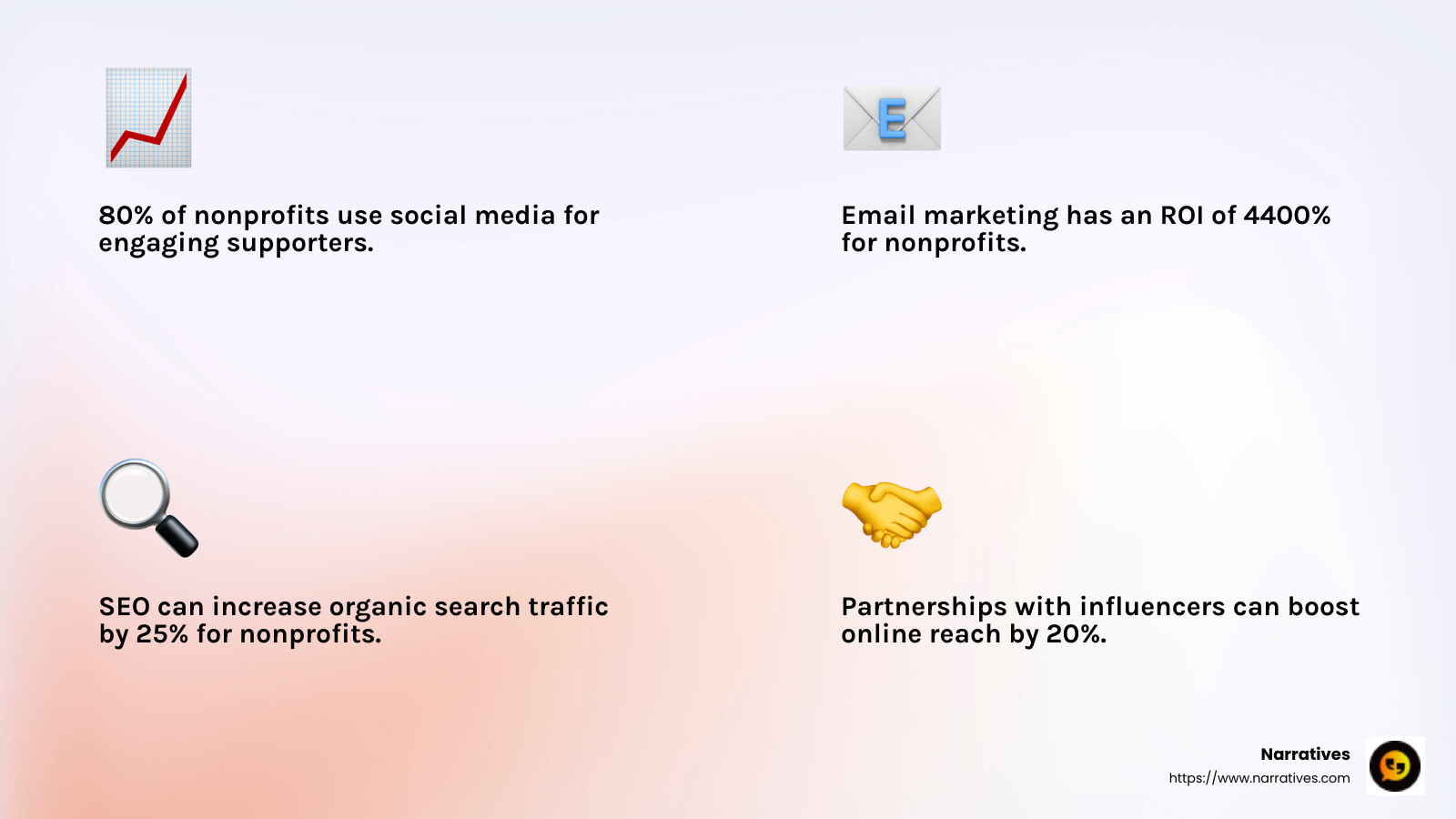
Non-profit digital marketing is more than a buzzword—it's a lifeline for organizations striving to amplify their missions. Having an impactful online presence is essential. Here’s a snapshot of why this matters:
- Digital Marketing Importance: It's about reaching more people with fewer resources.
- Nonprofit Engagement: Encourages deeper connections with supporters.
- Online Presence: Builds credibility and trust with a global audience.
For non-profits, digital marketing is crucial. It transforms limited budgets into expansive reach, using channels like social media, email, and search engines. This helps to engage existing supporters while attracting new ones.
By understanding and implementing effective digital strategies, non-profits not only increase brand awareness but also build meaningful relationships with their audience.
Quick look at non-profit digital marketing:
Understanding Non-Profit Digital Marketing
Non-profit digital marketing is all about using online tools to spread your mission and make a difference. It's a way to reach people across the globe quickly and efficiently, even if you have a tight budget. Let's explore the key elements that make digital marketing for non-profits so effective.
Digital Marketing Strategies
Non-profits can use a variety of digital marketing strategies to get their message out. Here are some of the most effective ones:
Social Media Campaigns: Platforms like Facebook, Instagram, and Twitter allow you to connect with supporters instantly. You can share stories, promote events, and even run fundraising campaigns. For example, using Facebook's birthday fundraiser feature can turn birthdays into opportunities for supporters to raise money for your cause.
Email Marketing: This is a powerful tool for keeping in touch with your supporters. By segmenting your audience, you can send personalized messages that resonate with different groups. Automated emails can thank donors or update volunteers, ensuring everyone feels valued and informed.
Search Engine Optimization (SEO): By using the right keywords, your website can appear higher in search results. This makes it easier for people to find you when they're looking for services or causes like yours. Imagine someone searching for "animal rescue in Georgia" and finding your organization at the top of the list.
Online Outreach
Online outreach is about more than just posting on social media or sending emails. It's about creating a community around your mission. Here’s how you can improve your outreach efforts:
Influencer Partnerships: Collaborate with people who have a strong voice in your field. They can help spread the word about your cause, reaching audiences you might not be able to engage on your own.
Content Creation: Create engaging content like blogs, videos, or infographics that tell your story. Organizations like Charity: Water use stunning visuals to communicate their work, making it hard for people not to get involved.
Brand Awareness
Building brand awareness is crucial for non-profits. It’s about making sure people recognize and trust your organization. Here’s how you can achieve this:
Consistent Branding: Use the same colors, fonts, and messaging across all platforms. This consistency helps people easily recognize your organization and understand its mission.
Storytelling: Share stories that highlight the impact of your work. This creates an emotional connection with your audience, making them more likely to support your cause. TWLOHA, for example, uses storytelling to engage their community and foster a sense of belonging.
By leveraging these digital marketing strategies, non-profits can expand their reach, engage supporters, and build a strong brand presence online. This sets the stage for crafting a detailed digital marketing strategy that aligns with your mission and goals.
Crafting a Digital Marketing Strategy
Creating a successful digital marketing strategy for your non-profit is like planning a journey. You need a clear destination, a map, and a plan to get there. Let’s break down the essentials: goal setting, audience segmentation, and SMART goals.
Goal Setting
First, identify what you want to achieve. Is it raising awareness, increasing donations, or growing your volunteer base? Be clear about your objectives. For instance, instead of saying, "We want more followers," aim for "We want 2,000 new Instagram followers in six months." This clarity will guide your strategy.
Audience Segmentation
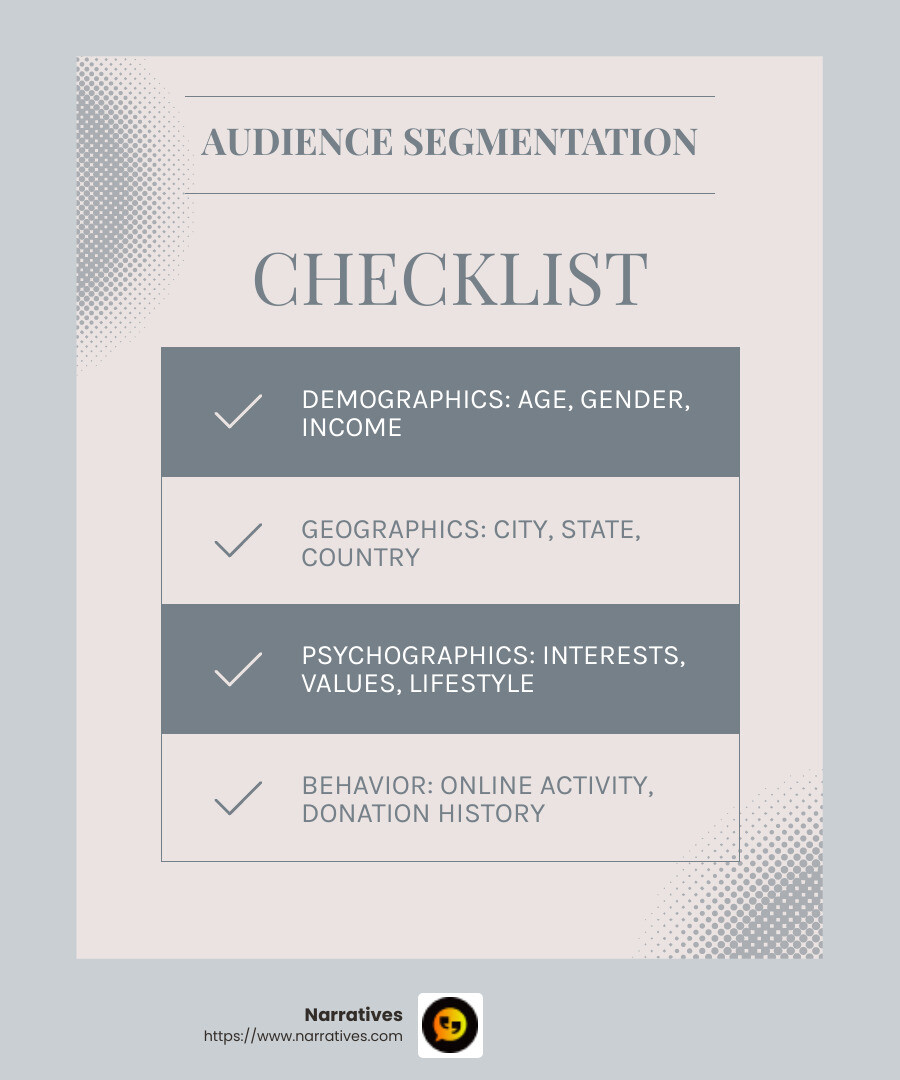
Knowing your audience is key. Imagine trying to sell ice in Alaska. Not very effective, right? Audience segmentation helps you tailor your message to the right people. Break down your audience into groups based on:
- Demographics: Age, gender, income
- Geographics: City, state, country
- Psychographics: Interests, values, lifestyle
- Behavior: Online activity, donation history
For example, if your non-profit supports animal rescue, you might target pet owners or animal lovers. Understanding these groups helps you craft messages that resonate with them.
SMART Goals
Using the SMART technique ensures your goals are clear and achievable:
- Specific: Define exactly what you want to accomplish. "Increase donations" becomes "Increase donations by 20%."
- Measurable: Quantify your goal. Use metrics like follower count or donation amount to track progress.
- Attainable: Set realistic goals. Don’t aim for the moon if you’re just starting out.
- Relevant: Ensure your goal aligns with your mission. Will it help further your cause?
- Timely: Set a deadline. This creates urgency and helps keep your team focused.
For example, if your goal is to grow your Instagram followers, aim for a specific number, like 2,000 new followers, and set a deadline, such as six months. This makes your goal both concrete and achievable.
By setting clear goals, understanding your audience, and using the SMART framework, you can craft a digital marketing strategy that’s both effective and aligned with your mission. This foundation will guide your non-profit to greater success in the digital world.
Essential Digital Marketing Tools for Nonprofits
When it comes to non-profit digital marketing, having the right tools can make all the difference. Let's explore some must-have tools: email automation, digital advertisements, and social media platforms.
Email Automation
Email is a powerful way to connect with your audience. But doing it manually can be time-consuming. That's where email automation comes in.
Why use it?
- Saves Time: Automate welcome emails, thank-you notes, and newsletters. No more sending each one by hand.
- Personalization: Tailor messages to different segments. For example, send a thank-you email to recent donors and a newsletter to volunteers.
- Consistency: Ensure everyone gets the right message at the right time.
Example: A nonprofit could automate a series of emails for new subscribers, starting with a welcome message, followed by stories of impact, and ending with a call to action.
Digital Advertisements
Sometimes, organic reach isn't enough. Digital ads can boost your visibility and help you reach more people.
Benefits:
- Targeting: Aim your ads at specific groups. For example, use Google Ads to reach people searching for "animal rescue in Georgia."
- Quick Results: Get your message in front of the right audience fast.
- Budget-Friendly: Tools like Google Ad Grants offer $10,000 per month in free advertising for eligible nonprofits.
Example: A nonprofit could use Facebook ads to promote an upcoming fundraising event, targeting people in their local area who have shown interest in similar events.
Social Media Platforms
Social media is where people spend a lot of their time. It’s a great place for nonprofits to engage with their audience.
Platforms to Consider:
- Facebook: Great for reaching a broad audience. Use it for event promotions and sharing success stories.
- Instagram: Perfect for visual storytelling. Share photos and videos of your impact.
- LinkedIn: Ideal for professional networking and partnerships.
Tips for Success:
- Engage: Respond to comments and messages. Show your audience you care.
- Consistency: Post regularly. Keep your audience updated on your activities.
- Storytelling: Use compelling stories to connect emotionally with your followers.
Example: A nonprofit could share a photo series on Instagram showing the journey of a rescued animal, from arrival to adoption, to engage their audience emotionally.
By leveraging these tools, nonprofits can maximize their digital marketing efforts, reach more supporters, and drive their mission forward. These tools not only make your marketing more efficient but also help you connect with your audience on a deeper level.
Maximizing Your Nonprofit's Online Presence
Your nonprofit's website is the hub of your non-profit digital marketing strategy. It's where potential supporters learn about your mission, donate, or sign up for events. Let's explore how to make your website work best for you.
Website Optimization
A well-optimized website is key to engaging visitors. Here’s how to ensure yours is up to the task:
Clear Navigation: Make it easy for users to find what they're looking for. Use simple menus and clear labels.
Fast Loading Speed: Slow websites lose visitors. Compress images and use efficient coding to speed up your site.
Compelling Calls-to-Action (CTAs): Guide visitors to take action, whether it's donating, signing up for a newsletter, or volunteering.
Example: A nonprofit could place a bold "Donate Now" button on its homepage, making it easy for visitors to support their cause instantly.
Mobile Optimization
With more than half of internet traffic coming from mobile devices, your website must be mobile-friendly.
Responsive Design: Ensure your site looks good on all devices. Text and images should automatically resize to fit smaller screens.
Easy Navigation: Mobile users should be able to steer your site with ease. Keep menus simple and buttons large enough to tap.
Example: A nonprofit might use a mobile-friendly donation form that’s quick and easy to fill out on a smartphone, encouraging more mobile users to complete their donations.
Accessibility
An accessible website ensures everyone can engage with your content. Here’s how to make your site inclusive:
Alternative Text for Images: Use descriptive text for images so screen readers can convey the information to visually impaired users.
Closed Captions for Videos: Provide captions for all video content to make it accessible to those with hearing impairments.
Readable Fonts and Colors: Use high-contrast colors and legible fonts to make the text easy to read for everyone.
Example: A nonprofit could ensure that all its video tutorials on volunteer training include closed captions, allowing everyone to participate fully.
By focusing on these areas, your nonprofit can create a seamless online experience that keeps visitors engaged and eager to support your mission. A well-optimized, mobile-friendly, and accessible website is not just good practice—it's essential for effective non-profit digital marketing.
Next, we'll explore how to evaluate and improve your digital marketing strategy to ensure ongoing success.
Evaluating and Improving Your Digital Marketing Strategy
To improve your non-profit digital marketing efforts, it's crucial to evaluate your strategy regularly. This involves analyzing key metrics, understanding campaign conversion rates, and focusing on donor retention.
Metrics Analysis
Metrics are your roadmap to understanding what works and what doesn’t. By analyzing these, you can make informed decisions to refine your strategy.
Email Open and Click-Through Rates: These metrics indicate how engaging your email content is. If open rates are low, consider revisiting your subject lines. If click-through rates are lacking, evaluate the content and calls-to-action within your emails.
Website Traffic and Engagement: Monitor how many visitors your website attracts and how they interact with your content. Tools like Google Analytics can provide insights into which pages are most visited and where users drop off.
Social Media Engagement: Keep an eye on likes, shares, and comments to gauge how your audience interacts with your content. This can help tailor future posts to better meet their interests and needs.
Tip: Regularly compare these metrics against your set goals to track progress and identify areas for improvement.
Campaign Conversion
Campaign conversion rates tell you how effective your marketing efforts are at turning interest into action.
Donation Page Conversions: Track how many visitors to your donation page actually complete the process. If the conversion rate is low, consider simplifying the donation process or making the call-to-action more prominent.
Event Sign-Ups: Monitor how many people register for events through your marketing efforts. If sign-ups are not meeting expectations, reassess your promotional strategies and messaging.
Example: A nonprofit may find that when they use a story-driven approach in their emails, the conversion rates on their donation pages increase significantly.
Donor Retention
Keeping donors engaged is often more cost-effective than acquiring new ones. Focus on strategies to maintain their support.
Personalized Communication: Use segmentation to send custom messages that resonate with different donor groups. For instance, send thank-you notes and updates to recent donors, and solicit feedback from long-time supporters.
Regular Updates: Keep donors informed about how their contributions are making a difference. Share success stories and updates on ongoing projects to reinforce their impact.
Example: A nonprofit might find that sending personalized updates about specific projects significantly increases donor retention rates.
By focusing on these areas, your nonprofit can create a dynamic and effective non-profit digital marketing strategy. Regularly evaluating and adjusting your approach based on data helps ensure your marketing efforts continue to support your mission successfully.
Next, we'll address some frequently asked questions about non-profit digital marketing, including how to effectively use social media and the role of storytelling.
Frequently Asked Questions about Non-Profit Digital Marketing
How can nonprofits effectively use social media?
Social media is a powerhouse for non-profit digital marketing. It's all about strategy and engagement. Start by identifying the platforms where your audience spends most of their time. Is it Facebook, Instagram, or Twitter? Each platform has its own strengths.
Create a Content Calendar: Plan your posts in advance. This keeps your content organized and ensures consistency.
Engage Regularly: Don’t just post and leave. Engage with your audience by responding to comments and messages. This builds a community and fosters trust.
Use Visuals: Images and videos grab attention. Share photos from events or videos that tell your nonprofit's story.
Pro Tip: Encourage your followers to share your content. This can expand your reach and bring in new supporters.
What is the role of storytelling in nonprofit marketing?
Storytelling is the heart of effective marketing. It’s not just about facts and figures; it’s about creating an emotional connection.
Share Impact Stories: Highlight real people who have benefited from your nonprofit’s work. This makes your mission tangible and relatable.
Use Emotion: Stories that evoke emotions like joy, hope, or empathy are more likely to inspire action.
Be Authentic: Authentic stories build trust. Share both successes and challenges to show the full picture of your work.
Example: A nonprofit working with rescued animals might share a story about a specific animal’s journey from rescue to adoption. This personal connection can motivate supporters to donate or volunteer.
How can nonprofits measure digital marketing success?
Success in non-profit digital marketing is measured by how well you achieve your goals. Here are some key metrics to consider:
Engagement Metrics: Track likes, shares, and comments on social media to see how well your content resonates with your audience.
Conversion Rates: Measure how many people take action, like donating or signing up for events, after interacting with your marketing efforts.
Donor Retention: Monitor how many donors continue to support your nonprofit over time. High retention rates indicate successful engagement strategies.
Tip: Use these metrics to evaluate your progress toward SMART goals. This helps you identify what's working and where you need to adjust.
By understanding these elements, your nonprofit can harness the full potential of non-profit digital marketing. Up next, we'll dive into how Narratives can support your storytelling efforts in the digital space.
Conclusion
Digital storytelling is more than just a tool for nonprofits—it's a bridge that connects your mission to the hearts of your audience. At Narratives, we believe in the power of stories to inspire action and build a community around your cause.
Why Choose Narratives?
We specialize in elevating underrepresented voices through high-quality, emotionally resonant multimedia content. Our approach to digital storytelling helps nonprofits like yours share impactful stories that not only raise awareness but also drive real change.
The Power of Community-Driven Storytelling
Community-driven storytelling is about more than just sharing your mission. It's about involving your audience in the journey. When people see themselves as part of your story, they are more likely to engage and support your cause.
Collaboration: Work with your community to gather stories and insights. This adds authenticity and depth to your narrative.
Engagement: Use your stories to spark conversations. Invite your audience to share their experiences and perspectives.
Empowerment: Give a voice to those you serve. Highlight their stories to show the real impact of your work.
Narratives: Your Partner in Digital Storytelling
At Narratives, we are committed to helping nonprofits leverage the power of storytelling to increase visibility and inspire action. Our expertise in crafting compelling narratives ensures that your message reaches the right audience, in the right way.
Ready to lift your nonprofit's storytelling? Learn more about how Narratives can help you tell your story.
In the digital world, your story is your superpower. Use it wisely, and watch your community grow.


.avif)