Non-Profit Digital Marketing: Strategies for Success

Non-profit digital marketing strategy is more than just a buzzword; it's a vital tool for organizations striving to make a measurable impact in the digital age. For non-profits, establishing a strong online presence is no longer optional—engage stakeholders, amplify missions, and drive donations through strategic online channels. Here’s a quick overview:
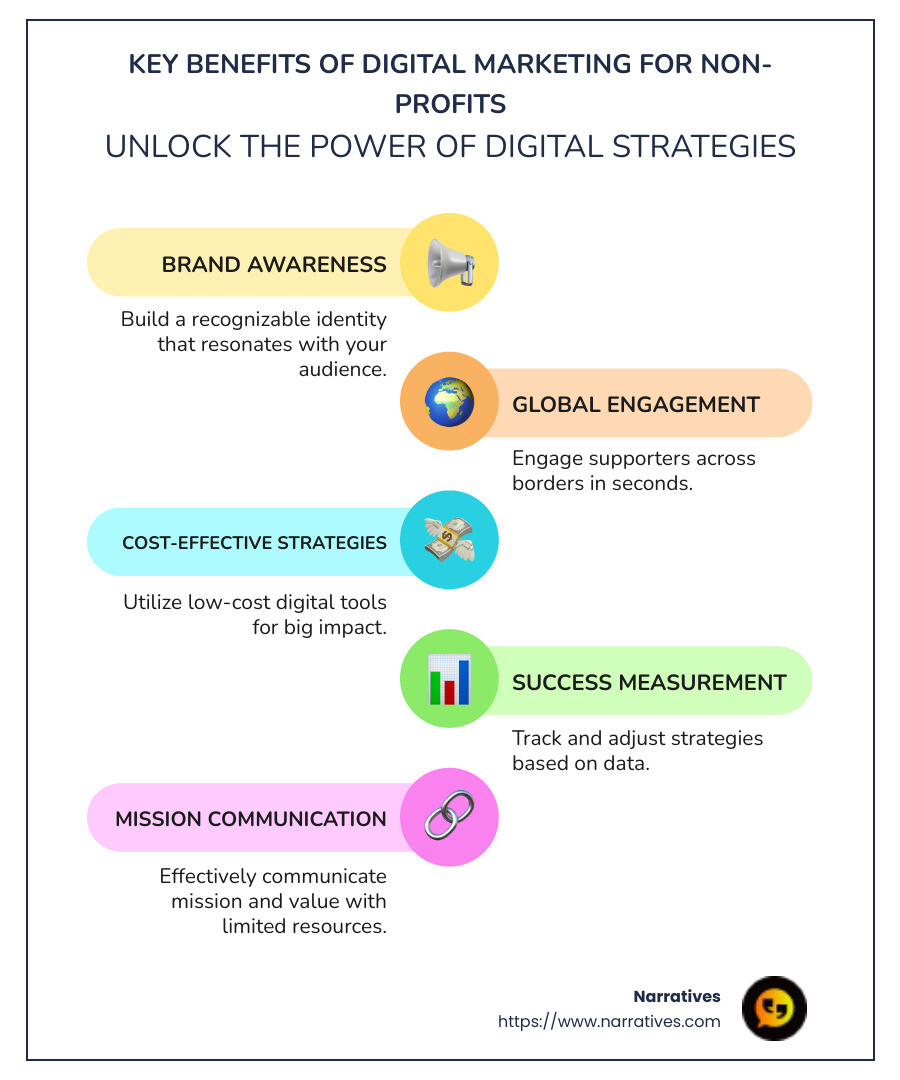
- Brand awareness: Build a recognizable identity that resonates with your audience.
- Engage supporters globally: Extend your reach across borders in seconds.
- Cost-effective strategies: Use low-cost digital tools for big impact.
- Support success measurement: Track and adjust strategies based on data.
Digital marketing importance for non-profits stems from the need to effectively communicate mission and value to a broader audience, all while managing limited resources. A well-crafted nonprofit digital strategy can release the power of storytelling, improve donor relationships, and make a transformative difference.
Online presence is the backbone of any successful digital marketing effort. It involves a combination of social media engagement, search engine optimization (SEO), email marketing, and more to engage supporters both near and far. Whether promoting corporate partnerships or sharing volunteer opportunities, digital strategies are integral to every non-profit's success.
Why Digital Marketing is Essential for Non-Profits
In the age of technology, digital marketing has become crucial for non-profits. Here's why it's essential:
Engagement
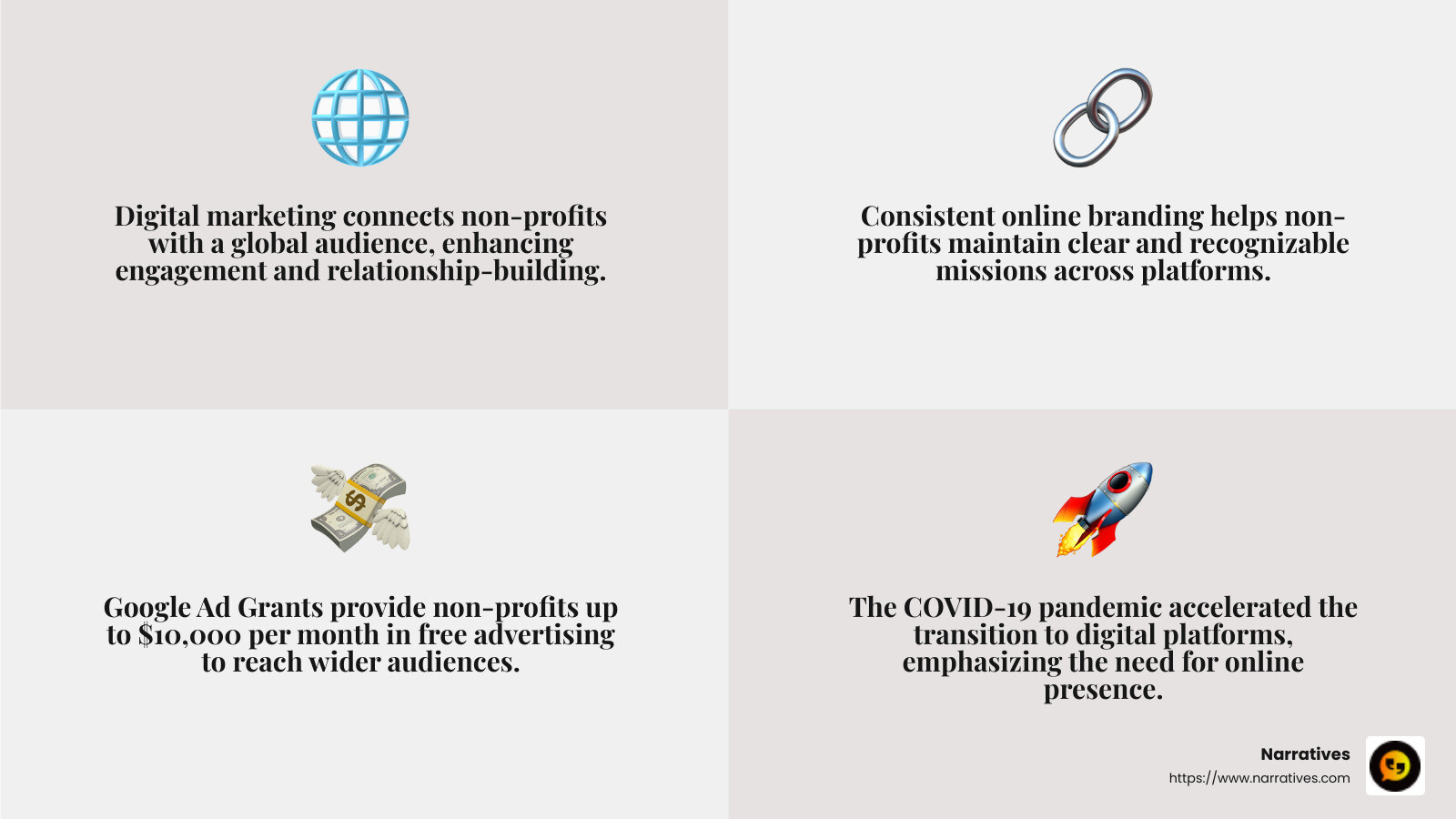
Digital marketing opens the door to engaging with supporters in meaningful ways. Social media platforms allow non-profits to share stories, updates, and calls to action with a global audience instantly. This engagement is not just about spreading awareness; it's about building relationships. For instance, organizations can use email newsletters to keep donors informed and involved, ensuring they feel connected to the mission.
Brand Awareness
Creating a strong brand identity is key for any organization, especially non-profits. Digital marketing helps build and maintain this identity online. Consistent messaging across platforms like Facebook, Twitter, and Instagram ensures that the organization's mission is clear and recognizable. This brand awareness is vital for attracting new supporters and retaining existing ones.
Online Platforms
The shift to online platforms is not just a trend—it's a necessity. Platforms like Google for Nonprofits offer tools that can significantly improve a non-profit's digital strategy. These tools include Google Ad Grants, which provide up to $10,000 per month in free advertising. This program helps non-profits reach a broader audience without straining their budgets.
COVID-19 Impact
The COVID-19 pandemic accelerated the need for non-profits to accept digital marketing. With in-person events limited, organizations turned to online platforms to continue their operations. Virtual fundraisers, webinars, and online campaigns became the norm. This shift highlighted the importance of having a robust digital strategy to maintain engagement and support, even when physical gatherings are not possible.
In conclusion, digital marketing is not just a tool but a necessity for non-profits aiming to thrive in today's digital landscape. By leveraging online platforms, enhancing brand awareness, and fostering engagement, non-profits can continue to make a difference in the world.
Crafting a Non-Profit Digital Marketing Strategy
Creating a non-profit digital marketing strategy is like building a road map for success. It helps guide your organization toward its goals by using digital tools effectively. Here's how you can craft a strategy that works:
SMART Goals
Start with SMART goals—Specific, Measurable, Attainable, Relevant, and Time-based. For instance, aim to increase your email list by 200 new sign-ups and secure 50 new donors by year's end. 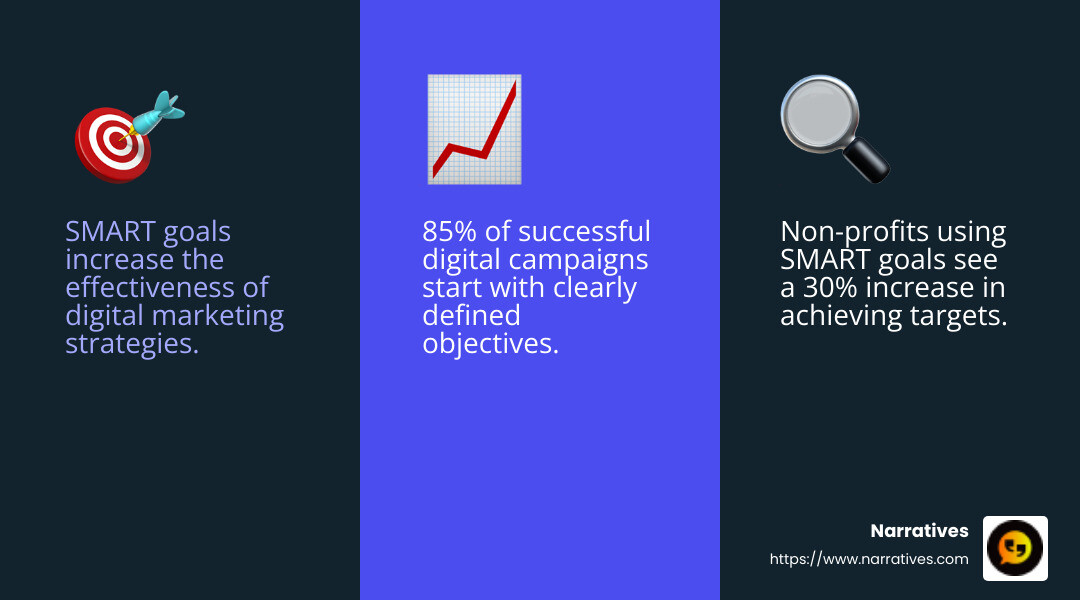
- Specific: Clearly define what you want to achieve.
- Measurable: Use numbers to track progress.
- Attainable: Set goals that are challenging yet achievable.
- Relevant: Ensure goals align with your mission.
- Time-based: Set a deadline to keep your team motivated.
Audience Segmentation
Understanding your audience is crucial. Segment your supporters based on their past interactions, like donations or event attendance. For example, if someone donates after attending a gala, they might be interested in future events. This allows you to tailor messages that resonate.
- Segment by behavior: Group supporters by their actions, like donation history or volunteer hours.
- Custom messaging: Send personalized messages that appeal to each segment.
Email Automation
Emails are powerful tools for non-profits. Automate them to save time and ensure timely communication. For instance, send a welcome email to new subscribers or a thank-you note to recent donors.
- Welcome emails: Greet new subscribers warmly.
- Donation confirmations: Acknowledge and thank donors instantly.
- Follow-ups: Keep supporters engaged with regular updates.
Digital Advertisements
Digital ads can amplify your reach. Use platforms like Google Ad Grants to access free advertising. This helps you reach more people without breaking the bank. For example, if you run an animal rescue, your ads can target people searching for "animal rescue in Georgia."
- Targeted ads: Focus on specific keywords related to your mission.
- Budget-friendly options: Use free or low-cost ad opportunities.
By setting SMART goals, segmenting your audience, automating email communication, and leveraging digital ads, your non-profit can build a strong digital marketing strategy. These steps ensure you engage effectively with your supporters and drive your mission forward.
8 Best Practices in Non-Profit Digital Marketing
Creating a successful non-profit digital marketing strategy requires a blend of creativity and practicality. Here, we dive into eight best practices that can lift your organization's digital presence.
1. Cohesive Branding
Your brand is more than just a logo; it's the essence of your mission. Consistent branding across all platforms helps people recognize and trust your organization. Use the same colors, fonts, and messaging on your website, social media, and emails. This consistency reinforces your identity and makes your cause memorable.
"A strong brand is the foundation of effective communication," says Zoe Galde, managing director of digital marketing at the American Cancer Society.
2. Data-Driven Storytelling
Harness the power of data to tell compelling stories about your impact. Share statistics and case studies that highlight your achievements. For example, if your nonprofit reduced the number of street dogs in a neighborhood, use before-and-after data to show success. This approach builds trust and encourages support.
3. Cost Reduction
Digital marketing doesn't have to be expensive. Use free tools like Google Ad Grants, which offers $10,000 per month in advertising credits. This allows you to reach a wider audience without overspending. Additionally, focus on organic strategies like SEO to boost visibility without extra costs.
4. Team Tools
Equip your team with the right tools to streamline efforts. Platforms like WildApricot help manage memberships, donations, and event registrations efficiently. This ensures your team can focus on mission-critical tasks rather than administrative burdens.
5. Imagery and Content
Visual content is a powerful way to engage audiences. Use high-quality images and videos to showcase your work. For instance, repurpose blog posts into videos to reach a broader audience on platforms like YouTube. Visuals not only capture attention but also convey your message quickly and effectively.
6. Google for Nonprofits
Take advantage of Google's suite of tools designed for nonprofits. Beyond Ad Grants, Google for Nonprofits offers access to tools like Google Workspace and YouTube Nonprofit Program. These resources help you collaborate, communicate, and reach your goals more effectively.
7. Lead Generation
Build a robust email list to keep supporters informed and engaged. Use lead magnets like downloadable e-books or exclusive webinars to attract sign-ups. Once you have their contact information, nurture these leads with personalized content and updates about your work.
8. Donation Platforms
Simplify the donation process to encourage giving. Use user-friendly platforms that offer seamless payment options. According to the American Cancer Society, 70% of online donors abandon their carts due to complex processes. Ensure your platform is straightforward to increase conversion rates.
By implementing these best practices, your nonprofit can improve its digital marketing efforts, engage more supporters, and ultimately drive its mission forward.
Non-Profit Digital Marketing Strategy: Key Components
Building a strong non-profit digital marketing strategy involves leveraging several key components. Let's explore these essential elements and how they can work together to amplify your mission.
Social Media
Social media platforms like Facebook, Instagram, and LinkedIn are indispensable for non-profits. They provide a space to share your story, engage with supporters, and grow your community. Use visual storytelling to showcase your impact, such as posting images of your latest projects or videos of volunteer testimonials. Regular updates keep your audience engaged and informed about your mission.
"Social media is not just a broadcast channel, but a place to build relationships," says Maria Smith, a social media strategist for non-profits.
SEO
Search Engine Optimization (SEO) is the art of making your website easy to find on search engines like Google. By using relevant keywords related to your cause, you increase your chances of appearing in search results. For instance, if your non-profit focuses on environmental conservation, use keywords like "sustainable practices" or "eco-friendly initiatives." This approach helps attract more visitors to your site and raises awareness about your work.
Email Marketing
Email remains a powerful tool for reaching supporters. Craft personalized messages custom to different segments of your audience. For example, send welcome emails to new subscribers and thank-you notes to recent donors. Automation can streamline this process, ensuring timely communication without overwhelming your team. According to industry statistics, email marketing generates around 28% of all online non-profit revenue, making it a crucial component of your strategy.
Texting
Text messaging offers a direct way to communicate with your audience. With an open rate of over 98%, SMS marketing is a highly effective channel. Use texting to send quick updates, event reminders, or fundraising appeals. However, ensure you have permission from recipients and keep messages concise to maintain engagement.
Search Ads
Search ads, such as those available through Google Ads, allow you to promote your cause at the top of search results. Non-profits can benefit from programs like Google Ad Grants, which provide $10,000 in free monthly advertising credits. Use these ads to drive traffic to your donation page or highlight specific initiatives. By targeting mission-specific keywords, you can reach potential supporters actively searching for causes like yours.
By integrating these components into your non-profit digital marketing strategy, you can effectively engage with your audience, increase visibility, and further your mission.
Evaluating and Optimizing Your Strategy
To ensure your non-profit digital marketing strategy is effective, it's crucial to regularly evaluate and optimize your approach. This involves understanding performance metrics, conducting thorough data analysis, and refining your strategy based on insights.
Performance Metrics
Start by tracking key performance metrics that align with your goals. These might include:
Email open and click-through rates: Measure engagement with your email campaigns. High open rates indicate your subject lines are effective, while click-through rates show the content's relevance.
Campaign conversion rate: This tells you how many people took the desired action, such as making a donation or signing up for a newsletter.
Donor retention rate: Keep an eye on how many donors continue to support your cause over time. High retention rates suggest strong donor relationships.
Supporter acquisition cost: Calculate how much it costs to gain each new supporter. This helps in budgeting and assessing the efficiency of your campaigns.
Data Analysis
Once you have the metrics, dive into data analysis to uncover patterns and insights. Use tools like Google Analytics to track website performance and audience behavior. Look for trends in what types of content resonate most with your audience. For instance, if blog posts about volunteer stories lead to higher engagement, consider producing more of this content.
A/B testing can also be valuable. Test different versions of your marketing materials to see which performs better. For example, you might test two email subject lines to determine which one results in higher open rates.
Strategy Refinement
Based on your analysis, refine your strategy to improve outcomes. If data shows that mobile users have a high bounce rate, consider optimizing your website for mobile devices. As Zoe Galde from the American Cancer Society highlights, "Consumers want an easy, easy experience," so ensure your donation process is seamless on all devices.
Regularly update your strategy to incorporate new insights and technologies. For example, if social media engagement is low, explore new platforms or adjust your content strategy to better connect with your audience.
By continuously evaluating and optimizing your strategy, you can ensure your non-profit effectively engages with supporters and advances its mission.
Now that you've laid the groundwork for evaluating and optimizing your strategy, let's explore some frequently asked questions about non-profit digital marketing.
Frequently Asked Questions about Non-Profit Digital Marketing
What is a Non-Profit Digital Marketing Strategy?
A non-profit digital marketing strategy is a plan that uses digital technology to advance your organization's mission. This strategy involves leveraging online tools like websites, social media, and email to reach and engage supporters. Non-profits use these digital channels to spread awareness about their cause, solicit donations, and promote events.
Digital technology is vital for non-profits to connect with a global audience and make a bigger impact. By using digital tools, non-profits can share their mission and stories with people worldwide, increasing support and engagement.
How Can Non-Profits Leverage Social Media?
Social media is a powerful tool for non-profits to engage with their audience. Visual storytelling is one of the most effective ways to capture attention and convey your message. Share impactful images and videos that highlight your mission and the people you serve. For example, posting a short video about a success story can inspire your followers to support your cause.
Audience engagement is key on social media. Encourage interaction by asking questions, responding to comments, and creating shareable content. Use platforms like Facebook, Instagram, and Twitter to build a community around your cause and keep supporters informed about your activities.
What Tools are Essential for Non-Profit Digital Marketing?
To execute a successful digital marketing strategy, non-profits need the right tools. CRM platforms (Constituent Relationship Management) are essential for managing supporter information and tracking interactions. These platforms help non-profits organize data, segment audiences, and personalize communications.
Email marketing software is another crucial tool. It allows non-profits to send targeted messages, automate follow-ups, and track campaign performance. With email marketing, you can keep supporters updated on your work and encourage them to take action, such as donating or volunteering.
By utilizing these tools, non-profits can efficiently manage their digital marketing efforts and strengthen relationships with their supporters.
In the next section, we'll dive deeper into how non-profits can use digital marketing to tell their stories and build partnerships within their communities.
Conclusion
At Narratives, we believe in the power of digital storytelling to transform how non-profits connect with their audiences. Telling your story isn't just about sharing information—it's about creating an emotional connection that inspires action. Our mission is to help non-profits lift their voices through high-quality, emotionally resonant video and multimedia content.
Non-profit partnerships are at the heart of what we do. By collaborating with organizations, we help them share their impact stories in a way that builds trust and increases visibility. Whether it's highlighting the work of volunteers, showcasing the journey of beneficiaries, or celebrating community achievements, our goal is to make these stories resonate with a broader audience.
Community-driven storytelling is a powerful tool that can bridge gaps and bring people together. By focusing on the stories of underrepresented voices, we aim to foster empathy and understanding. This approach not only amplifies the reach of a non-profit's message but also strengthens community bonds and drives positive change.
If you're ready to harness the power of digital storytelling to lift your non-profit's mission, learn more about how Narratives can help you achieve your goals. Together, we can create content that inspires, engages, and makes a lasting impact.


.avif)