From Vision to Action: Building Your Non-Profit's Digital Strategy

The Importance of Non-Profit Digital Strategy
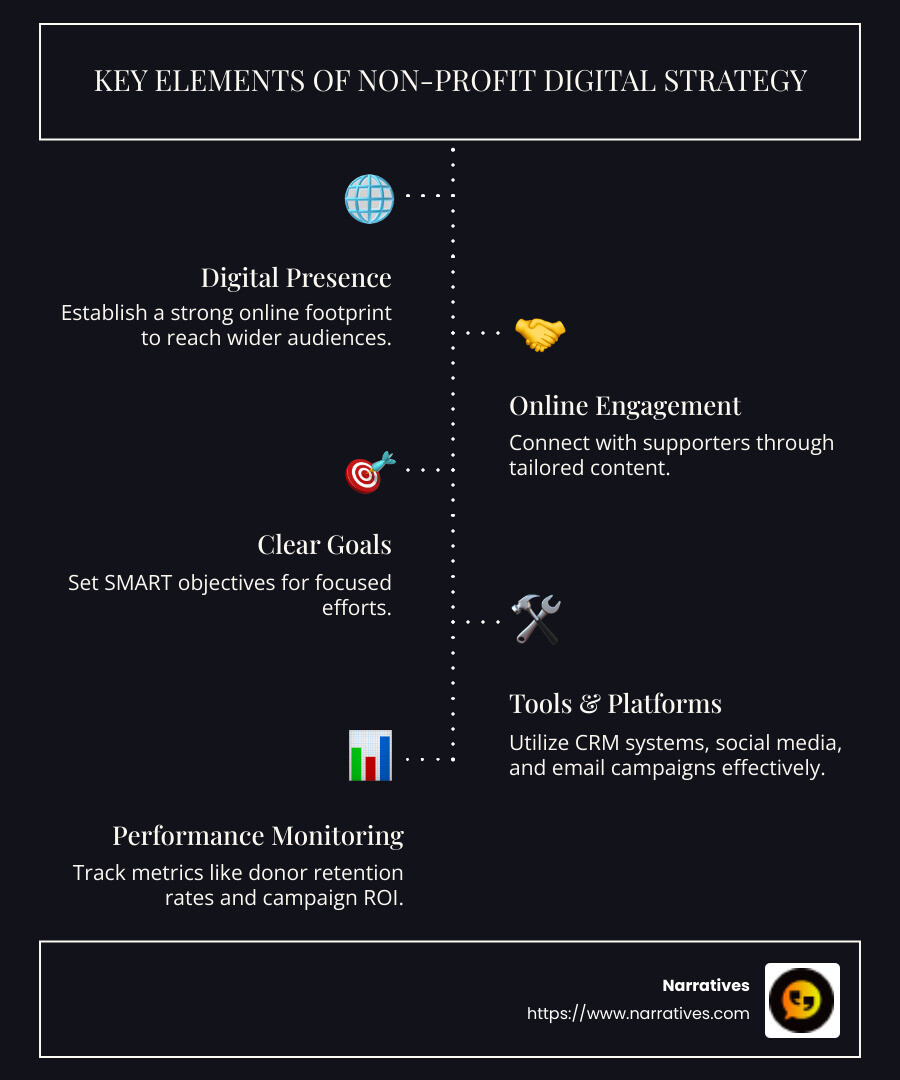
Non-profit digital strategy is key to amplifying your mission, engaging your community, and maximizing your impact in an increasingly online world. To help you get started, here are the essential elements:
- Digital Presence: Establish a strong online footprint to reach wider audiences.
- Online Engagement: Connect meaningfully with supporters through custom, interactive content.
- Clear Goals: Set specific, measurable, attainable, relevant, and time-bound (SMART) objectives.
- Tools and Platforms: Use CRM systems, social media, and email campaigns effectively.
- Performance Monitoring: Track metrics like donor retention rates and campaign ROI for ongoing improvement.
Digital platforms offer a powerful way for non-profits to tell their stories, rally support, and drive change. With a well-defined strategy, these organizations can cut through the digital noise, capture hearts, and inspire action.
As one organization noted, “To have a more structured process with our digital communications will help us save time. Now we need to allocate time to sit down as a team.” This sentiment captures the urgency and potential of crafting a thoughtful digital strategy.
In the coming sections, we'll explore how your non-profit can create a roadmap to effective digital engagement.
Understanding Non-Profit Digital Strategy
A non-profit digital strategy is your roadmap to leveraging technology for maximum impact. It isn't just about being online; it's about being effective online.
Digital Strategy
Think of your digital strategy as a blueprint. It outlines how your organization will use technology to achieve its mission. This includes everything from your website to social media and email campaigns. The goal is to have all these parts working together seamlessly.
A robust digital strategy helps you:
- Reach More People: By using online platforms, you can connect with more supporters worldwide.
- Engage Effectively: Tailor content to engage your audience and build strong relationships.
- Measure Success: Use data to track progress and adjust strategies as needed.
Technology Stack
Your technology stack is the collection of tools you use to implement your digital strategy. This includes:
- Websites: Your main hub for sharing information and resources.
- CRM Platforms: Manage and analyze supporter interactions.
- Social Media: Engage with your audience and share your mission.
- Email Marketing: Communicate directly with donors and volunteers.
- Data Analytics: Track performance and make data-driven decisions.

The right combination of tools helps streamline operations and improves your ability to meet goals.
Operational Efficiency
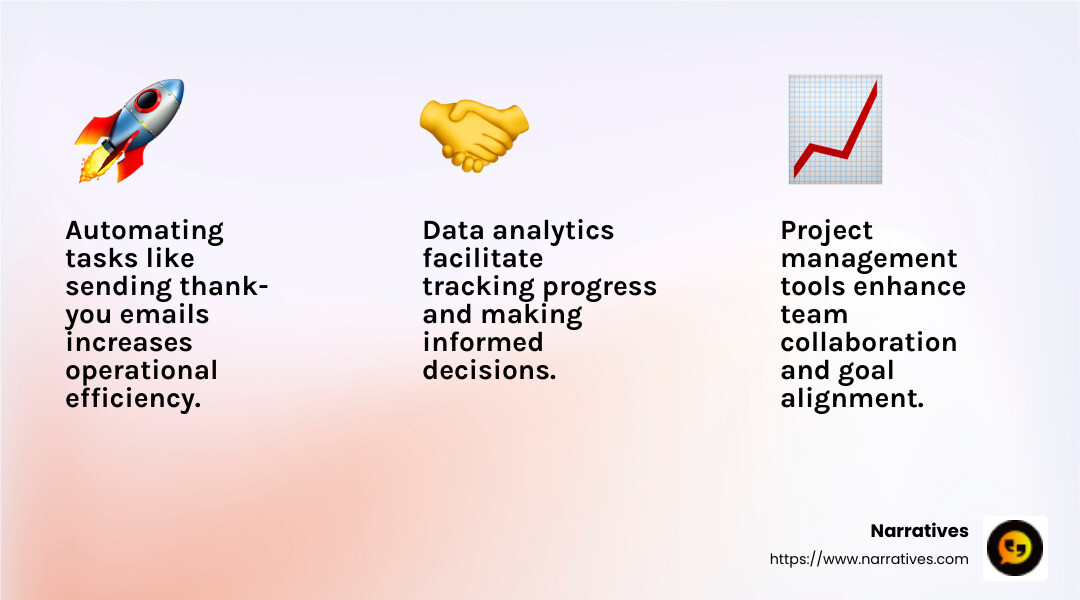
Operational efficiency is about doing more with less. A well-planned digital strategy can save time and resources. Automating routine tasks, like sending thank-you emails to donors, frees up your team to focus on what they do best.
For example, using project management tools can organize tasks and improve team collaboration. This ensures that everyone is on the same page and working towards common goals.
In summary, understanding and implementing a strong digital strategy is crucial for non-profits. It allows you to effectively communicate your mission, engage with your community, and operate more efficiently.
Next, we'll dive into the benefits of having a strong digital strategy and how it can amplify your fundraising and donor engagement efforts.
Benefits of a Strong Digital Strategy
A strong non-profit digital strategy offers numerous benefits that can significantly improve your organization's impact. Let's explore some key advantages, focusing on fundraising, donor engagement, and data management.
Fundraising
Digital tools can transform your fundraising efforts. By strategically using platforms like CRM systems and social media, you can reach a wider audience and engage them in your cause. For instance, online donation pages and crowdfunding campaigns make it easier for supporters to contribute, no matter where they are.
More successful fundraising is not just about reaching more people; it's about understanding them better. By analyzing data from your digital channels, you can tailor your campaigns to match donor preferences, leading to more effective fundraising.
Donor Engagement
Keeping donors engaged is crucial for ongoing support. A well-crafted digital strategy allows you to maintain strong relationships with your donors. Using tools like email marketing and social media, you can communicate regularly and personally.
Better donor engagement means inviting your supporters to be part of your journey, celebrating their contributions, and showing them the impact of their donations. This builds trust and encourages long-term commitment to your cause.
Data Management
Data is the backbone of any successful organization. A strong digital strategy helps you manage and use your data effectively. With the right tools, you can collect, organize, and analyze information about your donors and programs.
Better data management enables you to make informed decisions. By understanding donor behaviors and program outcomes, you can refine your strategies and align them with your mission. This leads to smarter, more impactful actions.
In summary, a robust digital strategy improves your ability to fundraise, engage donors, and manage data. These elements work together to amplify your organization's reach and effectiveness.
Next, we'll explore the steps to build your non-profit's digital strategy, ensuring you have a clear path to success.
Steps to Build Your Non-Profit's Digital Strategy
Creating a successful non-profit digital strategy involves several key steps. Let's explore how to set clear goals, assess your technology needs, and plan your budget effectively.
Goal Setting
Start with defining your goals. Think about what you want to achieve with your digital strategy. Is it to raise more funds, increase awareness, or improve efficiency? Write down these goals in broad terms first. For example, you might aim to "increase online donations by 15% this year" or "grow our email subscriber list by 20%."
Once you have your broad goals, make them actionable. Use the SMART technique—Specific, Measurable, Achievable, Relevant, and Time-bound. For instance, instead of just aiming to "raise funds," specify "raise $50,000 through an online campaign by December." This clarity helps in tracking progress and making adjustments as needed.
Technology Assessment
With your goals in mind, evaluate your current technology stack. What tools are you already using, and how well do they serve your needs? Conduct a technology audit to identify gaps and opportunities. Check if your current systems, like CRM platforms or email marketing tools, can support your goals or if you need to upgrade.
Consider the services you might need, such as data migration or custom integrations. Training and ongoing support are also crucial for ensuring your team can effectively use the tools you choose. The right technology can streamline operations, improve communication, and improve service delivery.
Budget Planning
Budgeting is a critical step in building your digital strategy. Assess the resources you have, including time, money, and personnel. Plan for these, not for what you wish you had. This realistic approach helps in setting achievable goals and prevents overwhelming your team.
Allocate your budget wisely across various needs, such as software licenses, training, and marketing campaigns. Consider potential partnerships that can offer cost-effective solutions. By planning your resources carefully, you ensure that your digital strategy is sustainable and scalable as your organization grows.
By following these steps—goal setting, technology assessment, and budget planning—you lay a strong foundation for your non-profit's digital strategy. This strategic planning not only aligns with your mission but also sets the stage for success in the digital field.
Next, we'll explore the essential tools you need to implement your digital strategy effectively.
Essential Tools for Non-Profit Digital Strategy
Implementing a successful non-profit digital strategy requires the right tools. Let's look at three essential components: CRM platforms, social media, and email marketing.
CRM Platforms
Customer Relationship Management (CRM) platforms are the backbone of any digital strategy. They help you manage interactions with current and potential donors. With a CRM, you can track donor information, engagement history, and donation patterns. This data is crucial for creating personalized outreach and improving donor retention rates.
For example, using a CRM, you can segment your donors into categories based on their giving history. This allows you to tailor your communications, ensuring that each group receives relevant messages. Such personalization can increase donor satisfaction and encourage continued support.
Social Media
Social media is a powerful tool for spreading your message and engaging with a broader audience. Platforms like Facebook, Instagram, and Twitter allow you to share your story, connect with supporters, and raise awareness about your cause.
Consider using social media to highlight success stories or upcoming events. Share impactful visuals and compelling narratives that resonate with your audience. Engage with followers by responding to comments and messages promptly. This interaction builds a community around your mission and fosters trust.
Email Marketing
Email marketing is a direct way to communicate with your supporters. It's an excellent channel for sending newsletters, fundraising appeals, and updates about your organization's activities.
To maximize the effectiveness of your email campaigns, segment your audience and personalize your messages. For instance, send thank-you emails to recent donors and updates to long-time supporters. Automated emails can also be set up to welcome new subscribers or confirm donations, ensuring that everyone feels valued.
By integrating CRM platforms, social media, and email marketing into your non-profit digital strategy, you can effectively engage with your audience, manage relationships, and drive your mission forward. These tools not only help in reaching your goals but also in building a supportive community around your cause.
Next, we'll address some frequently asked questions about non-profit digital strategies to further guide you on this journey.
Frequently Asked Questions about Non-Profit Digital Strategy
How to Define Goals?
Defining goals is the backbone of any non-profit digital strategy. Start by setting clear objectives using the SMART technique. This approach ensures your goals are:
- Specific: Clearly define what you want to achieve. For instance, aim to increase online donations by 20%.
- Measurable: Track your progress with quantifiable metrics. Use tools like Google Analytics to measure website traffic or donation platforms to track fundraising progress.
- Attainable: Set realistic goals that your team can achieve with the available resources.
- Relevant: Align your goals with your organization’s mission. Every goal should support your broader purpose.
- Timely: Set a deadline to create urgency and focus. For example, aim to achieve your fundraising goal within six months.
By setting SMART goals, you give your team a clear path to success and a way to measure achievements.
What Tools Are Essential?
When building a non-profit digital strategy, certain tools are indispensable:
CRM Platforms: These are vital for managing relationships with donors and volunteers. They help you track interactions, segment your audience, and personalize communications. Platforms like Salesforce or Bloomerang offer custom solutions for non-profits.
Social Media: Use platforms like Facebook, Instagram, and LinkedIn to engage with your audience. Share stories, post updates, and interact with followers to build a community around your cause.
Email Marketing: This is a direct channel to communicate with your supporters. Use services like Mailchimp or Constant Contact to send personalized messages and keep your audience informed.
These tools help streamline operations, improve engagement, and improve fundraising efforts.
How to Measure Success?
Measuring the success of your non-profit digital strategy involves tracking Key Performance Indicators (KPIs). Here are some essential KPIs to monitor:
Engagement Rates: Track likes, shares, and comments on social media posts to gauge audience interaction.
Conversion Rates: Measure the percentage of visitors who complete a desired action, like making a donation or signing up for a newsletter.
Donor Retention Rates: Monitor how many donors continue to support your organization over time.
Website Traffic: Use tools like Google Analytics to track the number of visitors to your site and how they interact with your content.
Regular performance monitoring allows you to identify what's working and where improvements are needed. Adjust your strategy based on these insights to optimize results and achieve your goals.
Next, we'll conclude with how Narratives can support your digital storytelling journey and build a community-driven strategy.
Conclusion
Non-profits must accept storytelling to amplify their mission and connect with their audience. At Narratives, we specialize in digital storytelling that resonates with the heart and inspires action. We believe that every non-profit has a unique story to tell, and our goal is to help you share it in the most impactful way.
Community-driven storytelling is at the core of what we do. By elevating underrepresented voices and focusing on the real stories of the communities you serve, we help build trust and foster deeper connections. This approach not only increases visibility but also encourages greater engagement from supporters and potential donors.
With a strong non-profit digital strategy, you can leverage multimedia content to highlight your impact and drive your mission forward. Whether it's through compelling videos, engaging social media campaigns, or personalized email outreach, we provide the tools and expertise to help you succeed.
Let us be your partner in this journey. Together, we can craft a narrative that not only tells your story but also inspires others to join your cause. Explore how Narratives can lift your digital presence and transform your storytelling efforts into meaningful action.


.avif)