Partnering for Impact: Unveiling the World of Non-Profit Media Collaborations

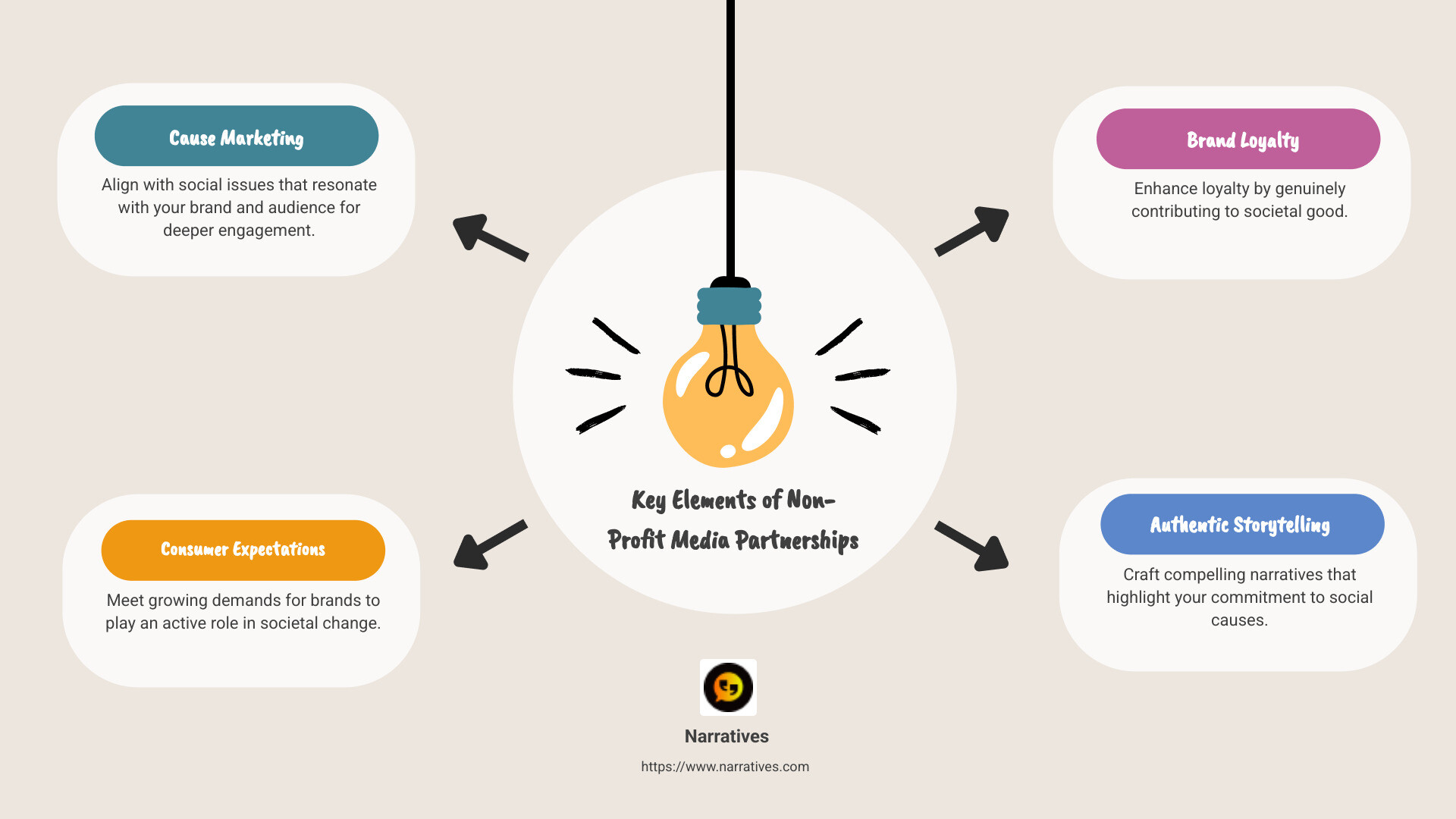
Non-profit media partnerships are reshaping the landscape of cause marketing by marrying organizational missions with impactful storytelling. These partnerships allow companies to engage with consumers on a deeper level, fulfilling the growing consumer expectation for brands to play an active role in societal change while enhancing brand loyalty. For businesses, this translates into compelling narratives that not only highlight their commitment to social causes but also expand their reach and authenticity.
Key takeaways:
- Cause marketing is not just about donating; it's about aligning with social issues that resonate with your brand and audience.
- Consumer expectations demand authenticity; inauthentic partnerships can be damaging.
- Brand loyalty significantly increases when consumers perceive that a brand genuinely contributes to societal good.
When 88% of Millennial consumers are likelier to support brands that give back, the synergy between non-profits and businesses is more crucial than ever. By choosing partnerships that genuinely reflect their values, brands can craft stories that are both ethically compelling and strategically effective.
Understanding Non-Profit Media Partnerships
Non-profit media partnerships create a bridge between businesses and societal causes, allowing companies to engage in meaningful ways. These collaborations are more than just a marketing tactic; they're about value-alignment and making a societal impact.
Value-Alignment
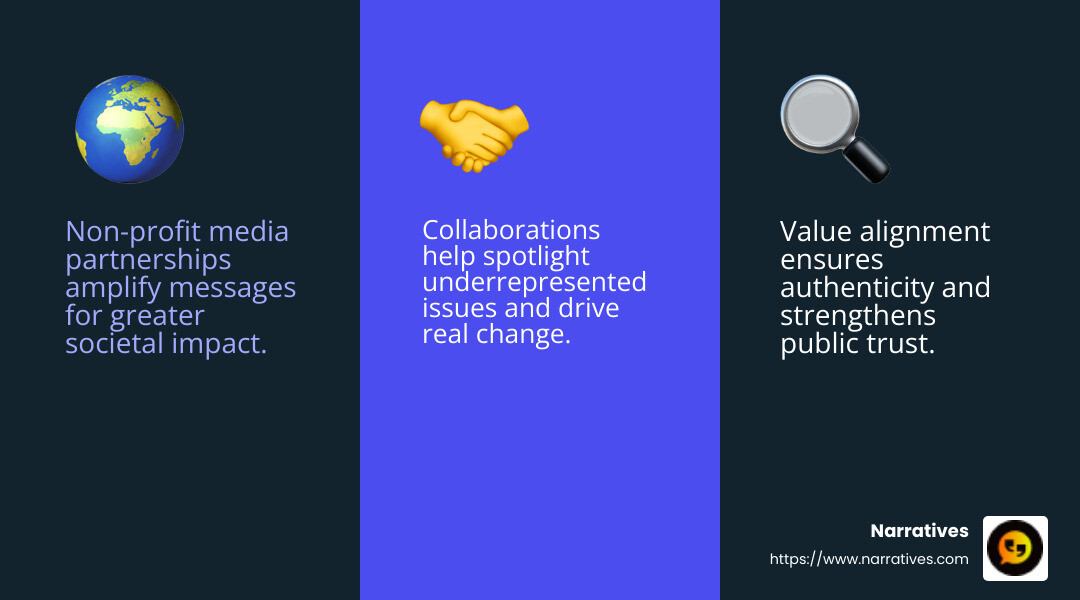
At the heart of any successful partnership is the alignment of values. When a company partners with a non-profit, both entities should share a common mission or goal. This alignment ensures that the partnership feels authentic, both to the organizations involved and to the public.
For example, when a company focused on environmental sustainability partners with a non-profit advocating for conservation, their combined efforts resonate more deeply with audiences. This shared mission can lead to more effective campaigns and stronger public trust.
Societal Impact
Non-profit media partnerships have the power to drive real change. By working together, businesses and non-profits can amplify their messages and reach larger audiences. This collaboration can bring attention to underrepresented issues and mobilize resources for significant societal impact.
A great example is when media organizations support reporting on global health and development issues. By funding such initiatives, they help keep the public informed and engaged, leading to better policy decisions and community actions.
Authentic Strategies
For a partnership to succeed, it must be authentic. This means that the collaboration should be transparent, and both parties should maintain creative and editorial independence.
Authentic strategies involve clear communication and mutual respect. Companies should not dictate the narrative but rather support the non-profit's mission. This approach not only maintains the integrity of the partnership but also ensures that the stories told are genuine and impactful.
In conclusion, non-profit media partnerships are about more than just business. They are about creating meaningful connections and driving change. By focusing on value-alignment and societal impact, these partnerships can tell powerful stories that resonate with audiences and make a difference in the world.
In the following section, we'll explore the tangible benefits that these collaborations can bring to both businesses and non-profits, including risk reduction, growth potential, and improved shareholder value.
Benefits of Non-Profit Media Collaborations
Non-profit media collaborations offer a multitude of advantages that go beyond traditional marketing strategies. They provide a unique opportunity for businesses to contribute to societal change while also reaping significant benefits.
Risk Reduction
Partnering with a non-profit can help businesses mitigate risks, especially those related to reputation. When a company aligns itself with a reputable non-profit, it sends a strong message of commitment to social responsibility. This can protect the company from potential backlash related to negative business practices. However, it's crucial for businesses to ensure that the non-profit's values align with their own to avoid any conflicts that could harm their credibility.
Growth
These partnerships can also drive growth by opening new avenues for engagement with audiences. By collaborating with non-profits, companies can tap into new markets and demographics that align with the non-profit's mission. This not only increases brand exposure but also builds a loyal customer base that values corporate responsibility.
For instance, when media organizations in sub-Saharan Africa partner with non-profits to report on health and development issues, they expand their reach and influence, attracting audiences interested in these topics.
Shareholder Value
Investors are increasingly looking at companies' social impact as a measure of their long-term viability. Non-profit media collaborations can improve shareholder value by demonstrating a company's commitment to ethical practices and social responsibility. This can lead to increased investor confidence and potentially higher stock valuations.
Societal Impact
Perhaps the most significant benefit of these partnerships is their potential for societal impact. By working together, businesses and non-profits can address pressing social issues, from health and education to environmental sustainability. These collaborations can mobilize resources and bring attention to causes that might otherwise be overlooked.
For example, the collaboration between Boston Globe Media and various non-profits has supported initiatives in healthcare, literacy, and arts, highlighting their commitment to community welfare.
In the next section, we'll dig into how to choose the right non-profit partner, ensuring that these collaborations are not only beneficial but also meaningful and aligned with your company's values.
How to Choose the Right Non-Profit Partner
Choosing the right non-profit partner is crucial for any successful collaboration. The partnership should be built on value-alignment, credible partnerships, and mission alignment.
Value-Alignment
First, ensure that the non-profit's values align with your brand’s mission. This alignment forms the foundation of a credible partnership. For instance, when DoorDash teamed up with Feeding America, both organizations shared a common goal of tackling hunger, making their collaboration both meaningful and effective.
Aligning values ensures that the partnership is genuine, not just a PR stunt. Consumers can easily detect when a company is committed to a cause versus when it is merely leveraging it for marketing gains. Authentic partnerships resonate more with audiences and build long-term trust.
Credible Partnerships
Next, partner with a credible non-profit. This means doing your homework to ensure the organization is legitimate and impactful. Check if the non-profit is a registered 501(c)(3) organization and assess how it allocates its funds. Resources like Charity Navigator and GuideStar can provide insights into the non-profit's credibility.
A credible partnership not only boosts your brand’s image but also amplifies the societal impact of the collaboration. Credibility ensures that your efforts and resources are making a real difference.
Mission Alignment
Finally, look for mission alignment. The non-profit’s mission should complement your company’s goals and industry. For example, a media company focusing on environmental issues might partner with a non-profit advocating for sustainability. This ensures that both parties are working towards a common goal, making the partnership more cohesive and impactful.
Mission alignment also allows for more integrated and effective campaigns. When both organizations are on the same page, they can create compelling stories and initiatives that engage audiences and drive change.
By focusing on these key elements—value-alignment, credible partnerships, and mission alignment—you can choose a non-profit partner that not only improves your brand but also contributes positively to society.
In the next section, we will explore successful examples of non-profit media partnerships, showcasing how these collaborations can drive meaningful impact.
Successful Examples of Non-Profit Media Partnerships
Successful non-profit media partnerships can drive significant societal impact and improve brand reputation. Let's explore some standout collaborations that have effectively harnessed the power of non-profit media partnerships.
DoorDash and Feeding America
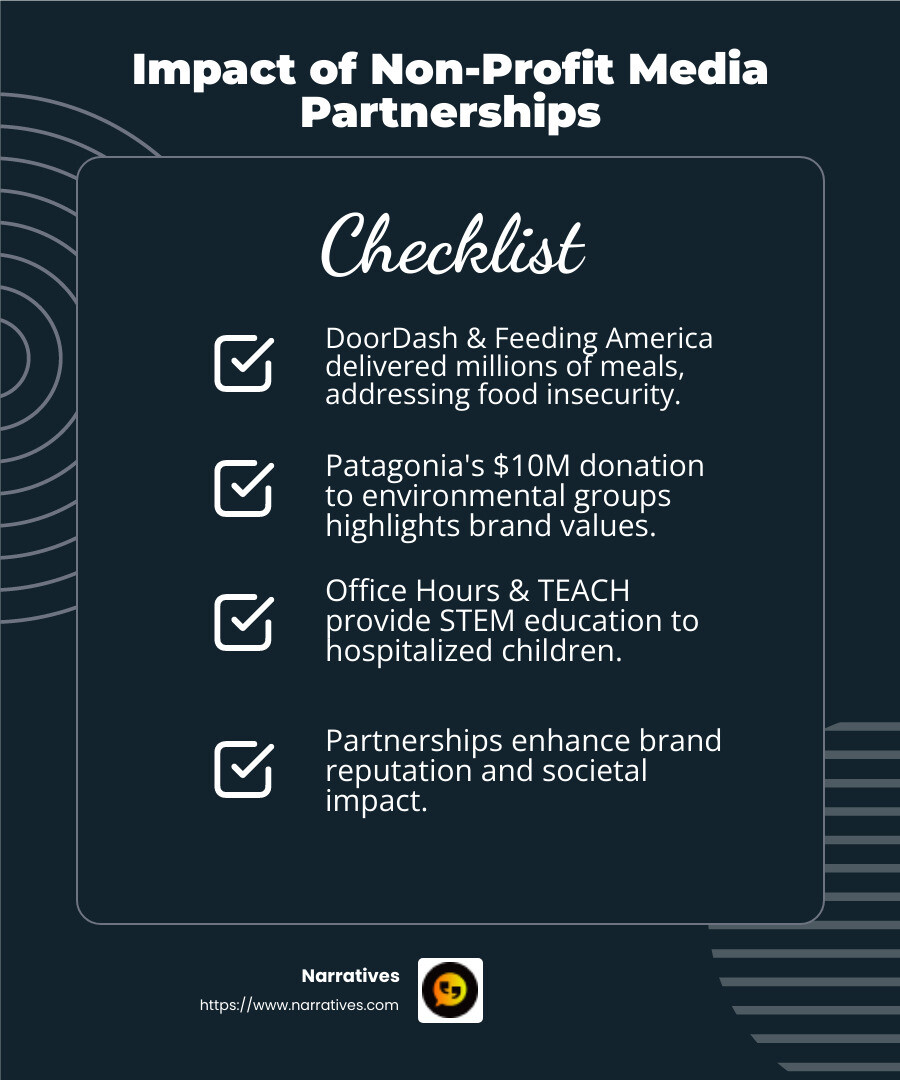
DoorDash, a popular food delivery service, partnered with Feeding America to address hunger in the United States. This collaboration was a natural fit due to their shared commitment to reducing food insecurity. DoorDash used its logistics network to deliver meals to food banks and community centers. This partnership not only helped feed millions but also strengthened DoorDash's brand as a socially responsible company. By aligning their resources, both organizations amplified their impact, demonstrating how value-alignment can lead to meaningful change.
Patagonia's Environmental Commitment
Patagonia is a brand known for its unwavering commitment to environmental sustainability. One of their remarkable initiatives was donating a $10 million tax cut to environmental protection groups. This action was more than just a financial contribution; it was a statement of their brand values. Patagonia's partnership with 1% for the Planet further solidifies their dedication to environmental causes. By embedding sustainability into their brand strategy, Patagonia has built trust and loyalty among eco-conscious consumers.
Office Hours and TEACH
Office Hours, a knowledge exchange platform, collaborated with TEACH to support hospitalized children through STEM education. Office Hours empowered professionals to share their expertise while donating a portion of their earnings to TEACH. This partnership not only provided educational opportunities to children in hospitals but also allowed professionals to contribute to a cause they care about. By integrating philanthropy into their business model, Office Hours demonstrated how companies can leverage their core competencies for social good.
These examples illustrate the power of non-profit media partnerships when organizations align their values and missions. By choosing the right partners, companies can create authentic, impactful collaborations that resonate with their audiences and drive positive change.
In the next section, we will discuss key considerations for maintaining creative and editorial independence in non-profit media partnerships.
Non-Profit Media Partnerships: Key Considerations
When diving into non-profit media partnerships, there are crucial factors to ensure a successful collaboration. Let's explore these key considerations: creative independence, transparency, and editorial independence.
Creative Independence
Creative independence is vital in any media partnership. This means that the media organization must have the freedom to create content without undue influence from the non-profit partner. For instance, when NPR's Goats and Soda blog receives funding to cover health and development issues, they maintain the liberty to choose stories and angles that align with their editorial standards, not the funder's agenda. This independence ensures the content remains authentic and trustworthy.
Transparency
Transparency is the bedrock of trust in partnerships. Both parties must be open about the nature of their collaboration and any financial exchanges involved. This openness prevents misunderstandings and maintains the integrity of the partnership. As highlighted in the research, transparency is a fundamental principle for media grants. It reassures audiences that the content they consume is unbiased and fact-based.
Editorial Independence
Editorial independence goes hand-in-hand with creative freedom. It ensures that media outlets are not obliged to produce content that favors the non-profit's interests. For example, Bhekisisa, a South Africa-based news organization, focuses on in-depth health reporting without external pressure to promote specific narratives. This independence is crucial for maintaining credibility and delivering fact-based information to the public.
By prioritizing creative independence, transparency, and editorial independence, organizations can forge non-profit media partnerships that are ethical and effective. These principles not only protect the integrity of the media content but also strengthen the partnership's impact.
Next, we'll address some frequently asked questions about non-profit media partnerships, providing insights into their benefits and how to ensure authentic collaborations.
Frequently Asked Questions about Non-Profit Media Partnerships
What are the benefits of partnering with a non-profit?
Partnering with a non-profit can bring a variety of benefits to both parties involved. Here are the key advantages:
Broadened Reach: Non-profits often have access to diverse communities and audiences. Collaborating with them can help media organizations reach new demographics and expand their influence.
Improved Credibility: Working with a reputable non-profit can boost a media organization's credibility. It shows a commitment to social causes and can improve trust among audiences.
Shared Resources: Non-profit media partnerships can lead to shared resources, such as expertise, data, and networks. This pooling of resources can amplify the impact of both organizations.
Increased Visibility: Media coverage of non-profit initiatives can increase visibility for both the cause and the media organization, attracting more attention and potential support.
Positive Brand Image: Aligning with a cause can improve a company's brand image, showing that it values social responsibility and community support.
How can companies ensure authentic partnerships?
Ensuring authenticity in partnerships is crucial for genuine impact and trust. Here are some ways companies can achieve this:
Align Values: Choose a non-profit whose mission and values align with your own. Shared core values create a solid foundation for an authentic partnership.
Be Transparent: Openness about the goals, expectations, and financial aspects of the partnership helps maintain trust and authenticity.
Engage in Dialogue: Regular communication with the non-profit partner ensures that both parties are on the same page and working towards common goals.
Focus on Impact: Ensure that the partnership is more than just a marketing tactic. Aim for tangible outcomes that benefit the cause and the community.
Evaluate and Adapt: Continuously assess the partnership's impact and be willing to make changes to improve effectiveness and authenticity.
What are some examples of successful non-profit media collaborations?
Several successful non-profit media partnerships have demonstrated the power of collaboration:
The Marshall Project: This non-profit focused on criminal justice reform partnered with major newspapers like The Washington Post to highlight issues such as billing parents for children's incarceration. The collaboration led to policy changes, such as Philadelphia stopping this billing practice.
Patagonia: Known for its environmental activism, Patagonia partners with various non-profits to support conservation efforts. This alignment with environmental values strengthens Patagonia's brand as a leader in sustainability.
The Canadian Breast Cancer Foundation: Collaborating with over 100 sponsors, they organize the CIBC Run for the Cure, raising millions for breast cancer research. This large-scale partnership showcases the power of collective effort for a common cause.
These examples illustrate how strategic partnerships can lead to significant societal impact, benefiting both the non-profit and the partnering organization.
Next, we'll dig into the conclusion, exploring how Narratives leverages digital storytelling for social impact.
Conclusion
At Narratives, we believe in the transformative power of digital storytelling to create meaningful social impact. Our mission is to amplify the voices of underrepresented communities and highlight the incredible work of non-profits through emotionally resonant content. By doing so, we aim to inspire action, build trust, and increase visibility for the causes that matter most.
Social impact is at the heart of what we do. We partner with non-profits and purpose-driven organizations to craft compelling narratives that not only inform but also engage and mobilize audiences. Our approach to storytelling is community-driven, ensuring that the stories we tell are authentic and reflective of the communities we serve.
Through our work, we strive to foster a sense of connection and empathy, encouraging audiences to support and engage with social causes. By focusing on community-driven storytelling, we help bridge the gap between non-profits and the public, facilitating a deeper understanding and appreciation of the challenges and triumphs faced by these organizations.
As we continue to grow, we remain committed to using our platform to support non-profit media partnerships that align with our values and mission. Together, we can create a more informed and compassionate world, one story at a time.
For more information on how Narratives can help your organization tell its story, visit our website or reach out to us directly. Let's make an impact together.


.avif)