Frame by Frame: Leading Video Production for Nonprofits
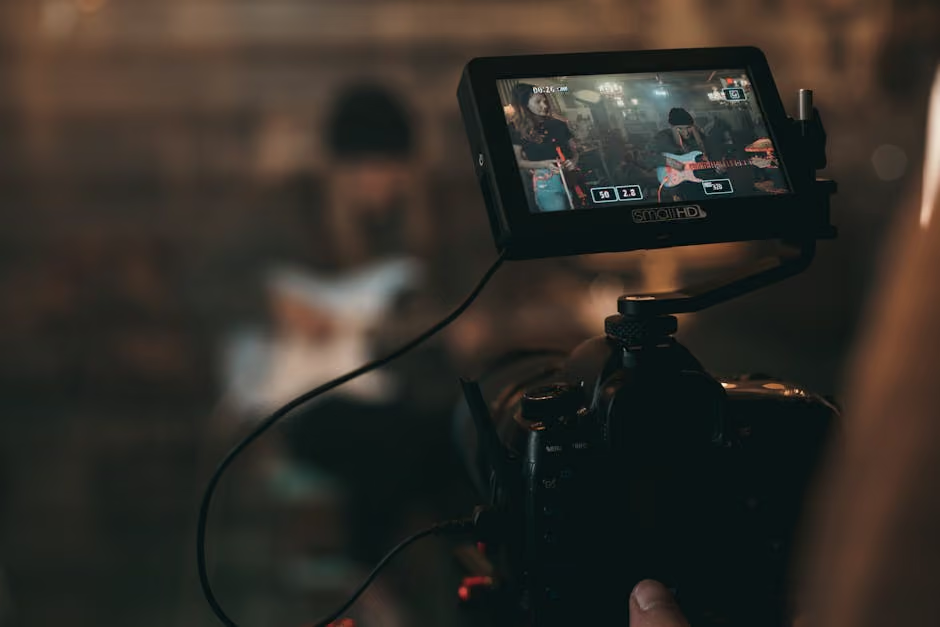
Non-profit video production is more than just creating engaging visuals; it's about storytelling that makes an emotional connection. Organizations looking to amplify their mission often find this approach invaluable for:
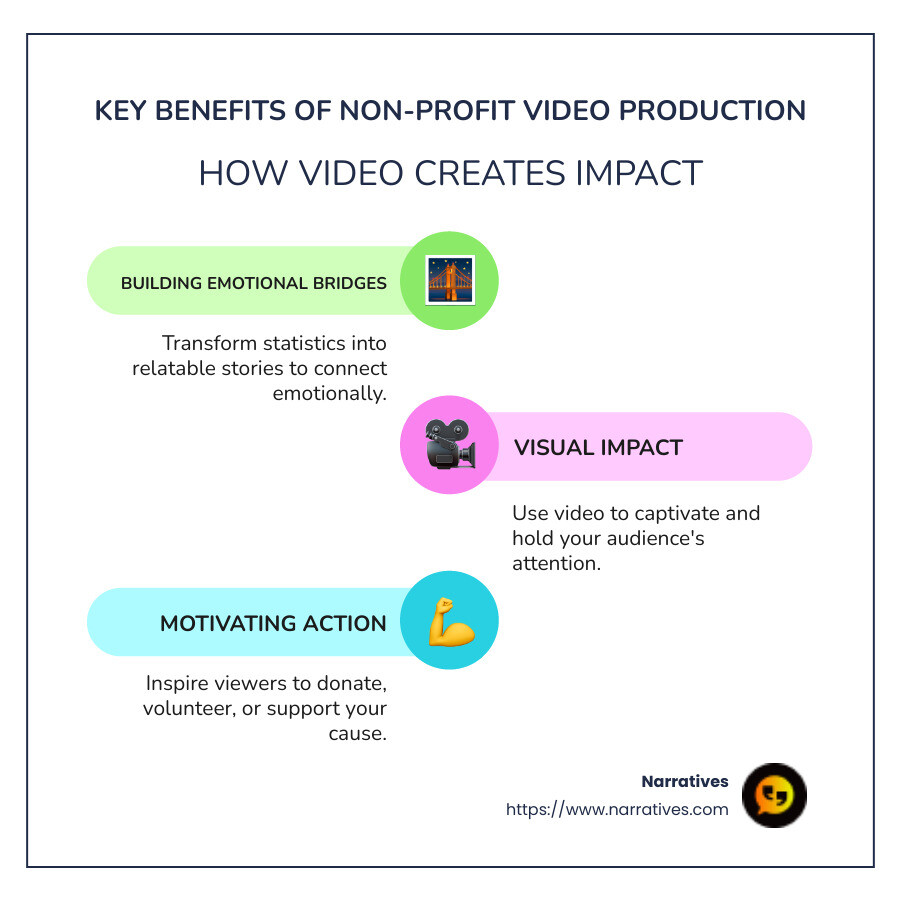
- Building Emotional Bridges: Transform statistics into relatable stories.
- Visual Impact: Use video to captivate and hold your audience's attention.
- Motivating Action: Inspire viewers to donate, volunteer, or support your cause.
Video is not a luxury—it's a necessity. Non-profits need to convey their stories compellingly and authentically to resonate with audiences and make an impact. Whether it's showing the journey of a child lifted from poverty or highlighting the efforts of community champions, these narratives create empathy and drive action.
Non-profits operate in an emotion-driven sector where the stories they tell can spark change. By spotlighting the individuals they serve, organizations can demonstrate the real-world impact of their missions. This approach not only garners support but also builds a community around shared values and goals.
The Importance of Non-Profit Video Production
Non-profit video production is a game-changer in how organizations connect with audiences. It's more than just visuals; it's about creating a narrative that resonates deeply and inspires action. Let's explore why video production is crucial for non-profits.
Audience Engagement
Video captivates like no other medium. It combines visuals, sound, and storytelling to create an immersive experience. For non-profits, this means turning passive viewers into active supporters. A well-crafted video can engage audiences by:
- Capturing Attention: People are more likely to watch a short, compelling video than read a long article.
- Communicating Quickly: Videos convey messages faster, making complex topics easier to digest.
- Encouraging Interaction: Videos are shared more on social media, increasing reach and engagement.
Emotional Storytelling
Emotions drive decisions. Videos allow non-profits to tell stories that touch the heart, making statistics and data relatable.
A compelling story can:
- Build Trust: When viewers see the faces and hear the voices of those impacted by a cause, they feel a personal connection.
- Inspire Action: Emotional stories motivate viewers to donate, volunteer, or advocate for a cause.
For example, a small non-profit saw donations skyrocket by 200% after launching an emotional video campaign. This demonstrates the power of connecting with viewers on a personal level.
Mission-Driven Content
Non-profits have unique stories that need to be told. Videos help convey these missions clearly and powerfully.
- Showcase Impact: Highlight the real-world effects of your work, like Baitulmaal's video on Afghan families, which reached over 50,000 viewers.
- Align with Goals: Tailor content to match your organization's mission, ensuring every video supports your objectives.
By focusing on mission-driven content, non-profits can build a community around shared values. This not only fosters support but also strengthens the organization's credibility and reach.
In summary, non-profit video production is essential for audience engagement, emotional storytelling, and mission-driven content. Videos are not just a tool but a bridge connecting non-profits to the hearts and minds of their audiences.
Types of Non-Profit Video Content
Non-profit organizations have a variety of video content types to choose from, each serving a unique purpose. Let's explore some of the most effective types: fundraising videos, educational content, PSAs, testimonials, and animated videos.
Fundraising Videos
Fundraising videos are powerful tools for non-profits. They tell compelling stories that inspire viewers to take action. These videos often highlight urgent needs and show the impact donations can make.
- Emotional Appeal: They often feature personal stories or testimonials that create a strong emotional connection with the audience.
- Clear Call to Action: Successful fundraising videos end with a direct request for donations, making it easy for viewers to contribute.
For instance, a video produced for Mutual Rescue went viral with over 100 million views, significantly boosting fundraising efforts.
Educational Content
Educational videos help non-profits inform and enlighten their audience about specific issues or causes. They break down complex topics in an engaging and accessible way.
- Informative: These videos provide valuable information about the organization’s mission and the issues it addresses.
- Engaging: By using visuals and storytelling, they keep the audience engaged while educating them.
For example, a non-profit focusing on environmental sustainability might use educational videos to explain the impact of climate change and how viewers can help.
PSAs (Public Service Announcements)
PSAs are short, focused videos that aim to raise awareness about a particular issue. They are often broadcasted on television or shared widely on social media.
- Attention-Grabbing: With a strong message and striking visuals, PSAs capture viewer attention quickly.
- Awareness-Raising: They are designed to inform the public and encourage behavior change.
An example might be a PSA that highlights the importance of regular health check-ups to prevent diseases, effectively reaching a broad audience.
Testimonials
Testimonial videos feature real people sharing their experiences with a non-profit. These authentic stories build trust and credibility.
- Personal Stories: Viewers hear directly from beneficiaries, volunteers, or donors, making the message more relatable.
- Trust-Building: Authentic testimonials increase transparency and foster trust among potential supporters.
A testimonial video could feature a student whose life was transformed by a non-profit’s educational program, providing a powerful endorsement of the organization’s impact.
Animated Videos
Animated videos are versatile and can simplify complex ideas through creative visuals. They are ideal for explaining processes or concepts that might be difficult to capture with live-action footage.
- Creative and Fun: Animation allows for creativity and can make learning fun and engaging.
- Simplifies Complexity: They break down complex topics into easy-to-understand visuals.
Demo Duck, for example, uses animation to create engaging content that simplifies complex concepts, making them accessible to a wider audience.
In conclusion, non-profits can leverage these diverse video content types to effectively communicate their mission and engage their audience. Each type has its unique strengths and can be used strategically to maximize impact.
Benefits of Professional Video Production for Nonprofits
Professional video production offers several key benefits to non-profits, helping them achieve their mission and engage with their audience effectively.
Brand Awareness
A well-crafted video can significantly improve a non-profit's brand awareness. Videos have the power to capture attention and leave a lasting impression. When viewers see a compelling video, they are more likely to remember the organization and its mission.
- Visual Impact: Videos combine imagery, dialogue, and music to create a memorable experience.
- Consistency: Consistent branding throughout the video reinforces the organization’s identity.
Donor Trust
Building trust with donors is crucial for non-profits. Professional videos convey authenticity and transparency, which are essential for fostering trust.
- Authenticity: High-quality videos that tell real stories resonate with viewers and build credibility.
- Transparency: When donors see where their contributions are going, they are more likely to continue supporting.
For instance, a well-produced testimonial video that shares a beneficiary's success story can greatly improve trust.
Audience Targeting
Professional video production can help non-profits target the right audience. By understanding the audience's preferences and interests, videos can be custom to speak directly to them.
- Customization: Videos can be customized to address the specific concerns and interests of different audience segments.
- Engagement: Targeted videos are more likely to engage viewers, leading to higher conversion rates.
Social Media Shares
Social media is a powerful tool for spreading a non-profit's message. Videos are highly shareable content, and professional production ensures they are optimized for social media platforms.
- Shareability: Engaging videos are more likely to be shared, increasing their reach.
- Virality: A compelling video can go viral, bringing widespread attention to the cause.
A great example is a video campaign that went viral, achieving millions of views and significantly boosting donations and awareness.
In summary, professional video production can lift a non-profit’s communication strategy, helping to build brand awareness, foster donor trust, target the right audience, and increase social media shares. This leads directly into the next section, where we explore the non-profit video production process.
Non-Profit Video Production Process
Creating impactful videos for non-profits involves several key steps, each essential to telling your story effectively. Let's break down the process from start to finish.
Findy and Strategy
The first step is understanding the purpose and goals of the video. This involves defining the message and identifying the target audience.
- Goal Setting: What do you want to achieve with the video? Is it fundraising, raising awareness, or educating the public?
- Audience Analysis: Who are you speaking to? Understanding your audience's demographics and interests is crucial.
A strategic approach ensures the video aligns with the non-profit's mission and resonates with viewers.
Creative Planning
With a clear strategy in place, it's time to get creative. This phase involves planning the content and visual elements of the video.
- Storyboarding: Outline the video's scenes to visualize the narrative flow.
- Scriptwriting: Craft a script that conveys the message clearly and emotionally.
- Casting and Location: Decide who will be in the video and where it will be filmed.
A well-thought-out plan sets the stage for a smooth production process.
Production and Post-Production
This is where the magic happens. Filming and editing bring the storyboard to life, changing ideas into a compelling video.
- Filming: Capture the footage, ensuring high-quality visuals and sound.
- Editing: Piece together the footage, adding music, graphics, and other elements to improve the story.
- Feedback and Revisions: Review the video and make necessary adjustments to ensure it meets the original goals.
The production phase is where creativity meets technical skill to produce a polished final product.
Distribution
Once the video is complete, it's time to share it with the world. Distribution is about getting your video in front of the right eyes.
- Platform Selection: Choose where to publish the video—social media, your website, or through email campaigns.
- Promotion: Use social media tools and strategies to maximize reach and engagement.
- Monitoring and Evaluation: Track the video's performance to understand its impact and gather insights for future projects.
Effective distribution ensures the video reaches its intended audience and achieves its goals.
By following these steps, non-profits can create videos that not only tell their story but also inspire action and drive change.
Frequently Asked Questions about Non-Profit Video Production
What is a non-profit video production company?
A non-profit video production company specializes in creating video content that amplifies the voices and missions of organizations dedicated to making a positive impact. Unlike commercial video production, the focus here is not on selling products but on telling compelling stories that resonate emotionally with viewers. These companies craft videos that highlight perseverance, hope, and change, helping mission-driven organizations connect with their audience on a deeper level. From fundraising videos to public service announcements (PSAs), their work is designed to inspire action and support.
How much does non-profit video production cost?
The cost of non-profit video production can vary widely depending on several factors. Production rates are influenced by the complexity of the project, the quality of equipment used, and the expertise of the crew. Generally, large-scale video projects start at around $30,000. However, there are options for smaller budgets too. The length of the video is another crucial factor, as shorter videos typically cost less to produce. For a precise estimate, it's best to request a quote custom to your project's specific needs and goals.
How long does the video production process take?
The timeline for non-profit video production depends on the project scope and complexity. Typically, the process takes between 2 to 4 weeks. This includes all stages from initial planning to final delivery. A well-defined timeline ensures that each phase—strategy, creative planning, production, and post-production—receives the attention it needs for a successful outcome. The timeline can also be influenced by factors such as the availability of key participants, the need for multiple revisions, and the time required for distribution planning.
By understanding these aspects of non-profit video production, organizations can better plan their projects and allocate resources effectively, ensuring their stories are told in the most impactful way possible.
Conclusion
In the field of digital storytelling, Narratives stands as a guide for non-profits aiming to make a real difference. We believe that every story has the power to drive social impact and foster a sense of community. Through our partnerships with mission-driven organizations, we lift underrepresented voices, helping them to share their powerful stories with the world.
Our approach is simple yet profound: focus on community-driven storytelling. By highlighting the real-life experiences of those served by non-profits, we create videos that not only inform but also inspire and connect. This is more than just content creation; it's about building a bridge between non-profits and the communities they aim to serve.
Video storytelling is a transformative tool. It turns abstract missions into tangible actions, and statistics into human stories. With us, non-profits gain a partner who understands the nuances of their mission and the importance of authenticity in storytelling.
Want to explore how video can amplify your mission and engage your community? Learn more about how Narratives can support your storytelling journey.
In a world that often feels divided, storytelling can unite us. Let’s work together to share stories that matter.
.avif)