Raising the Bar: Nonprofit Awareness Campaigns That Work

Nonprofit awareness campaigns are a powerful way for organizations to share their mission and encourage action. These campaigns often focus on storytelling to connect emotionally with audiences and motivate them to support a cause. By leveraging digital strategies, nonprofits can reach broader audiences and create meaningful engagement.
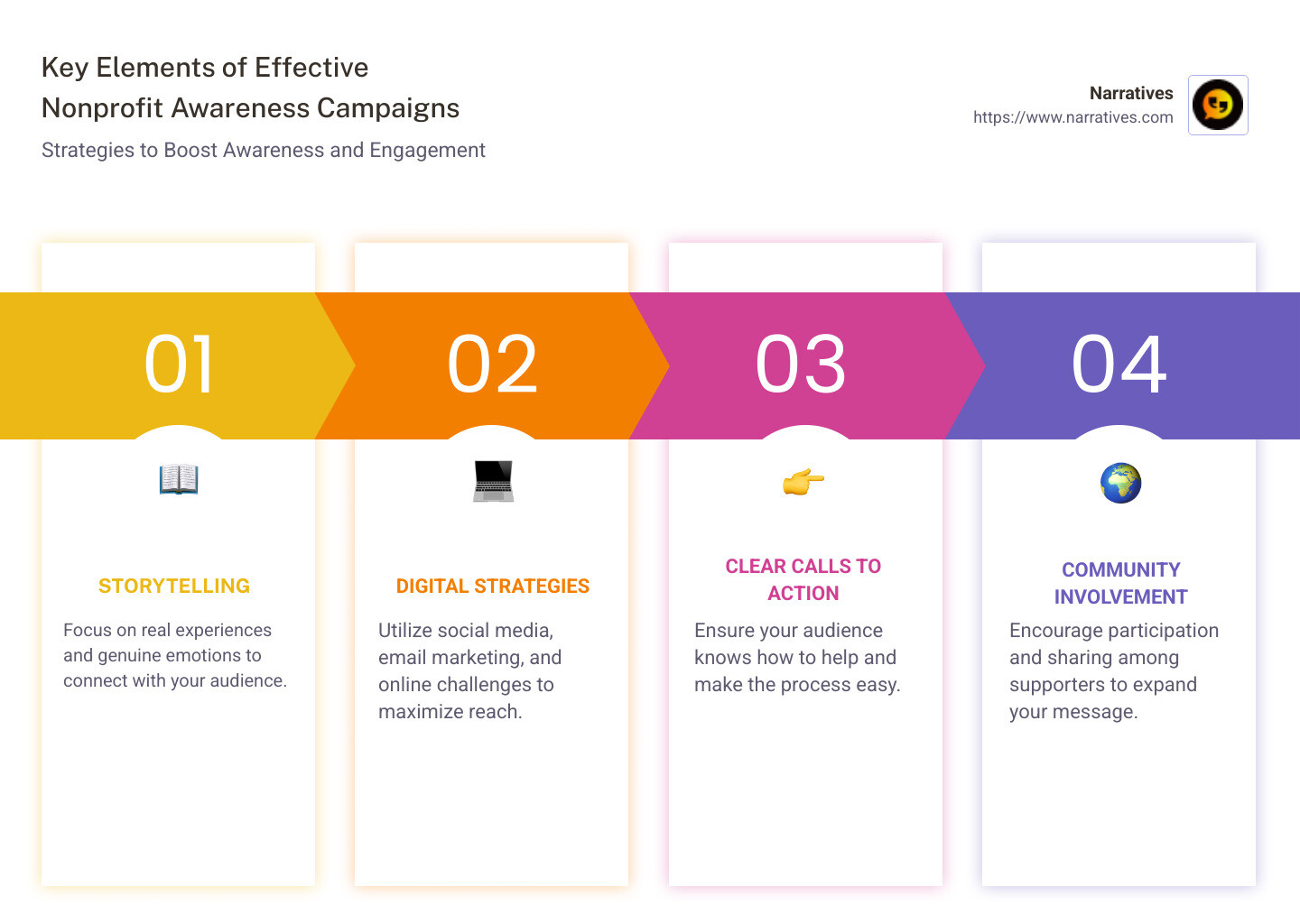
For those seeking a quick overview, here are some key elements of effective nonprofit awareness campaigns:
- Storytelling: Focus on real experiences and genuine emotions to connect with your audience.
- Digital Strategies: Use social media, email marketing, and online challenges to maximize reach.
- Clear Calls to Action: Ensure your audience knows how to help and make the process easy.
- Community Involvement: Encourage participation and sharing among supporters to expand your message.
Effective campaigns combine these elements to not only raise awareness but also drive tangible results, such as increased donations or volunteer participation. Utilizing creative approaches can make your campaign memorable and impactful.
Understanding Nonprofit Awareness Campaigns
Nonprofit awareness campaigns are strategic efforts by organizations to increase public knowledge and interest in a specific cause. They are designed to educate people about important issues, motivate them to take action, and ultimately support the organization's mission.
Definition
At their core, nonprofit awareness campaigns are marketing initiatives focused on spreading the word about a cause rather than promoting the organization itself. These campaigns use compelling stories, real-life experiences, and factual data to inform and engage the public. They often highlight a specific issue, like a new law's impact or the importance of adopting pets from shelters.
Benefits
The benefits of these campaigns are numerous:
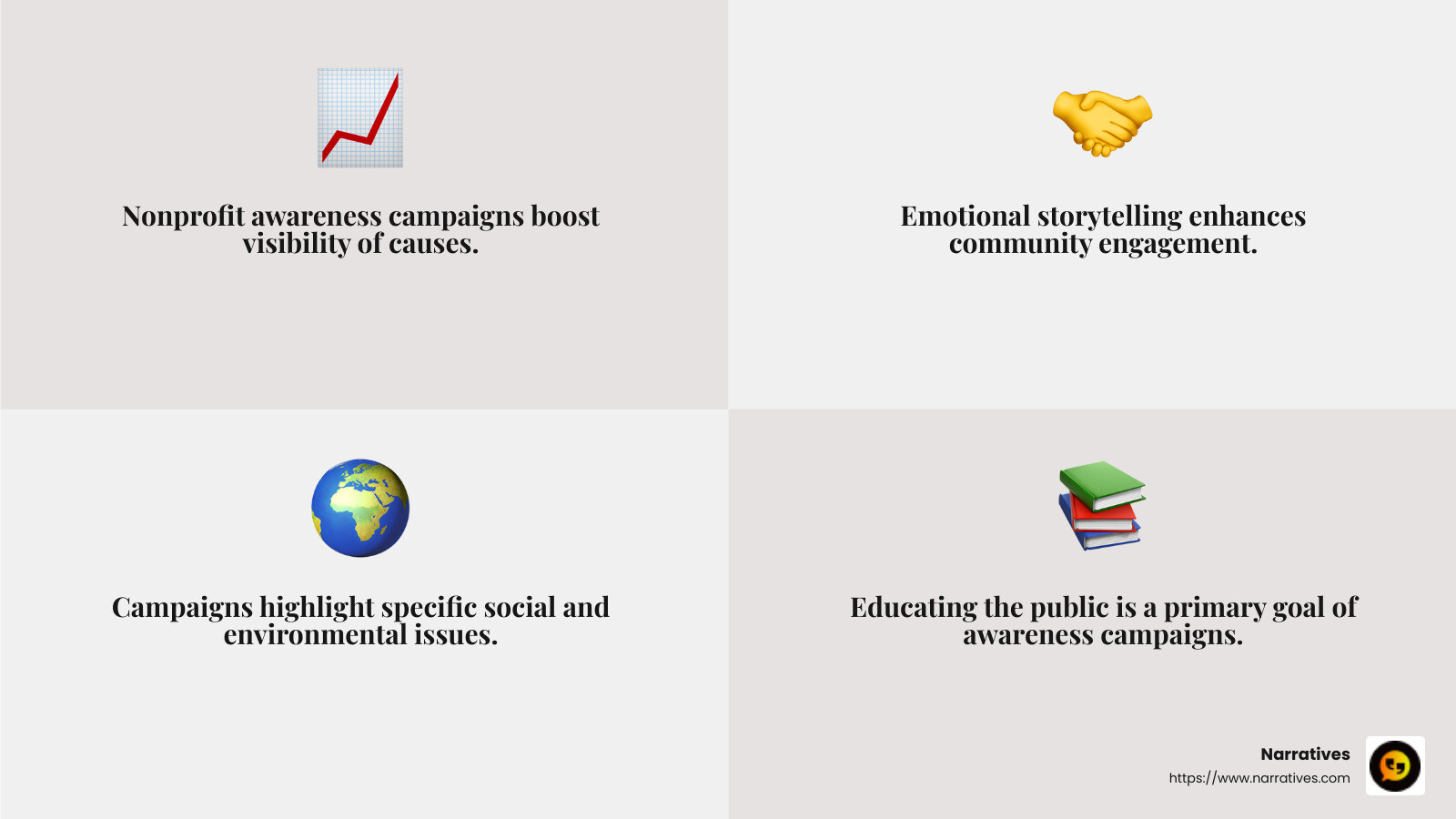
Increased Visibility: By raising awareness, nonprofits can reach new audiences who might not be familiar with their cause.
Improved Engagement: Storytelling and emotional connections encourage people to get involved, whether by donating, volunteering, or sharing information.
Stronger Community Ties: Campaigns that involve peer-to-peer interactions or collaborations with other organizations can strengthen the sense of community around a cause.
Goals
The primary goals of nonprofit awareness campaigns are to educate the public, inspire action, and foster long-term support. Here’s how they achieve these goals:
Educate: Provide clear, accurate information about the cause. For example, an animal shelter might run a campaign to educate the public on the benefits of adopting pets instead of buying from breeders.
Inspire Action: Use captivating stories and straightforward calls to action to encourage immediate involvement. This could mean signing a petition, attending an event, or making a donation.
Foster Support: Build lasting relationships with supporters by keeping them informed and engaged even after the campaign ends. This ongoing connection is crucial for turning one-time donors into lifelong advocates.
In summary, nonprofit awareness campaigns are more than just marketing efforts. They are a way for organizations to connect with the public on a deeper level, drive meaningful change, and build a community around their cause.
Steps to Launch a Successful Nonprofit Awareness Campaign
Launching a successful nonprofit awareness campaign involves careful planning, identifying your audience, crafting a compelling message, and leveraging the right tools. Let's break down each step:
Planning
Start with a clear goal. Do you want to raise awareness about a new law, encourage people to adopt pets, or gather donations for a cause? Define what success looks like for your campaign, and set measurable objectives.
Create a Basic Timeline: Align your campaign with national awareness days or months to tap into existing public interest. For example, running a campaign during Breast Cancer Awareness Month can increase visibility.
Consistency Is Key: Ensure your branding and messaging are consistent across all platforms. Tools like Canva can help maintain a cohesive visual identity.
Audience Identification
Understanding your audience is crucial. Who are you trying to reach? What are their interests and communication habits? Use this information to tailor your campaign's messaging and select the right channels.
Example: An environmental nonprofit might target young adults who are active on social media platforms like Instagram and TikTok.
Messaging
Your message should be clear, compelling, and aligned with your goals. Use storytelling to make an emotional connection. Share real stories of beneficiaries and donors, focusing on positive and uplifting narratives.
Develop Your Campaign Messaging: Reflect on your mission and any relevant themes. If your campaign aligns with a national awareness day, incorporate familiar images and colors to strengthen the connection.
Tools
Leverage technology to maximize your campaign's reach and efficiency. Here are some essential tools:
Email Marketing: Platforms like Mailchimp help design and automate email campaigns.
Social Media Management: Use tools like Loomly or Hootsuite to schedule posts and track engagement.
Analytics: Google Analytics can track website traffic, while Buffer helps manage social media performance.
PR Platforms: Muck Rack enables pitching to journalists who care about your cause.
Multi-Channel Strategy: Reach your audience wherever they are, whether through email, social media, or in-person events.
Measure What Matters: Set key performance indicators (KPIs) to track your campaign's success. This could include donations, social shares, or email open rates.
By following these steps, you can launch a nonprofit awareness campaign that not only raises awareness but also inspires action and fosters lasting support.
Top Nonprofit Awareness Campaign Examples
To truly understand the power of nonprofit awareness campaigns, let's dive into some of the most impactful examples that have set the bar high. These campaigns not only raised awareness but also inspired action on a global scale.
ALS Ice Bucket Challenge
In 2014, the ALS Ice Bucket Challenge took the internet by storm. Participants poured buckets of ice water over their heads and challenged others to do the same, all while raising funds for ALS research. The campaign's simplicity and viral nature made it a massive success. It raised $115 million from 2.5 million donors and significantly boosted awareness for ALS.
Key Factors for Success:
- Viral Challenge: The challenge format encouraged participation and sharing.
- Celebrity Endorsements: Many celebrities joined in, amplifying the campaign's reach.
- Simplicity: Clear instructions made it easy for anyone to participate.
#SaveOurPlanet by Greenpeace
Greenpeace's #SaveOurPlanet campaign focuses on climate justice and biodiversity conservation. By using powerful social media videos and interactive tools, Greenpeace highlights the urgent need for action against climate change. The campaign includes grassroots mobilization, petitions, and climate strikes, targeting both policymakers and the public.
Key Highlights:
- Augmented Reality (AR): Engages users by showing climate impacts in their local areas.
- Youth Engagement: Focuses on educating young people through social media.
- Local Partnerships: Collaborates with NGOs to drive regional policy changes.
#MentalHealthForAll by NAMI
NAMI's #MentalHealthForAll campaign addresses mental health challenges by reducing stigma and increasing access to services. It emphasizes equitable mental health care and uses compelling storytelling to connect with audiences.
Key Highlights:
- Equity and Inclusion: Advocates for mental health care accessibility, especially for marginalized communities.
- Digital Toolkits: Provides resources for community advocacy.
- Influencer Partnerships: Engages younger audiences through social media influencers.
#VoicesForEquality by ACLU
The ACLU's #VoicesForEquality campaign fights for racial justice, voting rights, and LGBTQ+ equality. It amplifies marginalized voices through video testimonials and digital storytelling, pushing for legislative action.
Key Highlights:
- Video Testimonials: Shares powerful stories of those affected by systemic inequalities.
- Grassroots Organizing: Combines digital petition drives with in-person protests.
- National and Local Focus: Targets change on both levels for a comprehensive impact.
#EndHungerNow
While not detailed in the research, campaigns like #EndHungerNow typically aim to address food insecurity by raising awareness and funds to support hunger relief efforts. They often involve partnerships with local food banks and use social media to highlight stories of those affected by hunger.
Common Strategies:
- Storytelling: Shares personal stories to humanize the issue.
- Community Involvement: Encourages local participation and support.
- Social Media Campaigns: Uses hashtags to spread awareness and engage a wider audience.
These examples illustrate the transformative power of well-executed nonprofit awareness campaigns. By leveraging storytelling, digital tools, and community involvement, these campaigns not only lift their causes but also drive real change.
Digital Strategies for Nonprofit Awareness Campaigns
Leveraging the right strategies can significantly amplify the reach and impact of nonprofit awareness campaigns. Here are some effective digital strategies that have proven successful:
Social Media
Social media is a powerhouse for spreading messages far and wide. It allows nonprofits to engage directly with their audience, share compelling stories, and encourage participation.
Key Tactics:
Storytelling: Share real-life stories of beneficiaries and supporters. This humanizes your cause and fosters empathy.
Interactive Campaigns: Host social media challenges or use hashtags to encourage user-generated content. For instance, the ALS Ice Bucket Challenge used a simple, shareable format to go viral.
Influencer Collaborations: Partner with influencers who align with your mission. They can help reach new audiences and add credibility to your campaign.
Peer-to-Peer Fundraising
Peer-to-peer fundraising empowers your supporters to become advocates for your cause. By leveraging their networks, you can expand your reach exponentially.
How It Works:
Personal Fundraising Pages: Allow supporters to create their own fundraising pages. They can share these with friends and family, encouraging donations.
Ambassador Programs: Recruit passionate supporters to act as campaign ambassadors. Provide them with resources and training to effectively spread the word.
Engagement Tools: Use tools like leaderboards or fundraising thermometers to create a sense of competition and urgency among participants.
Google Ad Grant
Google Ad Grants provide nonprofits with up to $10,000 per month in free advertising on Google Search. This can drive more traffic to your website and raise awareness for your cause.
Maximizing Impact:
Targeted Keywords: Use specific keywords related to your campaign to reach interested users. This ensures your ads appear in relevant searches.
Compelling Ad Copy: Write clear, engaging ad copy that encourages clicks. Include a strong call to action, such as "Donate Now" or "Learn More."
Landing Page Optimization: Ensure your landing pages are optimized for conversions. They should be mobile-friendly and provide a seamless user experience.
By integrating these digital strategies, nonprofits can improve the effectiveness of their awareness campaigns. Social media, peer-to-peer fundraising, and Google Ad Grants offer powerful tools to engage audiences, spread messages, and drive action.

Next, let's address some common questions about nonprofit awareness campaigns, including their definition, timing, and how to measure success.
Frequently Asked Questions about Nonprofit Awareness Campaigns
What are nonprofit awareness campaigns?
Nonprofit awareness campaigns are strategic initiatives designed to increase public knowledge and interest in a specific cause. They focus on educating the public about issues closely aligned with a nonprofit's mission. For example, a legal aid organization might launch a campaign to inform the public about new immigration laws and their implications. These campaigns often use various marketing channels, such as social media, email newsletters, and in-person events, to spread their message effectively.
When is the best time to launch a nonprofit awareness campaign?
Timing is crucial for the success of any awareness campaign. Many nonprofits align their campaigns with national awareness days or months, such as GivingTuesday or Breast Cancer Awareness Month, to capitalize on increased public interest. Launching during these times can help your campaign stand out and engage a more receptive audience. However, the best time ultimately depends on your organization's goals and the preferences of your target audience. Analyze past campaign performances and audience engagement trends to choose the most opportune moment.
How do you measure the success of a nonprofit awareness campaign?
To gauge the effectiveness of your campaign, set clear goals and track specific key performance indicators (KPIs). These metrics will help you understand how well your campaign is performing and where improvements are needed. Common KPIs for nonprofit awareness campaigns include:
- Number of clicks, shares, or likes on social media posts
- Event attendance or tickets sold
- New subscribers or followers gained during the campaign
- Website traffic on your campaign's landing page
By monitoring these metrics, you can assess whether your campaign is meeting its objectives and make data-driven decisions to improve future efforts.
Understanding these aspects of nonprofit awareness campaigns can help you plan and execute impactful campaigns that resonate with your audience and further your mission.
Conclusion
In the changing landscape of nonprofit awareness campaigns, one thing is clear: storytelling is at the heart of impactful change. At Narratives, we position ourselves as your dedicated storytelling partner, committed to elevating underrepresented voices and driving social impact through compelling digital content.
Our mission is simple yet profound. We aim to help nonprofits share their stories in a way that not only inspires action but also builds trust and increases visibility. Through high-quality, emotionally resonant video and multimedia content, we strive to create connections that transform audiences from passive observers to active participants in your cause.
By focusing on social impact, we tap into the power of stories to foster empathy and understanding. A well-told story can illuminate complex issues, turn statistics into relatable experiences, and ultimately, motivate people to take meaningful action.
As your partner, we offer more than just content creation. We provide strategic insights and innovative solutions custom to your specific needs. Whether it's leveraging social media to reach new audiences or using data to refine your messaging, our approach is designed to maximize your impact.
Let's build a better world together, one story at a time. If you're ready to lift your nonprofit's message and drive real change, learn more about how Narratives can support your storytelling journey. Together, we can make a difference.


.avif)