Stories That Move: Nonprofit Marketing Through Storytelling

Nonprofit marketing storytelling is all about crafting powerful narratives that resonate with hearts and minds, driving action and engagement. Stories create an emotional connection, making your mission and cause more relatable and inspiring. Here are the core reasons why storytelling is pivotal in nonprofit marketing:
- Humanize the Cause: Personal stories transform abstract missions into relatable human experiences.
- Build Trust: Success stories demonstrate effectiveness, building credibility.
- Engage Emotions: Emotional narratives inspire action and support.
- Increase Brand Awareness: Memorable stories stick, enhancing recognition.
- Foster Community: Shared values and impacts unite audiences.
Storytelling is at the heart of nonprofit marketing. When done right, it speaks volumes, touches lives, and sparks change.
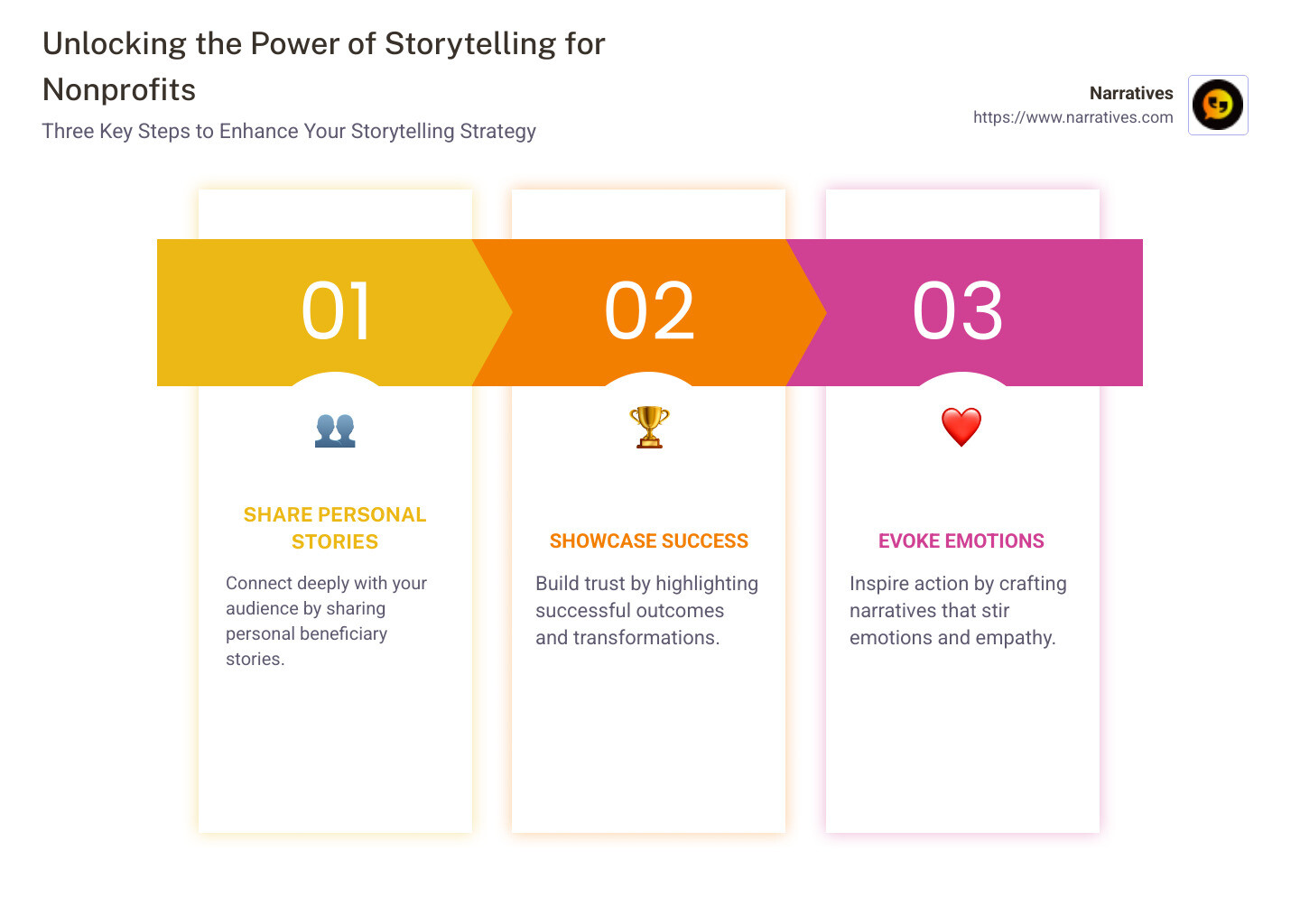
Quick look at Nonprofit marketing storytelling:
The Power of Nonprofit Marketing Storytelling
Nonprofit marketing storytelling is an incredibly effective way to connect with your audience on a deeper level. Let's explore why this approach is so powerful:
Humanize the Cause
Stories about real people make your mission tangible. When you share the journey of someone impacted by your work, it puts a face to your cause. This personal touch helps potential supporters see the real-world implications of their contributions, making them more likely to engage.
Build Trust
Trust is crucial for nonprofits. When you share success stories and testimonials, you demonstrate your organization's impact and reliability. This transparency builds confidence among potential donors and volunteers, encouraging them to support your mission.
Engage Emotions
Stories have the power to evoke strong emotions. Whether it's a narrative of triumph over adversity or a heartfelt plea for help, emotional storytelling can inspire action. A compelling story can move people to donate, volunteer, or advocate for your cause. 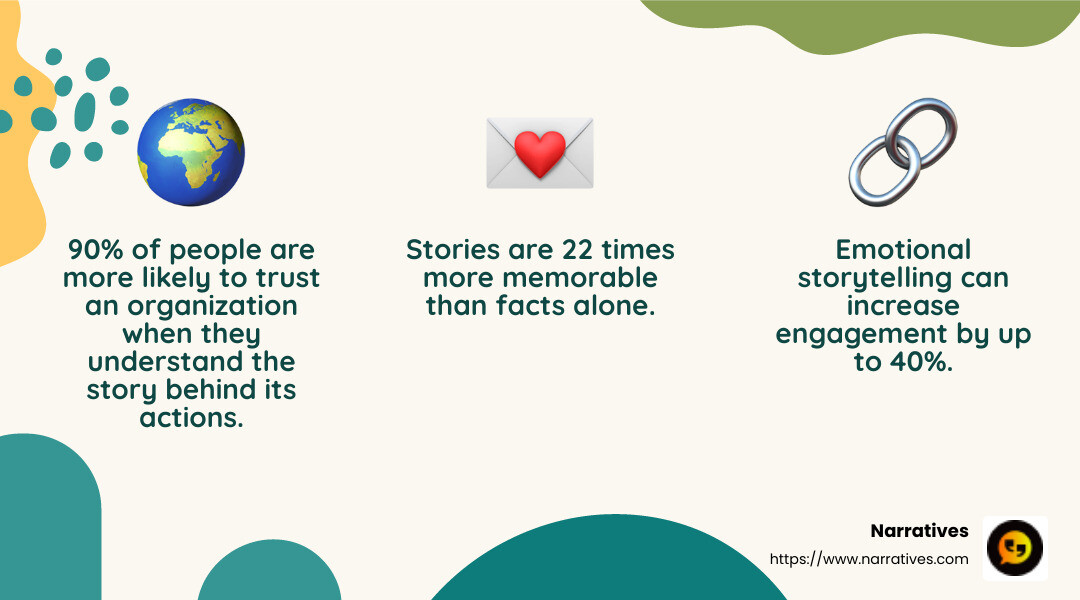
Increase Brand Awareness
Memorable stories are more likely to be shared. When your narrative resonates with an audience, it sticks with them. This not only improves brand awareness but also encourages word-of-mouth promotion, extending your reach beyond your immediate network.
Foster Community
Storytelling can create a sense of belonging. When people see their values reflected in your stories, they feel connected to your organization. This shared sense of purpose fosters a community of advocates who are passionate about your cause and eager to spread the word.
Incorporating storytelling into your nonprofit marketing strategy can transform the way people perceive and interact with your organization. By making your cause personal, trustworthy, and emotionally engaging, you can build a loyal community and lift your mission's impact.
Key Elements of Effective Storytelling
Effective storytelling is essential for nonprofit marketing. To make your stories resonate, focus on these key elements:
Authenticity
Authenticity is the cornerstone of effective storytelling. Share genuine stories that reflect real experiences. Avoid exaggeration or embellishment. Authentic stories build trust and credibility. They show your audience that your nonprofit is honest and transparent.
Focus on Individuals
People connect with personal stories. Highlight the experiences of individuals impacted by your work. This approach, known as the singularity effect, makes the narrative relatable and engaging. By focusing on one person, you humanize your cause and illustrate its broader implications.
Compelling Visuals
Incorporate visuals that complement your narrative. Images and videos can evoke emotions and make your story more memorable. Ensure that your visuals are high-quality and relevant to the story you are telling. This will help capture your audience's attention and enhance their connection to your cause.
Show Impact
Demonstrating the tangible results of your work is crucial. Use data, statistics, and testimonials to showcase your organization's impact. This not only builds trust but also motivates your audience to support your cause. When people see the difference you're making, they're more likely to get involved.
Concise Storytelling
Keep your stories concise and to the point. Attention spans are short, so clarity and simplicity are key. Ensure your message is easy to understand and remember. A clear, focused story is more likely to resonate with your audience and inspire action.
By incorporating these elements into your storytelling, you can create narratives that not only inform but also inspire and engage your audience. This approach will help lift your nonprofit's mission and drive meaningful support.
Steps to Crafting Compelling Nonprofit Stories
Crafting a compelling story for your nonprofit is an art. Here's a simple guide to help you create narratives that captivate and motivate.
Understand Story Structure
A good story often follows a three-act structure:
Set Up: Introduce the setting and characters. This is where your audience learns the basics—who, what, where, and why. It's like meeting Harry Potter before he gets his Hogwarts letter.
Confrontation: This is the heart of your story. Highlight the conflicts and challenges your character faces. Show the tension and struggles that need overcoming. This builds engagement as your audience roots for the character.
Resolution: Here, the character's journey concludes. Show the change and lessons learned. Your audience should see the point of the story and feel satisfied with its conclusion.
Focus on One Character
The Singularity Effect: Choose one main character to focus on. This person represents the broader impact of your nonprofit's work. Sharing their personal journey makes the story relatable and engaging. Include direct quotes and testimonials to maintain authenticity and connect with your audience on a deeper level.
Communicate Conflict and Success
Highlight the challenges your character faces and how they overcome them. This is what makes the story compelling. Show their courage and resilience. Avoid portraying them as a victim; instead, focus on their strength and hope. Your nonprofit's role in providing solutions should be clear, showcasing how your audience's support is crucial.
Highlight Results
Your audience wants a clear takeaway. Show the change from the beginning to the end of the story. Whether it's emotional, physical, or circumstantial, make sure your audience sees the impact. This not only satisfies their curiosity but also motivates them to take action.
Call to Action
End your story with a strong call to action. Encourage your audience to support your cause, whether through donations, volunteering, or spreading the word. Make it clear how they can help and why their involvement matters.
Edit
Finally, refine your story. Ensure it's concise, clear, and free of unnecessary details. A well-edited story is easier to understand and more likely to resonate with your audience.
By following these steps, you can craft stories that not only inform but also inspire action and support for your nonprofit. Next, let's explore some techniques and strategies to improve your storytelling efforts.
Nonprofit Storytelling Techniques and Strategies
When it comes to nonprofit marketing storytelling, using the right techniques and strategies can make all the difference. Let's explore some effective methods to lift your storytelling game.
Visual Storytelling
Visuals are powerful. They grab attention and evoke emotions faster than words alone. Use high-quality images, videos, and graphics to improve your narrative. For example, the United Nations Development Programme used striking photos of plastic pollution to drive home the urgency of environmental issues. This approach helps audiences grasp the scale of a problem and feel motivated to act.
User-Generated Content
Empower your supporters to share their own stories. This not only adds authenticity but also builds a sense of community. Encourage them to create content related to your cause and share it on social media. This strategy not only broadens your reach but also adds diverse perspectives to your storytelling.
Multi-Channel Approach
Don't limit your stories to just one platform. Share them across various channels like social media, email newsletters, and your website. This ensures your message reaches a wider audience. For instance, Habitat for Humanity effectively uses videos and quotes across their annual reports and social media to keep their audience engaged.
Involve Your Team
Your staff and volunteers have unique insights and experiences. Encourage them to share their stories. This not only enriches your storytelling but also creates a more comprehensive narrative. Their accounts can add depth and credibility to your cause.
Monitor and Evaluate
Track the performance of your storytelling efforts. Use metrics like engagement, reach, and conversion rates to assess what works and what doesn't. Regular evaluation helps you refine your approach and make data-driven decisions to improve future campaigns.
By embracing these storytelling techniques and strategies, your nonprofit can create compelling narratives that resonate with your audience and inspire action. Next, we'll address some frequently asked questions about nonprofit marketing storytelling.
Frequently Asked Questions about Nonprofit Marketing Storytelling
How can storytelling improve nonprofit communication?
Storytelling is a game-changer for nonprofit communication. It creates emotional engagement by connecting with audiences on a personal level. When you share a story, you're not just conveying information—you're inviting your audience to feel something.
Stories are 22 times more memorable than facts alone. This means that when you integrate storytelling into your communication strategy, your messages stick. People are more likely to remember your cause and take action.
Moreover, storytelling can inspire action. When people feel emotionally connected, they're more inclined to volunteer, donate, or spread the word about your cause.
What role do visuals play in nonprofit storytelling?
Visuals are crucial in nonprofit storytelling. They add emotional resonance and make your stories more impactful. A photo or video can convey emotions and information that words alone might miss.
For example, a touching photo of a family benefiting from your organization’s support can instantly communicate the impact of your work. Visuals help your audience see the difference you're making, which can be more powerful than any written description.
Incorporating visuals into your storytelling not only improves storytelling impact but also increases audience engagement. People are naturally drawn to images and videos, which makes them more likely to pause, absorb, and react to your message.
How can nonprofits leverage storytelling for donor engagement?
Storytelling is a powerful tool for building trust with donors. By sharing real stories of the people and communities you help, you demonstrate transparency and authenticity. This helps donors feel confident that their contributions are making a difference.
Showcasing the impact of donations through storytelling can also inspire donations. When donors see the tangible results of their support, they are more likely to continue contributing. For instance, sharing a story about a child who received an education because of donor funding can motivate others to give.
Incorporating donor stories into your narrative can further strengthen this connection. Highlighting why donors choose to support your cause can encourage others to join them.
By using storytelling to engage donors, you not only foster loyalty but also encourage continued support, ensuring your nonprofit can keep making a positive impact.
Conclusion
Narratives plays a crucial role in nonprofit marketing by elevating underrepresented voices and inspiring action. Through effective storytelling, we help nonprofits not only share their impact but also build trust and increase visibility in their communities.
When nonprofits use storytelling, they lift voices that might otherwise go unheard. This is essential for creating emotional connections with audiences. By showcasing personal stories, nonprofits make their causes relatable and real, encouraging people to engage and contribute.
Inspiration is at the heart of nonprofit storytelling. When audiences hear a compelling story, they are moved to act—whether that's donating, volunteering, or spreading the word. A well-told story can transform passive listeners into active participants in your cause.
Building trust is another key benefit of storytelling. When you share genuine stories about the people you help, you show transparency and accountability. This builds credibility with your audience, making them more likely to support your efforts.
Finally, storytelling helps nonprofits increase visibility. Memorable stories stick with people, leading to greater awareness of your organization and its mission. As your stories spread, so does your reach, allowing you to connect with more potential supporters.
At Narratives, we specialize in crafting stories that move. By using high-quality, emotionally resonant video and multimedia content, we help nonprofits share their stories in a way that not only inspires action but also builds lasting relationships with their audiences.
To learn more about how we can help your nonprofit lift its storytelling efforts, visit our service page. Together, we can make a bigger impact by sharing stories that truly matter.


.avif)