Storytelling for Nonprofits: Tips to Engage and Inspire

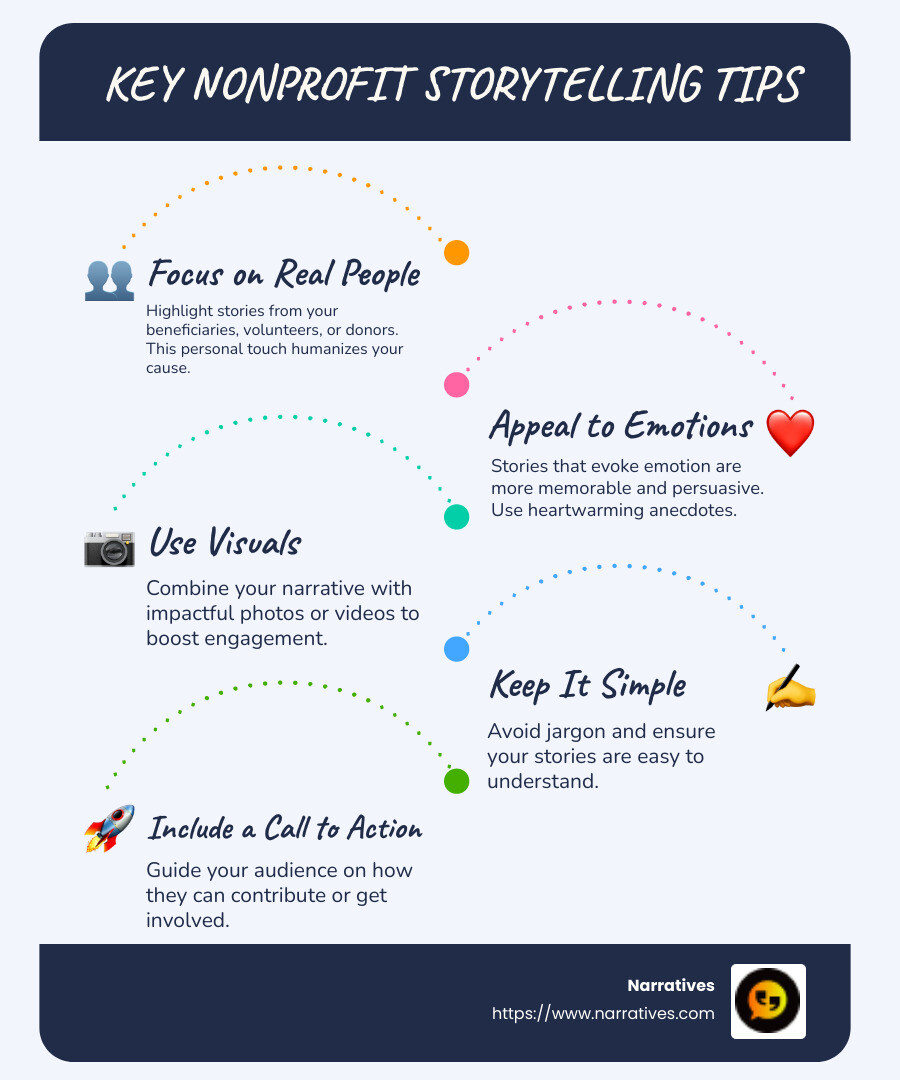
Nonprofit storytelling tips are crucial for creating emotional connections that engage and inspire your audience. Crafting stories that resonate isn't just about sharing facts and figures. It's about weaving narratives that highlight real lives, emotions, and experiences. Here are key tips you can use to improve your storytelling efforts:
- Focus on real people: Highlight stories from your beneficiaries, volunteers, or donors. This personal touch humanizes your cause.
- Appeal to emotions: Stories that evoke emotion are more memorable and persuasive. Use heartwarming anecdotes.
- Use visuals: Combine your narrative with impactful photos or videos to boost engagement.
- Keep it simple: Avoid jargon and ensure your stories are easy to understand.
- Include a call to action: Guide your audience on how they can contribute or get involved.
In today's digital world, nonprofits face the challenge of standing out amidst the noise. By sharing compelling stories, you can foster emotional connections that motivate support for your mission. According to Narratives, a content agency specializing in nonprofit storytelling, using narratives can breathe life into your communications, leaving your supporters inspired to take action. And isn’t that the ultimate goal?
Understanding Nonprofit Storytelling
Nonprofit storytelling is more than just telling tales. It's about connecting your mission, vision, and impact through powerful narratives. Let's break this down:
Mission and Vision
Every nonprofit has a mission—a core reason for its existence. Your mission is what drives your organization and guides its actions. It’s the "why" behind what you do. Your vision, on the other hand, is about the future. It paints a picture of what success looks like when your mission is achieved.
Example: If your mission is to provide clean water to underprivileged communities, your vision might be a world where every person has access to safe drinking water.
Impact
Impact is the measurable change your organization creates. It's the evidence that your mission is making a difference. Sharing stories of impact can be powerful. They show supporters the tangible results of their contributions.
Tip: Use both quantitative (numbers) and qualitative (stories) data to showcase your impact. This combination can make your stories more credible and compelling.
Narratives
Narratives are the stories that bring your mission, vision, and impact to life. They are the threads that weave through your organization's history and future. A good narrative takes your audience on a journey—showing them the challenges, the triumphs, and the ongoing need for support.
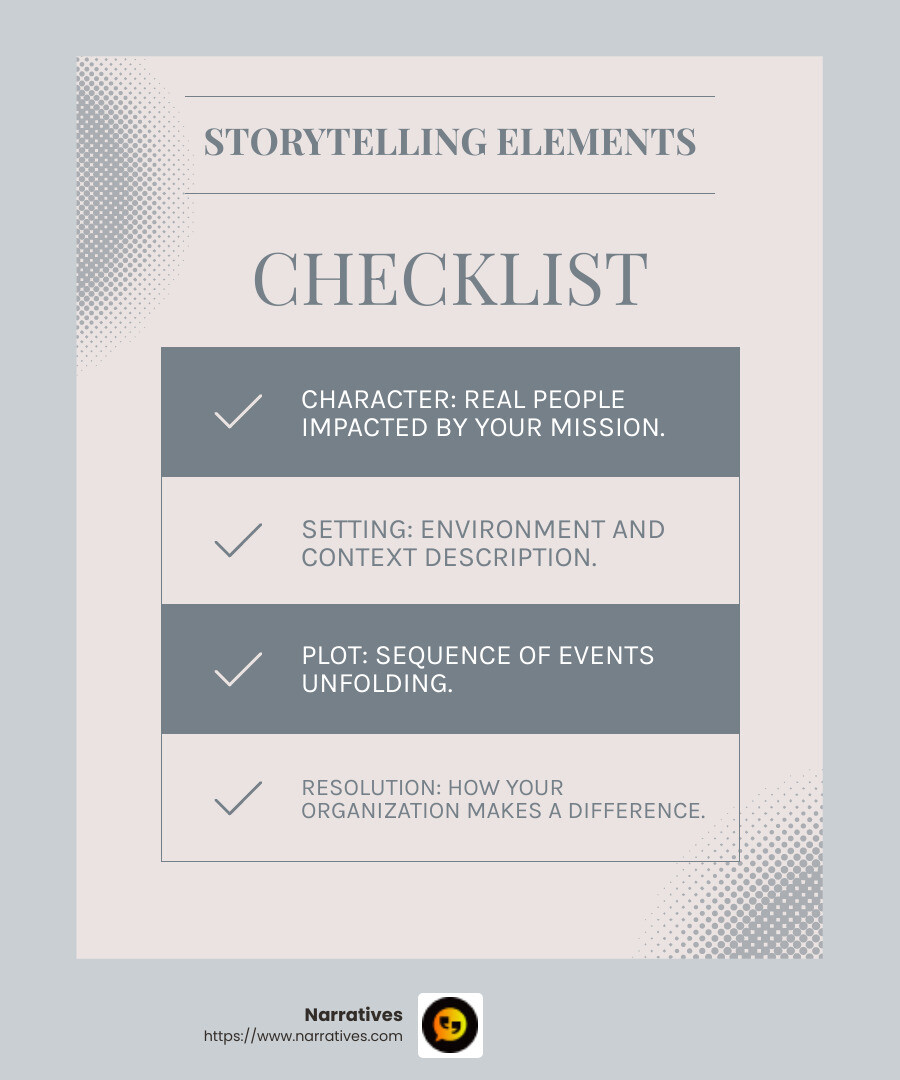
Key Elements of a Strong Narrative:
- Character: Introduce real people affected by your work.
- Setting: Describe the environment or context of your story.
- Plot: Outline the sequence of events that unfold.
- Conflict: Highlight the challenges faced.
- Resolution: Show how your organization is making a difference.
Quote from Nicole Suydam, Goodwill of Orange County: “Experiencing the story is one of the most effective storytelling techniques when communicating impact.”
By aligning your storytelling with your mission, vision, and impact, you create a cohesive narrative that resonates with your audience. This approach not only informs but also inspires action—encouraging others to join your cause.
Key Elements of Effective Storytelling
When it comes to nonprofit storytelling, understanding the key elements can make your narratives more engaging and impactful. Let's explore these essential components: character, setting, plot, conflict, and resolution.
Character
Characters are the heart of your story. They can be real people, animals, or even places that are central to your nonprofit's mission. Characters should be relatable and evoke empathy from your audience.
Example: In a nonprofit focused on education, a character might be a student who overcame challenges to achieve academic success.
Tip: Use direct quotes or testimonials from your characters to bring authenticity to your story. This helps your audience connect on a personal level.
Setting
The setting is where your story unfolds. It includes the physical location as well as the social and emotional environment. A well-described setting can transport your audience into the story.
Example: A nonprofit working in disaster relief might describe the aftermath of a hurricane, capturing both the devastation and the community's resilience.
Tip: Use vivid language to paint a picture of the setting. This helps your audience visualize and feel the context of your story.
Plot
The plot is the sequence of events that make up your story. It includes the exposition, inciting incident, rising action, climax, falling action, and resolution.
Example: A nonprofit's plot might start with a community facing a problem, followed by the organization's intervention, and end with a positive change.
Tip: Keep your plot focused and concise. A clear and structured plot helps maintain your audience's attention.
Conflict
Conflict is the challenge or obstacle that your characters face. It drives the story forward and creates tension that engages your audience.
Example: A nonprofit addressing homelessness might highlight the systemic barriers individuals face in finding stable housing.
Tip: Clearly define the conflict and show how your organization helps overcome it. This demonstrates the importance of your work.
Resolution
The resolution is how the story concludes. It shows the outcome of the conflict and the impact of your nonprofit's efforts.
Example: After addressing the conflict, the resolution might show a family moving into a new home, illustrating the success of the nonprofit's housing program.
Tip: A satisfying resolution leaves your audience feeling hopeful and optimistic about the future.

By mastering these key elements, your nonprofit storytelling can become a powerful tool to engage and inspire your audience, driving them to support your mission.
Nonprofit Storytelling Tips
Crafting compelling stories is an art. Here are some nonprofit storytelling tips to help you engage and inspire your audience.
Be Descriptive
"Show, don't tell." This classic advice is key to powerful storytelling. Use the five senses—sight, sound, smell, touch, and taste—to create vivid images in your audience's mind. Descriptive storytelling transports readers and makes them feel like they're part of the story.
Example: Instead of saying, "The community garden flourished," describe the vibrant colors of the vegetables, the sound of bees buzzing, and the earthy smell of fresh soil.
Tip: Use specific details to paint a picture. This draws your audience into the world you're describing.
Use Visuals
Visuals can improve your storytelling by providing context and making your message more memorable. High-quality visuals—like photos, videos, and infographics—can illustrate your impact and bring your stories to life.
Example: A photo of volunteers planting trees can highlight your environmental efforts better than words alone.
Tip: Ensure visuals add value and are relevant to your story. They should complement, not clutter, your narrative.
Impact Data
Support your stories with impact data to add credibility. Quantitative data shows the scale of your work, while qualitative data adds depth and context.
Example: "Thanks to our donors, 500 families now have access to clean water," accompanied by testimonials from community members.
Tip: Use data to back up your claims. This builds trust and showcases the tangible results of your efforts.
Call to Action
A strong call to action (CTA) encourages your audience to take the next step. Whether it's donating, volunteering, or sharing your story, a clear and compelling CTA can drive engagement.
Example: "Join us in making a difference. Donate today to help more families find safe shelter."
Tip: Keep your CTA short and actionable. Make it easy for your audience to understand what you want them to do.
By incorporating these nonprofit storytelling tips, you can create stories that resonate with your audience and inspire them to support your cause.
Examples of Successful Nonprofit Storytelling
Let's explore some standout examples of nonprofit storytelling that have successfully engaged and inspired audiences. These organizations have used creative storytelling techniques to bring their missions to life and connect with their supporters in meaningful ways.
MENTOR California
MENTOR California is a nonprofit organization focused on expanding youth mentoring relationships across the state. In their "State of MENTORing in CA" report, they combine impact data with personal stories to paint a complete picture of their work. By sharing their origin story, mission, and impact data gathered from the UpMetrics platform, MENTOR California provides tangible evidence of their success. They further improve their narrative with evocative stories from beneficiaries, collected through focus groups and interviews. This blend of data and storytelling not only demonstrates their impact but also builds trust and credibility with their audience.
WWF's Seaweed Diving Blog Article
The World Wildlife Fund (WWF) shares a compelling story about Patagonian Indigenous communities diving for a rare type of seaweed. This blog article combines descriptive storytelling and visuals to immerse readers in the divers' world. By including interviews with divers and vivid descriptions like "dazed aquanauts" with "faces... shriveled like prunes," WWF captures the harsh realities and hopes of these communities. High-quality images further enrich the narrative, making it an excellent example of how to engage an audience with both words and visuals.
American Heart Association's Survivor Video
The American Heart Association uses video storytelling to share powerful survivor stories on their YouTube channel. These videos feature individuals who have overcome heart disease, providing first-hand accounts that resonate emotionally with viewers. By focusing on personal narratives, the American Heart Association demonstrates the real-life impact of their work. This approach not only humanizes their cause but also inspires viewers to support their mission. The survivor videos serve as a testament to the power of storytelling in building emotional connections and encouraging action.
Days for Girls
Days for Girls is dedicated to increasing access to menstrual care and education. They effectively use storytelling to highlight the transformative impact of their work. Through case studies and impact reports, Days for Girls shares stories of individuals and communities benefiting from their programs. By combining personal stories with data on improved school attendance and health outcomes, they create a compelling narrative that showcases their achievements. This approach not only informs but also inspires supporters to contribute to their cause.
These examples illustrate the power of storytelling in the nonprofit sector. By combining descriptive narratives, visuals, and impact data, these organizations have successfully engaged their audiences and inspired action.
Frequently Asked Questions about Nonprofit Storytelling Tips
How can storytelling improve donor trust?
Storytelling is a powerful tool for building trust with donors. By being transparent about how donations are used, nonprofits can improve their credibility. When organizations share detailed stories about their projects and the impact of donations, they provide donors with a clear picture of where their money goes. For instance, using storytelling techniques to illustrate the journey from donation to impact helps donors see the tangible results of their contributions.
According to research, transparency is crucial for donor retention, with retention rates hovering between 40% and 45%. Nonprofits that openly communicate how each dollar is spent can foster a stronger trust relationship with their supporters. This trust is vital for encouraging continued support and engagement.
What are the benefits of using multimedia in storytelling?
Multimedia storytelling offers several advantages for nonprofits. It improves engagement by combining visuals, audio, and text, making stories more dynamic and memorable. For example, a video featuring a beneficiary sharing their personal experience can be far more impactful than text alone.
Research shows that stories are remembered up to 22 times more than facts alone, especially when combined with strong visuals. Platforms like social media, podcasts, and blogs are ideal for sharing multimedia content, allowing nonprofits to reach a wider audience. By leveraging multimedia, organizations can create a more immersive experience that captures attention and encourages action.
How do you identify the right stories to tell?
Identifying the right stories to tell is crucial for effective nonprofit storytelling. Start by considering your audience and purpose. Ask yourself: Who are you trying to reach, and what do you want them to do? Understanding your audience helps tailor stories that resonate with their interests and motivations.
Next, consider the purpose of your storytelling. Are you aiming to raise funds, recruit volunteers, or increase awareness? The purpose will guide the type of stories you share. For example, if the goal is to recruit volunteers, focus on stories of current volunteers and the difference they've made.
Finally, gather stories from a variety of sources. This could include testimonials from beneficiaries, insights from staff members, or success stories from past campaigns. By selecting diverse and relevant stories, nonprofits can create a compelling narrative that effectively communicates their mission and inspires action.
Conclusion
Storytelling is more than just a tool—it's a bridge that connects nonprofits to their communities. Narratives plays a pivotal role in this landscape, serving as a trusted partner for purpose-driven organizations looking to amplify their voices through impactful storytelling. By focusing on community-driven narratives, we help nonprofits share their unique stories in a way that not only inspires action but also builds trust and improves visibility.
Digital storytelling is key to reaching wider audiences. By using high-quality, emotionally engaging multimedia content, nonprofits can highlight their impact and foster a sense of connection with their audience. Whether through videos, podcasts, or social media, these stories become powerful vehicles for change, encouraging supporters to engage and contribute to the cause.
At Narratives, we believe in elevating underrepresented voices, ensuring that every story told is not just heard, but felt. Our approach centers on creating content that resonates emotionally, driving home the mission and vision of each organization we work with. This commitment to authentic storytelling helps build a stronger, more engaged community around your cause.
To explore how we can help your nonprofit tell its story and make a lasting impact, visit our digital storytelling service page. Together, we can create stories that inspire change and build a better tomorrow.


.avif)