The Ripple Effect: Understanding Social Impact Multimedia
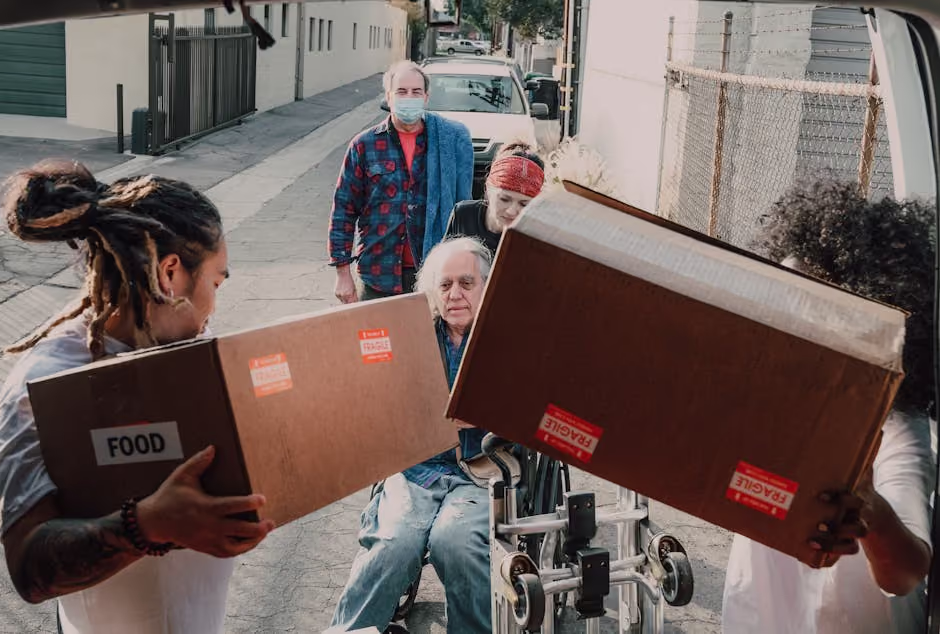
Social impact multimedia is a powerful tool that uses storytelling through different types of media to drive meaningful change. It's about crafting messages that matter, using formats like videos, animations, podcasts, and more to reach hearts and minds effectively.
Here's a quick look at how social impact multimedia makes a difference:
- Engagement: Captivating stories can raise awareness and inspire action.
- Connection: Builds emotional links between audiences and causes.
- Action: Encourages support through donations, volunteering, or advocacy.
Social impact multimedia is not just about sharing stories—it's about changing them into movements. By blending storytelling with diverse media formats, organizations can create narratives that resonate deeply and inspire positive change. Whether it's through a heartwarming documentary or an educational series, this approach fosters community connection and drives real-world impact.
For non-profit leaders and storytellers focusing on advocacy, equity, or justice, multimedia offers an unrivaled platform to amplify voices and stories that matter most.

The Role of Social Impact Multimedia
Social impact multimedia plays a crucial role in shaping how we think and act. It influences behavior, changes minds, and improves communication. Here's how:
Media Influence
Media has a significant impact on society. It shapes opinions and sets trends. Through social impact multimedia, stories can reach vast audiences and spark conversations. For example, a powerful documentary on climate change can inspire viewers to adopt eco-friendly habits.

Behavior Change
Social impact multimedia is a catalyst for behavior change. By presenting relatable stories, it motivates individuals to take action. Whether it's a video campaign on mental health or an animation about recycling, multimedia can transform awareness into action.
Consider the example of a campaign that uses storytelling to highlight the dangers of cyberbullying. When people see real stories, they are more likely to empathize and act against online harassment.
Communication
Effective communication is key in social impact work. Social impact multimedia improves this by making messages clear and engaging. It breaks down complex issues into digestible content.
For instance, educational programs that use videos and animations can simplify complicated topics like public health. This approach ensures that information is accessible to everyone, regardless of their background.
In summary, social impact multimedia is an essential tool for driving change. It leverages media influence, encourages behavior change, and improves communication, making it an invaluable asset for organizations aiming to create a positive impact.
Benefits of Social Impact Multimedia
Social impact multimedia offers several benefits that can significantly improve social impact work. Here are three key areas where it shines:
Mental Health
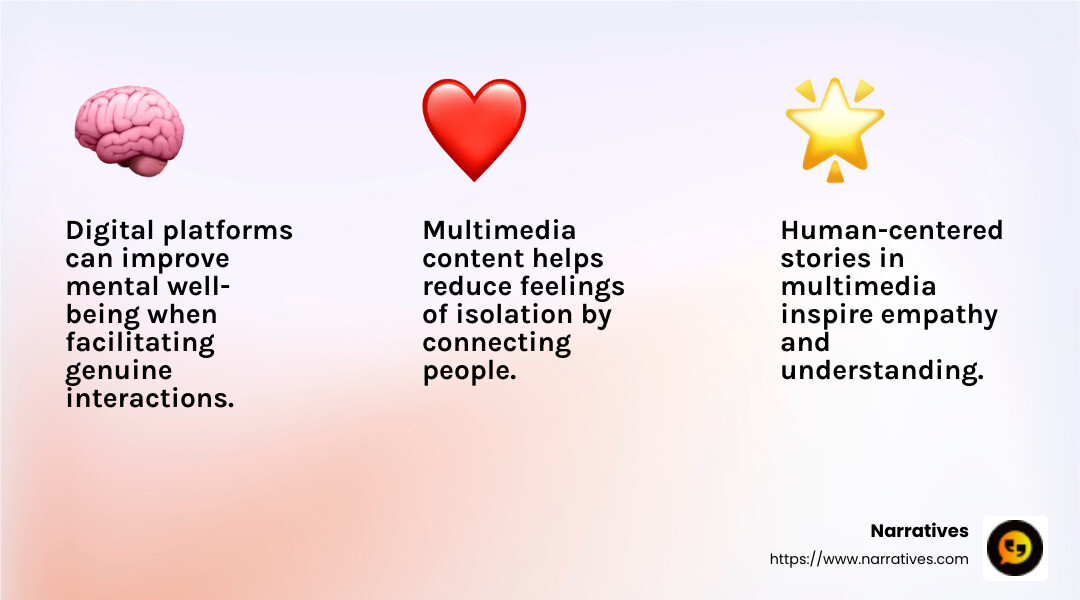
Social impact multimedia can positively affect mental health by fostering real human connections. A study by researchers Jenna L. Clark, Sara B. Algoe, and Melanie C. Green highlights how digital platforms can improve mental well-being when they facilitate genuine interactions. By using multimedia to tell human-centered stories, organizations can create content that inspires empathy and understanding, reducing feelings of isolation.
Creativity
Multimedia is a powerful tool for sparking creativity. It combines text, images, audio, and video to create engaging narratives. This blend allows for innovative storytelling that can captivate audiences. For instance, a campaign using animation and music can make complex social issues more relatable and memorable. The creative possibilities are endless, enabling organizations to craft unique messages that resonate deeply with their audience.
Professional Networking
Social impact multimedia also improves professional networking. Platforms like LinkedIn allow professionals to connect, share ideas, and collaborate on social impact projects. By showcasing multimedia content, individuals and organizations can highlight their work, attract partners, and build a strong network. This connectivity can lead to new opportunities, collaborations, and innovations in the social impact sector.
In summary, social impact multimedia not only enriches mental health and creativity but also strengthens professional networks. These benefits make it a vital component for any organization looking to make a meaningful difference.
Challenges in Social Impact Multimedia
While social impact multimedia can drive positive change, it also comes with significant challenges. Let's explore some of the most pressing issues: cyberbullying, doxxing, and child exploitation.
Cyberbullying
Cyberbullying is a pervasive issue in the digital age. It involves using multimedia platforms to harass, threaten, or demean individuals. This form of bullying can have severe psychological effects, especially on young audiences. According to the Addiction Center, social media addiction, which often accompanies cyberbullying, can lead to depression and anxiety.
- Impact: Victims often experience stress, anxiety, and depression.
- Solution: Implementing strict moderation policies and educational programs can help reduce cyberbullying.
Doxxing
Doxxing is the act of publicly revealing someone's private information without their consent. This can lead to harassment or even physical danger. Real-life examples include the release of personal information about public figures, like the case involving U.S. Supreme Court justices after the Roe vs. Wade decision.
- Impact: Doxxing can endanger individuals and erode trust in digital spaces.
- Solution: Stronger privacy laws and platform policies are essential to combat doxxing.
Child Exploitation
The internet has unfortunately become a tool for child exploitation. Predators use social media to groom and exploit minors, sometimes under the guise of "kidfluencers." These children, who have large followings on platforms like YouTube and TikTok, often lack the same protections as traditional child actors.
- Impact: Exploitation can have lifelong effects on victims.
- Solution: Legislation, like Illinois' protection laws for kidfluencers, is crucial in providing safeguards for minors online.
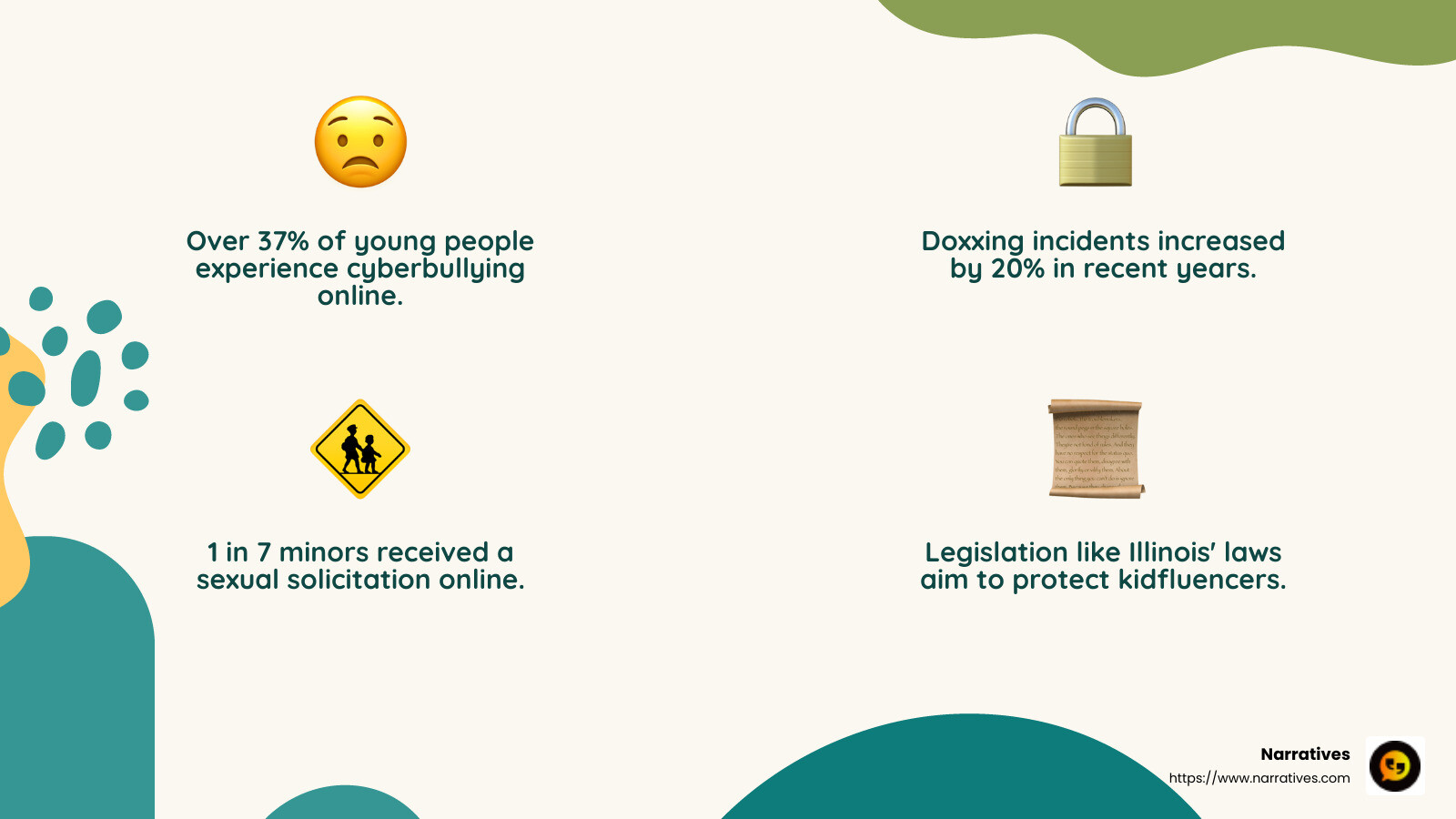
These challenges highlight the dark side of social impact multimedia. Addressing them requires a concerted effort from policymakers, platforms, and communities. By understanding and mitigating these risks, we can create a safer and more impactful digital environment.
Next, we'll examine how social impact multimedia is being used in real-world applications to drive positive change.
Social Impact Multimedia in Action
Social impact multimedia is a powerful tool for creating positive change in the world. Let's explore some real-world examples of how it's being used effectively.
Documentaries
Documentaries are a compelling form of social impact multimedia. They tell real stories that can inspire and educate viewers. For example, "The Lucky Specials" is a film that reaches 294 million viewers across 22 countries. It educates people about tuberculosis (TB) and encourages them to get tested. After watching, 36% of viewers reported getting a TB test, and 66% advised others to do the same.
Why it works:
- Real stories: People connect with real-life experiences.
- Wide reach: Documentaries can reach millions, spreading important messages.
Educational Programs
Educational programs use social impact multimedia to teach and inspire. "My Better World" is an animated series that combines cartoons with real-life stories. It's designed to promote education and health among young people. In Nigeria, 95% of viewers said the series made them more likely to support girls' education. The program also led to a 51% increase in girls' school enrollment.
Key elements:
- Engaging content: Animation and storytelling make learning fun.
- Community involvement: The series was developed with input from local teens, making it relatable.
Community Projects
Community projects harness social impact multimedia to address local issues. "Shaina," a story about a teenager in Zimbabwe, tackles gender-based violence and promotes peer support among girls. The project reached 21 million people across five countries, showing the power of multimedia in driving social change.
Features:
- Localized impact: Projects are custom to specific communities.
- Empowerment: Stories highlight the strength of community support and positive masculinity.
These examples show that social impact multimedia can be a force for good, driving awareness, education, and change. By leveraging the power of storytelling and media, communities can address pressing issues and inspire action.
Next, we'll answer some common questions about social impact multimedia and how it supports meaningful change.
Frequently Asked Questions about Social Impact Multimedia
What is social impact multimedia?
Social impact multimedia combines different types of media—like text, images, audio, video, and animation—to create content that promotes positive change. It's used to raise awareness, educate, and inspire action on social issues. This approach can engage diverse audiences by making complex topics more accessible and relatable.
How does multimedia support social impact?
Multimedia supports social impact by:
Engaging Audiences: Visual and audio elements capture attention and make messages more memorable.
Simplifying Complex Topics: Multimedia breaks down complicated issues into digestible pieces, making them easier to understand.
Encouraging Emotional Connections: Stories told through multimedia resonate emotionally, prompting viewers to care and take action.
Reaching a Wider Audience: Different media formats can reach diverse groups, from local communities to global audiences.
For instance, The Center on Media Innovation for Social Impact uses multimedia to support local change and improve our understanding of media's role in social movements.
What are examples of social impact multimedia projects?
Documentaries: Films like "The Lucky Specials" educate on health issues like tuberculosis, encouraging viewers to get tested and spread awareness.
Educational Programs: Shows like "My Better World" use animation to promote education and health, significantly increasing school enrollment among girls in Nigeria.
Community Projects: Initiatives like "Shaina" in Zimbabwe use storytelling to address gender-based violence and empower communities through peer support.
These projects demonstrate the power of social impact multimedia in driving awareness, education, and change across different communities and issues. By using the strengths of multimedia, we can tackle pressing social challenges in innovative and impactful ways.
In the next section, we'll dig into the partnerships and community-driven storytelling that make these projects possible.
Conclusion
Telling stories is more than just sharing information; it's about inspiring action and building connections. At Narratives, we believe in the power of community-driven storytelling to lift the voices that often go unheard. By partnering with non-profits and purpose-driven organizations, we create emotionally engaging multimedia content that not only tells a story but also drives social change.
Non-profit partnerships are at the heart of what we do. These collaborations allow us to amplify important causes and reach wider audiences. By working closely with non-profits, we ensure that the stories we tell are authentic and impactful. Our approach helps organizations build trust with their communities and supporters, encouraging more people to get involved and make a difference.
Through our focus on social impact multimedia, we aim to turn complex social issues into relatable, compelling narratives. This not only raises awareness but also empowers communities to take action. Whether it's through documentaries, educational programs, or community projects, our goal is to inspire change and create a ripple effect that extends far beyond the screen.
By using the power of multimedia, we can continue to support and grow the movements that matter most. Together, with our partners, we strive to make the world a better place—one story at a time.

.avif)