Narratives for Nature: How Storytelling Drives Environmental Action

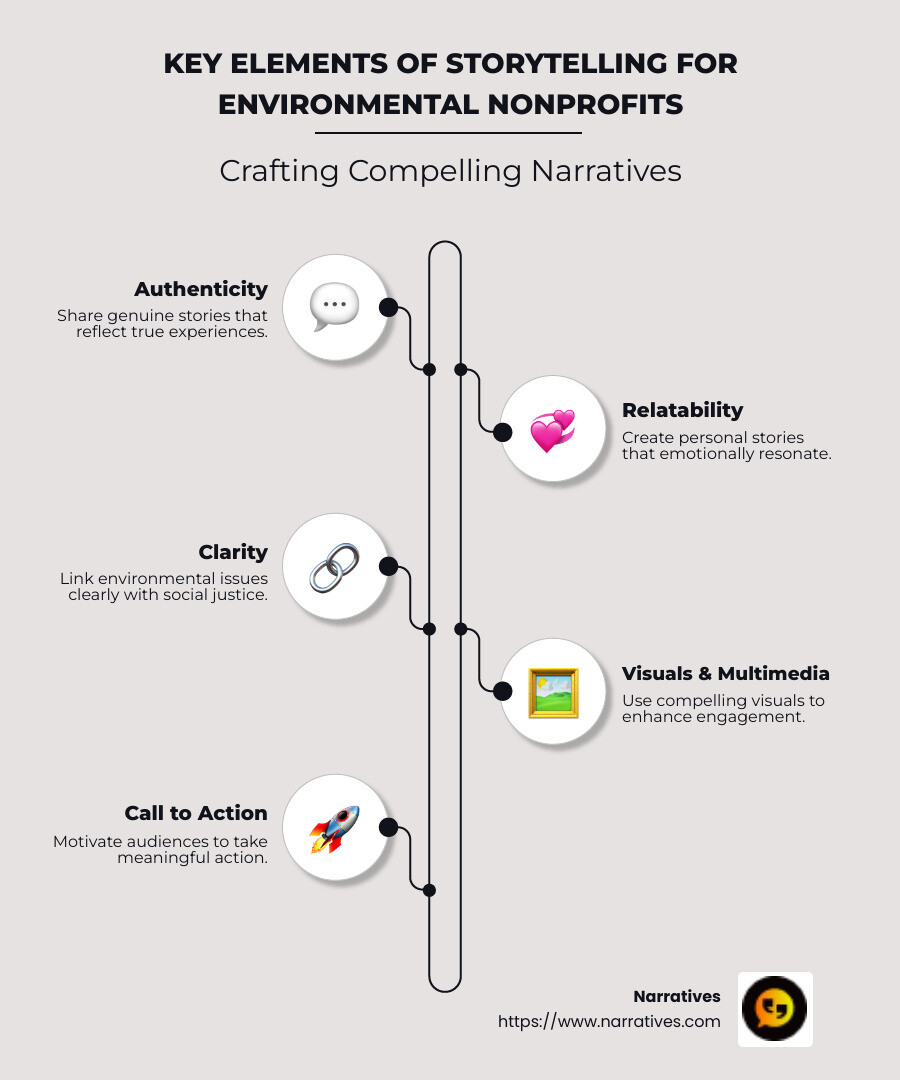
Storytelling for environmental nonprofits is a game changer. It bridges the gap between awareness and action by creating emotional ties with audiences. Nonprofit organizations focused on environmental justice can leverage this ancient technique to build strong connections, inspire change, and drive meaningful engagement. Here's how they can make it work:
- Authenticity: Genuine stories reflect the true experiences of communities.
- Relatability: Personal stories that hit home emotionally resonate the most.
- Clarity: Clear links between environmental issues and social justice resonate better.
- Visuals & Multimedia: Compelling visuals improve engagement.
- Call to Action: Stories should motivate audiences to take action.
Brand storytelling isn't just about recounting facts or statistics. It's a vital tool for nonprofits striving to make a difference in a world where environmental justice is a pressing issue. By infusing narratives with authenticity and emotional resonance, nonprofits can better connect with their audiences, turning passive supporters into passionate advocates.
Environmental justice issues often feel distant and complex. But storytelling transforms them into personal narratives that spark emotional connections. This method humanizes complex problems and builds trust with diverse audiences—key for nonprofits seeking to foster social change. As Dahmus articulated to students at the University of St. Thomas, storytelling aims to make listeners partners in the journey for climate and environmental justice.
Storytelling isn't just a method; it's an essential strategy for engaging people in the movement for environmental sustainability and justice.
Storytelling for environmental nonprofits terms made easy:
- digital storytelling guide for educators
- interactive digital storytelling examples
- why is digital storytelling an effective learning tool
The Power of Storytelling for Environmental Nonprofits
Storytelling for environmental nonprofits is a powerful tool that goes beyond simply sharing information. It taps into the human need for connection and understanding, making complex environmental issues more relatable and urgent. Here's why it matters:
Emotional Resonance
Stories have the unique ability to evoke emotions. For environmental nonprofits, this emotional resonance can be the difference between passive awareness and active involvement. When people hear about a community affected by pollution or a forest saved from deforestation, they feel the urgency and the impact.
Ami Vitale, a renowned photographer, emphasizes that stories showcasing successful solutions can inspire hope and action. When individuals see positive change, they are more likely to engage in efforts to address environmental challenges. 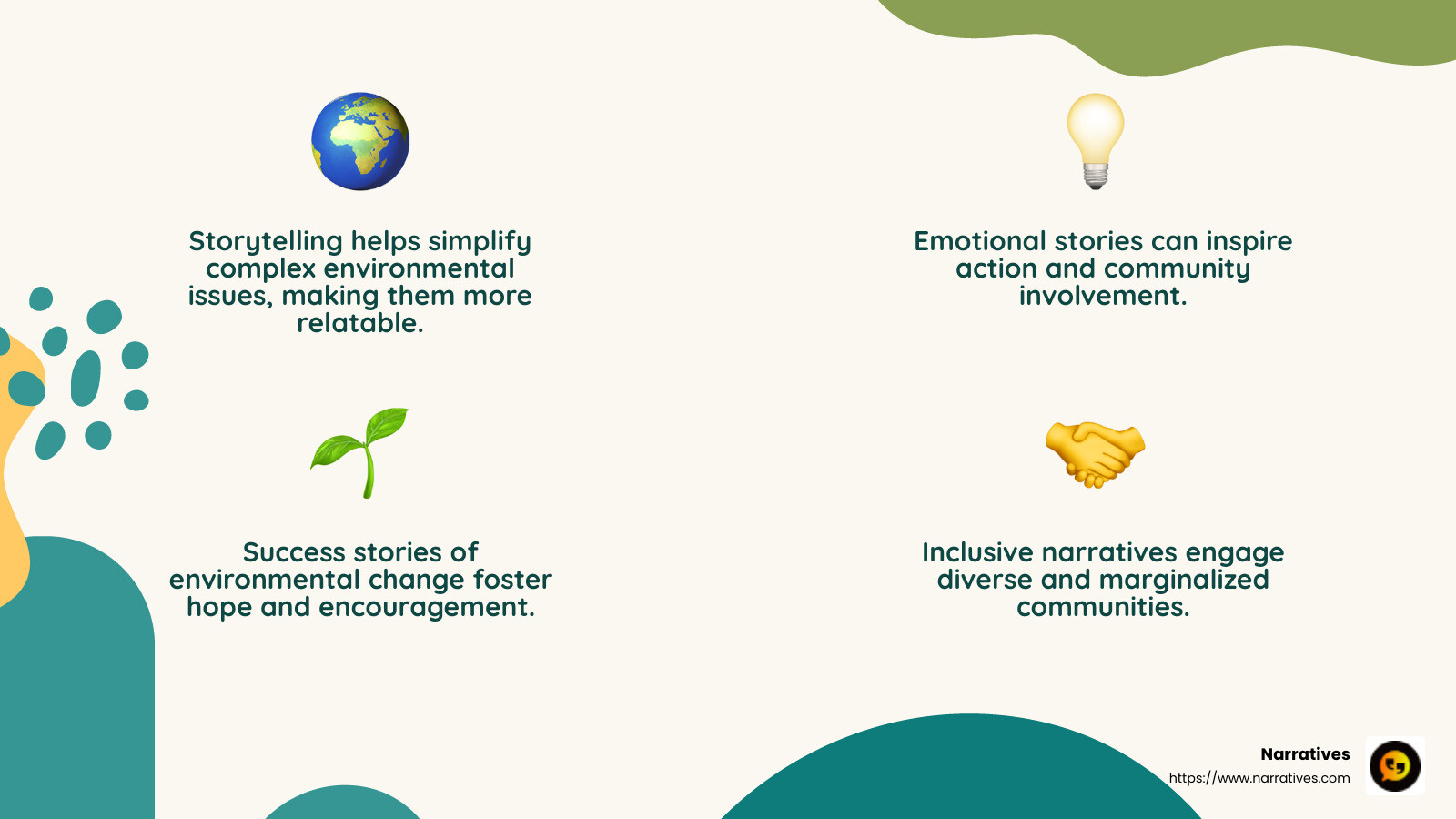
Community Engagement
Engaging a community requires more than just presenting facts. It's about creating narratives that people can see themselves in. For instance, the Environmental Justice Oral History Project (EJOHP) in Piney Woods Free Union used storytelling to shine a light on a historically disinvested community. By sharing oral histories and producing a mini-documentary, they brought the community's rich history and current struggles to a broader audience.
This approach not only raised awareness but also fostered a sense of belonging and pride within the community. It showed how storytelling can be a catalyst for community engagement and empowerment.
Building Bridges
Environmental issues often intersect with social justice, affecting marginalized communities the most. Storytelling helps bridge the gap between these issues by making them personal and relatable. It gives a voice to those who are often unheard, highlighting their struggles and triumphs.
Through inclusive narratives, nonprofits can engage diverse audiences, ensuring that everyone sees themselves as part of the solution. This inclusivity is crucial for building a broad base of support and driving collective action.
In summary, storytelling is not just about delivering a message. It's about creating an emotional connection that inspires action and fosters community engagement. For environmental nonprofits, this means turning complex issues into compelling narratives that resonate with people on a personal level.
Building Trust and Credibility Through Storytelling
Building trust and credibility is crucial for environmental nonprofits aiming to secure public support. Storytelling plays a pivotal role in achieving this by showcasing authenticity and shared values.
Authenticity and Transparency
Authentic stories resonate more with audiences. People can tell when a story is genuine, and this authenticity builds trust. For example, the Arbor Day Foundation uses real photos and videos from their tree planting events. These visuals are not just engaging; they prove the Foundation's commitment to its mission.
Similarly, the Environmental Justice Oral History Project (EJOHP) in Piney Woods Free Union used storytelling to create a brochure and a mini-documentary. This approach not only informed but also empowered the local community, demonstrating transparency in their efforts.
Demonstrating Impact
Stories that clearly show the impact of a nonprofit's work help establish credibility. The Recycling Partnership is a great example. By sharing educational content on recycling, they not only inform but also show how their efforts have diverted over 1 billion pounds of recyclables from landfills. 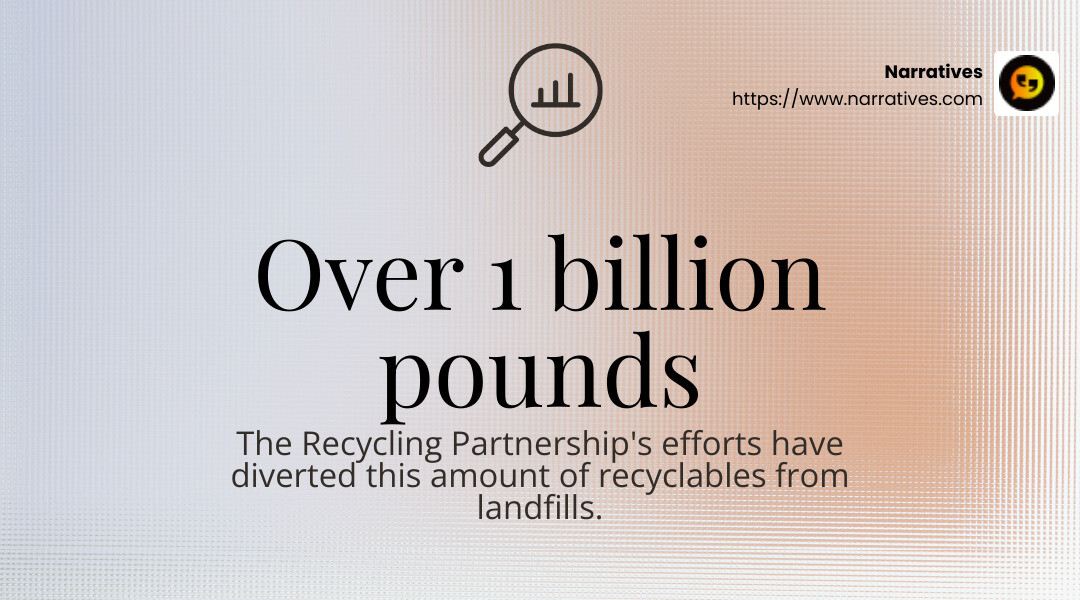
When audiences see tangible results, they are more likely to trust and support the organization.
Building Public Support
Engaging stories can mobilize public support by connecting emotionally with the audience. Keep Tahoe Blue uses breathtaking images of Lake Tahoe to highlight the beauty at stake. This visual storytelling is powerful in rallying community support to combat pollution and protect the lake.
By crafting narratives that align with public values and emotions, nonprofits can foster a sense of shared purpose. This collective identity strengthens public support and encourages more people to join the cause.
In conclusion, storytelling is not just a tool for communication; it's a strategy for building trust and credibility. By focusing on authenticity, demonstrating impact, and connecting emotionally, environmental nonprofits can secure the public support they need to drive meaningful change.
Engaging Diverse Audiences with Inclusive Narratives
Reaching diverse audiences is essential for environmental nonprofits, especially when addressing issues of social equity and supporting marginalized communities. Storytelling for environmental nonprofits can be a powerful way to achieve this.
Inclusivity in Storytelling
To engage diverse audiences, storytelling must be inclusive. This means representing a wide range of voices and experiences. For instance, Shaiye's reflection on environmental justice highlights the interconnected struggles of Black immigrants and Native communities. By sharing these stories, nonprofits can create a narrative that resonates with many different groups.
Social Equity and Environmental Justice
Environmental issues often disproportionately affect marginalized communities. By focusing on social equity, nonprofits can highlight these challenges and advocate for change. The Saint Paul Almanac's storytelling contest is a great example. It featured stories like "Animal Economics" by Eric Wilkinson, which explored themes of ecofeminism and environmental injustice. These narratives shed light on systemic issues and invite diverse communities to be part of the conversation.
Amplifying Marginalized Voices
Giving a platform to marginalized voices is crucial. It not only empowers these communities but also enriches the narrative with authentic perspectives. The SCP Arts workshops demonstrated this by involving community members in discussions and storytelling about climate vulnerability. These initiatives ensure that the stories told are reflective of all community members, not just the dominant voices.
Creating Connection and Understanding
Inclusive narratives foster understanding and empathy. By sharing stories that highlight the experiences of diverse groups, nonprofits can bridge gaps and build connections. This approach not only educates but also inspires action by showing the human side of environmental issues.
In summary, engaging diverse audiences through inclusive storytelling is vital for building a movement that truly represents all voices. By focusing on social equity and amplifying marginalized voices, environmental nonprofits can drive meaningful change and foster a more just and sustainable world.
Driving Advocacy and Action with Compelling Stories
Storytelling for environmental nonprofits isn't just about sharing facts. It's about sparking advocacy and inspiring action. When stories create an emotional connection, they can move people to act.
The Role of Emotional Connection
A strong emotional connection is crucial. Stories that evoke feelings—whether it's hope, outrage, or inspiration—can motivate people to get involved. Ami Vitale highlights this in her work, noting that stories showcasing successful solutions give people hope. When people see that positive change is possible, they're more likely to engage in efforts to address environmental challenges.
Inspiring Advocacy Through Success Stories
Success stories are powerful tools for advocacy. They show what's possible and encourage others to join the cause. For example, the Arbor Day Foundation has planted over 500 million trees. Their storytelling strategy uses photos and videos from tree planting events to inspire new volunteers and partners. These visuals not only inform but also create a sense of pride and accomplishment, driving further action.
Mobilizing Public Support
Compelling stories can also mobilize public support. By highlighting real-life examples and personal experiences, nonprofits can rally communities around a common goal. The Recycling Partnership's educational content demystifies recycling, making it easier for people to take action in their daily lives. By providing clear and relatable stories, they empower individuals to contribute to environmental solutions.
Creating a Call to Action
Every story should end with a clear call to action. Whether it's to donate, volunteer, or spread the word, the next steps should be obvious. For instance, during Earth Day, nonprofits can use storytelling to highlight their mission and encourage community participation. Tools like MemoryFox can help capture and share these narratives, creating a ripple effect of advocacy and action.
In conclusion, compelling stories have the power to drive advocacy and inspire action. By fostering emotional connections and showcasing success, environmental nonprofits can engage more people in their mission and create lasting change.
Inspiring Hope and Empowerment Through Success Stories
Success stories are more than just tales of triumph; they are powerful tools that inspire hope and foster empowerment. For environmental nonprofits, sharing these stories can ignite change and motivate communities to take action.
The Power of Hope
Hope is a catalyst for change. When people see that positive outcomes are possible, they feel encouraged to participate. Ami Vitale, a renowned storyteller, emphasizes that stories showcasing successful solutions provide hope. This hope can inspire people to engage in efforts to tackle environmental issues.
Consider the example of the Arbor Day Foundation. Over the past 50 years, they have planted more than 500 million trees across 60 countries. By sharing photos and videos from their tree planting events, they not only inform but also inspire hope in a greener future. This storytelling approach encourages others to join their mission, nurturing a global community of environmental stewards.
Empowering Communities
Empowerment comes from seeing real-life examples of success. When individuals feel empowered, they are more likely to take action and make a difference. The EJOHP's work with the Snow Hill community is a testament to this. By providing educational brochures and multimedia resources, they empowered local residents to stand against a landfill, turning a single article into a community-building tool.
Keep Tahoe Blue also empowers its community by combating pollution in the Lake Tahoe Basin. By sharing stunning images of their work, they inspire others to protect and preserve their beautiful environment. These visuals not only educate but also empower individuals to become advocates for their surroundings.
Success Stories as a Guide
Success stories act as a guide, guiding others toward achievable goals. They demonstrate that change is possible, even in the face of daunting challenges. The Recycling Partnership uses storytelling to explain recycling, making it accessible for everyone. By sharing relatable stories and clear information, they empower individuals to make environmentally friendly choices.
Building a Legacy of Action
To create a lasting impact, success stories should include a call to action. Whether it's volunteering, donating, or spreading awareness, the next steps must be clear. On Earth Day, nonprofits can leverage storytelling to amplify their mission and encourage community involvement. Tools like MemoryFox make it easy to collect and share these stories, creating a wave of hope and empowerment.
In conclusion, success stories are a vital part of storytelling for environmental nonprofits. They inspire hope, empower communities, and build a legacy of action. By sharing these narratives, nonprofits can engage more people in their mission and drive meaningful change.
Frequently Asked Questions about Storytelling for Environmental Nonprofits
How can storytelling attract more resources for nonprofits?
Storytelling for environmental nonprofits is a powerful way to attract resources like donations and volunteer work. When people hear compelling stories, they often feel a connection to the cause. This emotional connection can lead them to donate money or time to support the nonprofit's mission.
Donations: Sharing success stories, like the Arbor Day Foundation's tree planting efforts, can inspire people to contribute financially. When donors see tangible results, they are more likely to give.
Volunteer Work: Highlighting the experiences of volunteers, as seen in community-driven efforts like those of Keep Tahoe Blue, can motivate others to join in. Personal stories about volunteering can show potential volunteers the impact they can have.
What are the ethical principles of storytelling for nonprofits?
Ethical storytelling is crucial for maintaining trust and credibility. Transparency and authenticity are key principles to follow:
Transparency: Nonprofits should be open about their goals, challenges, and successes. Sharing both triumphs and setbacks ensures that the story is honest and believable.
Authenticity: Stories should be genuine and reflect the real experiences of people involved. This means avoiding exaggeration and focusing on truthful narratives.
The Environmental Justice Oral History Project (EJOHP) exemplifies ethical storytelling by authentically capturing the voices and stories of the Piney Woods community. This approach builds trust with both the community and the wider public.
How can digital tools improve storytelling for environmental nonprofits?
Digital tools offer innovative ways to improve storytelling through multimedia content and video storytelling:
Multimedia Content: Using a mix of photos, videos, and infographics can make stories more engaging and accessible. For example, the EJOHP uses a combination of oral histories and mini-documentaries to tell comprehensive stories.
Video Storytelling: Videos can capture emotions and details that written stories might miss. They can be shared easily across social media platforms, reaching a broader audience.
Tools like MemoryFox enable nonprofits to collect and share stories efficiently, amplifying their impact. By leveraging digital tools, nonprofits can create immersive experiences that resonate with diverse audiences and drive action.
In summary, effective storytelling can attract resources, uphold ethical standards, and leverage digital tools to reach and engage more people. This approach not only strengthens the nonprofit's mission but also fosters a community of support and action.
Conclusion
As we've explored, storytelling for environmental nonprofits is not just a tool—it's a catalyst for change. By leveraging narratives that resonate emotionally and inspire action, nonprofits can amplify their impact and drive social change.
Narratives play a critical role in digital storytelling, especially for purpose-driven organizations. By highlighting underrepresented voices and sharing authentic experiences, we can create powerful connections between nonprofits and their audiences. This connection is essential for building trust, fostering community engagement, and enhancing the visibility of environmental causes.
The use of digital storytelling tools opens up new possibilities for nonprofits. Through high-quality video and multimedia content, organizations can share their stories in ways that are both engaging and accessible. This digital approach not only reaches wider audiences but also deepens the emotional impact of the stories being told.
The goal is to drive social impact. By integrating storytelling into their strategies, environmental nonprofits can inspire hope and empower communities. Whether it's through advocacy, education, or direct action, effective storytelling can mobilize support and resources, creating a ripple effect of positive change.
At Narratives, we are committed to partnering with nonprofits to harness the power of storytelling. Together, we can lift the voices that matter and work towards a more sustainable and equitable future.


.avif)