Storytelling for Nonprofits: Six Reasons to Start Today

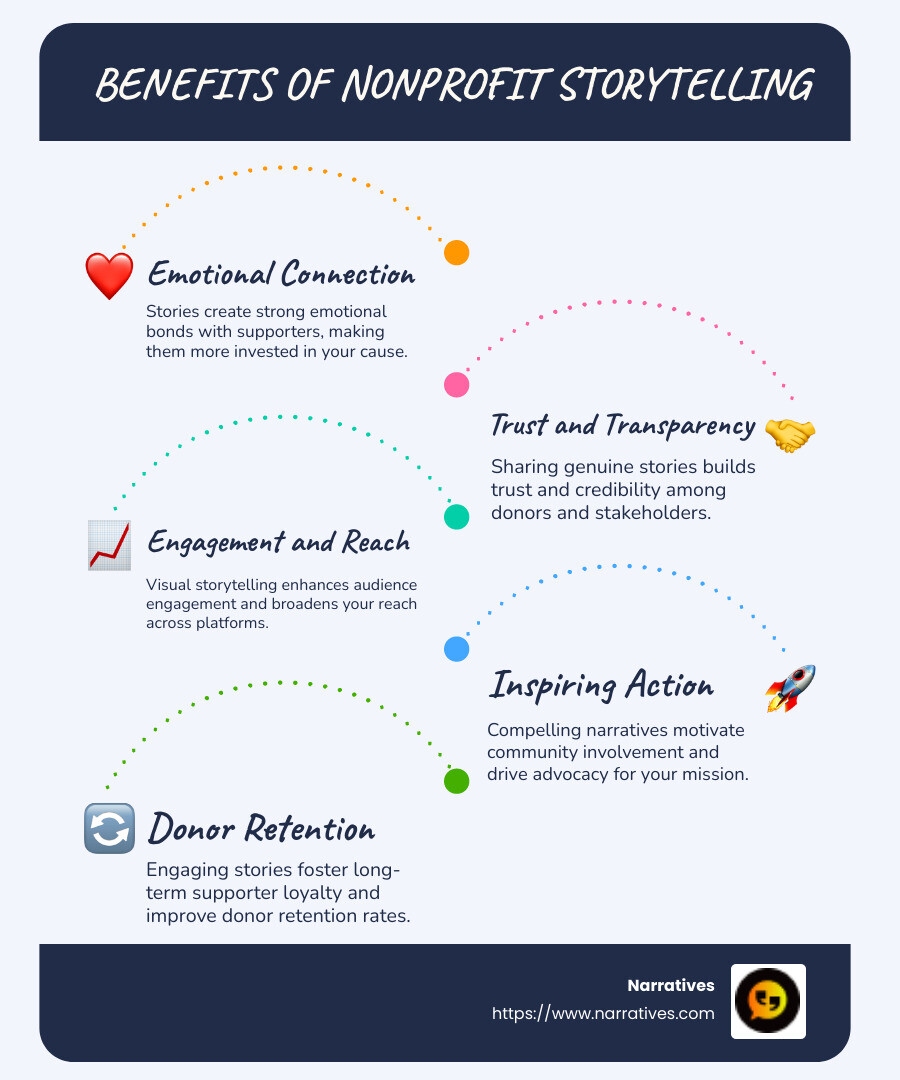
Storytelling for nonprofits is more than just crafting a compelling narrative; it's a strategic tool that offers multiple benefits and drives real impact. If you're involved in a nonprofit and want to amplify your mission, here's a quick look at the benefits:
- Emotional Connection: Stories create strong emotional bonds with supporters.
- Trust and Transparency: Sharing genuine stories builds trust and credibility.
- Engagement and Reach: Visual storytelling improves audience engagement.
- Inspiring Action: Compelling narratives motivate community involvement.
- Donor Retention: Engaging stories cultivate long-term supporter loyalty.
- Clarity of Mission: Well-told stories articulate your nonprofit's purpose clearly.
In an age where people's attention is scattered, connecting emotionally with your audience is crucial. Stories bridge the gap between your nonprofit's mission and potential supporters by illustrating real-world impacts and fostering empathy. Using elements like relatable characters and engaging visuals, nonprofits can effectively communicate their challenges and successes.
Done right, storytelling is a catalyst for positive change, helping nonprofits not just survive, but thrive amidst growing challenges.
Basic storytelling for nonprofits terms:
Storytelling Humanizes Your Mission
Storytelling for nonprofits is your secret weapon for making your mission relatable and impactful. Why? Because stories connect emotionally, making abstract causes feel real and urgent. When you share stories about real people, you create a bridge between your mission and your audience.
Emotional Connection
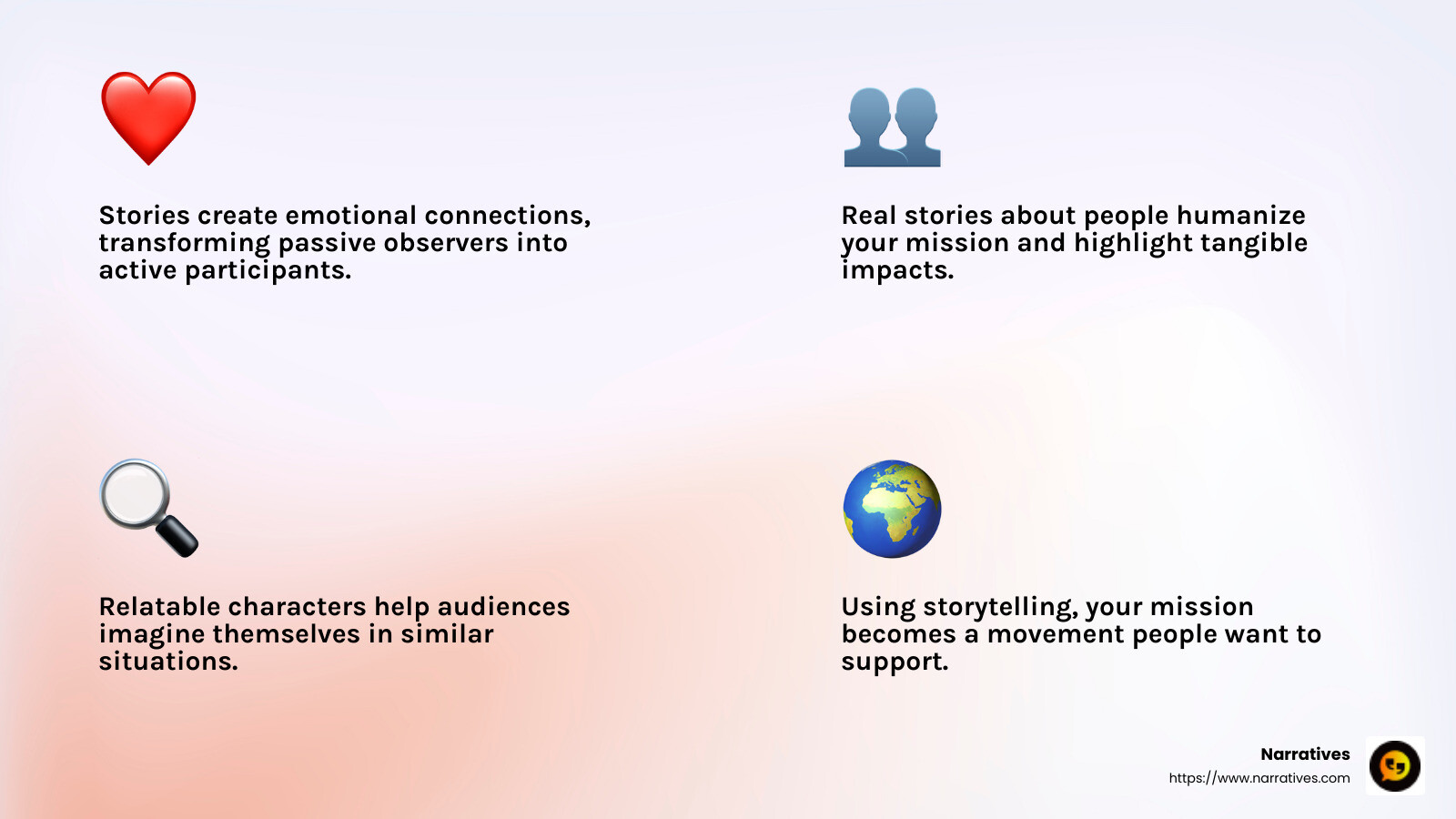
People are wired to respond to stories. They evoke emotions, trigger memories, and inspire action. A compelling story about a person affected by your nonprofit's work can move supporters to feel empathy and compassion. This emotional connection is powerful; it transforms passive observers into active participants.
Real People, Real Impact
Telling stories about real people helps humanize your mission. For instance, the Catholic Agency for Overseas Development (CAFOD) used a powerful campaign to raise funds for drought-stricken Uganda. They started with an illustrated story that morphed into real photographs, making it clear that the issue wasn't abstract but someone's reality.
This approach not only captured attention but also highlighted the tangible impact of their work. By focusing on individual stories, you're not just sharing statistics — you're sharing lives.
Relatable Characters
To make your stories resonate, focus on one main character. This character acts as a proxy for your audience, helping them imagine themselves in similar situations. Charity: water exemplifies this by sharing Hadjara's story, a young girl striving for clean water. Her journey is relatable and inspiring, pulling the audience into her world and the nonprofit's mission.
Characters don't have to be people; they can be communities, families, or even animals. The key is to make them relatable and real, so your audience can see themselves in the story.
By using storytelling to put a face to your mission, you make it easier for people to understand and care about your cause. This human element is what transforms your mission from a set of goals into a movement people want to support.
Now, let's explore how storytelling can build trust and transparency in your nonprofit's journey.
Storytelling for Nonprofits: Building Trust and Transparency
Storytelling for nonprofits isn't just about sharing compelling narratives; it's also a strategic tool for building trust and transparency. When donors understand your mission and see how their contributions make a difference, they are more likely to support your cause with confidence.
Donor Confidence
Donors want to know that their contributions are making an impact. By sharing stories that showcase the tangible results of their support, you can build their confidence. For example, when a nonprofit shares a story about how a donation helped provide clean water to a village, it illustrates the direct impact of their generosity.
This level of transparency reassures donors that their money is being used effectively. It encourages them to continue supporting your organization because they can see the change they're helping to create.
Transparency
Transparency is key to maintaining donor trust. Sharing stories that detail the challenges and successes of your initiatives provides a clear picture of your operations. It shows that you're not just about numbers and statistics but about real people and real change.
Consider the story of a nonprofit that faced challenges in delivering aid due to logistical issues. By openly discussing these problems and how they were overcome, the organization demonstrates its commitment to honesty and accountability. This openness fosters a sense of trust and reliability among donors.
Accountability
Accountability goes hand-in-hand with transparency. When nonprofits use storytelling to highlight their goals, challenges, and outcomes, they hold themselves accountable to their supporters. This accountability is crucial for sustaining donor relationships and ensuring continued support.
A well-crafted story that outlines the steps taken to achieve a goal, along with any lessons learned along the way, shows that your organization is responsible and committed to its mission. It reassures donors that you're using their contributions wisely and effectively.

Incorporating storytelling into your nonprofit's strategy not only humanizes your mission but also strengthens trust and transparency. This approach transforms donors from one-time contributors into long-term supporters who believe in your cause.
Next, we'll dive into how visual storytelling can improve engagement with your audience.
Visual Storytelling Improves Engagement
Visual storytelling is a powerful way to connect with your audience. It uses photos, videos, and other multimedia assets to tell your nonprofit's story in a way that's both engaging and memorable.
Photos and Videos
Photos and videos are essential tools in storytelling for nonprofits. They bring your stories to life and help your audience see the real impact of your work. A picture of a child drinking clean water for the first time or a video of a community coming together to build a school can speak volumes.
Stories told through visuals are more likely to be remembered. According to research, people remember 80% of what they see, compared to just 20% of what they read. This makes photos and videos incredibly effective in capturing attention and inspiring action.
Multimedia Assets
Storytelling is not just about words. It's about creating an immersive experience using multimedia assets. This includes infographics, audio clips, and interactive elements that enrich your narrative.
For example, The Catholic Agency for Overseas Development (CAFOD) used a mix of illustrations and real photographs to tell a compelling story about drought-stricken Uganda. This combination of media types helped to convey the seriousness of the situation and the real-life impact of their work.
Digital Storytelling
Digital storytelling leverages the internet and social media to reach a wider audience. Platforms like Instagram and YouTube are perfect for sharing your nonprofit's story through engaging visuals and videos.
When you use digital storytelling, you're not just telling a story; you're inviting your audience to be a part of it. You can encourage them to share your content, comment on it, and even create their own stories about your cause.
Incorporating visual storytelling into your nonprofit's strategy can significantly improve engagement. It allows you to connect with your audience on a deeper level, making your stories more impactful and memorable.
Next, we'll explore how stories can inspire action and advocacy within your community.
Stories Inspire Action and Advocacy
Stories have a unique power to move people. They tap into emotions, urging individuals to take action and advocate for change. In the field of storytelling for nonprofits, this emotional appeal is crucial.
Emotional Appeal
A well-told story can evoke a wide range of emotions, from hope to urgency. For instance, the United Nations Development Programme's story "A Tidal Wave of Plastic" uses stark visuals of plastic pollution to convey the gravity of the environmental crisis. Yet, it ends on a hopeful note, highlighting progress and urging personal responsibility. Such emotional narratives can inspire your audience to reflect on their role and motivate them to contribute to your cause.
Call to Action
After engaging your audience emotionally, guide them on what to do next. A clear call to action (CTA) is vital. Whether it's donating, volunteering, or advocating, your CTA should be direct and easy to follow. For example, World Help effectively uses CTAs by connecting the protagonist's story to specific actions supporters can take, like donating or subscribing to newsletters. This approach empowers your audience to become part of the solution.
Community Involvement
Stories also foster community involvement. By sharing real-life experiences, you invite your audience to connect with your mission on a personal level. When people see themselves reflected in your stories, they're more likely to spread the word and get involved. Consider the success of Habitat for Humanity's annual reports, which highlight volunteer stories and project outcomes. These narratives not only showcase the organization's impact but also encourage others to participate in similar efforts.
Incorporating stories that inspire action and advocacy can transform passive supporters into active participants. By leveraging emotional appeal, clear CTAs, and community involvement, your nonprofit can drive meaningful change.
Next, we'll dig into how storytelling can boost donor retention and loyalty.
Storytelling Boosts Donor Retention and Loyalty
In storytelling for nonprofits, building strong donor relationships is key. Stories have the power to make donors feel connected, engaged, and appreciated.
Donor Relationships
When donors feel a personal connection to your cause, they're more likely to stick around. Stories about real people and their challenges help donors see the impact of their contributions. For instance, sharing a story about how a single donation provided clean water to a village can make donors feel directly involved in your mission. This connection fosters a sense of belonging and purpose.
Memorable Stories
Memorable stories are those that linger in the minds of your audience. They often feature relatable characters, clear conflicts, and satisfying resolutions. For example, the story of Hadjara from charity: water shows a young girl overcoming obstacles to access clean water. Such stories not only highlight the issues but also show how donors' support can bring about real change. When donors remember these stories, they are more likely to continue their support.
Audience Engagement
Engaging your audience goes beyond just sharing stories. It's about creating an ongoing dialogue. Use multimedia content like videos, photos, and social media posts to keep your audience engaged. A great example is the Catholic Agency for Overseas Development (CAFOD), which uses illustrated stories that morph into real photographs to captivate their audience. This approach keeps supporters interested and invested in your cause.
By focusing on donor relationships, crafting memorable stories, and maintaining audience engagement, your nonprofit can improve donor retention and loyalty. These elements ensure that donors feel valued and connected, leading to long-term support for your mission.
Next, we'll tackle some frequently asked questions about storytelling for nonprofits.
Frequently Asked Questions about Storytelling for Nonprofits
How can storytelling improve nonprofit fundraising?
Storytelling for nonprofits is a powerful tool for enhancing fundraising efforts. By creating an emotional connection between the audience and your cause, storytelling can inspire donors to act. When donors feel emotionally invested in a story, they're more likely to contribute. For example, sharing a story about a family overcoming adversity with the help of donations can ignite empathy and encourage financial support.
Donor engagement is another crucial aspect. Stories that resonate with donors make them feel part of the mission. This engagement is not just about a one-time donation but fostering an ongoing relationship. By continuously sharing impactful stories, nonprofits can keep donors interested and willing to support the cause over the long term.
What are the key elements of a compelling nonprofit story?
A compelling nonprofit story typically includes a relatable character, a conflict, and a resolution.
Relatable Character: This is someone or something that the audience can connect with. It could be a person, a community, or even an animal. For instance, Hadjara, from charity: water, is a relatable character because she represents the universal desire for a better life.
Conflict: This is the challenge or problem that needs solving. It creates tension and interest, prompting the audience to care about the outcome. In Hadjara's story, the lack of clean water is the conflict.
Resolution: This is how the conflict is resolved, often with the help of the nonprofit and its supporters. It shows the impact of the donations and efforts, providing a satisfying conclusion. When Hadjara's community receives clean water, it illustrates the positive change donors can help achieve.
How can nonprofits effectively use digital storytelling?
Digital storytelling allows nonprofits to reach a wider audience through various platforms. Here are some ways to use it effectively:
Multimedia Content: Incorporate videos, photos, and audio to make stories more engaging. Multimedia elements can bring stories to life, making them more vivid and memorable.
Social Media: Use platforms like Facebook, Instagram, and Twitter to share stories widely. These platforms allow for interactive engagement, where followers can comment, share, and even contribute to the narrative.
Visual Storytelling: Emphasize imagery and design to capture attention. As demonstrated by CAFOD, using illustrated stories that transition into real photographs can captivate and sustain audience interest.
By leveraging these digital tools, nonprofits can amplify their storytelling efforts, reaching more people and inspiring greater action and support.
Next, let's dig into the conclusion, where we'll explore how Narratives partners with nonprofits for community-driven storytelling.
Conclusion
In storytelling for nonprofits, Narratives stands out as a key partner for purpose-driven organizations. We specialize in creating high-quality, emotionally resonant content that lifts underrepresented voices and showcases the real impact of nonprofit work. Our approach isn't just about telling stories; it's about building partnerships that drive social change.
Nonprofit partnerships are at the heart of what we do. We work closely with organizations to understand their unique missions and the communities they serve. This collaboration allows us to craft stories that are not only authentic but also deeply moving. Whether it's through video, multimedia content, or digital platforms, we ensure that each narrative reflects the true essence of the nonprofit's work, inspiring action and building trust.
Community-driven storytelling is another pillar of our strategy. By focusing on the people and communities at the center of each story, we create narratives that resonate on a personal level. This approach helps nonprofits connect more effectively with their audiences, fostering a sense of shared purpose and community involvement. It's not just about telling a story; it's about inviting others to be part of the journey.
As we continue to support nonprofits in sharing their impact stories, our goal is to help them build stronger connections with their audiences and increase their visibility. By doing so, we contribute to a world where every story has the potential to inspire change and make a difference.
Ready to lift your nonprofit's storytelling? Learn more about how Narratives can help you amplify your message and engage your community.


.avif)