Harnessing Stories for Organizational Change: A Comprehensive Guide

Storytelling for organizational change is a powerful tool that can drive change within any organization. It's clear and compelling narratives that captivate and persuade, engaging both internal and external audiences.
To get started, here's what you need to know about using storytelling effectively:
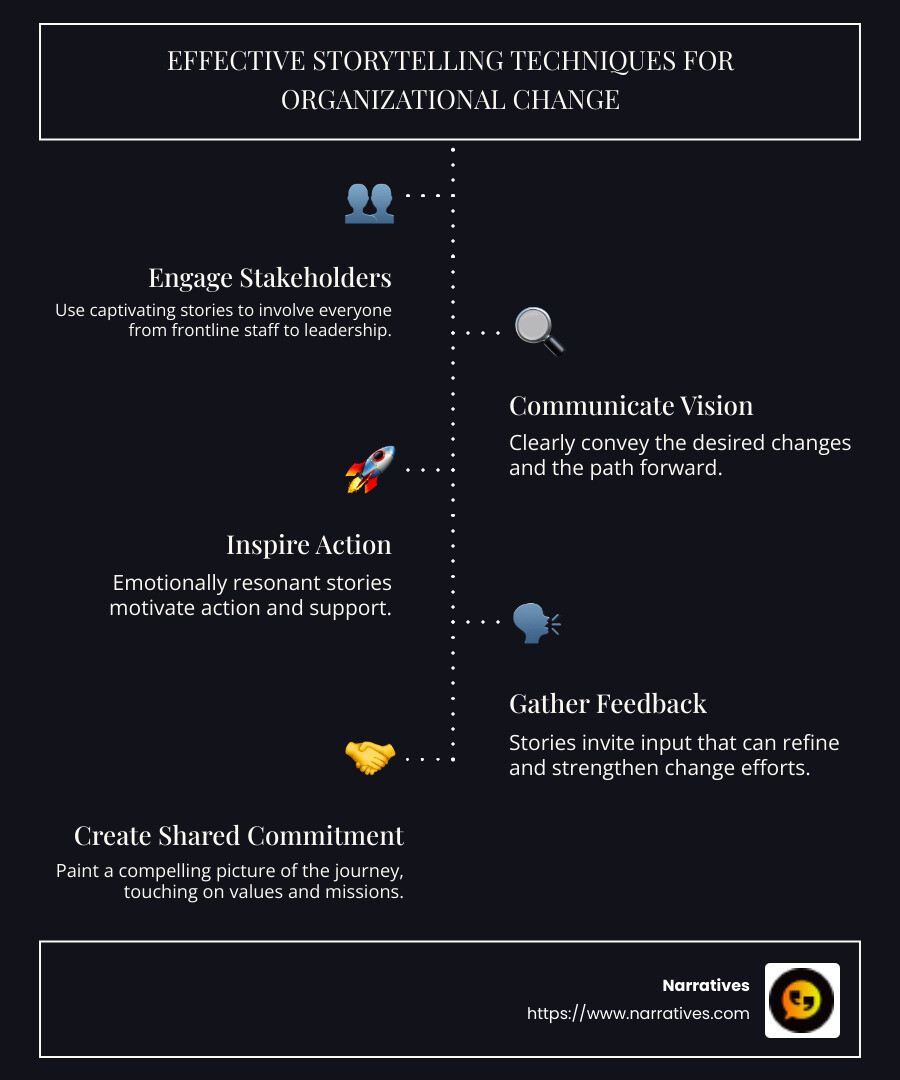
- Engage Stakeholders: Captivating stories help involve everyone, from frontline staff to leadership.
- Communicate Vision: Clearly convey the desired changes and the path forward.
- Inspire Action: Emotionally resonant stories motivate action and support.
- Gather Feedback: Stories invite input that can refine and strengthen your change efforts.
Through storytelling, organizations can weave narratives that make complex change efforts understandable and relatable to all stakeholders. It's about painting a compelling picture of where you are and where you're headed, touching on the values and missions that drive your cause. By doing so, stories not only inform but also create a shared commitment to the journey ahead.
The Power of Storytelling in Change Management
Storytelling is more than just sharing tales; it's a strategic tool in change management that can transform organizations. Let's explore how narratives can create belief, improve leadership communication, and drive change.
Narrative: The Heart of Change
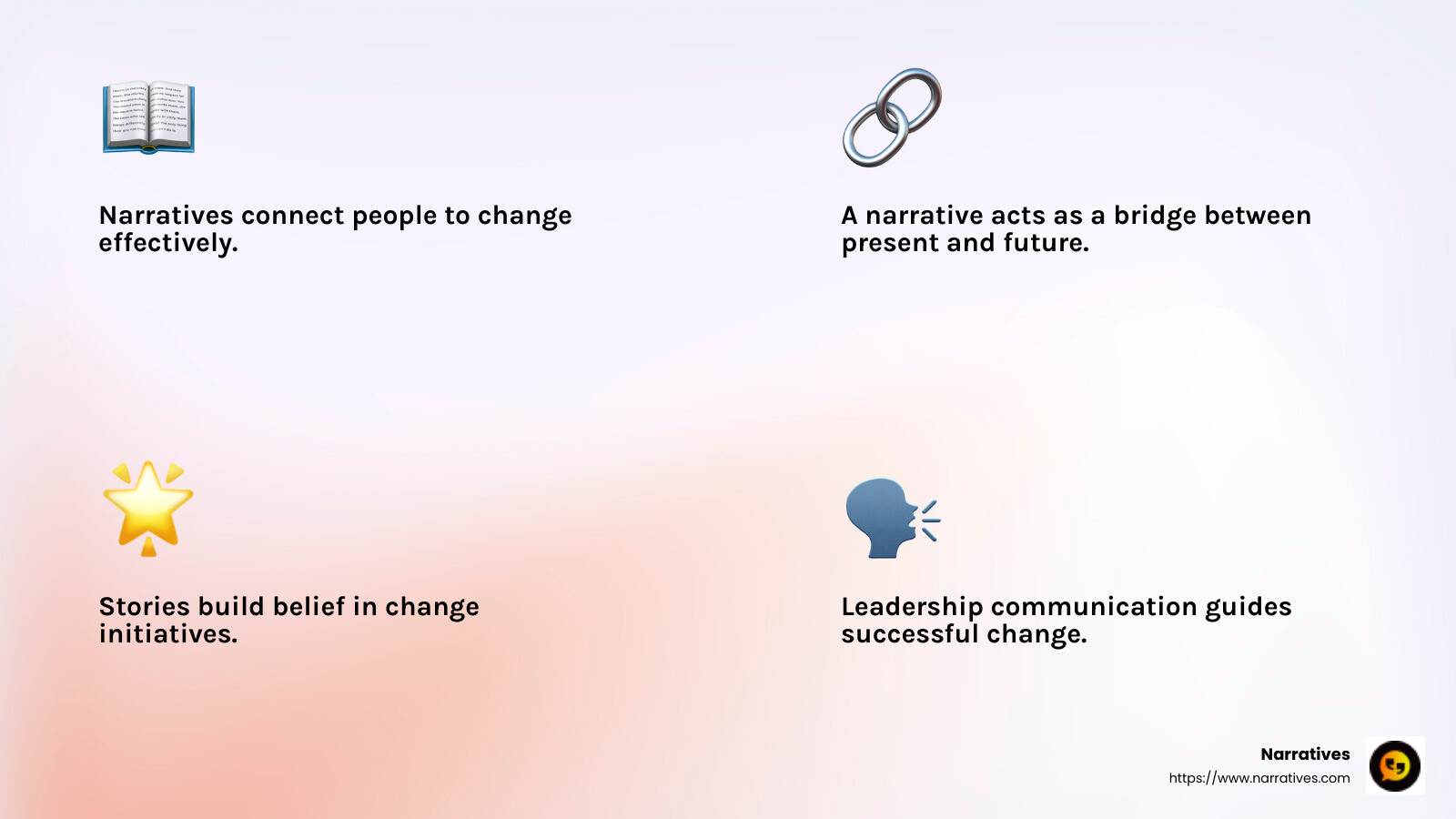
A well-crafted narrative is the backbone of effective change management. It connects people to the change by telling a story that is both relatable and inspiring. A narrative isn't just about facts; it's about weaving those facts into a story that resonates with the audience.
Think of a narrative as a bridge that links the present to the future. It shows where the organization is now, where it wants to go, and how it plans to get there. This journey is what engages people and makes them part of the change.
Belief Creation Through Storytelling
Creating belief in a change initiative is crucial. Stories have the power to build this belief by making the change feel real and achievable. When people hear a story that reflects their own experiences and aspirations, they are more likely to buy into the change.
Consider a story of a team overcoming challenges to innovate. This narrative can inspire others by showing that change is possible and beneficial. It helps people see themselves as part of the success story, fostering a sense of ownership and commitment.
Leadership Communication: Guiding the Change
Effective leadership communication is key to successful change management. Leaders who use storytelling can communicate complex ideas in a simple and engaging way. This approach not only informs but also inspires and motivates.
By sharing stories of past successes, leaders can highlight the values and goals that drive the organization. These stories serve as a reminder of what the organization stands for and why the change is necessary. It's about aligning the team with the mission and vision, creating a unified force ready to accept the change.
In the next section, we'll dive into crafting a compelling change narrative, exploring techniques like the hero's journey, shared history, and envisioning a vivid future.
Crafting a Compelling Change Narrative
When it comes to storytelling for organizational change, crafting a compelling narrative is key. This involves using elements like the hero's journey, shared history, and envisioning a vivid future. Let's break down these components to see how they can help drive change within an organization.
The Hero's Journey
Every great story has a hero. In the context of change management, the hero can be an individual, a team, or even the organization itself. The hero's journey is a classic storytelling structure that resonates deeply because it mirrors the challenges and triumphs we all face.
- Start with a relatable hero: Choose a protagonist that reflects your audience's values and experiences. This makes the narrative relatable and engaging.
- Show the journey: The hero encounters challenges and setbacks, much like the organization does during change. This part of the story emphasizes resilience and the willingness to adapt.
- Highlight the change: The journey leads to growth and success, symbolizing the positive outcomes of embracing change. This inspires the audience to join in and support the change.
Shared History
A shared history creates a sense of unity and continuity. It connects the past to the present, providing a foundation for the change narrative.
- Recall past successes: Highlight moments when the organization overcame challenges. This reassures the team that they have the capability to tackle the new changes.
- Emphasize learning and growth: Show how past experiences have prepared the organization for this new chapter. This builds confidence and reduces fear of the unknown.
- Connect to values: Reinforce the core values that have guided the organization. This helps align the change with the organization's identity and mission.
Envisioning a Vivid Future
Painting a vivid future is crucial for motivating and engaging the audience. It turns abstract goals into tangible visions that people can strive toward.
- Use sensory details: Describe the future state in a way that people can see, feel, and even hear. This makes the change feel real and attainable.
- Highlight benefits: Explain how the change will improve processes, team dynamics, or the overall work environment. This connects the change to personal and organizational gains.
- Create emotional impact: Capture the emotional essence of the change. Will it bring more freedom, reduce stress, or open up innovation? These feelings drive the willingness to accept change.
By integrating the hero's journey, shared history, and a vivid future into your change narrative, you can create a powerful tool for engaging your team and driving successful organizational change.
In the next section, we'll explore techniques for effective storytelling, including the use of analogies, humor, and empathy to further improve your change narrative.
Techniques for Effective Storytelling
When using storytelling for organizational change, employ techniques that make your narrative both engaging and relatable. Let's explore how analogies, humor, and empathy can improve your storytelling.
Analogies
Analogies are a powerful way to simplify complex ideas, making them easier to understand and relate to.
Connect the unfamiliar with the familiar: Use analogies to explain new concepts by linking them to something your audience already understands. For example, describe a change process like the change of a caterpillar into a butterfly. This analogy illustrates growth and change in a way that is both familiar and inspiring.
Clarify complexity: Analogies help break down intricate processes. If a team is struggling with a new system, compare it to learning to ride a bike. Initially challenging, but eventually, it becomes second nature.
Humor
Humor can be a secret weapon in easing the tension and fostering a positive environment during change.
Lighten the mood: Use humor to address common fears or misconceptions. A light-hearted joke about the chaos of a new system can make the experience feel less intimidating.
Build camaraderie: Laughter is a universal language. Sharing a funny story related to the change can create a sense of unity and shared experience. However, ensure that humor is appropriate and sensitive to the context.
Empathy
Empathy is crucial in connecting with your audience on a deeper level.
Acknowledge feelings: Recognize the emotions your team might be experiencing, whether it's excitement, fear, or uncertainty. This acknowledgment shows that you understand their perspective.
Tell relatable stories: Share stories that resonate with your audience's experiences. For example, recount a time when a similar change led to positive outcomes, emphasizing that their feelings are valid and understood.
Encourage open dialogue: Use storytelling as a way to invite feedback and discussion. When people feel heard, they are more likely to engage with the change process positively.
By incorporating analogies, humor, and empathy into your storytelling, you can create a more engaging and impactful narrative. These techniques help explain change, foster a supportive environment, and connect with your audience on an emotional level.
Next, we'll dig into how storytelling can be effectively used in change management to engage your audience and create emotional impact.
Storytelling for Organizational Change
Storytelling for organizational change is more than just sharing tales. It's about crafting narratives that resonate deeply, engage your audience, and drive change. Let's explore how storytelling can improve change management, boost audience engagement, and create a lasting emotional impact.
Change Management
Change management often feels daunting. But when paired with storytelling, it becomes more approachable and effective. Stories offer a way to communicate complex changes in a simple, relatable manner. They help clarify the why behind the change and show the how in action.
Clarifying the Vision: A clear narrative helps everyone understand the vision and goals. By illustrating the journey from the current state to the desired future, stories make the path forward less intimidating.
Overcoming Resistance: People naturally resist change. But when you tell a compelling story, it can reduce resistance by addressing fears and highlighting benefits. A well-told story can transform skeptics into supporters.
Audience Engagement
Engaging your audience is crucial for successful change management. Stories captivate attention and foster a deeper connection with the message.
Personal Connection: Use stories that your audience can relate to. When people see themselves in the narrative, they're more likely to invest in the change process.
Interactive Elements: Encourage participation by inviting team members to share their stories. This not only enriches the narrative but also fosters a sense of ownership and collaboration.
Consistent Communication: Regularly share stories that reinforce the change message. Consistency helps keep the momentum going and reminds everyone of the shared goals.
Emotional Impact
Emotions drive action. A story that resonates emotionally can inspire and motivate your team to accept change.
Inspiring Action: Highlight the positive outcomes of change through stories of past successes. This not only builds confidence but also encourages proactive participation.
Building Empathy: Share stories that evoke empathy and understanding. When people connect emotionally, they're more likely to support each other through the transition.
Celebrating Milestones: Use storytelling to celebrate achievements along the way. Recognizing progress boosts morale and reinforces the value of the change.
By leveraging storytelling for organizational change, you can transform the way your team perceives and participates in change initiatives. Stories simplify the complex, engage your audience, and create emotional connections that drive lasting impact.
Next, we'll address frequently asked questions about storytelling for organizational change, exploring how to craft narratives that truly matter.
Frequently Asked Questions about Storytelling for Organizational Change
How to craft a narrative that matters?
Crafting a narrative that truly matters involves a few key elements. First, keep it real. Authentic stories resonate more with people. Use real examples or events that reflect the change you're advocating for.
Next, make the narrative relatable. Use characters or scenarios that your audience can see themselves in. This fosters a connection and makes the story more compelling.
Lastly, ensure the narrative is clear and concise. Avoid overwhelming details. Focus on the core message and ensure it aligns with the change objectives. A well-crafted story can be the catalyst for engagement and change.
How can storytelling help in change management?
Storytelling is a powerful tool in change management. It helps in several ways:
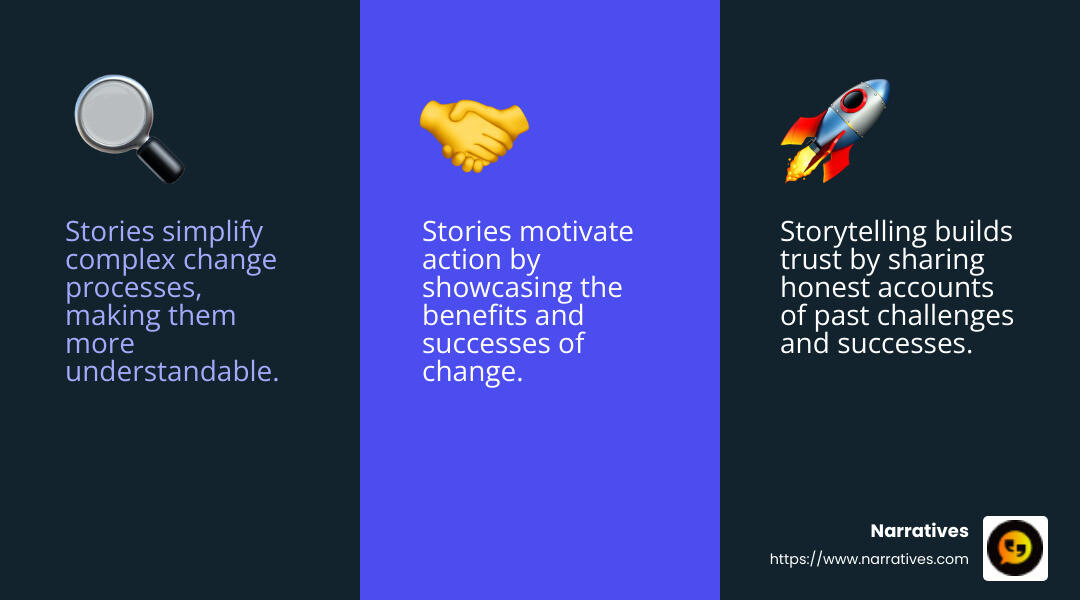
Simplifying Complexity: Stories can break down complex change processes into understandable and relatable narratives. This makes it easier for everyone to grasp the change and its implications.
Building Trust: Sharing honest stories about past challenges and successes builds trust. It shows transparency and helps create a supportive environment for change.
Motivating Action: Stories that highlight the benefits of change and showcase success stories can motivate and inspire action. They provide a vision of what is possible and encourage people to strive for it.
What are examples of storytelling in organizational change?
There are several effective examples of storytelling in organizational change:
Success Stories: Sharing stories of successful change initiatives within the organization can inspire confidence and encourage participation. Highlighting specific examples where change led to positive results can motivate others to accept new ideas.
Customer Testimonials: Use stories from customers who have benefited from the change. This provides an external perspective and reinforces the value of the change.
Vision Stories: Craft stories that paint a vivid picture of the future post-change. These narratives help people visualize the benefits and opportunities that the change will bring.
By addressing these frequently asked questions, we see that storytelling for organizational change is not just about sharing stories. It's about crafting narratives that engage, simplify, and inspire. Next, we'll explore the role of narratives in creating social impact and driving community-driven storytelling.
Conclusion
In today's world, narratives are more than just stories—they are powerful tools for driving social impact and fostering community-driven storytelling. At Narratives, we believe in the transformative power of stories to not only inform but also inspire and mobilize communities towards meaningful change.
Narratives serve as bridges that connect individuals to larger missions. By sharing authentic and compelling stories, organizations can amplify underrepresented voices, bringing attention to causes that matter. This connection is crucial for non-profits and purpose-driven organizations aiming to make a tangible difference in their communities.
Our approach focuses on community-driven storytelling, where the stories originate from the very people and communities they aim to represent. This ensures authenticity and fosters a sense of ownership and empowerment among community members. When people see themselves in the stories being told, they are more likely to engage and support the cause.
Furthermore, social impact is at the heart of every story we craft. By highlighting the challenges and triumphs faced by communities, we create narratives that resonate on an emotional level, compelling audiences to take action. Whether it's through high-quality video content or engaging multimedia stories, our aim is to lift the voices that often go unheard.
In conclusion, storytelling is not just a tool for communication; it's a catalyst for change. At Narratives, we are dedicated to partnering with organizations to harness the power of stories for organizational change, driving social impact, and nurturing community-driven narratives. Together, we can create a more empathetic and connected world.
For more information on how we can help your organization leverage storytelling for impactful change, visit our Narratives service page. Let's tell stories that matter and inspire action!


.avif)