Crafting Narratives: Video Storytelling for Marketers

Storytelling in video marketing has emerged as a cornerstone in crafting genuine connections between brands and audiences. In a world saturated with content, a compelling narrative sets a brand apart. Here's why storytelling is crucial:
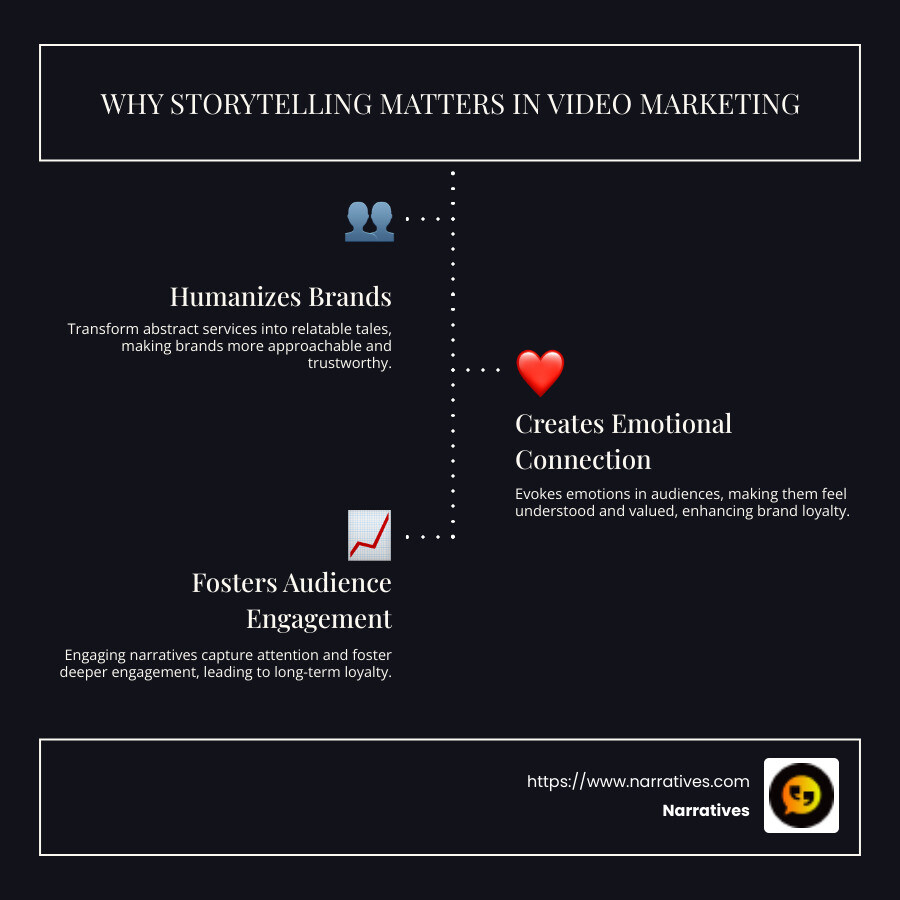
- Importance: Storytelling humanizes brands, changing abstract services into relatable tales.
- Emotional Connection: Stories evoke emotions, making audiences feel understood and valued.
- Audience Engagement: Engaging narratives capture attention, fostering deeper engagement and long-term loyalty.
Incorporating storytelling involves weaving emotions into the very fabric of content. This isn't just about aesthetics; it's about creating resonant and memorable experiences.
An evocative story acts like glue, sticking in the minds of viewers long after the video ends. This stickiness is particularly vital for non-profits and mission-driven organizations, who aim to translate their impactful work into meaningful, emotional content.
Tapping into our innate love for stories isn't just good practice—it's essential for any effective marketing strategy. Get ready to explore the depth of storytelling and its power to transform ordinary videos into extraordinary brand experiences.
Storytelling in video marketing terms you need:
Understanding Storytelling in Video Marketing
The Basics of Video Storytelling
Video storytelling is the art of using moving images to narrate a story that resonates with viewers on an emotional level. It’s more than just a medium—it's a powerful tool to engage and captivate audiences. At the core of video storytelling are key elements like plot structure, character development, and visual elements.
Plot Structure: Every great story has a beginning, middle, and end. This structure helps guide viewers through an engaging journey. Think of it as setting the stage, introducing a conflict, and then resolving it in a satisfying way.
Character Development: Characters are the heart of any story. They should be relatable and evoke empathy. Whether it's a hero overcoming obstacles or a brand ambassador sharing a personal journey, well-developed characters make stories memorable.
Visual Elements: The visual aspect of storytelling cannot be overstated. Camera angles, lighting, and colors all play a role in setting the mood and tone. A well-shot video can convey emotions that words alone cannot.
Importance of Storytelling in Video Marketing
Storytelling in video marketing is crucial for creating a brand connection and ensuring audience retention. Here’s how it works:
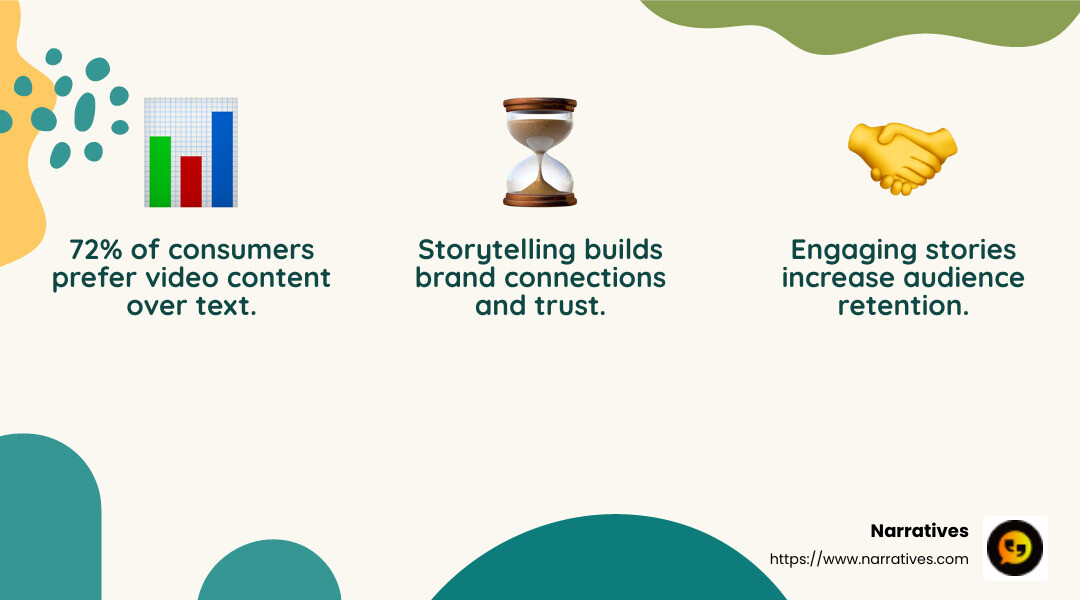
Brand Connection: Stories have the power to humanize brands, turning faceless corporations into entities with values and missions. This connection is vital for building trust and loyalty.
Audience Retention: An engaging story keeps viewers hooked from start to finish. It’s not just about grabbing attention; it’s about holding it. According to research, 72% of consumers prefer video content over text, highlighting the potential of storytelling to captivate audiences.
- Emotional Triggers: Emotions are at the heart of every great story. They trigger responses in viewers that lead to action. Whether it's joy, sadness, or inspiration, tapping into emotions can drive viewers to share content, make a purchase, or support a cause.
Narrative techniques, such as using a story arc or incorporating relatable characters, improve the storytelling experience. They create a compelling narrative that not only entertains but also informs and persuades.
Storytelling in video marketing isn't just about selling a product or service. It's about creating a connection, evoking emotions, and leaving a lasting impression on the audience. As we dig deeper into crafting compelling storytelling videos, these foundational elements will serve as the building blocks for creating impactful and memorable content.
How to Create Compelling Storytelling Videos
Steps to Craft a Storytelling Video
Creating a compelling storytelling video involves several key steps that ensure your message resonates with your audience and achieves your goals. Here's how you can craft a video that captivates and engages:
1. Goal Setting
Start by defining what you want to achieve with your video. Are you aiming to increase brand awareness, generate leads, or communicate a new product feature? Clear goals will guide every decision you make, from narrative crafting to promotion.
2. Understanding Your Target Audience
Knowing who you're talking to is crucial. Understand their demographics, motivations, and pain points. This knowledge helps you tailor your message and ensures it hits home. For example, Nintendo Switch's video storytelling success lies in its deep understanding of its audience's desires and challenges.
3. Narrative Crafting
Craft a narrative that aligns with your goals and resonates with your audience. Decide if your story will follow a linear path or if a non-linear approach might add intrigue. A well-crafted narrative is the backbone of your video.
4. Scriptwriting
Your script is the blueprint of your video. It should be detailed, covering all the points you want to tackle, the story you'll tell, and the tone you'll use. A great script saves time during filming and ensures a coherent message.
5. Deciding on Video Format
Choose a format that suits your story and budget. Whether it's live-action, animation, or a mix, the format affects the production process and final outcome. Animation, for instance, offers creative freedom beyond live-action constraints.
6. Assembling a Production Team
Select a team or hire a studio that aligns with your vision. Review their previous work to ensure their style matches your goals. A skilled team brings your story to life with the right technical expertise and creative flair.
Video Storytelling Techniques
Once you've laid the groundwork, it's time to improve your video with techniques that lift the storytelling experience:
1. Story Arc
A compelling story arc guides viewers through an emotional journey. It includes an introduction, a conflict, and a resolution. This structure keeps viewers engaged and invested in the outcome.
2. Relatable Characters
Characters are the heart of your story. They should be relatable and evoke empathy. Whether it's a protagonist overcoming obstacles or a brand ambassador sharing a personal journey, well-developed characters make stories memorable.
3. Visual Appeal
Visual elements set the mood and tone. Use camera angles, lighting, and colors to convey emotions that words alone cannot. A visually appealing video captivates viewers and improves the storytelling experience.
4. Emotional Triggers
Emotions drive action. Use storytelling to tap into emotions like joy, sadness, or inspiration. According to research, character-driven stories stimulate oxytocin synthesis, fostering cooperation and engagement.
By following these steps and techniques, you can create storytelling videos that not only entertain but also inform and persuade. These elements are essential for crafting narratives that leave a lasting impression on your audience.
Video Storytelling for Non-Profits
Elevating Non-Profit Narratives
Video storytelling is a powerful tool for non-profits to amplify their mission and connect with audiences on a deeper level. By focusing on social impact, community-driven initiatives, and underrepresented voices, non-profits can craft narratives that resonate emotionally and build trust with their audience.
Social Impact and Community-Driven Content
Non-profits often tackle pressing social issues, making their stories inherently impactful. Video storytelling allows these organizations to showcase the real-world effects of their work. For instance, a video highlighting a community clean-up initiative not only shows the physical change of a space but also the rejuvenation of community spirit.
Community-driven stories focus on the people who are directly affected by the non-profit's work. These narratives give a voice to community members, allowing them to share their experiences and perspectives. This approach not only humanizes the cause but also fosters a sense of ownership and pride among the participants.
Amplifying Underrepresented Voices
Many non-profits work with communities that are often overlooked by mainstream media. Video storytelling provides a platform for these underrepresented voices to be heard. By sharing personal stories and testimonials, non-profits can highlight the unique challenges and triumphs of these individuals, creating a more inclusive narrative.
For example, the Pars Equality Center uses video to showcase the stories of Persian-speaking immigrants. By doing so, they not only raise awareness of the community's needs but also build empathy and understanding among a broader audience.
Building Emotional Resonance and Trust
Emotional resonance is key to effective storytelling. Non-profits can use video to evoke emotions that inspire action, whether it's donating, volunteering, or advocating for a cause. Emotional triggers such as joy, hope, and empathy can drive viewers to engage more deeply with the organization's mission.
Moreover, storytelling builds trust. When non-profits transparently share their challenges and successes, they demonstrate authenticity and integrity. This transparency is crucial for establishing credibility and fostering long-term relationships with supporters.
Increasing Visibility
In a crowded digital landscape, video storytelling can significantly increase a non-profit's visibility. Engaging and shareable content can reach new audiences, expanding the organization's reach and impact. By consistently producing high-quality storytelling videos, non-profits can maintain a strong presence in the minds of their audience.
Platforms like social media are particularly effective for this purpose. Short, impactful videos can quickly capture attention and encourage viewers to share with their networks, further amplifying the message.
By leveraging the power of video storytelling, non-profits can lift their narratives, engage their audiences, and ultimately drive greater social change. This approach not only highlights the importance of their work but also creates a community of passionate advocates who are invested in their mission.
Frequently Asked Questions about Storytelling in Video Marketing
What are the different types of video storytelling?
Video storytelling comes in various forms, each serving a unique purpose and engaging audiences in different ways. Here are some popular types:
Explainer Videos: These are short, informative videos that break down complex topics into easy-to-understand segments. They are ideal for educating your audience about your product or service. Think of them as bite-sized lessons that clarify and inform.
Brand Films: These videos tell the story of your brand's journey, values, and mission. They are crafted to build an emotional connection with the audience, often focusing on the brand's personality and ethos.
Narrative Ads: Unlike traditional ads that focus on selling, narrative ads weave a story around the product or service. They engage viewers by tapping into emotions and experiences that resonate personally, making the product feel like a natural part of the story.
How long should a storytelling video be?
The length of a storytelling video is crucial for maintaining audience engagement. Here are some guidelines to consider:
Platform Considerations: Different platforms have varying optimal video lengths. For instance, a video on TikTok should be much shorter than one intended for YouTube. Generally, aim for 60 to 120 seconds for most platforms to keep viewers engaged.
Audience Engagement: Shorter videos tend to perform better online as they align with the average viewer's attention span. However, the key is to ensure that every second adds value to the story, keeping the audience hooked from start to finish.
What are common mistakes to avoid in video storytelling?
Crafting a compelling video story requires careful attention to avoid common pitfalls:
Overly Sales-Focused: Videos that focus too heavily on selling can turn off viewers. Instead, aim to tell a story that naturally integrates your product or service, making it relatable and engaging without being pushy.
Lack of Emotional Engagement: Failing to connect emotionally with your audience is a missed opportunity. Use relatable characters and real-life scenarios to evoke feelings like joy, empathy, or inspiration.
Unclear Call to Action: Every video should have a clear purpose, whether it's to inform, entertain, or persuade. Make sure to include a strong call to action, guiding viewers on what to do next, whether it's visiting your website, subscribing, or sharing the video.
By understanding these aspects of storytelling in video marketing, you can create videos that not only capture attention but also resonate deeply with your audience, driving engagement and action.
Conclusion
In the evolving landscape of storytelling in video marketing, Narratives stands out as a powerful ally for non-profits and purpose-driven organizations. Our mission is to lift underrepresented voices through high-quality, emotionally resonant video content that inspires action and builds trust.
Narratives is committed to helping our partners craft compelling stories that not only increase visibility but also foster genuine connections with their audience. By focusing on non-profit partnerships, we aim to highlight the impactful work being done in communities and amplify the voices of those who are often unheard.
Building domain authority is a crucial part of our strategy. We focus on underused storytelling-related keywords to ensure that our content ranks high in search results, driving organic traffic and enhancing brand awareness. Through consistent and strategic content creation, we aim to become the go-to resource for ethical video storytelling.
Our approach is designed to not only inform and engage but also support inbound lead generation. By aligning with the values of our partners and the communities they serve, we create a narrative that resonates and encourages audience loyalty.
To explore how we can help tell your story, visit our media page. Together, we can craft narratives that inspire change and make a lasting impact.

.avif)