Narrative Magic: Top Storytelling Tools for Nonprofits

Storytelling tools for nonprofits hold the key to open uping a world of potential and impact. Nonprofits face unique challenges in amplifying their missions amidst a barrage of competing messages. Yet, with the right tools, it's more possible than ever to craft stories that make a genuine emotional connection.
Emotional Connection: Stories are powerful because they reach the heart. They can bridge gaps, foster empathy, and inspire action, all elements that drive your mission forward.
Nonprofit Impact: Effective storytelling can significantly impact your organization. It helps attract donors, build a community of supporters, and showcase the vital work you do.
Amplifying Mission: With limited resources, nonprofits might struggle to convey their story compellingly. This is where storytelling tools become invaluable allies, enhancing outreach and engagement.
Using tools like content calendars, collaborative apps, and visualization platforms, nonprofits can streamline their storytelling process, ensuring that every piece of content resonates and inspires.
"From a staff perspective, we've always understood the incredible impact our programs have in our community, but we've never been able to share that impact visually." - Geetika Sharma, Communications Associate
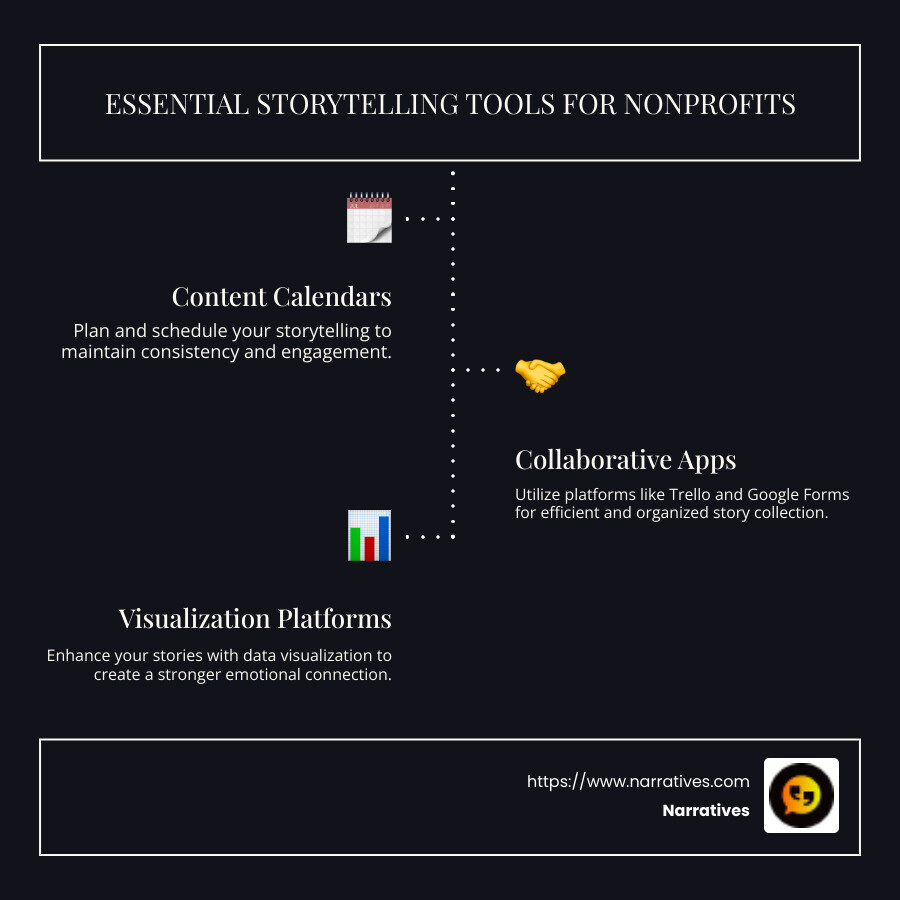
Essential Storytelling Tools for Nonprofits
Crafting compelling stories is crucial for nonprofits to connect with their audience and amplify their mission. Here are some storytelling tools for nonprofits that can streamline the process and help you reach your goals effectively:
1. Story Calendar
A Story Calendar is your roadmap for storytelling success. It helps organize when and what stories to share, aligning with your fundraising and communication goals. Here's how to set it up:
- Dates and Deadlines: Mark important dates for appeals and donor communications.
- Story Needs: Identify the type and number of stories required.
- Draft Timelines: Set deadlines for first drafts to ensure timely publication.
Using a calendar ensures your storytelling is consistent and strategic.
2. Monthly Emails
Monthly emails are a great way to engage your team in the storytelling process. They serve as a call for stories, letting staff know what stories are needed and when. This approach keeps storytelling top-of-mind and encourages staff to contribute. Include prompts and share positive feedback from previous stories to motivate your team.
3. Google Forms
Google Forms is a user-friendly tool for collecting stories. Set up an evergreen form for staff to submit stories anytime. This accessibility removes logistical barriers and ensures a steady flow of content. It's a favorite among nonprofits for its simplicity and effectiveness.
4. Trello
Trello is a flexible project management tool that helps visualize the storytelling process. Create a story bank to organize and track stories from inception to publication. Trello's board and card system makes it easy to manage tasks, deadlines, and content updates.
5. Evernote
Evernote is perfect for capturing ideas and notes on the go. It's a digital notebook where you can jot down story ideas, save articles, and store multimedia content. This tool ensures you never lose a great story idea, no matter where you are.
By integrating these tools into your storytelling strategy, nonprofits can better manage their content, engage their audience, and ultimately, drive their mission forward.
Data-Driven Storytelling Techniques
Data is more than just numbers; it's a powerful tool to tell stories that resonate. For nonprofits, using data-driven storytelling techniques can amplify impact by making stories more relatable and compelling. Let's explore how data visualization, ethical storytelling, and emotional engagement can transform your nonprofit's narrative.
Data Visualization
Data visualization is like painting a picture with numbers. It turns complex data into simple visuals that anyone can understand. This helps audiences grasp information quickly and intuitively. A well-designed chart or infographic can communicate a message faster than a paragraph of text.
For instance, using color and layout strategically can evoke emotions and highlight key points. A Forbes article notes that visualization not only aids understanding but also creates a shared understanding among stakeholders, making it a vital tool for nonprofits.
Ethical Storytelling
Ethical storytelling is about respecting the dignity and privacy of those whose stories you tell. It involves being transparent, truthful, and considerate of the impact your narrative might have. Nonprofits should ensure that their storytelling practices do not exploit or misrepresent the individuals involved.
As noted by Mathieu Guglielmino, the aim is to foster empathy and connection, not just present data. This means crafting stories that are honest and respectful, which can lead to more profound audience engagement and trust.
Emotional Engagement
Stories have the power to move people. By creating an emotional connection, nonprofits can inspire action and build lasting relationships with their audience. Emotional engagement is achieved by weaving personal stories with data, making the abstract tangible.
For example, when you combine a beneficiary's personal journey with impact statistics, it humanizes the data. This approach can make your audience feel more connected to your cause, encouraging them to act. Personal testimonials and visual narratives are effective ways to achieve this, as they allow audiences to see the real-world impact of their support.
Incorporating these data-driven storytelling techniques into your nonprofit's strategy can improve your communication efforts, making your mission more relatable and impactful. Up next, we'll explore how to build a compelling narrative using these elements.
Building a Compelling Narrative
Creating a compelling narrative is like crafting a bridge between your nonprofit's mission and your audience's hearts. It's about weaving personal stories, impact data, and visual narratives into a mix that not only informs but also inspires.
Personal Stories
Personal stories are the heartbeat of nonprofit storytelling. They provide a face and a name to your cause, allowing supporters to connect on a human level. As Bree Carriglio from Fund For Armenian Relief highlights, showcasing beneficiaries' success stories helps donors see the tangible impact of their contributions.
Consider sharing first-hand accounts directly from those affected by your work. Paula Schneider of Susan G. Komen emphasizes the power of real testimonials. When stakeholders hear directly from those they've helped, it grounds the narrative in reality and urgency.
Impact Data
Impact data adds depth to your narrative, changing anecdotes into evidence of change. By presenting data alongside personal stories, you make the abstract concrete. Dee Lawrence from Cool Effect illustrates this by combining statistics with visuals and testimonials, making donor impact both tangible and engaging.
For example, an environmental nonprofit might highlight how donations have led to clean water access for hundreds of people. Pairing these stats with images or videos of community members utilizing new water pumps paints a vivid picture of progress.
Visual Narratives
Visual narratives are the glue that binds stories and data together. They turn information into experiences that resonate. Cherian Koshy from Kindsight suggests anthropomorphizing elements of your work to create relatable characters out of programs or data.
Visual storytelling isn't just about pretty pictures. It's about creating a narrative that audiences can see and feel. This could be through infographics, videos, or even animated data, as suggested in the Forbes article on data visualization. These visuals help convey complex ideas quickly and evoke emotional responses, making your story more memorable and impactful.
By integrating personal stories, impact data, and visual narratives, nonprofits can craft compelling stories that resonate deeply with their audience. This approach not only informs but also inspires action, building stronger connections and fostering ongoing support.
Next, we'll dive into the top storytelling tools that can help your nonprofit bring these narratives to life.
Top 5 Storytelling Tools for Nonprofits
When it comes to storytelling tools for nonprofits, having the right resources can make all the difference. Let's explore five essential tools that can help you gather, organize, and share your nonprofit's stories effectively.
1. Story Calendar
A Story Calendar is like a roadmap for your storytelling journey. It helps you plan when and what to share, ensuring your stories align with key fundraising and communication milestones.
Steps to Create an Effective Story Calendar:
- Mark Important Dates: Identify key dates for appeals or donor communications.
- Define Story Needs: Determine how many stories you need and their types.
- Set Deadlines: Establish deadlines for story drafts and final versions.
Using a story calendar keeps your storytelling organized and consistent, helping you maintain a steady narrative flow throughout the year.
2. Google Forms
Google Forms is a simple yet powerful tool for collecting stories from staff and volunteers. It's an evergreen collection tool, meaning it's always available for inputs.
Benefits of Using Google Forms:
- Ease of Use: Anyone can fill out a Google Form, making it accessible for all team members.
- Centralized Collection: Gather stories in one place, reducing logistical problems.
This tool eliminates excuses and streamlines the story collection process, ensuring you have a steady stream of narratives to share.
3. Trello
Trello is a flexible project management tool that can double as a story bank. It helps you visualize and organize stories, ensuring none get lost in the shuffle.
How to Use Trello for Storytelling:
- Create Boards: Set up boards for different story categories or projects.
- Track Progress: Use cards to track story progress from idea to publication.
Trello's visual layout makes it easy to manage your storytelling projects, ensuring everything stays on track.
4. Evernote
Evernote is a versatile tool for capturing ideas, notes, and stories on the go. It's perfect for jotting down story ideas or recording interviews.
Features of Evernote:
- Note Organization: Categorize notes by tags or notebooks for easy retrieval.
- Multimedia Support: Attach images, audio, or documents to enrich your notes.
With Evernote, you can capture inspiration whenever it strikes, ensuring no story idea is lost.
5. Tumblr
While Tumblr is often thought of as a blogging platform, it's also a great private repository for your stories. By setting your account to private, you can use Tumblr to store and organize stories for future use.
Advantages of Using Tumblr:
- Tagging System: Use tags to categorize stories, making them easy to find later.
- Multimedia Storage: Save text, images, and videos in one place.
Tumblr's flexibility makes it an excellent choice for maintaining a comprehensive story archive.
By incorporating these tools into your storytelling strategy, your nonprofit can effectively gather, organize, and share impactful stories. This not only improves your communication efforts but also deepens your connection with donors and supporters.
Next, we'll address some frequently asked questions about storytelling tools for nonprofits.
Frequently Asked Questions about Storytelling Tools for Nonprofits
How can nonprofits effectively collect stories?
Collecting stories efficiently is crucial for nonprofits aiming to create compelling narratives. A collaborative approach is key. Encourage staff engagement by sending monthly emails requesting specific types of stories. This keeps storytelling top of mind for everyone involved.
Using tools like Google Forms can simplify the process. These forms serve as a central hub for story submissions, eliminating logistical problems. By making story collection a team effort, nonprofits ensure a diverse range of narratives that truly reflect their mission.
What role does data visualization play in nonprofit storytelling?
Data visualization transforms complex data into engaging visuals, creating a shared understanding among audiences. This technique not only makes information more digestible but also evokes an emotional connection.
For example, effective data visualization can illustrate the impact of donations, showing donors exactly how their contributions make a difference. This fosters a deeper emotional response and encourages continued support.
How can storytelling increase nonprofit engagement?
Storytelling is a powerful tool for increasing engagement, both within the community and among donors. By sharing authentic stories, nonprofits can boost community involvement. People are more likely to participate when they feel a personal connection to the cause.
Furthermore, storytelling improves donor engagement by showcasing the real-world impact of their support. When donors see and feel the difference their contributions make, they're more likely to stay committed and even increase their support.
Incorporating these storytelling strategies not only strengthens your nonprofit's narrative but also fosters stronger connections with your audience. Next, we'll dig into how nonprofits can leverage these tools to create truly compelling narratives.
Conclusion
In nonprofit storytelling, community-driven storytelling is a game-changer. At Narratives, we believe in elevating underrepresented voices to create powerful stories that resonate and inspire action.
Nonprofit partnerships are at the heart of our mission. By collaborating with purpose-driven organizations, we help them share their unique impact stories. These partnerships amplify community voices and highlight the vital work being done to address pressing social issues.
Our approach focuses on using high-quality, emotionally resonant video and multimedia content. This not only builds trust but also increases visibility for nonprofits. When people see the real stories behind the statistics, they connect on a deeper level.
Through our services, nonprofits can craft narratives that not only inform but also engage and inspire. This is the magic of storytelling—it turns data into emotion, and emotion into action.
Join us in creating content that makes a difference. Visit our media page to learn more about how we can partner with you to tell your story. Let's use the power of storytelling to drive change and make the world a better place.


.avif)