Brand Narratives: 17 Campaigns That Made Waves

Successful storytelling campaigns have become an essential part of how brands connect with their audiences in today's digital age.
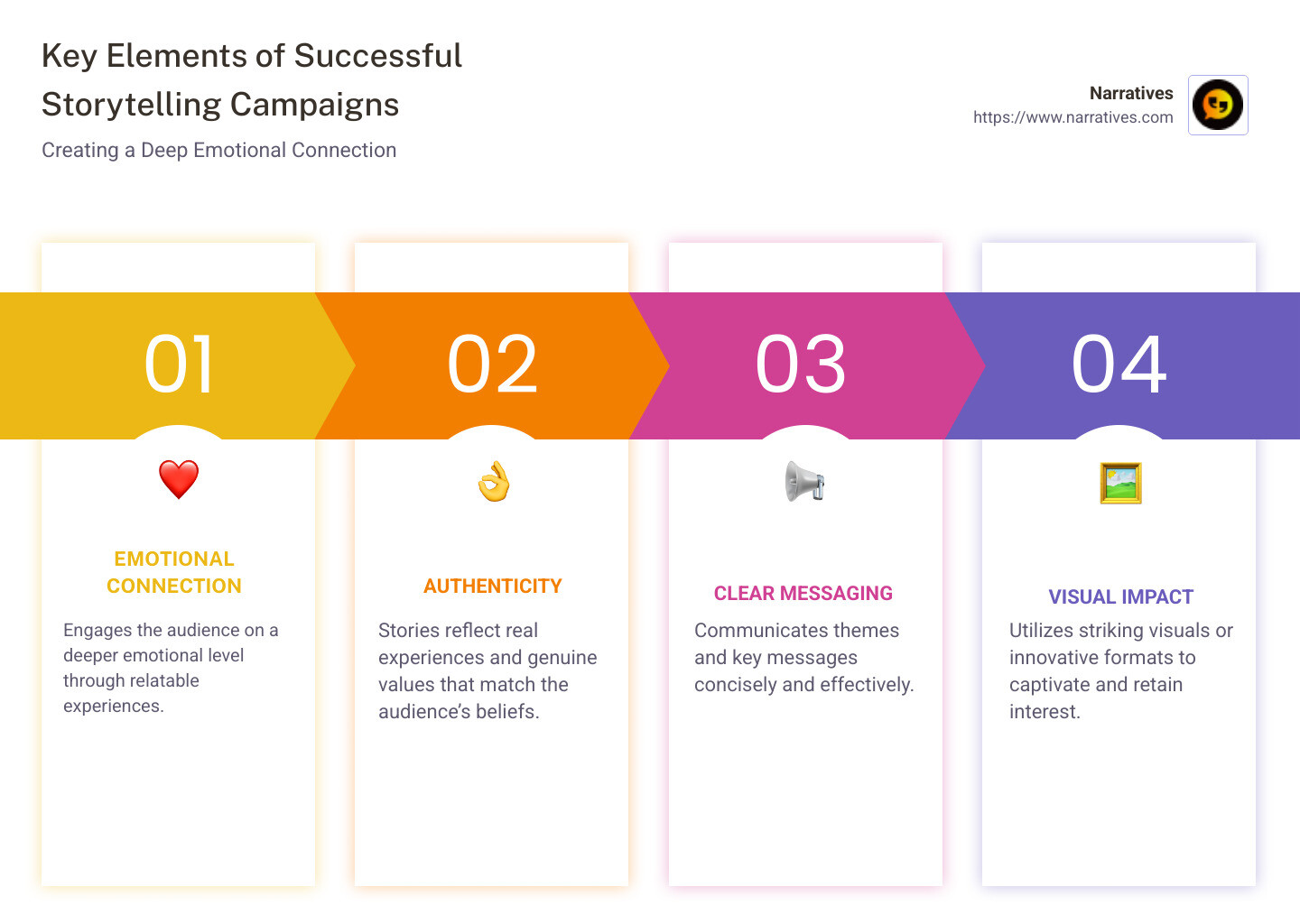
Here are a few standout elements that ensure the success of storytelling campaigns:
- Emotional Connection: Engage the audience on a deeper emotional level.
- Authentic and Relatable Stories: Reflect real experiences and values that resonate with the audience.
- Clear Messaging: Communicate key themes and messages concisely.
- Visual and Digital Impact: Use striking visuals or innovative formats to captivate and maintain interest.
In an era where digital communication dominates, storytelling is a powerful way to break through the noise and establish an emotional connection. This connection is not just a buzzword; it underpins how effective campaigns resonate with their audience, foster loyalty, and build brand identity. By sharing genuine narratives, brands leverage the universal human affinity for stories, allowing them to tap into emotions and create memorable experiences.
From Patagonia’s ethical long-form content to Airbnb’s community-driven host stories, campaigns built on storytelling have shown that emotional connections lead to real-world impact. Whether it’s through a gripping documentary or a heartwarming short video, successful storytelling campaigns are about sharing a narrative that not only informs but also inspires action and aligns with shared values.
Quick look at Successful storytelling campaigns:
- interactive digital storytelling examples
- digital storytelling in education
- why is digital storytelling an effective learning tool
Successful Storytelling Campaigns
Brand storytelling is more than just a marketing buzzword; it's a strategic approach that helps brands connect with their audiences in meaningful ways. By crafting stories that resonate emotionally, brands can engage their audience and build lasting relationships.
Emotional Resonance
Stories that evoke emotions can significantly impact how audiences perceive a brand. Consider Disney's ad for Disneyland Paris, which tells the heartwarming tale of a duckling who idolizes Donald Duck. This narrative pulls at the heartstrings, creating a connection that goes beyond the product itself.

Similarly, Guinness used emotional storytelling in its “Made of More” campaign, highlighting the inspiring story of the Liberty Fields RFC women's rugby team. By showcasing their journey and defying societal expectations, Guinness not only promoted inclusivity but also engaged audiences on an emotional level.
Audience Engagement
Engaging your audience is crucial for any storytelling campaign. Yara International's “Growers for the Future” campaign did this by focusing on personal stories of farmers facing succession challenges. By personalizing these narratives, Yara created a sense of community and shared purpose.
Apple's “Apple at Work” campaign is another great example. By demonstrating how their products improve creativity and productivity, Apple reinforced its brand identity and connected with consumers who value innovation.
Authenticity and Relatability
Authenticity can make or break a storytelling campaign. Rare Beauty, founded by Selena Gomez, emphasizes challenging unrealistic beauty standards and promoting mental health awareness. By aligning the brand with issues that resonate with its audience, Rare Beauty fosters a sense of belonging and empowerment.
LEGO’s “Rebuild the World” campaign also taps into authenticity by showcasing children’s creativity and imagination. By encouraging kids to build their unique worlds, LEGO connects with both children and adults, highlighting the joy of play—a core element of their brand identity.
Incorporating these elements—emotional resonance, audience engagement, authenticity, and relatability—can transform a simple marketing effort into a successful storytelling campaign. These campaigns not only captivate audiences but also inspire action and foster loyalty by aligning with shared values and real-world impact.
17 Campaigns That Made Waves
F1: Drive to Survive
The Netflix series Drive to Survive has been a game-changer for Formula 1, especially in capturing new audiences in the U.S. Instead of focusing on the technical side of racing, the series dives into the personal stories of drivers, mechanics, and team bosses, making F1 more relatable and engaging. This approach has significantly increased interest in the sport, with one survey noting that 34% of US adults are now interested in F1, with a quarter attributing this to the series. This is a prime example of how storytelling can drive audience growth by making a sport more accessible and human.
Patagonia: Ethical Storytelling
Patagonia leverages long-form content to emphasize its commitment to sustainability and ethical practices. With videos like What The Hands Do, which tells the story of climbers fostering community growth, Patagonia demonstrates its values in action. This dedication to in-depth storytelling not only highlights their ethical credentials but also resonates with consumers who prioritize sustainability, fostering deeper brand loyalty.
Airbnb: Host Stories
Airbnb has mastered the art of community connection through immersive experiences. By sharing host stories on their platform, they highlight the transformative power of travel and the unique connections formed between hosts and guests. This storytelling approach not only promotes the brand's community-focused ethos but also improves user engagement by immersing audiences in diverse cultural experiences.
Dove: Real Beauty
Dove's Real Beauty campaign is a quintessential example of storytelling that promotes body positivity and social impact. By challenging traditional beauty standards and featuring real women, Dove creates authentic narratives that resonate with audiences. This approach not only lifts brand perception but also drives social change by encouraging conversations around self-esteem and beauty inclusivity.
Heinz: Personalized Labels
Heinz took consumer engagement to the next level with its personalized labels campaign. By allowing customers to create custom labels for their ketchup bottles, Heinz established a personal connection with consumers. This strategy not only fostered emotional connection but also increased brand interaction, demonstrating the power of personalization in storytelling.
Nike: Move to Zero
Nike's Move to Zero campaign showcases sustainability and innovation by committing to a zero-carbon and zero-waste future. Through compelling storytelling, Nike highlights its efforts to protect the planet, engaging audiences who value environmental responsibility. This campaign aligns with Nike's brand values, reinforcing its commitment to sustainability and inspiring consumer action.
Humans of New York
Humans of New York exemplifies authentic storytelling with its global reach. By sharing personal stories from diverse individuals, the project creates a powerful narrative mix that resonates worldwide. This approach not only builds a strong emotional connection with audiences but also highlights the universal human experience, fostering empathy and understanding.
Goldfish Crackers: AR Experience
Goldfish Crackers acceptd interactive storytelling with their augmented reality (AR) campaign. By allowing consumers to engage with the brand through AR experiences, Goldfish created a fun and memorable interaction. This innovative approach captures the imagination of younger audiences, enhancing brand engagement and loyalty.
LEGO: Rebuild the World
LEGO's Rebuild the World campaign celebrates creativity and imagination. By showcasing stories of children building their own worlds, LEGO taps into the joy of play and innovation. This storytelling strategy not only appeals to both kids and adults but also reinforces LEGO's brand identity as a champion of creativity and exploration.
Yara International: Growers for the Future
Yara International's Growers for the Future campaign focuses on sustainability and personal stories of farmers. By highlighting the challenges and aspirations of growers, Yara connects emotionally with its audience, fostering a sense of community and shared purpose. This approach underscores the importance of sustainability in agriculture, aligning with Yara's core values.
Apple: Apple at Work
Apple's Apple at Work campaign showcases innovation and productivity by demonstrating how their products improve professional creativity. This storytelling aligns with Apple's brand identity, resonating with consumers who value technological advancement and efficiency. By highlighting real-world applications, Apple reinforces its role as a leader in innovation.
Rare Beauty: Authenticity
Rare Beauty, founded by Selena Gomez, emphasizes mental health and inclusivity through authentic storytelling. By aligning the brand with social issues that resonate with its audience, Rare Beauty fosters a sense of belonging and empowerment. This approach not only builds a loyal community but also lifts the brand's impact on societal conversations around beauty and mental well-being.
The Rock: Teremana Tequila
Dwayne "The Rock" Johnson's Teremana Tequila leverages personal narrative and craftsmanship in its storytelling. By sharing the journey of creating a high-quality tequila, The Rock connects with consumers on a personal level. This approach highlights the brand's authenticity and dedication to quality, resonating with audiences who appreciate craftsmanship.
Intel: AI Innovations
Intel's storytelling focuses on technology and future focus through its AI innovations. By showcasing how AI is changing industries, Intel engages audiences interested in cutting-edge technology. This narrative not only highlights Intel's role in technological advancement but also inspires curiosity and exploration of future possibilities.
Lululemon: Feel Grounded
Lululemon's Feel Grounded campaign emphasizes mental wellness and community connection. By promoting mindfulness and self-care, Lululemon aligns with the values of its audience, fostering a supportive community. This storytelling approach not only improves brand loyalty but also encourages consumers to prioritize mental health and well-being.
Gillette: The Best A Man Can Be
Gillette's The Best A Man Can Be campaign uses bold messaging to drive social change. By challenging traditional notions of masculinity, Gillette engages audiences in meaningful conversations about gender roles. This storytelling approach not only lifts the brand's social impact but also resonates with consumers seeking authenticity and progress.
Spotify: Wrapped
Spotify's Wrapped campaign leverages personalization and user engagement by providing listeners with a year-end summary of their music habits. This interactive storytelling approach fosters a sense of connection and celebration, encouraging users to share their experiences. By combining data with personal narratives, Spotify improves user loyalty and engagement.
Frequently Asked Questions about Successful Storytelling Campaigns
What makes a storytelling campaign successful?
A successful storytelling campaign hinges on its ability to create an emotional connection with the audience. When brands tell stories that resonate emotionally, they foster a deeper relationship with their audience. For instance, the Dove Real Beauty campaign connects by promoting body positivity, creating a strong bond with diverse audiences worldwide.
Audience engagement is another crucial factor. Campaigns that invite interaction or participation keep audiences invested. Spotify's Wrapped campaign exemplifies this by allowing users to engage with their own personalized music stories, encouraging them to share and celebrate their experiences, enhancing user loyalty and engagement.
How can non-profits leverage storytelling?
Non-profits can harness the power of storytelling by focusing on impact stories that highlight the real-world effects of their work. For example, the Homeless Documentary Series by Everyone In humanizes the issue of homelessness, providing a face to the statistics and fostering empathy and support from the community.
Community-driven content is key for non-profits. By involving the community in the storytelling process, non-profits can build a sense of shared purpose. This approach not only amplifies their message but also strengthens their connection with supporters, as seen in campaigns like Cities Talk Back by Lyft, which celebrates the diverse stories of its driver community.
Why is storytelling important for brands?
Storytelling is essential for brands because it builds brand loyalty. When a brand consistently shares stories that align with its values, it strengthens its identity and fosters trust with consumers. Apple's Apple at Work campaign, for example, reinforces its brand image of innovation, resonating with tech-savvy consumers.
Moreover, storytelling improves emotional resonance, making brands memorable. By telling stories that evoke emotions, brands can create lasting impressions. Take the LEGO Rebuild the World campaign, which taps into creativity and imagination, appealing to both children and adults and solidifying LEGO's position as a champion of play and exploration.
Storytelling transforms brands from mere providers of products or services into entities that inspire, connect, and engage on a deeper level.
Conclusion
In today's digital world, narratives are more than just stories—they're powerful tools that can drive change, build connections, and inspire action. For non-profits and purpose-driven organizations, storytelling is not just a strategy; it's a vital part of their mission to create social impact.
Narratives play a crucial role in amplifying the voices of underrepresented communities. By crafting emotionally resonant stories, organizations can highlight the real-world impact of their work, making it relatable and compelling to a broader audience. This is where we, at Narratives, step in. We specialize in elevating these voices through high-quality video and multimedia content, ensuring that each story not only reaches but also moves its audience.
Non-profit partnerships are at the heart of our approach. Collaborating with organizations allows us to dig deep into their missions and bring their impact stories to life. By focusing on community-driven storytelling, we help non-profits engage their supporters in meaningful ways. This not only amplifies their message but also strengthens their bond with their community, encouraging more people to join their cause.
The social impact of storytelling cannot be overstated. When done right, storytelling has the power to shift perceptions, mobilize communities, and drive real change. Campaigns like Yara International's Growers for the Future and Rare Beauty's focus on authenticity and mental health demonstrate how storytelling can connect on an emotional level, fostering a sense of belonging and empowerment.
In conclusion, whether you're a non-profit looking to share your mission or a brand aiming to build deeper connections, storytelling is your key to success. Let us help you craft stories that inspire action and create lasting impact. Explore our services to see how we can lift your narrative today.


.avif)