Syndication Simplified: What It Is and How to Master It

Content Syndication: Empowering Non-Profits Through Digital Storytelling
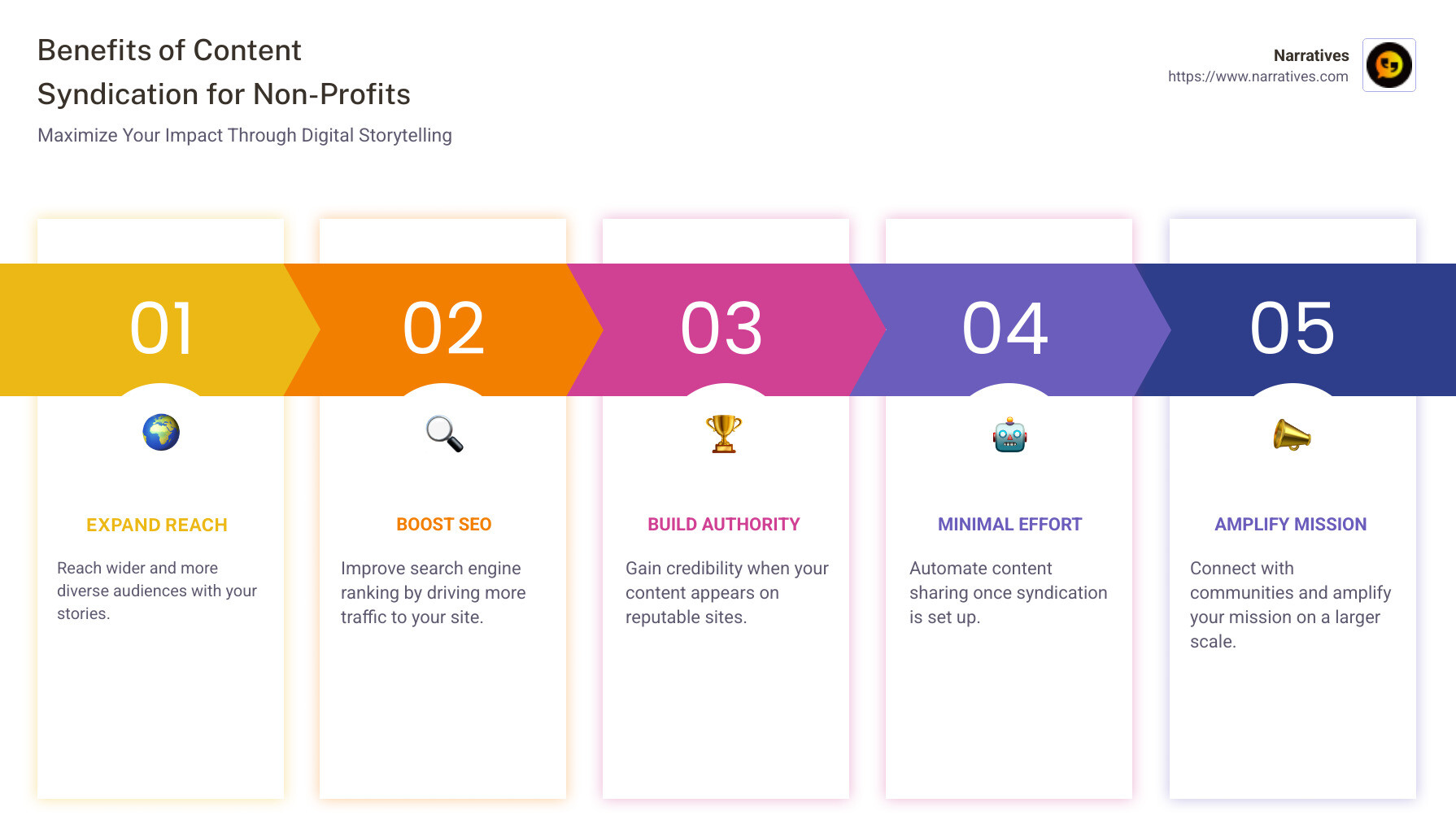
Content syndication is a powerful way to maximize your stories' reach without much extra effort. This technique involves sharing your digital content, like blog posts, videos, or infographics, across multiple platforms or websites. Key points to remember about syndicate content include:
- Expand Reach: By syndicating, you make your content accessible to wider, diverse audiences.
- Boost SEO: Syndication can drive more traffic to your site, enhancing your search engine ranking.
- Build Authority: When your content appears on reputable sites, it boosts credibility.
- Minimal Effort: Once set up, syndication allows for automated content sharing.
For non-profits focused on impactful storytelling, content syndication offers an avenue to amplify their mission and connect with communities on a larger scale. By leveraging this strategy, non-profits can effectively broadcast their stories of change, advocacy, and social justice, paving the way for increased awareness and engagement.
Digital storytelling, combined with syndication, provides an opportunity for organizations to share their narratives widely, fostering empathy and action. While it might seem challenging to steer, understanding content syndication can open up new potential for growth and collaboration, amplifying your mission even further.
Syndicate content word list:
Understanding Content Syndication
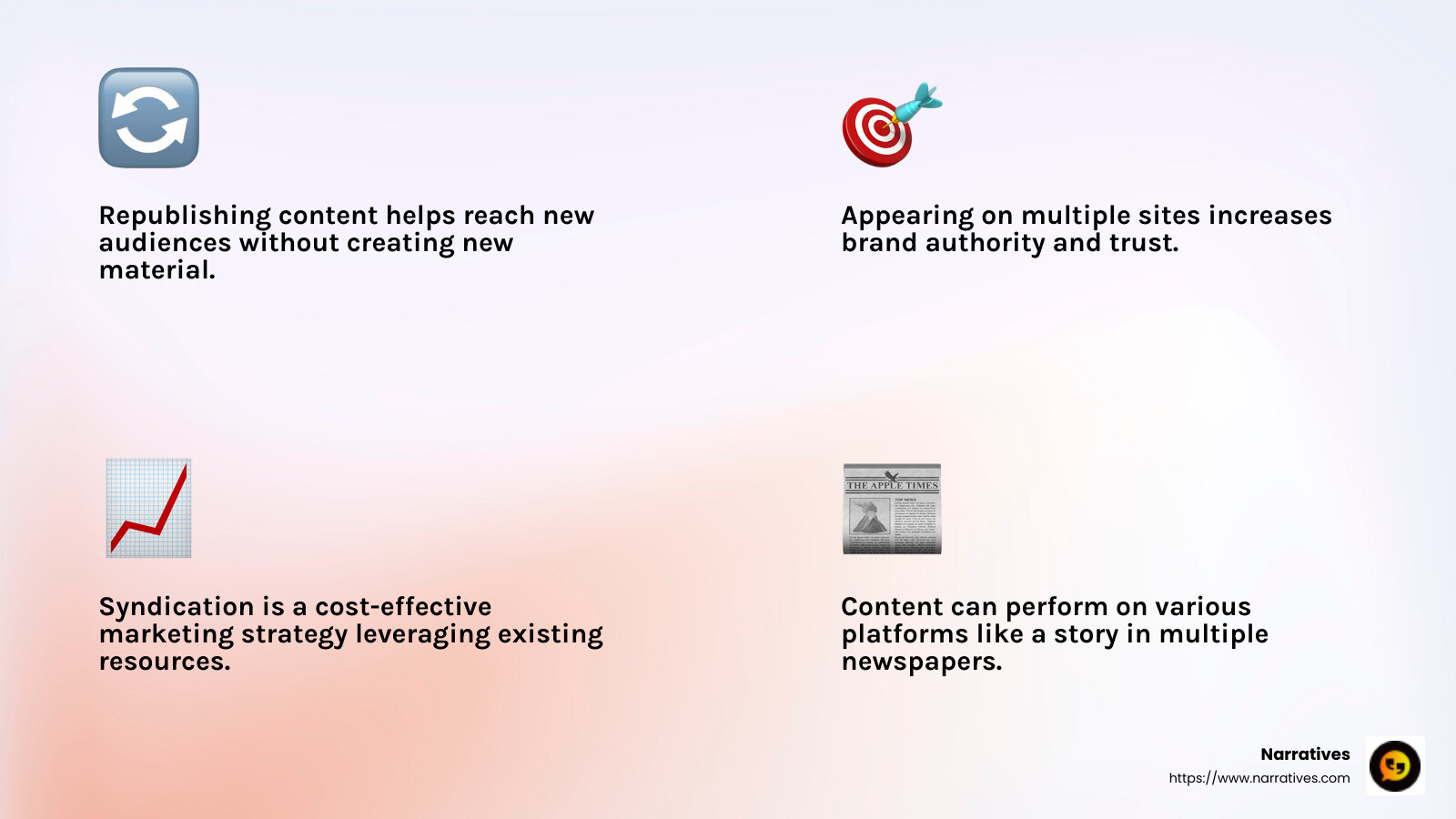
Content syndication is like echoing your voice across a busy marketplace. It involves republishing your content on various platforms, making sure your message reaches as many ears as possible. Imagine writing a story and having it appear in multiple newspapers—each reaching different readers. That’s the magic of syndication.
Republishing Content
When you republish content, you’re sharing the same piece on different sites. This isn't about creating new material—it's about making the most of what you already have. Whether it’s a blog post, a video, or an infographic, you can give it new life by sharing it on platforms that align with your mission.
Multiple Sites
Think of each platform as a unique stage where your content can perform. By appearing on multiple sites, your content can tap into different audiences. This strategy not only increases your reach but also helps build your brand’s authority. When readers see your content on respected platforms, they’re more likely to trust your expertise.
Marketing Strategy
Syndication is a savvy marketing strategy. It’s about being smart with your resources. Instead of spending time creating new content, you leverage existing material to expand your influence. It’s cost-effective and efficient, allowing you to focus on other crucial aspects of your organization.
By understanding and implementing content syndication, you can turn a single piece of content into multiple opportunities for engagement and growth. This approach not only improves visibility but also drives traffic back to your main site, amplifying your message with minimal effort.
Benefits of Syndicating Content
Syndicating content offers several key benefits that can significantly boost your organization's reach and credibility. Let's explore how this strategy can lift your brand.
Brand Awareness
When you syndicate content, you cast a wider net, capturing the attention of diverse audiences. It's like having your story told in various languages across different regions. Each platform you publish on acts as a new voice, spreading your message further than your own channels might reach.
This expanded presence helps establish your organization as a thought leader. As more people encounter your content, they begin to recognize and trust your brand. The more they see your name associated with valuable insights, the more likely they are to remember and engage with your mission.
SEO Performance
Syndicating content can also improve your SEO performance. Each time your content appears on a reputable site, it increases your visibility in search engine results. This is crucial because it means more potential supporters can find your organization online.
Moreover, syndication can help your original content rank higher. When search engines see your content appearing on multiple credible sites, it signals that your material is valuable and relevant, boosting your overall SEO standing.
Backlinks
Backlinks are like votes of confidence from other websites. When you syndicate content, you often gain these valuable links back to your site. Each backlink acts as a pathway leading new visitors to your doorstep.
These links not only drive traffic but also improve your site's authority in the eyes of search engines. The more authoritative sites link back to you, the more credible you appear, which can lead to higher rankings and more organic traffic.
In summary, by syndicating content, you not only amplify your brand awareness but also boost your SEO performance and accumulate valuable backlinks. These benefits work together to improve your online presence, making it easier for new audiences to find and engage with your organization.
How to Syndicate Content Effectively
Syndicating content can be a game-changer for expanding your reach and influence. Let's explore how to do it effectively through free syndication, paid syndication, and building strong content partnerships.
Free Syndication
Free syndication involves collaborating with platforms that will publish your content without any cost. This is a great way to extend your reach without stretching your budget. Platforms like Business2Community and Lifehacker often syndicate content for free, allowing your message to reach their established audiences.
To find potential free partners, use search engines with phrases like "originally appeared on" or "republished with permission." This method can uncover sites already open to syndication, helping you identify the right opportunities.
However, free syndication can be time-consuming. It often requires pitching your content to various editors and undergoing a back-and-forth process. But the exposure you gain can be well worth the effort.
Paid Syndication
If you have the budget, paid syndication offers a more streamlined approach. Services like Outbrain and Taboola can place your content on high-traffic sites like CNN and Bloomberg. This guarantees a broader audience reach.
Paid syndication works much like pay-per-click advertising. You set a budget, define your target audience, and your content appears as recommended articles. While this can increase visibility, be aware that such links are often seen as "sponsored content" by both search engines and readers.

Content Partners
Building relationships with content partners is vital for successful syndication. Look for partners whose audiences align with your target demographics. Choose platforms with similar or higher authority than your own to maximize your content's reach.
When approaching potential partners, clearly explain how your content can benefit their audience. Provide examples of your best-performing posts to showcase the value you bring.
Maintaining these partnerships can lead to regular syndication opportunities, providing a consistent boost to your brand's visibility.
By leveraging free syndication, investing in paid options, and nurturing strong content partnerships, you can effectively syndicate content and expand your organization's reach. This strategic approach ensures your message resonates with new audiences, amplifying your impact.
Syndicate Content: Best Practices
When you syndicate content, it's crucial to follow best practices to avoid pitfalls and maximize benefits. Here’s how to do it right:
Use Canonical Tags
Canonical tags are your best friend when it comes to content syndication. They tell search engines which version of your content is the original. This is key to ensuring that your primary site gets the SEO credit it deserves. Without canonical tags, search engines might get confused, leading to potential indexing issues.
Tip: Always ensure that your syndication partners use canonical tags pointing back to your original article. This helps in maintaining the integrity of your content and boosting your SEO performance.
Avoid Duplicate Content Issues
Duplicate content can be a nightmare for your SEO. Search engines like Google strive to provide users with unique and relevant content. If they find the same content on multiple sites, they may choose not to index any of them. This can mean lost opportunities for visibility and traffic.
To avoid this, make sure every syndicated piece has a clear attribution to the original source. A simple line stating, "This article originally appeared on [Your Website]," can make a big difference.
Optimize for SEO
Optimizing your content for SEO is vital, even when it's syndicated. Use relevant keywords naturally throughout your content to improve its findability. Ensure that any links within your syndicated content are working and point back to your original site.
Quick Checklist for SEO Optimization:
- Use canonical tags to establish the original source.
- Include a link back to your original content.
- Optimize your content with relevant keywords.
- Ensure all internal and external links are functioning.
By following these best practices, you can effectively syndicate content while maintaining your SEO health and expanding your audience reach.
Leading into the next section, let's explore the top platforms that can help you distribute your content even further.
Top Platforms for Content Syndication
When it comes to syndicating content, choosing the right platforms can make a significant difference in your reach and engagement. Here are some of the top platforms that can amplify your content's visibility:
Medium
Medium is a popular platform for writers and organizations to share their stories with a wide audience. It’s user-friendly and allows for easy import of your existing blog posts. Medium's algorithm favors quality and engagement, so make sure your content is well-crafted and relevant.
- Tip: Use Medium's import tool to bring in your articles with a canonical link back to your original post. This ensures your site maintains its SEO authority.
LinkedIn is not just for networking; it's also a powerhouse for content syndication. Publishing articles on LinkedIn can boost your professional credibility and reach a targeted audience interested in your industry.
- Pro Tip: Engage with your audience through comments and shares to increase visibility. LinkedIn's algorithm rewards active engagement.
SlideShare
SlideShare, owned by LinkedIn, is an excellent platform for sharing visual content like presentations and infographics. It's a great way to repurpose your content into a more visual format that can capture attention quickly.
- Strategy: Convert key blog posts into slide decks or infographics. This not only diversifies your content format but also increases the likelihood of shares and embeds.
Quora
Quora is a question-and-answer platform where you can establish thought leadership by providing insightful answers. Syndicating your content here can help you reach an audience actively seeking information in your field.
- Advice: Use Quora to answer questions related to your content topics. Link back to your original articles for more detailed information, driving traffic to your site.

By utilizing these platforms, you can effectively syndicate content and expand your reach, engaging with audiences across different channels. Each platform offers unique benefits, so choose the ones that align with your content strategy and audience goals.
Frequently Asked Questions about Content Syndication
What is the difference between syndication and guest posting?
Content syndication and guest posting are both strategies to expand your reach, but they work differently. Syndicate content means republishing the same piece across multiple sites. This can be done in full or in part, and always includes a link back to the original source. It's like giving your content a second life on other platforms.
In contrast, guest posting involves creating an original piece specifically for a third-party site. This means the content is unique to that site and doesn't appear anywhere else. Guest posts help build relationships and credibility within a new audience, but they don't carry the risk of duplicate content issues since they're one-of-a-kind.
How can I avoid duplicate content issues?
Duplicate content can confuse search engines, potentially hurting your SEO performance. To avoid this when you syndicate content, it's crucial to use canonical tags. These tags tell search engines which version of your content is the original, guiding them on which to prioritize in search results.
Here's what a canonical tag looks like:
<link rel="canonical" href="https://www.yoursite.com/original-article" />In addition to using canonical tags, ensure that your syndicated content includes a link back to the original article. This not only gives credit but also helps maintain your site's SEO authority. Communicate clearly with your syndication partners about these practices to keep your content strategy on track.
What are the best platforms for syndicating content?
Choosing the right platform can significantly boost your content's reach. Here are some top content syndication platforms:
Medium: Ideal for reaching a broad audience interested in diverse topics. Medium's import tool allows you to bring in articles with a canonical link, protecting your SEO.
LinkedIn: Perfect for professional audiences. Publishing on LinkedIn can improve your industry credibility and tap into a targeted network.
SlideShare: Great for visual content like presentations and infographics. This platform helps diversify your content format, increasing shareability.
Quora: A Q&A platform where you can showcase expertise by answering relevant questions. Linking back to your articles can drive traffic to your site.
These platforms each offer unique advantages, so consider your content type and target audience when choosing where to syndicate. By leveraging these platforms, you can expand your reach and engage with new readers effectively.
Conclusion
As we wrap up our exploration of content syndication, it's clear that this strategy holds immense potential for non-profit organizations aiming to amplify their impact through storytelling. At Narratives, we believe in the power of elevating underrepresented voices and sharing their stories in ways that resonate deeply and inspire action.
Storytelling is not just about sharing facts; it's about connecting emotionally with your audience. For non-profits, this means creating content that highlights their mission, showcases their achievements, and, most importantly, tells the stories of the people and communities they serve. By doing so, non-profits can build trust, increase visibility, and foster a sense of community among supporters.
Partnerships are crucial in this journey. Collaborating with platforms and partners that share your values can help you reach new audiences and strengthen your message. Whether through free or paid syndication, choosing the right partners ensures that your stories are heard by those who care most.
Incorporating content syndication into your digital strategy can significantly improve your organization's reach and effectiveness. It's not just about spreading content—it's about spreading impact. By leveraging the right platforms and practices, you can ensure that your stories not only reach a wider audience but also drive meaningful change.
Let us help you harness the power of storytelling to lift your mission. Explore the opportunities with Narratives and see how we can support your non-profit in making a lasting difference.


.avif)