Unlocking the Secrets of Syndication Schedules

Syndication schedules are essential tools in the content marketing toolbox, particularly for those looking to extend their reach and impact. If you're exploring ways to broaden your content's visibility or capture the interest of new audiences, understanding syndication schedules can offer a strategic advantage.
Here's the quick takeaway:
Definition: Syndication schedules refer to the organized timelines and strategies for redistributing content across various platforms to maximize exposure.
Purpose: They aim to improve content visibility, improve brand recognition, and ultimately drive more engagement.
Benefits: Effective syndication schedules can amplify a brand's voice, increase SEO performance, and build a stronger audience base.
Content syndication is a proven marketing strategy used to republish existing content on third-party platforms. This approach not only extends the lifespan of your content but also puts it in front of a broader audience who might not find it through your website alone. Why is this so valuable? When executed well, syndication schedules can greatly improve brand authority and drive significant engagement by leveraging existing high-traffic channels.
In today's saturated digital landscape, getting noticed can be challenging, particularly for non-profit organizations and social advocacy groups seeking to amplify their mission. Implementing a well-structured syndication schedule helps steer this challenge by connecting valuable content with the right audience, at the right time.

Syndication schedules glossary:
Understanding Syndication Schedules
Syndication schedules are essential tools in the content marketing toolbox, particularly for those looking to extend their reach and impact. If you're exploring ways to broaden your content's visibility or capture the interest of new audiences, understanding syndication schedules can offer a strategic advantage.
Here's the quick takeaway:
Definition: Syndication schedules refer to the organized timelines and strategies for redistributing content across various platforms to maximize exposure.
Purpose: They aim to improve content visibility, improve brand recognition, and ultimately drive more engagement.
Benefits: Effective syndication schedules can amplify a brand's voice, increase SEO performance, and build a stronger audience base.
Content syndication is a proven marketing strategy used to republish existing content on third-party platforms. This approach not only extends the lifespan of your content but also puts it in front of a broader audience who might not find it through your website alone. Why is this so valuable? When executed well, syndication schedules can greatly improve brand authority and drive significant engagement by leveraging existing high-traffic channels.
In today's saturated digital landscape, getting noticed can be challenging, particularly for non-profit organizations and social advocacy groups seeking to amplify their mission. Implementing a well-structured syndication schedule helps steer this challenge by connecting valuable content with the right audience, at the right time.
Content Distribution: The core of syndication schedules is effective content distribution. This involves selecting the right platforms to share your content, ensuring it reaches the intended audience. Platforms like Medium, LinkedIn, and Flipboard are popular choices due to their vast user bases and diverse readership.
Republishing Content: Republishing is not just about copying and pasting your content onto another site. It's about adapting and optimizing your content to fit the platform and audience. This might involve tweaking headlines, adjusting formats, or even updating content to ensure relevance.
A well-planned syndication schedule considers the unique characteristics of each platform and aligns content distribution with audience behavior. By doing so, you not only increase the chances of your content being seen but also improve the likelihood of it being shared, thus further extending its reach.
Understanding and implementing syndication schedules can be a game-changer for content marketers and brands alike. They provide a systematic approach to content distribution, ensuring your message is not only heard but also remembered.
Benefits of Syndication Schedules
When executed with precision, syndication schedules can transform your content strategy by elevating brand awareness, boosting SEO performance, and driving lead generation.
Brand Awareness
Imagine your brand's message displayed across multiple high-traffic platforms. This is the power of syndication schedules. By republishing your content on reputable sites, you tap into new audiences who may not have finded your brand otherwise. This increased exposure not only builds brand recognition but also establishes your brand as a thought leader in your industry. Think of it as casting a wider net to catch more fish.
SEO Performance
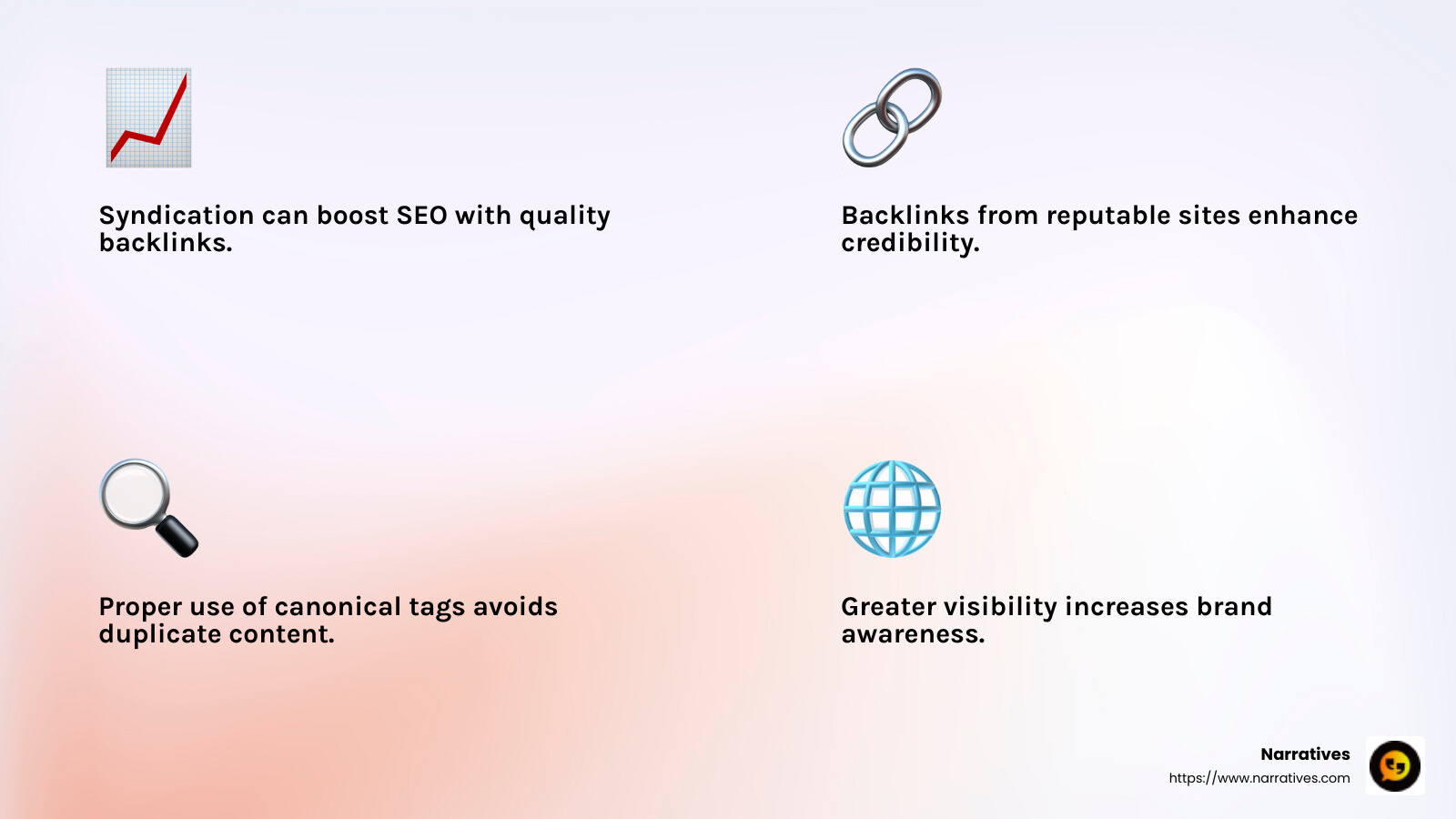
Syndication schedules can be a boon for your site's SEO. How? By generating high-quality backlinks from reputable sites. When your content is syndicated, it often includes a link back to your original site. These backlinks signal to search engines that your content is credible and valuable, potentially boosting your search engine rankings.
However, it's crucial to implement canonical tags and proper attribution to avoid duplicate content issues. As Google suggests, ensuring clear differentiation between original and syndicated content is key to maintaining SEO health.
Lead Generation
Beyond visibility and SEO, syndication schedules can fuel your lead generation efforts. By strategically placing your content on platforms frequented by your target audience, you increase the chances of capturing qualified leads. The more eyes on your content, the higher the likelihood of converting readers into interested prospects.
Consider the case of a B2B company that syndicated its whitepapers across industry blogs. The result? A notable increase in qualified leads entering their sales funnel, demonstrating the power of targeted content distribution.
In summary, syndication schedules offer a structured approach to maximizing the impact of your content. By enhancing brand awareness, improving SEO performance, and driving lead generation, they serve as a vital component of a successful content marketing strategy.
How to Create Effective Syndication Schedules
Creating an effective syndication schedule requires careful planning and strategic thinking. Let's explore the key components: content planning, audience targeting, and platform selection.
Content Planning
Start by identifying the content pieces that will resonate most with your target audience. Think about what topics are trending in your industry or what questions your audience frequently asks. These insights will guide you in selecting content that not only informs but also engages your readers.
Once you've chosen your content, establish a timeline for when and where each piece will be syndicated. A well-organized calendar can help you keep track of publication dates and ensure a consistent flow of content across different platforms. This consistency is crucial in maintaining audience interest and building brand recognition.
Audience Targeting
Understanding your audience is key to effective syndication. Ask yourself: Who are you trying to reach? What are their interests and pain points? Use this information to tailor your content and select platforms that your audience frequents.
For example, if your target audience consists of professionals in the tech industry, consider syndicating your content on platforms like LinkedIn and Medium, where tech discussions are prevalent. By aligning your content with the interests of your audience, you increase the chances of engagement and conversion.
Platform Selection
Choosing the right platforms is vital for maximizing the reach and impact of your content. Not all platforms are created equal, and each has its unique strengths. Here are some popular options to consider:
- Medium: A great choice for reaching a broad audience interested in thought leadership and in-depth articles.
- LinkedIn: Ideal for B2B content and professional networking.
- SlideShare: Perfect for sharing visual content like presentations and infographics.
- Quora: Excellent for engaging with an audience seeking answers to specific questions.
- Flipboard: Useful for curating and sharing content with a visually appealing format.
When selecting platforms, consider factors such as audience demographics, engagement levels, and the type of content that performs well on each site. This strategic approach ensures that your content reaches the right people at the right time.
By focusing on these elements, you can create a syndication schedule that effectively amplifies your content's reach and impact. Next, we'll explore the top platforms for content syndication and how to leverage them for maximum benefit.
Top Platforms for Content Syndication
When it comes to content syndication, choosing the right platform can make all the difference. Let's explore some of the top platforms where you can effectively syndicate your content to reach a wider audience.
Medium
Medium is a popular platform for sharing long-form content and thought leadership articles. It's a hub for readers interested in diverse topics, from technology to lifestyle. The platform's algorithm helps surface high-quality content, making it easier for your work to reach a broad audience. Plus, Medium's clean and user-friendly interface improves the reading experience, encouraging more engagement.
LinkedIn is ideal for B2B content and professional networking. With its large user base of professionals, LinkedIn is perfect for sharing industry insights, case studies, and white papers. Syndicating content here can boost your brand's visibility among decision-makers and industry leaders. Additionally, LinkedIn's publishing platform allows for easy sharing of articles directly to your network, increasing the chances of engagement.
SlideShare
SlideShare is a platform for sharing visual content like presentations and infographics. It's particularly useful if you have content that can be effectively communicated through visuals. SlideShare's integration with LinkedIn also means your presentations can reach a professional audience, making it a powerful tool for thought leadership and brand awareness.
Quora
Quora is a question-and-answer platform where users seek expert advice and insights. Syndicating content on Quora can position you as an authority in your field. By answering relevant questions and linking back to your content, you can drive traffic to your website and increase your content's reach. Quora's community-driven model ensures that quality answers get more visibility, which can help your content gain traction.
Flipboard is a content curation platform that presents articles in a visually appealing, magazine-style format. It's excellent for sharing curated content and reaching an audience interested in specific topics. Flipboard's user-friendly interface and customizable "magazines" allow users to find and engage with content easily. Syndicating on Flipboard can help you tap into niche audiences and improve your content's findability.
Selecting the right platform for your content syndication efforts is crucial. Each platform offers unique advantages, so consider your target audience and the type of content you produce when making your choice. By leveraging these platforms effectively, you can maximize your content's reach and impact, ultimately driving more traffic and engagement to your brand.
Next, we'll address some frequently asked questions about syndication schedules to help you steer this powerful strategy.
Frequently Asked Questions about Syndication Schedules
What is a syndication schedule?
A syndication schedule is a strategic plan for distributing your content across various platforms over time. It involves republishing your articles, videos, or infographics on different websites to reach a broader audience. This schedule ensures that your content consistently appears on multiple platforms, increasing visibility and engagement.
Think of it as a roadmap for your content distribution. It helps you decide when and where to republish your content, ensuring your audience sees it at the right time and place. This strategy can be particularly useful for maintaining a steady flow of content and keeping your brand in the public eye.
How do syndication schedules impact SEO?
When done correctly, syndication schedules can positively impact your SEO performance. Here's how:
Increased Backlinks: Republishing content on reputable sites can generate backlinks to your original content, boosting your site's authority.
Canonical Tags: Using canonical tags is crucial in syndication. They tell search engines which version of the content is the primary one, preventing duplicate content issues. Ensure that the third-party site includes a canonical link back to your original article.
Traffic Diversification: By appearing on multiple platforms, your content can attract different audiences, driving more traffic to your site.
However, choose the right partners and platforms for syndication. Avoid low-authority sites that can harm your SEO and focus on those that align with your brand and audience.
What are the best practices for syndication schedules?
To maximize the benefits of your syndication schedule, consider these best practices:
Content Quality: Ensure your content is high-quality and valuable to readers. Engaging content is more likely to be shared and linked back to.
Partner Selection: Choose syndication partners with a similar or higher authority than your site. Avoid sites with spammy links or unclear editorial guidelines.
Clear Attribution: Always credit the original source. Use phrases like "originally appeared on" with a link to your article to prevent confusion and maintain transparency.
Timing and Frequency: Plan when to syndicate your content to avoid overwhelming your audience. A well-timed schedule ensures your content reaches readers when they're most likely to engage.
By following these practices, you can create an effective syndication schedule that boosts your brand's visibility and improves your SEO strategy.
Conclusion
At Narratives, we believe in the power of digital storytelling to amplify the voices of non-profits and purpose-driven organizations. Our mission is to help these organizations share their impact stories in a way that resonates emotionally and inspires action.
Content syndication is a key part of this strategy. By creating and following a syndication schedule, we ensure that impactful stories reach a wider audience. This approach not only increases brand visibility but also builds trust and engagement with the community.
For non-profits, partnering with us means more than just content distribution. It’s about creating a platform for underrepresented voices and showcasing real stories that drive social change. Through our strategic partnerships, we help non-profits share their narratives effectively, ensuring their messages are heard and understood.
If you’re ready to explore the opportunities that content syndication can offer your non-profit, learn more about how Narratives can support you. Together, we can open up the potential of your stories and make a meaningful impact.


.avif)