Breaking the Silence: How to Ensure Underrepresented Voices Are Heard
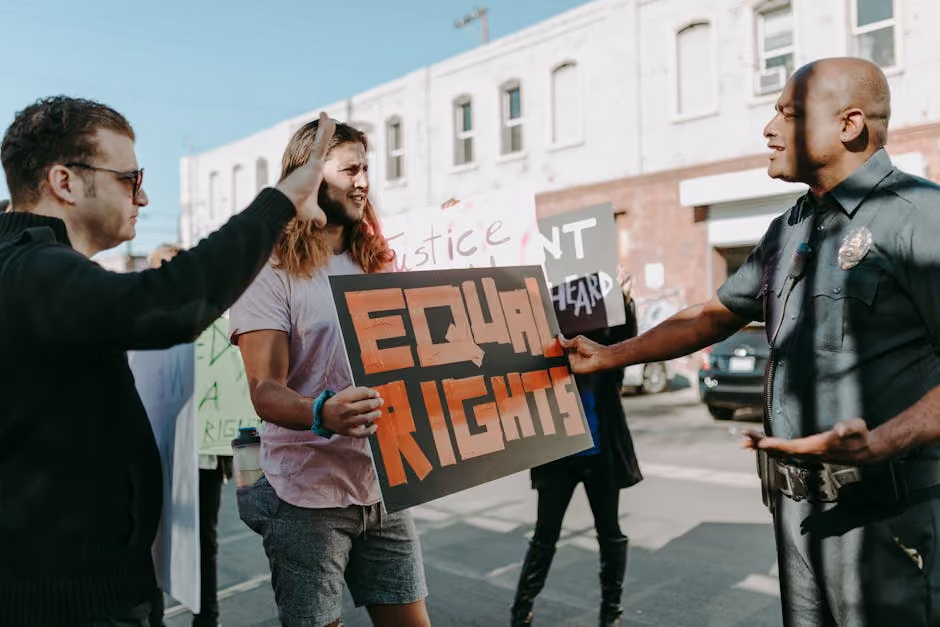
Underrepresented community voices are crucial for creating a society where everyone has the opportunity to be heard and seen. These voices often belong to marginalized groups, including racial and ethnic minorities, LGBTQ+ individuals, people with disabilities, and those from low-income backgrounds. They face unique challenges and barriers, making their representation and inclusion crucial for fostering equity and social justice.
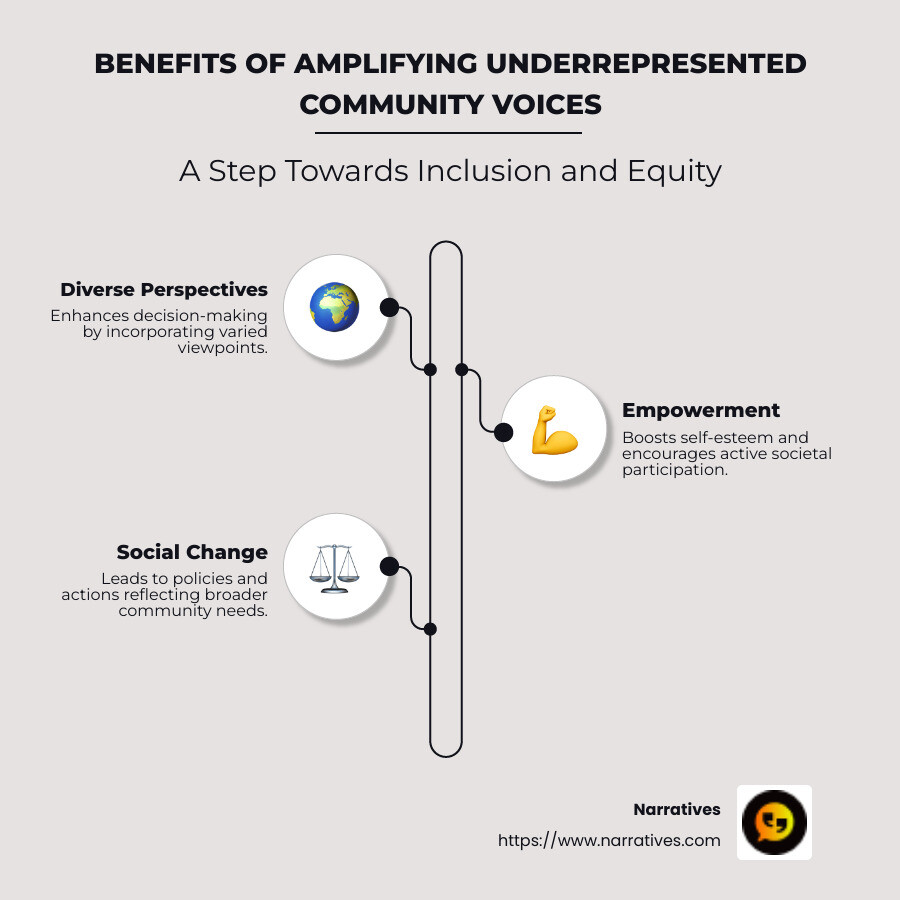
Diverse Perspectives: Bringing in voices from underrepresented communities enriches decision-making with a variety of perspectives that might otherwise be overlooked.
Empowerment: Giving these communities a platform can boost self-esteem and encourage active participation in societal change.
Social Change: Amplifying marginalized voices can lead to policies and actions that more accurately reflect the needs and interests of the broader community, promoting positive change.
By prioritizing these voices, we not only strengthen our communities but also pave the way to a more inclusive and equitable future.
Understanding Underrepresented Community Voices
Understanding underrepresented community voices is key to fostering a society that values inclusivity and equality. These voices, often from marginalized groups, offer unique perspectives and experiences that are vital for meaningful community engagement and effective decision-making.
Diverse Perspectives
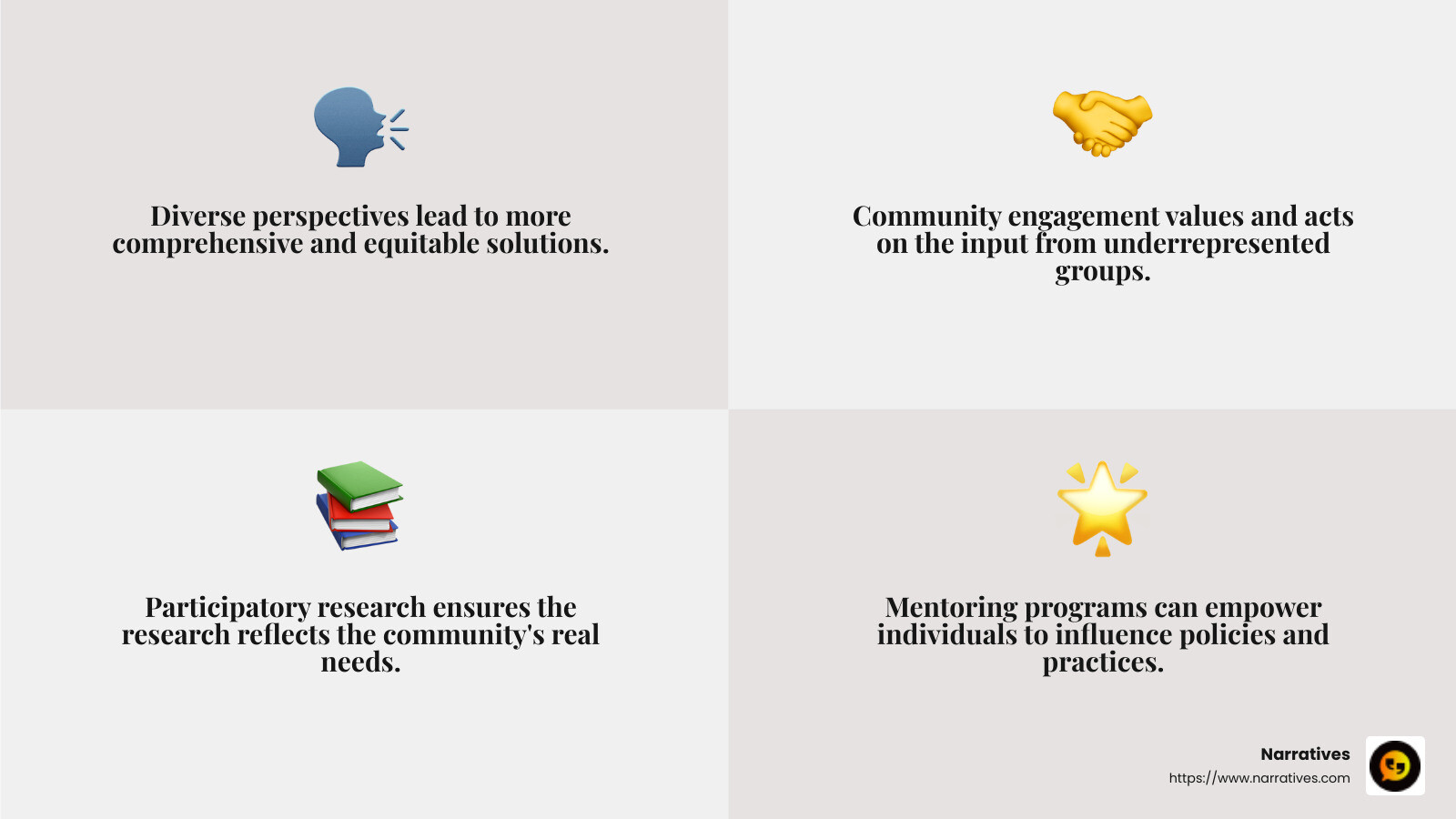
When we talk about diverse perspectives, we're talking about the different ways people view the world based on their unique backgrounds and experiences. For example, a policy decision might look one way to a person from a majority group and entirely different to someone from an underrepresented group. By incorporating these varied viewpoints, we can create solutions that are more comprehensive and equitable.
In the field of media, for instance, authentic portrayals of Latino characters in shows like Coco and Jane the Virgin have been both commercially successful and critically acclaimed. These successes highlight the importance of embracing diverse narratives in storytelling.
Community Engagement
Community engagement involves actively involving underrepresented groups in conversations and decisions that affect them. This means not just listening to their voices but also valuing and acting on their input.
One effective way to engage communities is through participatory research, where community members collaborate in the research process. This approach ensures that the research reflects the community's real needs and perspectives rather than imposing external assumptions.
Inclusion
Inclusion goes beyond just having a seat at the table; it's about ensuring that every voice is heard and valued. For example, mentoring programs can play a pivotal role in fostering inclusion. By connecting individuals with mentors who can guide and support them, these programs help build confidence and provide access to networks and resources that might otherwise be unavailable.
Mentoring also helps individuals develop their own voices, empowering them to become leaders within their communities. This empowerment can lead to significant social change, as those who have been marginalized begin to influence policies and practices that affect their lives.
By prioritizing underrepresented community voices, we not only enrich our societal fabric but also ensure that everyone has the opportunity to contribute to and benefit from the collective progress. This approach is essential for building a future where equity and justice are at the forefront.
Amplifying Underrepresented Voices
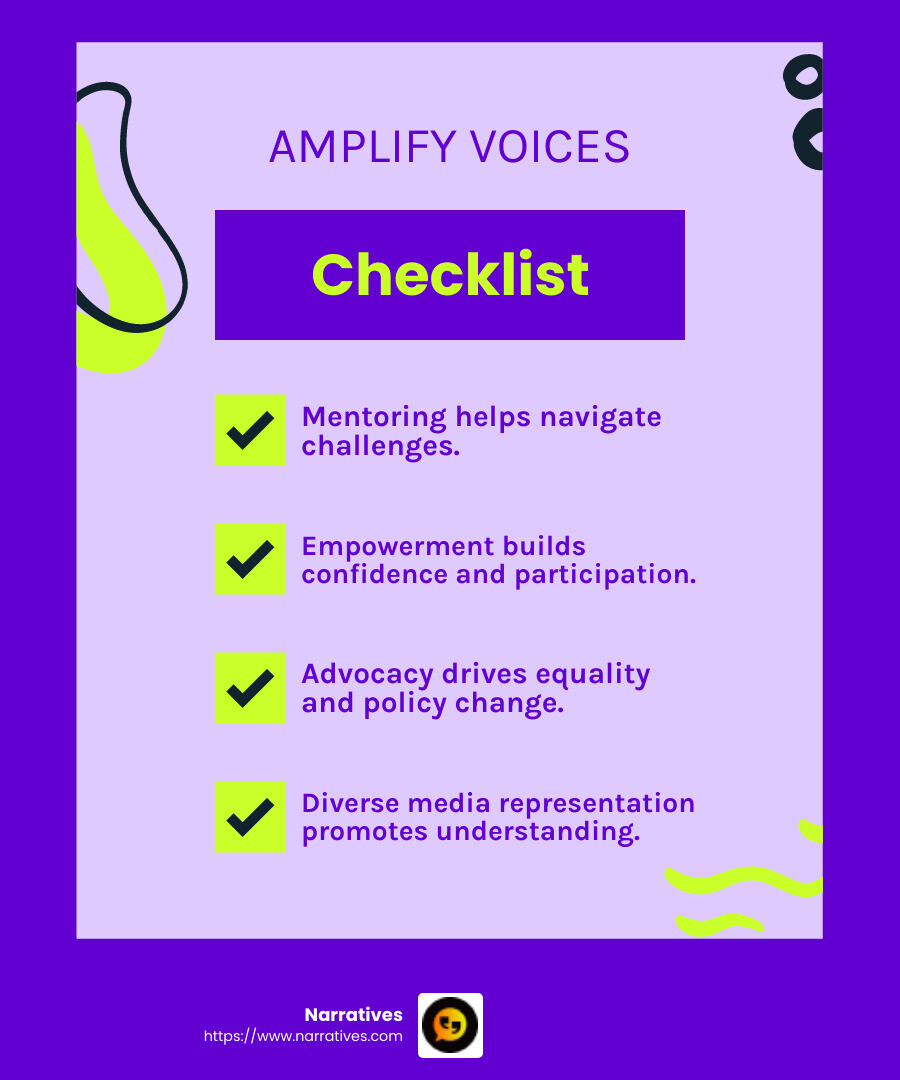
To truly amplify underrepresented community voices, we must focus on mentoring, empowerment, and advocacy. These elements are crucial for ensuring that marginalized groups have the tools and opportunities they need to make their voices heard.
Mentoring
Mentoring is a powerful tool for empowering individuals from underrepresented communities. By providing guidance, support, and access to networks, mentors can help mentees steer challenges and seize opportunities. A mentor acts as a role model, showing what’s possible and offering practical advice on how to achieve personal and professional goals.
For instance, organizations like Girls Who Code, led by Reshma Saujani, have successfully used mentoring to inspire young women to pursue careers in technology. This not only helps individuals but also contributes to diversifying fields traditionally dominated by majority groups.
Empowerment
Empowerment involves giving people the confidence and resources they need to take control of their lives. When individuals feel empowered, they are more likely to participate in their communities and advocate for change.
Mentoring plays a significant role in empowerment by building self-esteem and encouraging personal growth. As mentees gain confidence, they are more likely to speak up and share their unique perspectives, contributing to a richer, more inclusive community dialogue.
Advocacy
Advocacy is about taking action to support a cause or policy. For underrepresented communities, advocacy can be a way to fight for equality and justice. It involves raising awareness, influencing public opinion, and pushing for policy changes that reflect the needs and interests of marginalized groups.
One effective strategy is to amplify these voices through media and storytelling. For example, featuring diverse characters and stories in films and television can challenge stereotypes and promote a deeper understanding of different cultures and experiences. As seen with media successes like Coco and Jane the Virgin, authentic representation can lead to both critical and commercial success.
By focusing on mentoring, empowerment, and advocacy, we can help lift underrepresented community voices. This not only benefits the individuals involved but also enriches society as a whole by fostering a more inclusive and equitable environment.
Next, we will explore strategies for incorporating underrepresented voices into decision-making processes, ensuring that these voices are not just heard but also acted upon.
Strategies for Incorporating Underrepresented Voices
To ensure underrepresented community voices are truly heard and valued, we need to adopt effective strategies. This involves community consultations, participatory research, and leveraging social media.
Community Consultations
Community consultations are a way to actively involve underrepresented groups in decision-making processes. By organizing forums, workshops, or town hall meetings, community members can share their insights and concerns directly. This method ensures that diverse perspectives are considered and that solutions are custom to the actual needs of the community.
For example, the PARS Equality Center uses community consultations to empower Persian-speaking immigrants, providing them with a platform to express their needs and contribute to community initiatives.
Participatory Research
Participatory research involves community members as active participants in the research process. Unlike traditional research methods, where subjects are merely observed, participatory research engages them in designing and conducting the study. This approach ensures that the research reflects the community's real issues and priorities.
A study by Wineburg et al. demonstrated the power of participatory methods in education. By involving students in evaluating digital content, the study highlighted the importance of active participation in learning and decision-making.
Social Media
Social media is a powerful tool for amplifying underrepresented community voices. Platforms like Twitter, Instagram, and Facebook enable individuals to share their stories, connect with others, and raise awareness about important issues. Social media can democratize the conversation, allowing even those with limited resources to reach a wide audience.
For instance, the hashtag movements like #BlackLivesMatter and #MeToo have shown how social media can drive social change by bringing attention to systemic issues and mobilizing support across the globe.
By integrating these strategies—community consultations, participatory research, and social media—we can ensure that underrepresented voices are not only heard but also influence decision-making and policy development. This leads to more equitable and inclusive communities.
Next, we'll discuss the benefits of elevating underrepresented voices and how these efforts can lead to significant social change.
Benefits of Elevating Underrepresented Voices
Elevating underrepresented community voices can have profound impacts on health equity, policy influence, and social change. Let's explore how empowering these voices can transform communities and societies.
Health Equity
When underrepresented communities are given a platform, it leads to better health outcomes. Community engagement ensures that healthcare policies and programs address specific needs. For example, when community voices are considered, healthcare providers can tailor services to cultural and linguistic needs, improving access and quality of care. The Satcher Health Leadership Institute focuses on reentry and prison health, illustrating how targeted efforts can address disparities in health access and outcomes.
Policy Influence
Incorporating diverse perspectives in policy-making leads to more inclusive and effective policies. When policies reflect the needs of all community members, they are more likely to succeed. Participatory research and community consultations empower individuals to contribute to policy development. As a result, decisions are informed by those who are directly affected, leading to policies that are equitable and just.
Social Change
Amplifying underrepresented voices can drive significant social change. When communities speak up, they challenge existing norms and advocate for justice and equality. Social media movements like #BlackLivesMatter have shown how powerful collective voices can be in fighting systemic injustices. By elevating these voices, we can foster a society that values diversity and inclusivity.
Elevating underrepresented community voices is not just about being heard—it's about making meaningful change. When these voices influence health policies, drive social justice initiatives, and shape societal norms, they pave the way for a more equitable future.
In the next section, we'll address some frequently asked questions about the impact of mentoring and social media on empowering underrepresented communities.
Frequently Asked Questions about Underrepresented Community Voices
How can mentoring empower underrepresented communities?
Mentoring is a powerful tool for empowering underrepresented community voices. It provides guidance, support, and opportunities for personal and professional growth. Mentors act as role models and advocates, helping individuals steer challenges and overcome barriers.
Through mentoring, people from marginalized groups gain access to networks, resources, and knowledge that might otherwise be out of reach. This support boosts self-esteem and encourages individuals to develop their own voices, becoming leaders in their communities. For example, programs like Defy Ventures help individuals with past convictions turn their lives around through entrepreneurship, demonstrating the transformative power of mentorship.
Why is it important to include underrepresented voices in research?
Including underrepresented voices in research is crucial for achieving health equity and developing inclusive policies. Participatory research involves community members in the research process, ensuring that studies address the unique needs and challenges of marginalized groups.
When underrepresented voices are part of research, it leads to more accurate data and better outcomes. For instance, the Satcher Health Leadership Institute emphasizes the importance of considering community perspectives in health studies to tackle disparities effectively. This approach ensures that findings are relevant and applicable to those who need them most.
What role does social media play in amplifying underrepresented voices?
Social media is a vital platform for amplifying underrepresented community voices. It provides a space for marginalized groups to connect, share experiences, and advocate for change. Platforms like Twitter have given rise to movements such as #BlackLivesMatter, highlighting the power of collective voices in driving social change.
Hashtags act like keywords, making it easier to find and join conversations. This visibility raises awareness and fosters community engagement. Social media also serves as a tool for advocacy, allowing underrepresented voices to reach wider audiences and influence public discourse.
By leveraging social media, individuals and communities can push for justice, equality, and inclusion, ensuring their voices are heard and valued.
Conclusion
At Narratives, we believe in the power of underrepresented community voices to drive meaningful change. Our mission is to partner with non-profits and purpose-driven organizations to lift these voices through digital storytelling. By focusing on high-quality, emotionally resonant multimedia content, we help non-profits share their impact stories in ways that inspire action and build trust.
Digital storytelling is more than just sharing stories; it's about creating connections. When we highlight the struggles and triumphs of underrepresented communities, we open the door to empathy and understanding. This approach not only raises awareness but also empowers communities to take charge of their narratives, fostering a sense of ownership and pride.
Our non-profit partnerships are at the heart of what we do. By collaborating with organizations dedicated to social impact, we amplify stories that might otherwise go unheard. These partnerships are crucial for bringing diverse perspectives to the forefront and ensuring that all voices are part of the conversation.
As we continue to build our brand, we aim to own storytelling-related keywords, differentiating ourselves through content that focuses on non-profit partnerships and community-driven storytelling. Our blog content is a long-term investment, designed to rank for high-intent keywords and build consistent, organic traffic. This strategy supports our goal of increasing visibility and generating leads.
When many voices are still silenced, we are committed to breaking the silence and ensuring that every story is told. Together with our partners, we strive to create a more inclusive and equitable society, one story at a time.


.avif)