Video Strategy Unleashed: How to Create Content That Captivates

Video creation strategy is at the heart of successful modern storytelling. Tapping into the power of video not only amplifies your mission but also strengthens audience engagement, which is essential for non-profits aiming to make a difference.
Here's a quick look at how video marketing can lift your efforts:
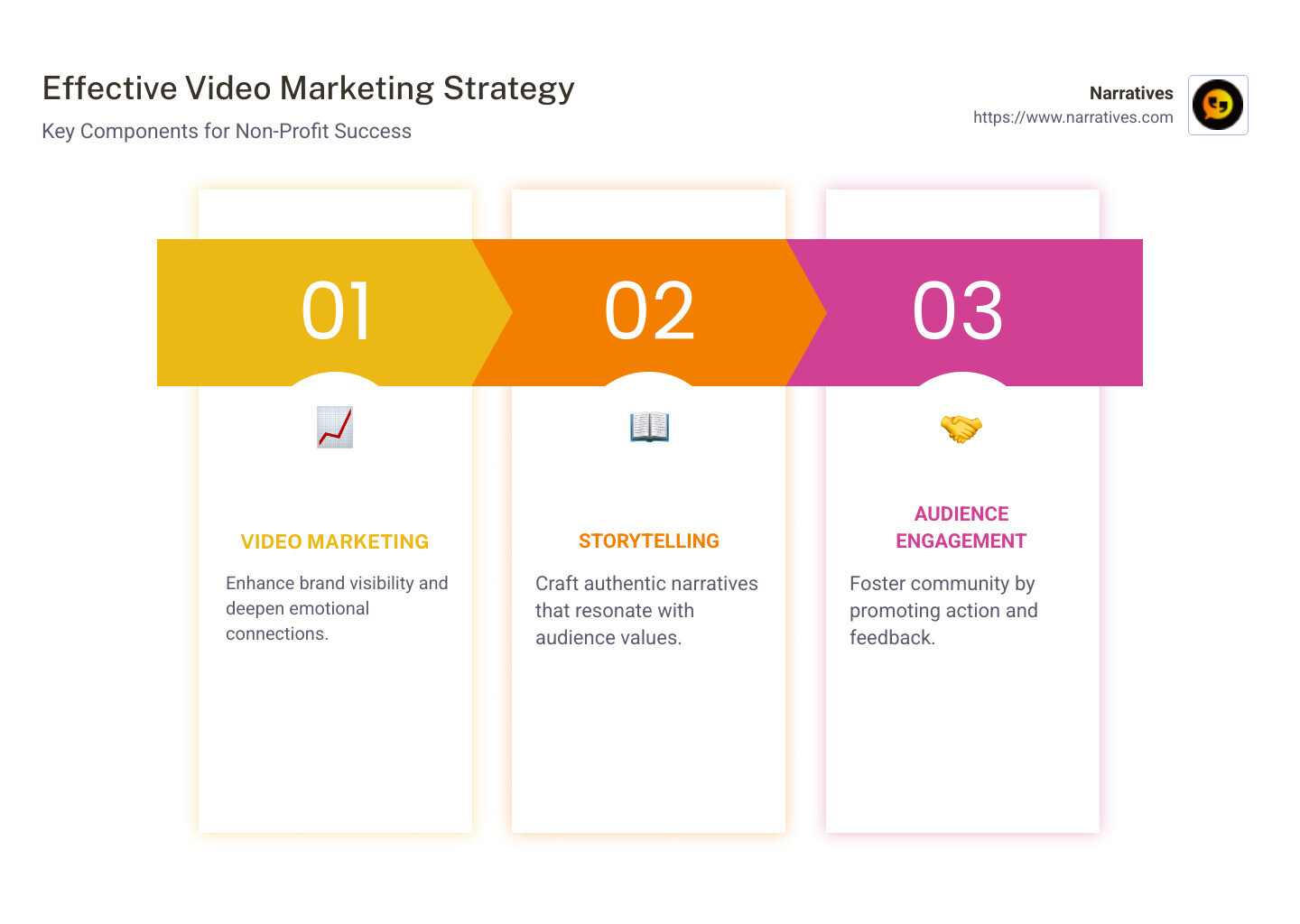
- Video Marketing: Use video content to improve brand visibility and deepen emotional connections.
- Storytelling: Craft authentic and compelling narratives that resonate with your audience’s values and aspirations.
- Audience Engagement: Foster a community by creating content that prompts action and feedback.
By focusing on these core aspects, you can transform your communication approach and achieve measurable impacts like increased donations, improved awareness, and community growth.
Key terms for video creation strategy:
Understanding Your Target Audience
To create a video creation strategy that truly resonates, you must first understand your audience. This means diving deep into audience research to gather insights that inform your content creation. Let's break it down.
Audience Research
Start by gathering data about your current and potential audience. Use surveys, social media analytics, and feedback forms to collect information. Focus on demographics, interests, and behaviors. This data will form the foundation of your strategy.
Consider this: Knowing that a large portion of your audience is interested in environmental issues allows you to tailor content around sustainability. This not only makes your content more relevant but also increases engagement.
Building a Buyer Persona
A buyer persona is a fictional representation of your ideal viewer. It's a composite sketch based on real data and educated guesses about your audience's motivations, challenges, and goals.
To build a buyer persona, ask questions like:
- What are their age, gender, and occupation?
- What are their main interests and hobbies?
- What challenges do they face that your organization can help solve?
Creating detailed personas helps you craft messages that speak directly to the needs and desires of your audience. This ensures your videos are not just seen, but remembered.
Gaining Audience Insights
Audience insights are the nuggets of wisdom you gain from analyzing your data. They help you understand not just who your audience is, but what makes them tick.
For example, if analytics show that your audience engages more with short-form content on weekdays, you can adjust your posting schedule accordingly. Understanding these patterns allows you to meet your audience where they are, increasing the chances of your message being received.
"The only way to ensure your videos resonate with your audience is to deeply understand them."

By focusing on audience research, building buyer personas, and gaining insights, you're not just creating videos—you're crafting experiences that resonate and inspire action. This is the essence of a successful video creation strategy.
Crafting a Video Creation Strategy
Creating a video creation strategy is like building a roadmap. It guides you from concept to execution, ensuring your content is engaging and purposeful.
Content Planning
Content planning is the backbone of your strategy. Start by setting clear objectives. Do you want to raise awareness, educate, or drive action? Your goals will shape your content.
Next, create a content calendar. This helps you stay organized and consistent. Plan your topics, formats, and posting schedule. Consistency is key in building a loyal audience.
Consider repurposing existing content. Do you have blog posts or reports? Transform them into engaging videos. This saves time and maximizes your resources.
Storytelling Framework
A compelling story is at the heart of every great video. To craft a narrative that captivates, follow a storytelling framework:
Hook: Grab attention in the first few seconds. This is crucial, as viewers decide quickly whether to continue watching.
Problem: Present a challenge or issue that resonates with your audience. Make it relatable and relevant to their interests.
Solution: Offer a solution or insight. This is where your organization shines, showing how you can help resolve the problem.
Call to Action: End with a clear call to action. Encourage viewers to visit your website, share your video, or join your cause.
This framework ensures your videos are structured and impactful, driving viewers to take action.
Aligning with Brand Messaging
Your videos should reflect your brand’s voice and values. Consistency in messaging builds trust and recognition. Align your visuals, tone, and style with your brand guidelines.
For example, if your brand is known for being innovative and bold, your videos should mirror these traits. Use dynamic visuals and engaging storytelling to convey your message.
Incorporating these elements into your video creation strategy will help you produce content that not only reaches your audience but also resonates with them. Up next, we'll explore the different types of video content that can be especially powerful for non-profits.
Types of Video Content for Non-Profits
In non-profits, video content is a game-changer. It’s a powerful way to connect with supporters, showcase your mission, and drive action. Let's explore some of the most effective types of videos for non-profits.
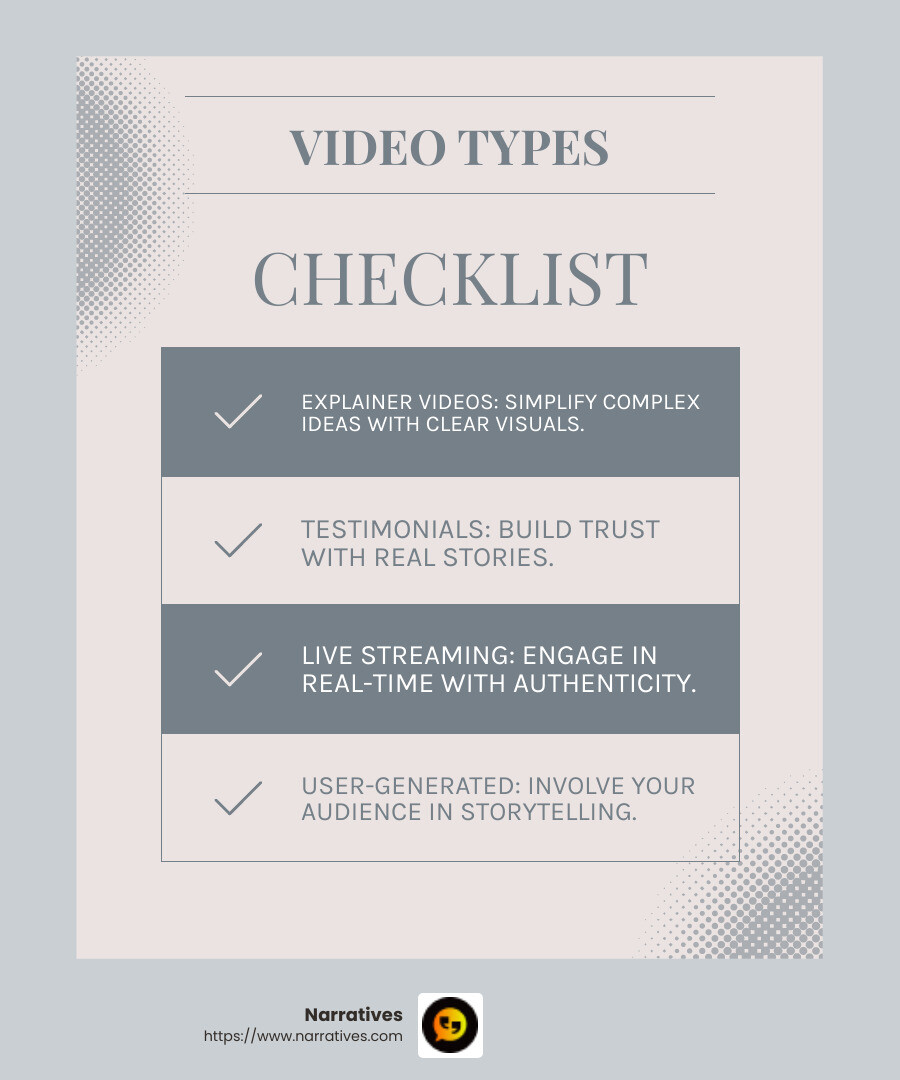
Explainer Videos
Explainer videos are short, engaging pieces that clarify your mission or a specific project. They break down complex ideas into simple, digestible content.
Imagine a short animated video that shows how your organization provides clean water to communities. With visuals and clear narration, explainer videos can highlight the impact of your work and show donors exactly where their money goes.
Testimonials
Nothing builds trust like hearing from real people. Testimonial videos feature stories from those who have benefited from your work. These videos create an emotional connection, showcasing the real-world impact of your efforts.
For example, a video featuring a community member talking about how your services changed their life can be incredibly powerful. It humanizes your mission and encourages others to support your cause.
Live Streaming
Live streaming brings immediacy and authenticity to your content. It allows you to engage with your audience in real-time, making them feel part of your mission.
Consider live streaming a fundraising event or a behind-the-scenes look at your daily operations. This can foster a sense of community and transparency, encouraging viewers to take action and support your cause.
User-Generated Content
User-generated content (UGC) is a goldmine for non-profits. It involves your audience in your storytelling, making them active participants in your mission.
Encourage supporters to create and share videos about why they support your organization. This not only provides authentic content but also expands your reach as these videos are shared within their networks.
Why These Types Matter
Each of these video types plays a unique role in your video strategy. They help convey authenticity, build trust, and engage your audience on a deeper level. By incorporating these into your video creation strategy, you can amplify your message and make a bigger impact.
Up next, we'll explore how to optimize video content for different platforms, ensuring your message reaches the right audience.
Optimizing Video Content for Different Platforms
Creating great video content is just the beginning. The next step is ensuring your videos reach and resonate with your audience. This means optimizing your content for each platform's unique environment and audience preferences.
Platform-Specific Strategies
Different platforms cater to different types of content and audiences. Here’s a quick guide to help you tailor your video creation strategy to each platform:
YouTube: Known as the second-largest search engine, YouTube is ideal for longer, in-depth content. Use descriptive titles and detailed descriptions with relevant keywords to improve findability. Incorporate engaging thumbnails and playlists to keep viewers on your channel longer.
Instagram: Here, visuals are king. Focus on eye-catching, short videos. Use Instagram Stories and Reels to post more casual, behind-the-scenes content. Don’t forget hashtags—they’re crucial for reaching a broader audience.
Facebook: Facebook favors videos that spark engagement. Consider using live video to interact with your audience in real time. For regular posts, keep videos short and include captions, as many users watch videos without sound.
TikTok: This platform thrives on creativity and trends. Short, snappy videos that align with current trends can gain traction quickly. Use popular sounds and hashtags to increase the visibility of your content.
LinkedIn: As a professional network, LinkedIn is best for thought leadership and educational content. Post videos that demonstrate expertise, such as case studies or industry insights, to engage a professional audience.
SEO Optimization
Optimizing your video content for search engines is crucial for increasing visibility. Here are some tips:
Keywords: Conduct keyword research to understand what terms your audience is searching for. Use these keywords naturally in your video titles, descriptions, and tags.
Captions and Transcripts: Including captions not only makes your content accessible but also provides additional text for search engines to crawl. Transcripts can be included in the video description for further SEO benefits.
Thumbnails: Create custom thumbnails that are visually appealing and relevant to the video content. A compelling thumbnail can significantly increase click-through rates.
Social Media Distribution
Once your video is optimized, it’s time to distribute it across social media platforms. Here’s how to do it effectively:
Timing: Post your videos when your audience is most active. Each platform has peak times, which you can determine through analytics tools or platform-specific insights.
Engagement: Encourage viewers to like, comment, and share your videos. Engage with your audience by responding to comments and fostering a community around your content.
Cross-Promotion: Share your video content across multiple platforms to maximize reach. For example, post a teaser on Instagram Stories with a link to the full video on YouTube.
By tailoring your content to each platform and focusing on SEO and distribution, you can ensure your videos reach the right people and make a lasting impact.
Next, we'll dive into leveraging analytics for video success, helping you refine your strategy and understand what works best for your audience.
Leveraging Analytics for Video Success
Once your video content is out in the world, the real work begins: understanding how it performs. This is where video analytics comes into play. By analyzing performance metrics, you can gain valuable audience insights and refine your strategy for even greater success.
Understanding Video Analytics
Video analytics involves tracking various metrics to see how your content is doing. Here are key metrics to focus on:
Views: The number of times your video has been watched. It’s a basic indicator of reach but doesn’t tell the whole story.
Watch Time: This shows how long viewers are watching your video. A higher watch time suggests engaging content.
Engagement: Includes likes, comments, shares, and other interactions. High engagement indicates that your audience is connecting with your content.
Click-Through Rate (CTR): Measures how often people clicked on your video after seeing the thumbnail. A higher CTR means your title and thumbnail are effective.
Conversion Rate: If your video has a call to action, such as signing up for a newsletter, this metric shows how many viewers took that action.
Gaining Audience Insights
With analytics, you can learn more about your audience:
Demographics: Find who is watching your videos—age, gender, location. This helps tailor future content to your audience's preferences.
Viewing Behaviors: Understand when and where your audience watches your videos, which can inform your posting schedule.
Drop-Off Points: Identify where viewers stop watching. This can highlight areas for improvement in your content.
Using Analytics to Refine Your Strategy
Once you have your data, it's time to put it to use:
Experiment and Adjust: Use insights to test different types of content, formats, and posting times. Adjust based on what works best.
Focus on What Works: If a certain type of video performs well, consider creating more content in that style or on that topic.
Improve Engagement: Use feedback from comments and interactions to make your content more engaging and relevant.
Optimize for Future Videos: Apply learnings about keywords, titles, and descriptions to improve SEO for future uploads.
By leveraging video analytics, you can continuously improve your video creation strategy, ensuring your content not only reaches but resonates with your audience.
Next, we’ll address frequently asked questions about video creation strategy, providing you with practical tips to start your journey.
Frequently Asked Questions about Video Creation Strategy
How do I start a video creation strategy?
Starting a video creation strategy can seem daunting, but it all begins with understanding what your audience wants. This is where keyword research comes in. By identifying the terms and phrases your audience is searching for, you can tailor your content to meet their needs. This ensures your videos are not only seen but also valued.
Set clear content goals. Ask yourself: What do you want your videos to achieve? Whether it's raising awareness or driving donations, having clear objectives will guide your content creation process.
What types of videos are most effective for non-profits?
Non-profits thrive on emotional storytelling. Videos that tell a compelling story can create a deep connection with viewers, turning them into advocates for your cause. Impact stories are particularly effective. They showcase real-life examples of how your organization is making a difference.
Consider using user-generated content. Encourage your community to share their experiences with your organization. This not only provides authentic content but also fosters a sense of involvement and ownership among your supporters.
How can video content improve SEO?
Videos can significantly boost your site's search visibility. Search engines love content that keeps users engaged, and videos do just that. High engagement metrics—like watch time and shares—signal to search engines that your content is valuable.
Integrate videos into your website to improve SEO. Use relevant keywords in your video titles and descriptions to improve searchability. Videos can also increase the time visitors spend on your site, reducing bounce rates and improving rankings.
By focusing on these elements, you can craft a video creation strategy that not only captivates but also converts. Next, we’ll explore different types of video content suitable for non-profits.
Conclusion
At Narratives, we believe in the transformative power of digital storytelling. Our mission is to help non-profits and purpose-driven organizations amplify their voices through engaging and emotionally resonant video content. By focusing on non-profit partnerships, we aim to lift underrepresented voices and highlight impactful stories that inspire action and build trust.
The key to successful digital storytelling lies in understanding your audience and crafting a video creation strategy that resonates with them. This involves not only creating compelling content but also optimizing it for various platforms to maximize reach and engagement. Our approach is to integrate storytelling with strategic content planning, ensuring that each video serves a purpose and aligns with your organization's goals.
We understand that non-profits often face unique challenges in gaining visibility and driving engagement. That's why we focus on creating videos that showcase real-life impact stories and foster a sense of community and involvement among supporters. By doing so, we help organizations not only tell their stories but also connect with their audiences on a deeper level.
To learn more about how Narratives can help your organization harness the power of digital storytelling, visit our service page and find how we can support your mission.
In conclusion, a well-crafted video creation strategy is a powerful tool for non-profits looking to increase visibility, engage audiences, and drive meaningful change. By partnering with Narratives, you can ensure your stories are told in a way that captivates and inspires. Together, let's release the potential of digital storytelling for the greater good.

.avif)