The Art of Nonprofit Video Storytelling: Engage and Inspire

Engaging Hearts and Minds: The Power of Video Storytelling Non-Profits
Video storytelling non-profits have open uped a powerful way to engage, inspire, and raise awareness for their causes. By tapping into the visual and emotional appeal of videos, non-profits can connect with audiences in more profound ways than traditional methods.
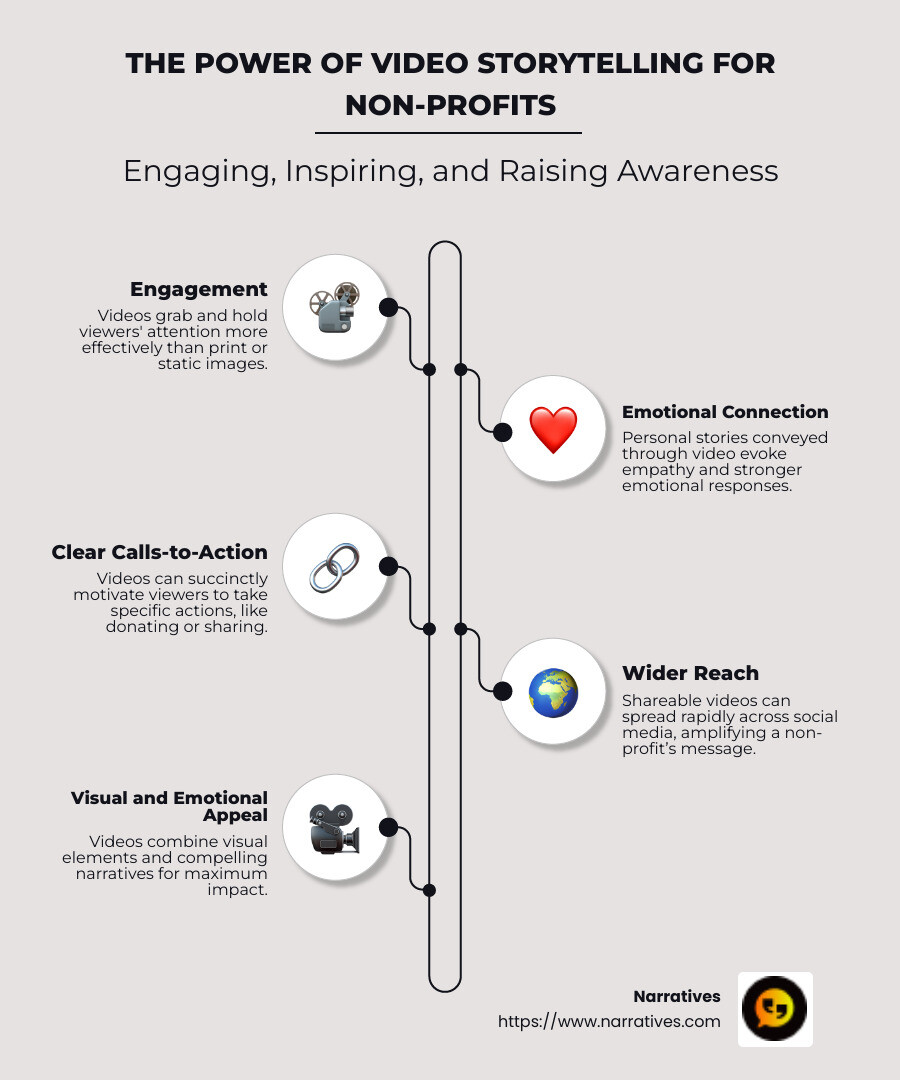
Here’s a quick answer for anyone interested in how video storytelling works for non-profits:
- Engagement: Videos grab and hold viewers' attention more effectively than print or static images.
- Emotional Connection: Personal stories conveyed through video evoke empathy and stronger emotional responses.
- Clear Calls-to-Action: Videos can succinctly motivate viewers to take specific actions, like donating or sharing.
- Wider Reach: Shareable videos can spread rapidly across social media, amplifying a non-profit’s message.
Today's digital world favors content that is visually engaging and emotionally compelling. Videos are a key tool for non-profits aiming to amplify their mission and storytelling potential.
The Power of Video Storytelling for Nonprofits
Video storytelling is a game-changer for nonprofits. It creates emotional connections that drive engagement and inspire action. Let's explore how this works.
Emotional Connection
Stories stick with us. They're remembered up to 22 times more than facts alone. When nonprofits share real-life stories through video, they tap into this power. People relate to the emotions and struggles of others. This makes them more likely to care about the cause and take action.
For example, a video from a food pantry might show a local family finding hope through community support. This personal touch helps viewers connect emotionally, making them more likely to remember the cause and contribute.
Engagement
Video grabs attention. When attention spans are shrinking, a well-crafted video can hold viewers' interest longer than text or images. This engagement is crucial for nonprofits aiming to spread their message widely.
Platforms like YouTube and social media make it easy to share videos. When viewers are engaged, they’re more likely to share these videos, expanding the nonprofit's reach. The viral nature of video content can amplify a nonprofit's message far beyond its initial audience.
Donations
At the heart of nonprofit work is the need to inspire action, often in the form of donations. Video storytelling can significantly boost this effort. A compelling video with a clear call-to-action can motivate viewers to donate, volunteer, or support the cause in other ways.
For instance, the organization Charity: Water effectively uses video to illustrate the urgency of the global water crisis. By showing the real impact of donations, they encourage viewers to contribute and become part of the solution.
In conclusion, video storytelling isn't just about telling a story—it's about creating a movement. By engaging viewers emotionally and inspiring them to act, nonprofits can harness the full power of video to further their mission.
Key Elements of Effective Nonprofit Video Storytelling
Creating a compelling video for nonprofits involves more than just pointing a camera and pressing record. It's about crafting a story that resonates with viewers on a deep level. To achieve this, focus on three key elements: narrative arc, relatable characters, and compelling visuals.
Narrative Arc
A strong narrative arc is the backbone of any great story. In nonprofit videos, this means taking viewers on a journey. Start with a compelling introduction that hooks your audience. Introduce a challenge or problem that needs solving. This creates tension and keeps viewers invested.
For example, in a video about a community health initiative, begin with the struggle of accessing healthcare. Then, demonstrate how your organization steps in to make a difference.
The narrative arc should conclude with a resolution. Show the impact of your work and how viewers can be part of the solution. This not only wraps up the story but also motivates viewers to take action.
Relatable Characters
Characters are the heart of your story. They give a face to your cause and help viewers connect on a personal level. Choose real people who have been impacted by your organization. This could be a beneficiary, a volunteer, or even a donor.
For instance, Children’s Healthcare of Atlanta shares stories of kids who have received treatment. By focusing on individual stories, they create a personal connection with viewers.
When featuring characters, make sure to get their permission and present their stories authentically. This builds trust and credibility with your audience.
Compelling Visuals
Visuals are a powerful tool in storytelling. They can convey emotions and messages more effectively than words alone. Use a mix of video footage, photos, and graphics to create a dynamic viewing experience.
For example, The Girl Effect uses animation and data to highlight the urgency of their cause. This approach quickly grabs attention and makes complex issues more understandable.
Uniform branding is also crucial. Ensure that your visuals align with your organization's identity by incorporating your logo, colors, and fonts. This consistency strengthens your brand and makes your message more memorable.
Incorporating these elements—narrative arc, relatable characters, and compelling visuals—into your video storytelling can transform your nonprofit's message into a powerful call to action. With these tools, you can engage viewers, inspire them to support your cause, and ultimately drive real change.
5 Tips for Successful Nonprofit Video Storytelling
Creating impactful videos for nonprofits requires more than just a camera. It's about crafting a story that moves people to act. Here are five tips to make your video storytelling non-profits efforts successful:
1. Know Your Target Audience
Understanding who you are speaking to is crucial. Create a profile of your ideal viewer. Consider their age, interests, and values. This helps tailor your message to resonate with them.
For example, if your nonprofit serves at-risk youth, your audience might include parents, educators, and community leaders. Knowing this helps you craft a story that speaks to their concerns and interests.
2. Craft a Strong Narrative Arc
A well-structured story keeps viewers engaged. Start with a compelling introduction to grab attention. Introduce a challenge or problem, then show how your organization addresses it. This creates tension and keeps viewers invested.
Conclude with a resolution that highlights the positive impact of your work. For instance, show how a community has improved thanks to your efforts. This not only wraps up the story but also motivates viewers to get involved.
3. Include a Clear Call-to-Action
Every nonprofit video should end with a strong call-to-action (CTA). This tells viewers what you want them to do next. Whether it's donating, volunteering, or sharing the video, make sure your CTA is clear and compelling.
Use emotive language to create urgency. Phrases like "Join us in making a difference today" or "Help end hunger now" inspire immediate action.

4. Consider Professional Production
While anyone can create a video with a smartphone, professional production can lift your story. High-quality sound, lighting, and editing make your video more engaging and credible.
Consider partnering with a video production company that specializes in nonprofit storytelling. They can help you craft a polished and impactful video that resonates with your audience.
5. Appeal to Emotions
Emotions are powerful motivators. Use your video to evoke feelings that connect viewers to your cause. Share personal stories, like Mutual Rescue's video about Kylie and Liza, to demonstrate the impact of your work.
By tapping into emotions, you can inspire viewers to support your cause. People are more likely to act when they feel a personal connection.
Implementing these tips can transform your nonprofit videos into powerful storytelling tools. By knowing your audience, crafting a strong narrative, including a clear call-to-action, considering professional production, and appealing to emotions, you can engage viewers and inspire them to support your mission.
Top Nonprofit Video Storytelling Examples
When it comes to video storytelling non-profits, some organizations stand out for their ability to engage and inspire viewers. Let's explore a few notable examples:
United Way: A Vision for Stronger Neighborhoods
United Way’s Neighborhood Network Initiative beautifully illustrates how a community can come together to solve its most pressing issues. By focusing on one specific neighborhood in Austin, the video highlights the collective effort of residents to improve their community. This story not only resonates with locals but also sparks a national conversation on community development.
Mutual Rescue: Kylie & Liza
Mutual Rescue captures hearts with the touching story of Kylie, a young girl with terminal cancer, and her rescue kitten, Liza. This video showcases the profound impact animals can have on human lives. Through personal interviews and home videos, viewers are moved to support animal rescue efforts. The final call-to-action encourages viewers to rescue, volunteer, or donate to local shelters, making the video both emotional and actionable.
World Relief: Al’s Story
World Relief sheds light on the refugee crisis with Al's story. After fleeing violence in Iraq, Al and his family find safety in the United States. The video documents their journey and the challenges they faced. By humanizing the refugee experience, World Relief inspires viewers to join their mission in helping refugees rebuild their lives. This story effectively breaks down stigmas and fosters empathy and understanding.
Charity: Water
Charity: Water excels in illustrating the impact of clean water projects around the world. Their storytelling often includes interactive maps and personal stories from the communities they serve. By showing how access to clean water transforms lives, they make a compelling case for support. Their transparent approach, where donors see exactly where their money goes, builds trust and inspires continued contributions.
Union Gospel Mission
Union Gospel Mission focuses on providing pathways out of homelessness. By sharing success stories, like that of James, a participant in their recovery program, they highlight the transformative power of their work. Viewers are drawn into James' journey from homelessness to stability, creating a strong emotional connection. These stories not only engage current donors but also attract new supporters by showcasing real, positive change.
These examples demonstrate the power of storytelling in nonprofit videos. By focusing on real-life stories and emotional connections, these organizations effectively engage their audiences and drive support for their causes.
Frequently Asked Questions about Video Storytelling Non-Profits
How can nonprofits best tell their stories through video?
Nonprofits can tell their stories most effectively through video by crafting a narrative arc that hooks viewers from the start. This arc should begin with a relatable character facing a challenge, such as a community lacking clean water or a family overcoming hardship with support from the nonprofit. By focusing on real people and their experiences, videos can create an emotional connection that words alone might not achieve.
Using compelling visuals is key. Show, don’t just tell. For example, footage of a child drinking clean water for the first time or a community working together to build a school can be incredibly powerful. These visuals help viewers feel like they are part of the story, motivating them to take action.
What makes a good nonprofit video story?
A strong nonprofit video story combines a compelling narrative with relatable characters. The story should have a clear beginning, middle, and end, guiding the viewer through the journey. Characters should be individuals who viewers can identify with or feel empathy for, such as a volunteer making a difference or a beneficiary whose life has been transformed.
The story should also include supporting details to add depth. For instance, share statistics or facts that highlight the scale of the issue, but use them sparingly to avoid overwhelming the viewer. The goal is to engage the audience emotionally and intellectually, leaving them inspired to support the cause.
Why is video storytelling important for nonprofits?
Video storytelling is crucial for nonprofits because it boosts engagement and raises awareness. Videos have the power to reach a wide audience and can be easily shared across social media platforms, expanding the nonprofit's reach. This increased visibility can lead to more donations and volunteer support.
Moreover, by telling authentic stories, nonprofits can build trust with their audience. When people see real impacts and hear genuine testimonials, they are more likely to believe in the organization's mission and contribute to its efforts. Video storytelling transforms passive viewers into active supporters, driving positive change in the community.
Conclusion
In digital storytelling, nonprofits have a unique opportunity to make a significant social impact. By using the power of video, organizations can share their stories in a way that truly engages and inspires action.
At Narratives, we believe in the transformative power of storytelling. Our mission is to help nonprofits amplify their voices and connect with their audience on a deeper level. Through high-quality, emotionally resonant content, we aim to lift underrepresented voices and highlight the incredible work being done in communities around the world.
Video storytelling is more than just a tool—it's a bridge that connects people to causes they care about. By focusing on relatable characters and compelling narratives, nonprofits can create content that not only informs but also moves people to take action. Whether it's increasing donations, attracting volunteers, or raising awareness, video storytelling can drive meaningful change.
As we continue to explore the possibilities of digital storytelling, we invite nonprofits to join us in this journey. Together, we can tell stories that inspire, build trust, and create a lasting impact. Let's leverage the power of storytelling to make the world a better place, one video at a time.

.avif)