Crafting Compelling Tales: Best Practices in Storytelling

Best practices in storytelling are vital for anyone looking to captivate and inspire an audience. By following proven methods, you can transform your message into a powerful narrative. Here’s a quick start guide:
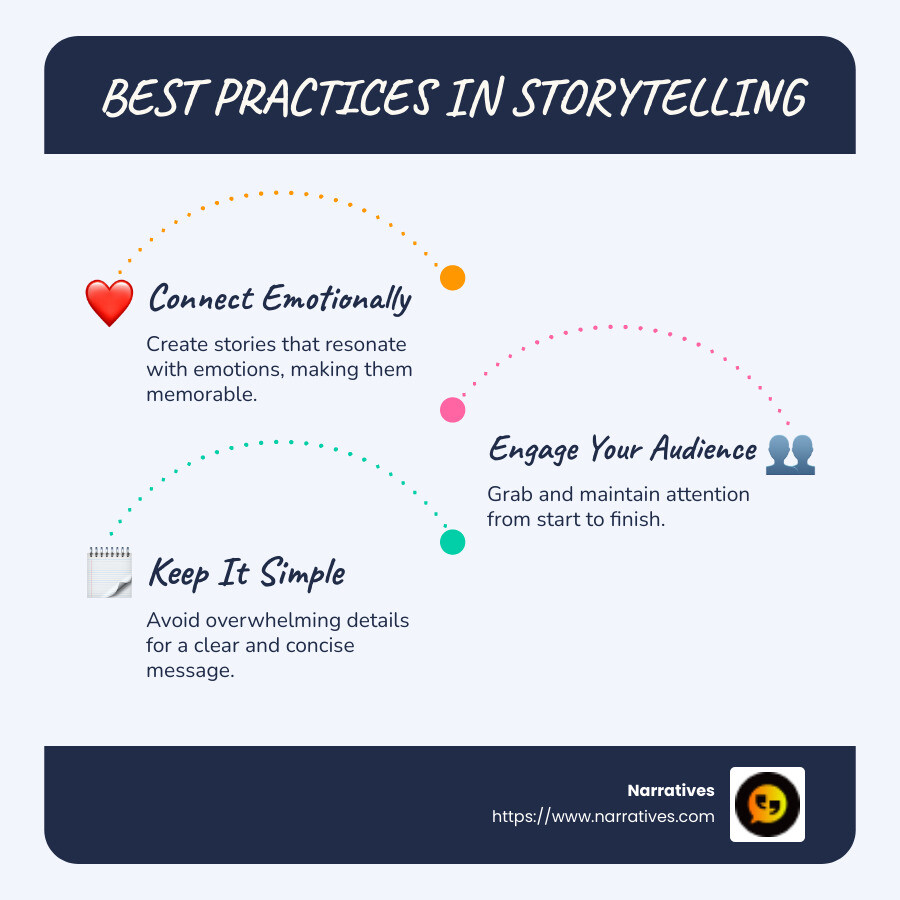
- Connect Emotionally: Stories need to stir emotions; they're what people remember.
- Engage Your Audience: A great story grabs attention and keeps people interested until the end.
- Keep It Simple: Clear and concise storytelling avoids overwhelming details.
Storytelling holds a critical role in communication. It's an ancient tool that shapes our understanding and connects us on a human level. When done right, storytelling becomes the heartbeat of effective engagement.
In our information-saturated world, stories stand out as guides of meaning. They cut through noise by providing context, crafting emotional bonds, and inspiring action. As Lewis Carroll put it, "No, no! The trips first, explanations take such a dreadful time." Stories invite us to start on a journey, offering not just facts but experiences that resonate personally.
For non-profits and advocacy organizations, mastering storytelling is key to amplifying their mission. It's more than just conveying a message; it's about lighting a spark that drives change. We'll guide you through essential practices that improve the impact of every story you tell.
Simple best practices in storytelling word guide:
Understanding the Essence of Storytelling
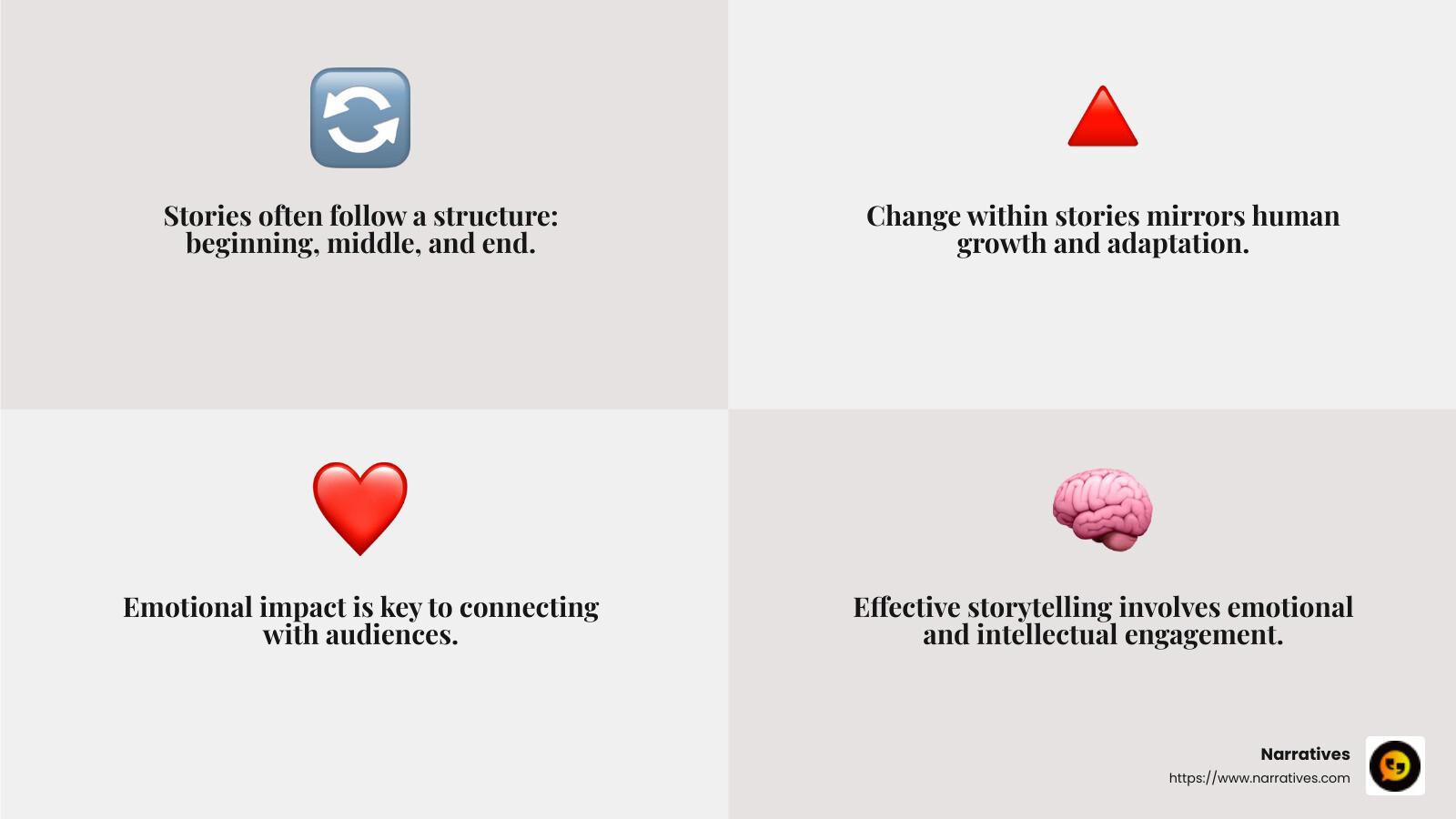
Storytelling is more than just a sequence of events; it's a journey that invites listeners to experience change and emotion. At its core, storytelling is structured around a beginning, middle, and end, which provides a framework that audiences can easily follow.
Beginning-Middle-End
Every compelling story starts with a strong beginning that captures attention. This is where the scene is set, characters are introduced, and the stage is prepared for what's to come. The middle of the story is where tension builds. This is the heart of the narrative, where challenges arise and characters are tested. Finally, the end delivers resolution, providing closure and often a powerful message or lesson.
Think of a classic tale where the hero starts on a journey, faces obstacles, and ultimately overcomes them. This structure not only keeps the audience engaged but also ensures the story is memorable.
Change
Change is an essential element of storytelling. It reflects the change that occurs within the narrative. Whether it's a character evolving, a situation shifting, or a new understanding emerging, change provides depth and meaning. Stories that showcase change resonate because they mirror the human experience of growth and adaptation.
As Sarah Austin Jenness from The Moth explains, stories are not just about what happens, but about how those events transform us. They make us laugh, cry, and hope, reminding us that change is a universal experience.
Emotional Impact
Emotions are the heartbeat of storytelling. They are what connect the audience to the story on a personal level. A story with emotional impact is one that lingers in the minds of listeners long after it's told. It evokes feelings, whether joy, sadness, anger, or inspiration, and prompts reflection or action.
To craft a story with emotional impact, focus on the human elements. Share the thoughts and feelings of characters, describe the stakes involved, and highlight moments of vulnerability or triumph. As Meg Bowles suggests, exploring moments of vulnerability can lead to powerful storytelling that truly resonates.
By understanding and applying these elements—beginning-middle-end, change, and emotional impact—you can craft stories that not only engage but also inspire and transform.
Best Practices in Storytelling
Crafting a compelling story isn't just about stringing words together. It's about creating a narrative that resonates, engages, and moves the audience. Here are some best practices in storytelling to guide you:
Purpose of the Story
Every story needs a clear purpose. Before you start, ask yourself: What do I want my audience to feel or do after hearing this story? Whether it's to inspire action, provoke thought, or simply entertain, having a clear purpose will shape your narrative and keep it focused.
Tip: If your story is a call to action, consider starting with a conclusion and then supporting it with key points. This approach works especially well for busy audiences who need the bottom line upfront.
Personal Connection
A story without personal connection is like a song without a melody. To truly engage your audience, find an element in the story that you can relate to. If you're not personally invested, your audience probably won't be either.
Example: Imagine telling a story about overcoming challenges. Share your own struggles and triumphs to forge a bond with your listeners. This vulnerability makes your story authentic and relatable.
Simplicity
Simplicity is key to keeping your audience engaged. Avoid overloading your story with unnecessary details that could bog it down. Instead, focus on the essentials that drive the narrative forward.
Advice: Keep cutting details until you can't remove any more without losing clarity. Less is often more. If your hero's eyes are sparkling, we don't need to know their color.
Conflict
Conflict is the engine of a good story. It creates tension and keeps the audience on the edge of their seats. Whether it's a clash of ideas, a personal struggle, or an external challenge, conflict adds depth and interest.
Insight: Conflict is what makes stories memorable. As noted in the research, people are drawn to tales of struggle because they mirror the challenges we face in real life. Accept conflict in your storytelling to captivate your audience.
By focusing on these elements—purpose, personal connection, simplicity, and conflict—you can craft stories that not only capture attention but also leave a lasting impact.
Techniques for Effective Storytelling
Creating a captivating story isn't just about the content; it's also about how you present it. Mastering techniques for effective storytelling can transform a simple narrative into a memorable experience. Let's explore some key techniques that can lift your storytelling.
Chronological vs. Non-Chronological
While our lives unfold chronologically, the best stories often don't. Chronological storytelling can be straightforward, but it might not always be the most engaging. Instead, consider a non-chronological approach. This allows you to start with a high-impact moment and then fill in the backstory as needed.
Tip: Begin with a pivotal scene that hooks your audience. Once they're invested, you can weave in the details and context that led to that moment. This technique keeps the audience curious and eager to know more.
Starting in Action
One of the most effective ways to grab attention is to start your story in the middle of the action. This technique, known as in medias res, plunges your audience directly into the excitement or conflict.
Example: Instead of beginning with a lengthy introduction, start with a dramatic event or a critical decision point. This immediate immersion captures your audience's interest and sets the stage for a dynamic narrative.
Detail Management
Balancing detail is crucial in storytelling. Too few details can leave your audience confused, while too many can overwhelm them. The key is to include just enough to paint a vivid picture without stalling the story's momentum.
Advice: Ruthlessly edit your story. Keep trimming details until only the essential elements remain. For instance, if describing a character, focus on traits that are relevant to the story's development rather than exhaustive physical descriptions.
By skillfully employing these techniques—non-chronological structure, starting in action, and managing details—you can create stories that are not only engaging but also memorable. These methods help you maintain a strong narrative flow and keep your audience eagerly anticipating what's next.
Storytelling for Non-Profits and Purpose-Driven Organizations
When it comes to storytelling for non-profits, the approach needs to be as purposeful as the mission itself. Here are some best practices to ensure your storytelling not only resonates but also drives action.
Audience-Specific Narratives
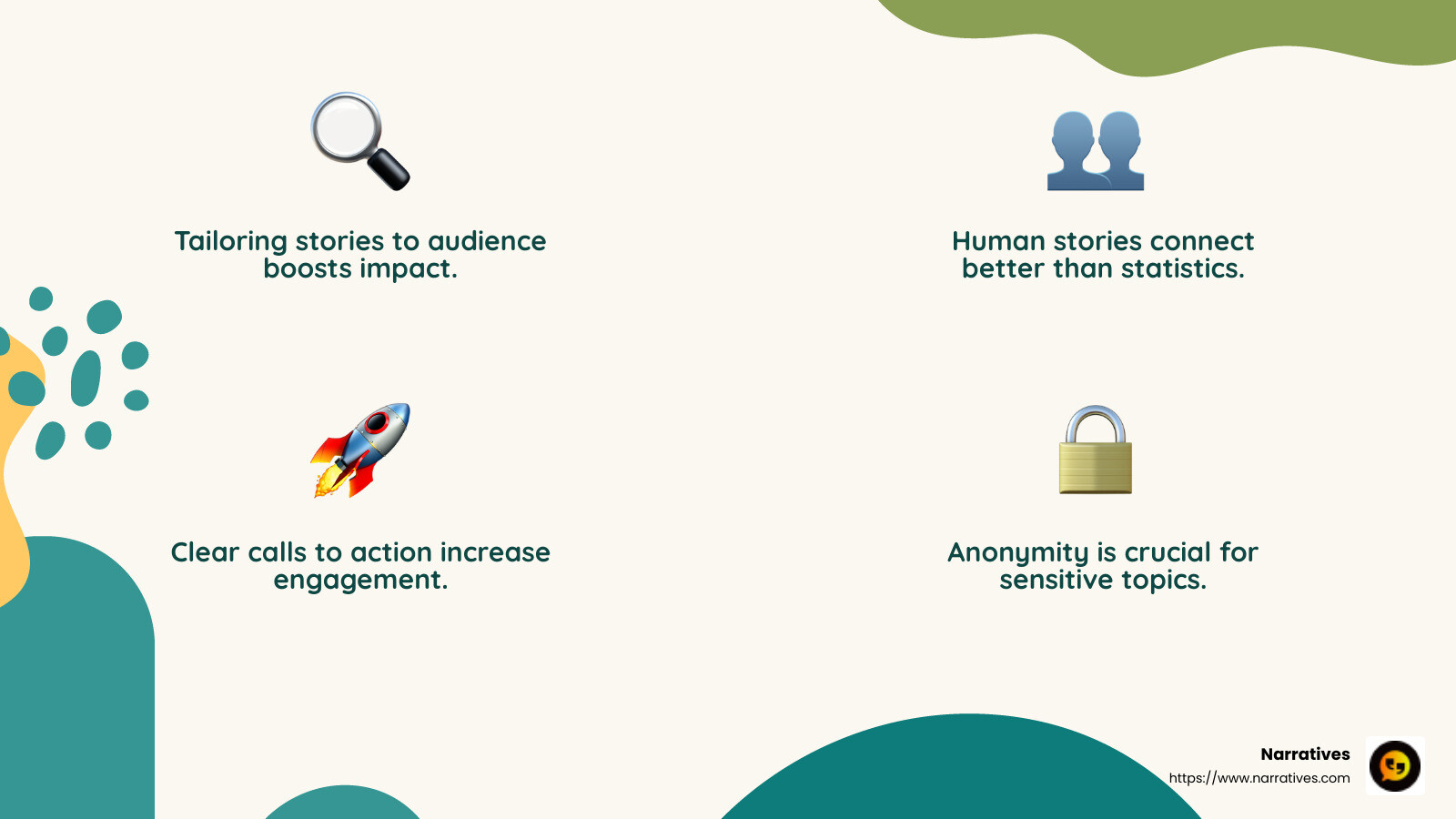
Non-profits often engage diverse audiences, each with unique concerns and values. Tailoring your story to these specific groups can significantly boost its impact.
Example: If your organization is addressing homelessness, stories that highlight the journey of a single individual can resonate deeply with donors who value personal connection. In contrast, sharing broader community impact might appeal to corporate sponsors interested in systemic change.
Humanize the Story
At the heart of every compelling non-profit story is a human element. People connect with people, not abstract concepts or statistics.
Tip: Use personal anecdotes to illustrate the challenges and triumphs experienced by those your organization serves. For instance, instead of saying, "We helped 100 families," tell the story of one family. Share their struggles, their hopes, and how your organization made a difference in their lives.
Action-Oriented Messages
A powerful story doesn't just inform; it compels the audience to act. Make sure your narrative includes a clear call to action.
Advice: Whether it's donating, volunteering, or simply sharing the story, guide your audience on how they can contribute to the cause. Highlighting the tangible impact of their involvement can motivate them to take the next step.
Anonymity and Sensitivity
In some cases, the stories you want to share may involve sensitive topics or vulnerable individuals. Respecting privacy and ensuring anonymity when necessary is crucial.
Approach: Offer storytellers the option to remain anonymous or use pseudonyms. This not only protects their privacy but can also encourage more people to share their experiences. Ensure that any agreements regarding anonymity are documented and respected throughout the storytelling process.
By focusing on audience-specific narratives, humanizing stories, encouraging action, and respecting anonymity, non-profits can craft powerful tales that inspire and mobilize support for their cause.
Frequently Asked Questions about Storytelling
How to tell a good story in conversation?
Telling a great story in a conversation is about creating an emotional connection. Start by picking a story that means something to you. When you care, your listeners will too.
Engage your audience by beginning with an interesting hook or a surprising fact. Keep the story simple—focus on the main points and avoid unnecessary details. This helps maintain the flow and keeps your listeners interested.
Remember to include a beginning, middle, and end. This structure helps your audience follow along and understand the change or change that occurs in the story.
What are the qualities of a good storyteller?
A good storyteller knows how to make a personal connection with their audience. They share stories that are relatable, allowing listeners to see parts of themselves in the narrative.
Simplicity is key. Great storytellers communicate clearly and avoid overly complex language. This makes the story accessible to everyone.
They also know their audience. Tailoring stories to be audience-specific ensures that the message resonates and has the desired impact.
How can storytelling be used to persuade and motivate?
Storytelling is a powerful tool for persuasion because it taps into emotional impact. When you tell a story that stirs emotions, you're more likely to influence behavior and inspire action.
To persuade effectively, your story should align with the values and concerns of your audience. This audience-specific approach increases the chances of your message being well-received.
Include a clear call to action. A story that ends with a suggestion or an invitation to act can motivate your audience to take the next step, whether it's supporting a cause, buying a product, or changing a behavior.
By focusing on engagement, emotional connections, and simplicity, storytelling becomes an effective way to connect with others and drive change.
Conclusion
At Narratives, we believe in the transformative power of community-driven storytelling. Our mission is to amplify underrepresented voices and share stories that make a real difference in the world. We partner with non-profits and purpose-driven organizations to craft compelling narratives that inspire action, build trust, and foster social impact.
Storytelling is not just about sharing experiences; it's about creating connections that transcend boundaries. By focusing on emotional impact and personal connections, we help our partners tell stories that resonate deeply with their audiences. This approach not only raises awareness but also encourages community engagement and support.
Our commitment to ethical storytelling ensures that every voice is heard with respect and dignity. We prioritize anonymity when needed, allowing storytellers to share their truths without fear. This empowers individuals to speak out, knowing their stories will be shared responsibly.
We invite you to join us on this journey. Whether you're a non-profit looking to share your impact or an individual with a story to tell, Narratives is here to help you make your voice heard. Together, we can create stories that inspire and drive meaningful change.
Find more about how we can support your storytelling needs by visiting our Learn More page. Let's make a difference, one story at a time.


.avif)