Trust Falls: How to Strengthen Community Bonds

Building community trust is crucial for fostering strong and resilient neighborhoods that thrive on collaboration and mutual support. Without trust, communities struggle to achieve cohesion and effective engagement. Establishing this trust involves a few key elements:
- Transparency: Be open and honest about intentions and decisions.
- Consistency: Follow through on promises to build reliability.
- Inclusion: Engage diverse voices and perspectives to ensure everyone feels heard.
- Communication: Maintain open lines of dialogue to keep all stakeholders informed.
Trust acts as the glue that holds communities together, enabling them to work towards common goals and face challenges with a united front. It's more than just a nice-to-have; it's a necessity for any successful communal effort.
The landscape of trust has evolved, particularly in large urban areas where diverse populations and complex issues can either reinforce or erode communal bonds. As highlighted in recent studies, trust-building rests on relational practices and values, such as meeting people "where they are" and sharing decision-making roles.
When we accept trust, it transforms communities into places where people not only coexist but also collaborate enthusiastically to make positive changes. Trust is more than just a willingness to be vulnerable; it's a shared belief in benevolent intentions and mutual respect.
We will explore how building community trust is an essential pillar for long-term success in societal efforts, focusing on the strategies and benefits of enhancing community engagement through trust-based practices.
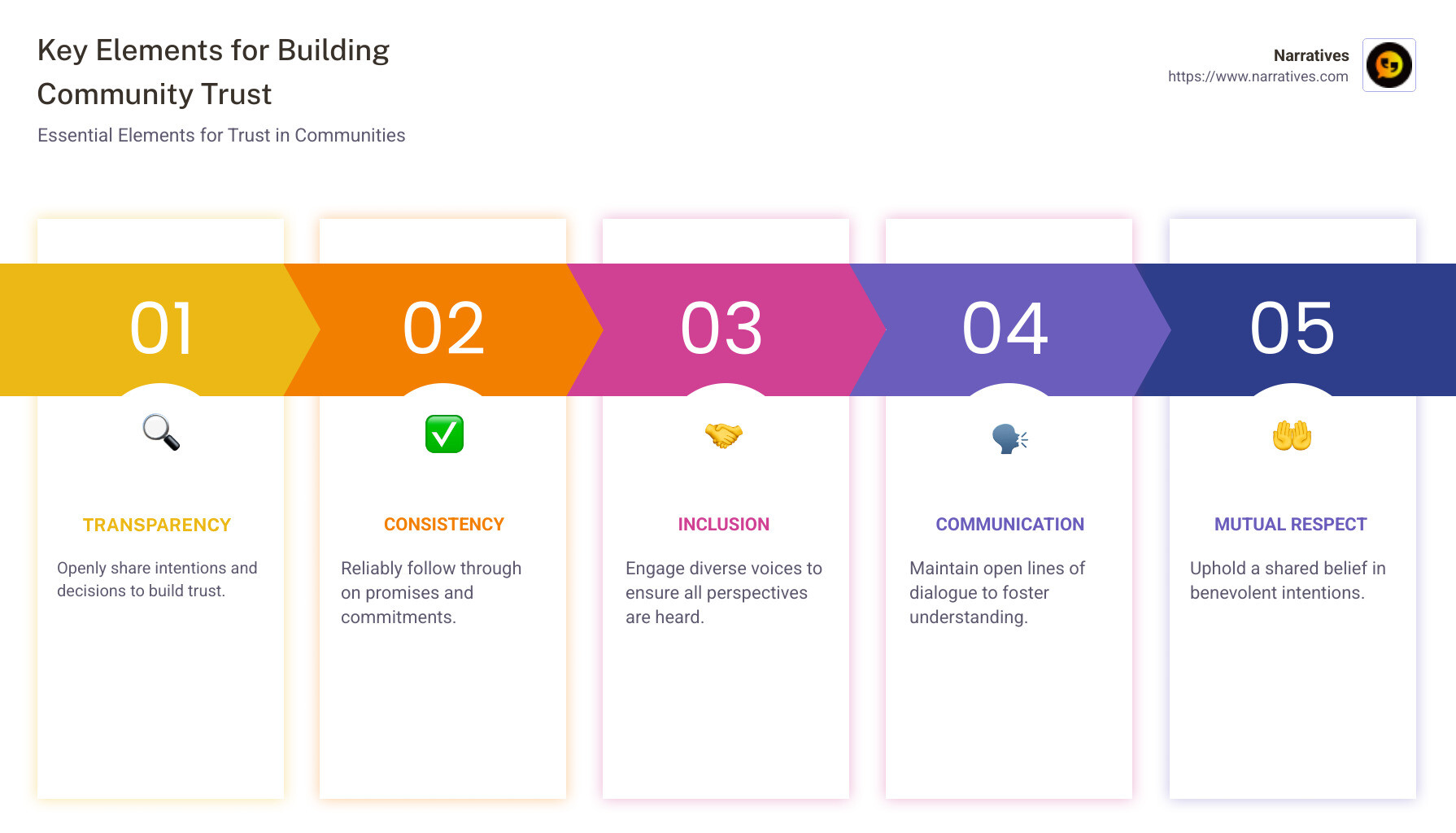
Simple Building community trust word guide:
The Importance of Building Community Trust
Building community trust is the cornerstone of strong, vibrant neighborhoods. Trust fosters community bonds, creating a network of support that can tackle challenges and seize opportunities. It's not just a feel-good concept; trust has a measurable social impact.
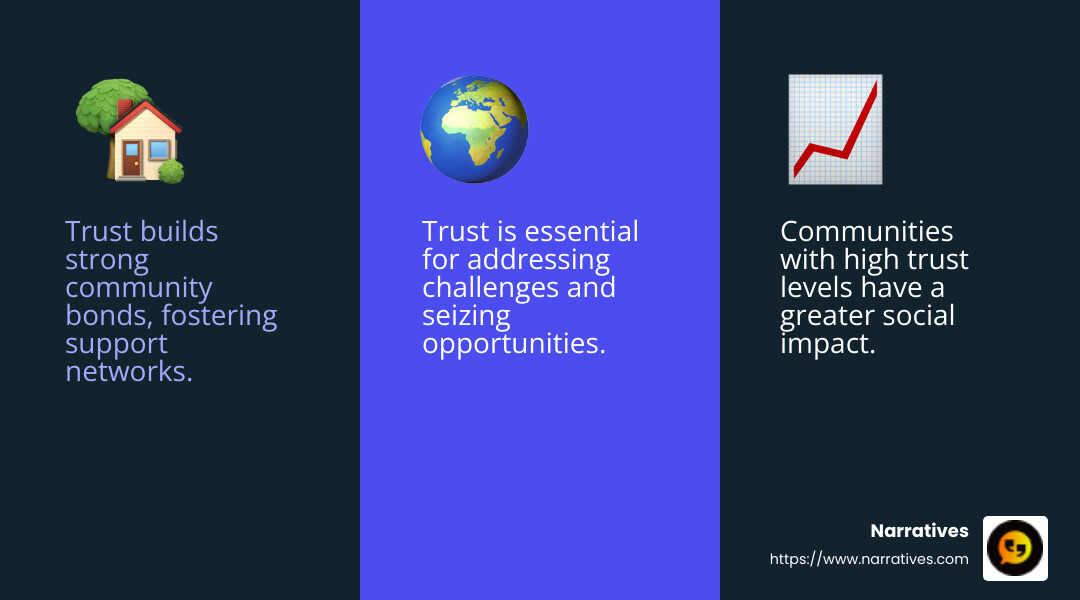
Why Trust Matters
Trust is the foundation of any successful community. It creates bonds among neighbors, bridges between different groups, and links to resources that help communities thrive. When trust is present, people feel more connected and are more likely to collaborate on initiatives that benefit everyone.
Imagine a neighborhood where people look out for each other, share resources, and work together to improve their surroundings. In such communities, trust acts as the glue that holds everything together, enabling residents to face challenges with a united front.
Community Bonds
Trust strengthens community bonds by encouraging open dialogue and cooperation. When people trust each other, they are more willing to share ideas and work collectively towards common goals. This collaboration leads to a more cohesive and supportive community, where everyone feels valued and heard.
Consider the story of a diverse urban community that, through trust-building efforts, transformed into a model of cooperation. By meeting people "where they are" and embracing shared decision-making, they created an inclusive environment that celebrated diversity and fostered unity.
Social Impact
The social impact of trust cannot be overstated. Communities with high levels of trust experience lower crime rates, better educational outcomes, and improved public health. Trust also improves economic development by attracting businesses and investments, leading to job creation and increased prosperity.
In a world of increasing diversity, building trust across different cultural and social lines is more important than ever. Scholars like Robert Putnam have noted that while diversity can make trust more elusive, it also presents an opportunity for growth and innovation. By investing time in understanding differences and finding commonalities, communities can harness the power of diversity to create a brighter future for all.
In the next section, we will dig into the Four Pillars of Trust in Communities, exploring how contractual, communication, competency, and caring trust form the bedrock of thriving neighborhoods.
Four Pillars of Trust in Communities
Building community trust hinges on four key pillars: contractual trust, communication trust, competency trust, and caring trust. Each plays a vital role in creating a community where people feel safe, respected, and valued.
Contractual Trust
Contractual trust is about keeping promises and ensuring that expectations are clear. Imagine a local government promising to fix potholes by a certain date. If they follow through, they build trust. If not, trust erodes.
In a community, when people know they can rely on others to do what they say, it creates a foundation of dependability. This trust is essential for fostering cooperation and collaboration.
Communication Trust
Communication trust is all about being open and honest. People need to know what's happening in their community and why. Clear communication helps people understand rules, support local causes, and accept change.
But it's not just about sharing information. It's also about knowing when to keep things private. Leaders who handle sensitive information with discretion build trust. On the flip side, gossip can quickly erode it.
Competency Trust
Competency trust is earned when people and organizations show they can do their jobs well. It's not enough to simply perform tasks; they must be done competently. This is especially true in areas like education, healthcare, and public safety.
Trust in competence can also grow when people admit mistakes and learn from them. This honesty shows a commitment to improvement and builds confidence in their abilities.
Caring Trust
Caring trust is the emotional side of trust. It's about showing genuine concern for others' well-being. When community leaders act with empathy and prioritize the community's best interests, they foster a sense of caring trust.
Consider a community center that offers free workshops to help residents develop new skills. This act of caring not only benefits individuals but also strengthens the community as a whole.
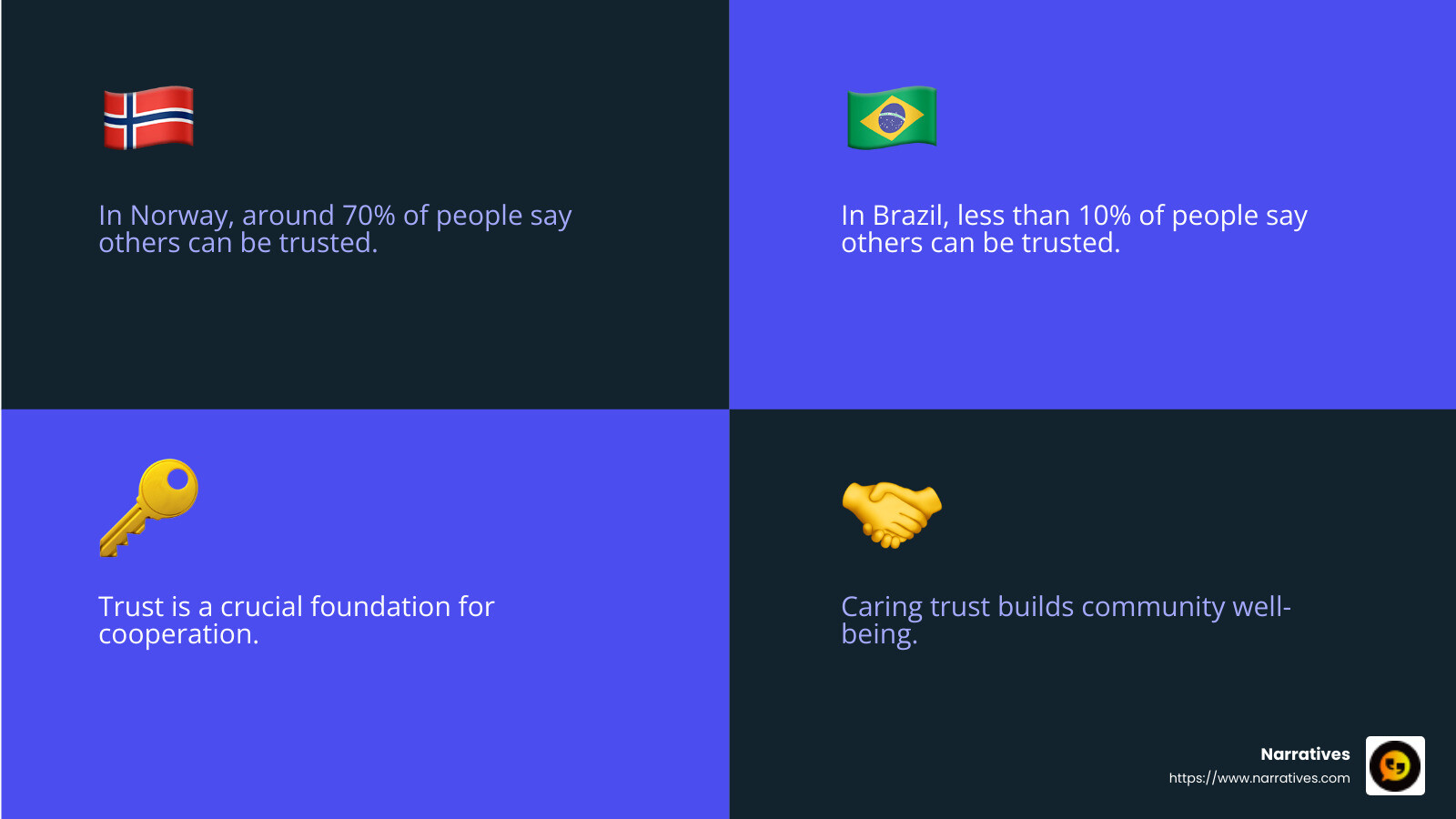
Together, these four pillars form the bedrock of a thriving community. They create an environment where people feel connected, supported, and empowered to work together for the common good.
In the next section, we'll explore strategies for building community trust, focusing on effective communication, transparency, respect, and engagement.
Strategies for Building Community Trust
Building community trust requires intentional actions and consistent effort. Here are some strategies to help foster trust within communities:
Effective Communication
Clear and open communication is the backbone of trust. When everyone understands what's happening and why, it reduces confusion and builds confidence.
Share information widely. Whether it's updates on community projects or changes in local laws, ensure that everyone has access to the same information. This can be done through newsletters, social media, or community meetings.
Listen actively. Engage with community members by asking questions and genuinely listening to their concerns. This approach not only informs leaders about community needs but also shows residents that their voices matter.
Transparency
Transparency means being honest and open about decisions and processes. It helps eliminate suspicions and builds trust.
Be upfront about intentions. Let community members know the goals and potential outcomes of projects or policies. This openness helps manage expectations and avoids misunderstandings.
Admit mistakes. If something goes wrong, acknowledge it and explain the steps being taken to fix it. Admitting errors shows integrity and a commitment to improvement.
Respect
Respect is fundamental in all interactions. It ensures that everyone feels valued and heard.
Value diverse perspectives. Encourage participation from all community members, regardless of their background. This inclusivity fosters a sense of belonging and respect.
Conduct respectful meetings. Even when disagreements arise, maintain a tone of respect and civility. This sets a positive example and encourages constructive dialogue.
Engagement
Engagement goes beyond just talking; it's about actively involving people in the community.
Create opportunities for involvement. Organize events, workshops, or volunteer opportunities that encourage participation. Repeated interactions help strengthen bonds and build trust over time.
Empower community members. Give people a voice in decision-making processes. When community members feel they have a say, they are more likely to trust the outcomes.
By focusing on these strategies, communities can create an environment where trust flourishes. This trust, in turn, leads to stronger community bonds and a more cohesive and supportive society.
We'll now dig into the challenges and solutions in building trust, including how diversity and confirmation bias play a role.
Challenges and Solutions in Building Trust
Building community trust isn't always straightforward. There are problems that can make the process tricky. Let's explore some challenges and how to tackle them.
Diversity
Diversity is a beautiful aspect of any community, but it can also make trust more elusive. As communities grow more diverse, differences in culture, language, and experiences can create misunderstandings.
- Solution: Take time to understand differences. Host events that celebrate various cultures and encourage open dialogues. This not only highlights commonalities but also helps people appreciate each other's unique backgrounds. For example, creating a local sports team that welcomes everyone promotes repeated interactions, which helps sustain trust.
Confirmation Bias
Confirmation bias can cloud judgment. People tend to favor information that confirms their existing beliefs and ignore what challenges them. This can lead to divisions and mistrust within a community.
- Solution: Foster open-mindedness. Encourage community members to seek out a variety of ideas before making decisions. This can be done through respectful meetings where all opinions are valued. By listening to different perspectives, people can break free from their biases and build a more inclusive community.
Trust Erosion
Trust can erode over time due to various factors, such as political polarization or limited engagement. This decline in trust can make community efforts less effective.
- Solution: Rebuild trust step by step. Trust is reciprocal and grows gradually. Start by showing trust in others, which will encourage them to reciprocate. Consistently demonstrate transparency and integrity in all community dealings. Admitting mistakes and being upfront about intentions can also help rebuild trust over time.
Addressing these challenges head-on can pave the way for stronger community bonds. By embracing diversity, tackling biases, and restoring trust, communities can become more resilient and cohesive, ready to face future challenges together.
In the next section, we'll answer some frequently asked questions about building community trust, diving deeper into concepts like contractual trust and the role of effective communication.
Frequently Asked Questions about Building Community Trust
What does 'contractual trust' refer to in the context of building trust?
Contractual trust is all about keeping promises and following through on commitments. It's the foundation of any strong relationship, whether between neighbors or entire communities. When people do what they say they'll do, trust builds naturally. For example, if a community group promises to publish updates about important projects in local newspapers or social media, they need to follow through. This keeps everyone informed and reassures them that their interests are being considered.
How can effective communication improve community trust?
Effective communication is key to building community trust. It ensures that everyone is on the same page and helps prevent misunderstandings. Clear communication about new or changed laws, for instance, ensures that no one unknowingly breaks them. Additionally, respectful meetings, even when conflicts arise, show that all voices are valued. By sharing information in multiple languages or through various channels, communities can make sure everyone feels included and informed, building a bridge of trust across diverse groups.
Why is trust essential for healthy, reciprocal relationships?
Trust is the glue that holds communities together. It creates bonds between neighbors, bridges between different social groups, and links communities to vital resources. Trust isn't just about feeling good; it's about making communities more effective and resilient. When trust exists, people are more likely to support each other, share resources, and collaborate on solving community issues. As Simon Sinek wisely noted, "Simply doing everything that you said you will do doesn’t mean people will trust you, it just means that you’re reliable." Trust goes beyond reliability—it's about showing care, consistency, and integrity, which encourages others to engage and reciprocate.
These elements of trust are crucial for fostering a connected and supportive community environment. By understanding and implementing these concepts, communities can thrive and overcome challenges together.
Conclusion
At Narratives, we believe that building community trust is essential for creating strong, impactful stories. Through our expertise in digital storytelling, we help non-profits and purpose-driven organizations lift underrepresented voices and share their narratives in compelling ways. By focusing on authentic, emotionally resonant content, we aim to inspire action and foster deeper connections within communities.
Digital storytelling is a powerful tool for non-profits seeking to build trust and engage their audiences. By showcasing real stories and experiences, organizations can highlight their impact and the meaningful work they do. This approach not only increases visibility but also strengthens the bonds between the organization and the community it serves.
Our partnership with non-profits centers on collaboration and mutual respect. We work closely with our partners to ensure their stories are told with accuracy and empathy. By doing so, we help them build credibility and trust with their audience, which is crucial for long-term success and social impact.
If you’re looking to strengthen your community bonds through impactful storytelling, consider partnering with us at Narratives. Together, we can create content that not only informs but also inspires and connects. Learn more about how we can help you share your story.


.avif)