From Words to Action: A Guide to Change-Making Storytelling

Change-making storytelling is not just a tool—it's a catalyst for social change. At its core, it bridges the gap between personal narratives and collective impact.
When numbers and data often dominate dialogues, storytelling brings the human element to life. It connects us, evokes empathy, and inspires action.
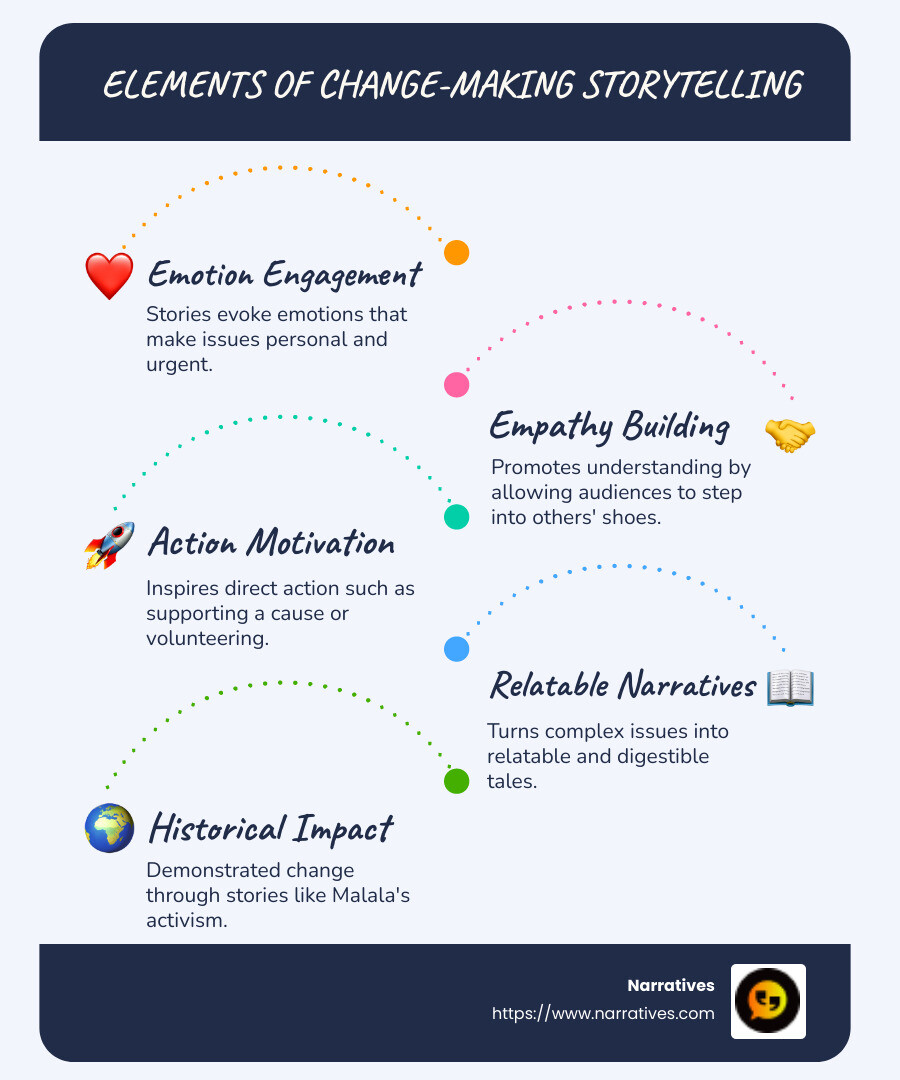
- Harnesses emotions: Unlike raw data, stories engage our emotions, making issues feel personal and urgent.
- Creates empathy: By stepping into someone else's shoes through their story, we naturally build understanding and compassion.
- Drives action: A well-told story doesn't just inform; it motivates people to act, whether by supporting a cause, volunteering, or changing behavior.
Storytelling’s roots run deep, its transformative power evident throughout history. From Malala Yousafzai's fight for girls' education to IBM's shift from hardware to services, effective narratives have driven change across various arenas.
Why is storytelling essential for social change? It offers a way to translate complex issues into relatable tales, making it easier for audiences to digest, resonate with, and ultimately, be moved to champion a cause. In our rapidly changing world, using the power of storytelling is more critical than ever.
Glossary for Change-making storytelling:
Understanding Change-Making Storytelling
Change-making storytelling is all about shifting narratives to spark mindset changes and overcome biases. It's a powerful way to reframe how people see the world and their role in it.
Narrative Shift
At the heart of change-making storytelling is the narrative shift. This means changing the dominant stories that shape our understanding of social issues. When we shift these narratives, we can change perceptions and open minds.
For example, consider how Malala Yousafzai’s story has reshaped narratives around girls' education. By sharing her personal journey, she highlighted the importance and urgency of education for all girls, leading to global awareness and action.
Mindset Change
Mindset change happens when stories help people see things differently. Stories can challenge existing beliefs and encourage new ways of thinking. They make complex issues like climate change or social justice more accessible and relatable.
When IBM transitioned from hardware to services, they used storytelling to communicate their new vision. This helped employees and customers understand and accept the change, illustrating how a compelling narrative can support organizational change.
Overcoming Biases
Stories are also powerful tools for overcoming biases. They allow us to step into someone else's shoes, fostering empathy and understanding. This is crucial for addressing stereotypes and prejudices.
A well-crafted story can dismantle preconceived notions and bring people together. By focusing on shared human experiences, storytelling bridges divides and promotes unity.
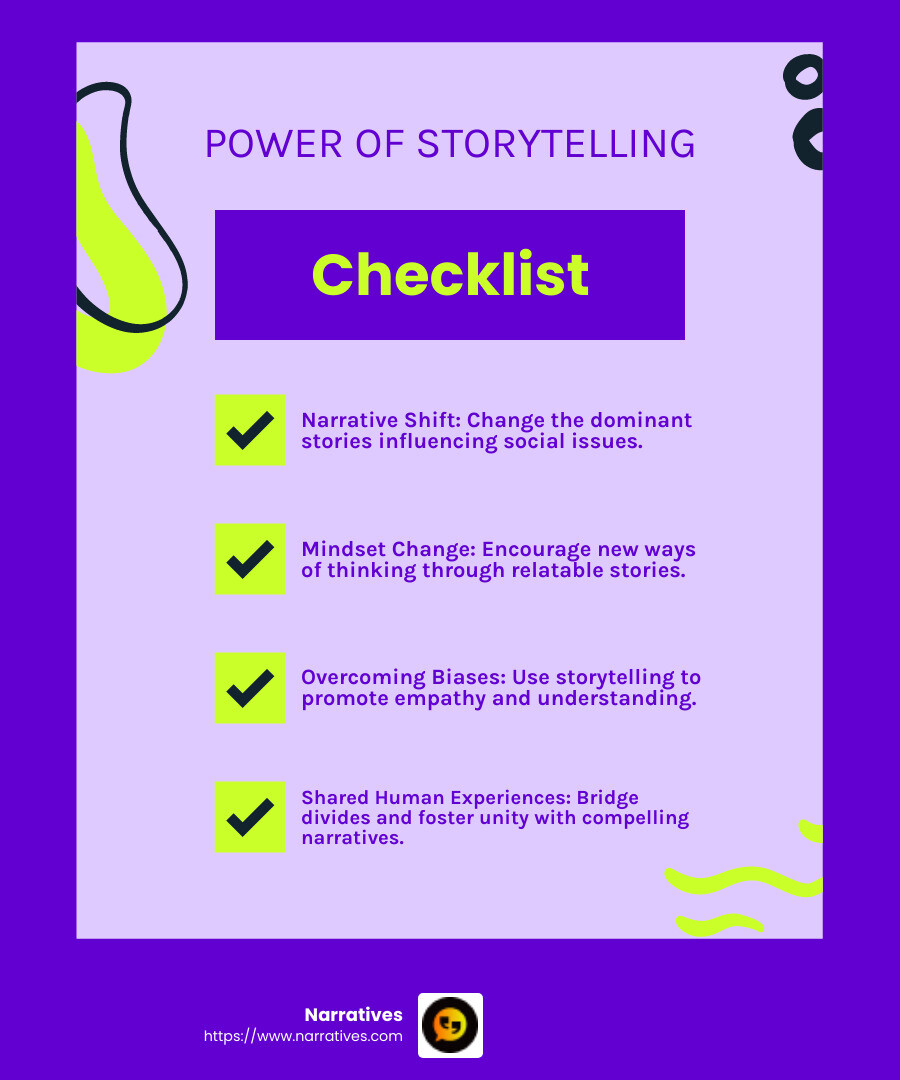
Change-making storytelling is about more than just telling stories—it's about changing the way people think and act. By shifting narratives, changing mindsets, and overcoming biases, storytelling becomes a catalyst for meaningful social change.
In the next section, we'll explore how to craft a compelling narrative, ensuring your story resonates with your audience and drives the action you seek.
Crafting a Compelling Narrative
Creating a compelling narrative is essential in change-making storytelling. It’s not just about telling a story; it’s about making sure the story resonates with your audience and prompts action. Here’s how you can do it effectively:
Audience-Specific
Your story should speak directly to your audience. Understand who they are, what they care about, and how they perceive the world. Tailor your narrative to address their specific needs and values. For example, if you're communicating with big-picture thinkers, highlight how the change aligns with broader goals. Conversely, for detail-focused individuals, ensure your narrative is rich with descriptive details and relatable protagonists.
Contextualize
Put your story in context. This means connecting the individual experiences in your story to larger social, organizational, or global issues. Contextualizing helps your audience see the relevance and urgency of the narrative. For instance, Malala Yousafzai’s story isn't just about her personal struggle; it's about the global fight for girls' education. This broader context amplifies the impact of her story.
Humanize
People connect with people, not abstract concepts. Bring your narrative to life by focusing on real individuals and their experiences. Use their journeys to illustrate the broader change you're advocating for. This human element fosters empathy and makes your story more relatable. As noted in the research, using real examples rather than abstract metaphors resonates more deeply with audiences.
Action-Oriented
A compelling narrative should inspire action. Clearly define what you want your audience to do after hearing your story. Whether it's changing a behavior, supporting a cause, or joining a movement, your call to action should be clear and achievable. This action-oriented approach ensures your story doesn’t just inform—it transforms.
Humble
Finally, be humble in your storytelling. Avoid making it about you or your organization. Instead, focus on the experiences and voices of those directly involved in the change. A humble narrative is more authentic and trustworthy, building credibility with your audience. As highlighted, authenticity is more engaging and effective than formality.
By crafting a narrative that is audience-specific, contextualized, humanized, action-oriented, and humble, you create a powerful tool for change. In the next section, we’ll dig into the specific steps to create a "sticky" story that sticks with your audience and inspires action.
Steps to Create a "Sticky" Story
Creating a "sticky" story in change-making storytelling involves several deliberate steps. These steps ensure that your story not only captures attention but also inspires action and fosters lasting change. Here’s how you can do it:
1. Reflect and Build Your Narrative Arc
Start by crafting a solid narrative arc. This arc is the backbone of your story, guiding the audience through a journey with a beginning, middle, and end. It should include a clear problem, a journey toward resolution, and an impactful conclusion. This structure helps keep your audience engaged and provides a framework for delivering your core message.
2. Identify Your Key Audience
Understand who you're speaking to. Your audience might be the general public, social innovators, or thought leaders. Knowing your audience will help you tailor your message to their interests and needs, making it more likely to resonate and stick.
3. Select Your Core Message
What is the main takeaway you want your audience to remember? Your core message should be clear and concise. It’s the essence of your story and the key idea you want to communicate. Ensure it aligns with the values and beliefs of your audience to maximize its impact.
4. Choose Your Story Type
Different stories serve different purposes. Decide whether your story is a challenge story, a big idea story, a how-to story, or an impact story. Each type has its own strengths and can be used to highlight various aspects of your message.
5. Create Your Call to Action
Your story should inspire your audience to act. Whether you want them to support a cause, change a behavior, or spread your message, your call to action must be clear and compelling. It’s the bridge between storytelling and real-world impact.
6. Select Your Story Medium
Determine the best way to tell your story. Will it be a written article, a video, an audio recording, or a spoken presentation? Each medium has its own advantages, so choose the one that best suits your audience and story type.
7. Create an Authentic and Concrete Story
Authenticity is key. Use real examples and avoid jargon. A story that feels genuine is more likely to connect with your audience on an emotional level. Highlight specific, tangible details to make the story relatable and memorable.
8. Optimize Channels for Sharing Your Story
Finally, ensure your story reaches your audience through the right channels. Whether it’s social media, newsletters, or community events, choose platforms where your audience is most active. This helps maximize the reach and impact of your story.
By following these steps, you can craft a "sticky" story that not only captivates but also drives change. In the next section, we’ll explore the role of storytelling in complex organizational change.
The Role of Storytelling in Complex Changeal Change
Change-making storytelling is not just about relaying information; it's about creating a shared vision that resonates on a human level. In the field of complex organizational change, storytelling plays a crucial role in engaging the human element, driving growth, and fostering a sense of unity.
Emphasizing the Human Element
Complex change often involves shifting an organization's culture, processes, or goals. This can be unsettling for employees, who may resist change due to fear or uncertainty. Storytelling taps into the human element by helping people understand the "why" behind the change. It connects the dots between organizational goals and individual roles, making the process more relatable and less intimidating.
Driving Organizational Growth
Storytelling is a powerful tool for organizational growth. It helps translate abstract concepts into tangible narratives that employees can relate to. For example, when IBM transitioned from a hardware-focused company to a solutions and services provider, they used storytelling to share their journey. This narrative not only explained the strategic shift but also instilled pride and a sense of belonging among employees, which is essential for growth.
Creating a Shared Vision
One of the most significant impacts of storytelling is its ability to create a shared vision. By painting a vivid picture of the future, storytelling aligns employees with the organization's mission and values. It fosters a sense of purpose and motivates individuals to work towards common goals. As stories are shared and retold within the organization, they build a collective identity that supports the change process.
The IBM Example
IBM's change story is a prime example of how storytelling can support complex change. By narrating their evolution, IBM helped employees understand their role in the company's new direction. This story was not just about past achievements but also a call to action for future endeavors. It demonstrated how storytelling can transcend resistance and create a cohesive narrative that employees are eager to be part of.
Change-making storytelling is about more than just changing processes; it's about changing hearts and minds. By engaging the human element and creating a shared vision, storytelling becomes a catalyst for successful organizational change.
In the next section, we’ll dig into how storytelling can drive social impact on a broader scale.
Storytelling for Social Impact
Malala Yousafzai: A Catalyst for Change
Malala Yousafzai's story is a remarkable example of change-making storytelling. Her journey from a young girl advocating for education in Pakistan to becoming a global icon for girls' education highlights the power of personal narratives. Malala's story is not just about her struggles and triumphs; it's a call to action for the global community to prioritize education for all children.
Building Empathy Through Diverse Experiences
Stories like Malala's help build empathy by showcasing diverse experiences and perspectives. When people hear about the challenges and triumphs of individuals from different backgrounds, it opens their minds to new possibilities and fosters a deeper understanding of global issues.
Storytelling bridges gaps and brings people together. It allows us to step into someone else's shoes and see the world through their lens. This empathy is crucial for fostering a sense of global community and driving social change.
Connecting a Global Community
In today's interconnected world, stories have the potential to reach a vast audience. Social media platforms have become powerful tools for sharing stories that might otherwise go unheard. For instance, during the Arab uprisings and conflicts in regions like Gaza and Ukraine, social media amplified the voices of those on the ground, bringing their stories to a global audience.
However, it's important to approach these platforms with care. Social media algorithms can create echo chambers and spread misinformation, making it essential to prioritize authentic and constructive storytelling.
The Role of Empathy in Social Impact
Empathy is a key component of effective storytelling for social impact. When stories evoke emotions and resonate with audiences, they inspire action. The release of chemicals like oxytocin in the brain during storytelling fosters connections and deepens our understanding of others.
By sharing and listening to stories, we can challenge biases, shift mindsets, and work towards a more inclusive and compassionate global community.
In the next section, we'll address some frequently asked questions about change-making storytelling and explore how it can support complex change.
Frequently Asked Questions about Change-Making Storytelling
How can storytelling support complex changeal change?
Storytelling is a powerful tool for navigating complex changeal change. Storytelling transcends data and charts, tapping into the human element of change. It helps people understand the "why" behind the change and connects it to their roles and the organization's mission.
By creating a shared vision and sense of purpose, storytelling reduces resistance and fosters acceptance, making change feel like an opportunity rather than a threat.
What are the key elements of effective storytelling?
To craft effective stories that drive change, focus on these elements:
- Real-World Examples: Use relatable examples to illustrate complex ideas.
- Narrative Arc: Build a clear storyline with a beginning, middle, and end.
- Core Message: Identify the central message you want to convey.
- Authenticity: Ensure your story is genuine and resonates with your audience.
- Call to Action: Encourage your audience to take specific actions.
- Medium Selection: Choose the right format—written, video, or spoken—to improve your message.
- Optimized Channels: Share your story on platforms that reach your key audience.
These elements help create "sticky" stories that capture attention and inspire action.
How can storytelling overcome biases and shift mindsets?
Change-making storytelling is a potent tool for overcoming biases and shifting mindsets. By presenting diverse perspectives and experiences, storytelling challenges preconceived notions and opens minds to new possibilities.
For example, constructive storytelling initiatives like the Syrian Archive collect testimonies of human rights violations, laying the groundwork for justice. These stories confront destructive narratives by empowering different voices and inviting listeners to think critically.
Moreover, storytelling fosters empathy, which is crucial for changing perceptions. When we hear others' stories, it activates our brain's empathy circuits, helping us understand and connect with their experiences. This emotional engagement can break down barriers and encourage more inclusive thinking.
By leveraging storytelling, we can address biases, promote understanding, and drive meaningful change in society.
Conclusion
Change-making storytelling is at the heart of Narratives' mission to empower non-profits and purpose-driven organizations. By focusing on elevating underrepresented voices, we use storytelling to inspire action, build trust, and amplify social impact.
Narratives understands the transformative power of storytelling in non-profit partnerships. By crafting emotionally resonant video and multimedia content, we help organizations share their unique impact stories. This approach not only raises awareness but also encourages community engagement and support.
Storytelling is more than just a communication tool—it's a catalyst for social change. By sharing diverse experiences and fostering empathy, storytelling challenges biases and encourages a more inclusive and understanding global community. As evidenced by initiatives like the Syrian Archive, storytelling can lay the groundwork for justice and accountability, showing how powerful narratives can be in driving change.
As we continue to partner with non-profits, our goal is to create content that not only informs but also moves people to action. By doing so, we help build a better world, one story at a time.
To learn more about how Narratives can support your organization's storytelling efforts, visit our service page. Let's work together to turn your words into actions and make a lasting impact.


.avif)