Narratives with a Purpose: How to Tell Compelling Non-Profit Stories

The Power of Storytelling in Non-Profits
Compelling non-profit storytelling is more than just sharing information. It's about creating an emotional connection that inspires action and fosters empathy. This approach can transform statistics into stories that resonate deeply with both potential donors and volunteers, often leading to increased support and engagement.
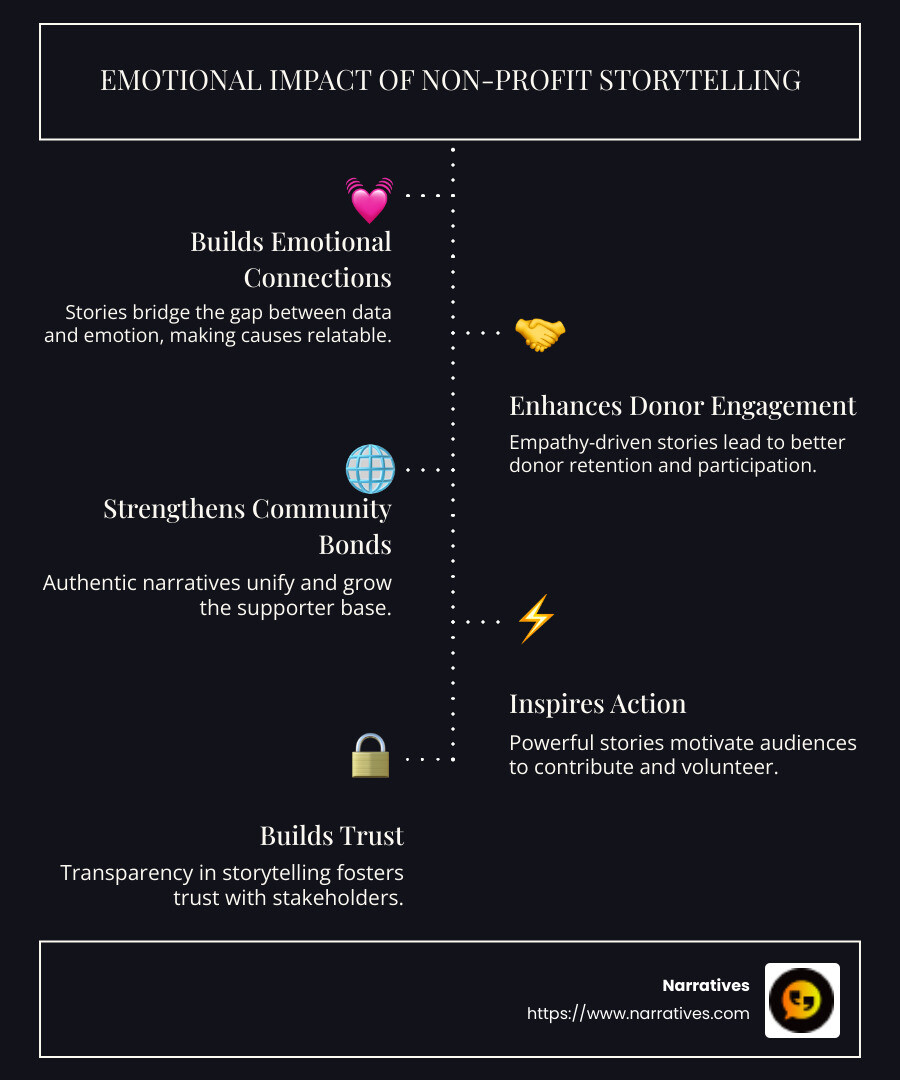
Here's how non-profits can benefit from compelling storytelling:
Builds Emotional Connections: Stories help bridge the gap between data and emotion, making your cause relatable and urgent.
Improves Donor Engagement: By activating empathy, stories lead to more significant donor retention and participation.
Strengthens Community Bonds: Through authentic narratives, non-profits can unify and grow their supporter base.
Storytelling is the heartbeat of successful nonprofit marketing. As highlighted in our research, it not only has the power to humanize your mission but also to inspire loyalty and action.
Imagine the story of Julia and Dewey from Morning Light, where a young girl connects with a hospice resident. This tale exemplifies how personal bonds can be created and showcases the profound impact of your support. Their story isn't just memorable; it ignites the spirit of giving.
Compelling non-profit storytelling terms simplified:
The Science and Art of Compelling Non-Profit Storytelling
Emotional Triggers
The magic of compelling non-profit storytelling lies in its ability to activate empathy. When you tell a story that touches the heart, it creates a chemical reaction in the brain that fosters prosocial behavior, like donating or volunteering. This isn't just fluff; it's backed by science.
Consider the emotional vocabulary used in successful campaigns. Words that describe feelings, like joy, fear, or hope, can make stories more relatable and engaging. For instance, when a story includes sensory details—such as the warmth of a hug or the sound of laughter—it helps the audience immerse themselves in the experience.
Narrative Structure
A well-structured narrative is crucial. Think of it like a roadmap for your story. Classic structures like the Hero’s Journey or Aristotle’s 3 Act Structure can guide your storytelling. These frameworks help maintain interest and provide a satisfying arc that leads your audience from introduction to resolution.
Take the example of the Girl Effect campaign. It starts with a problem—a young girl's challenging life—and then offers a solution, showing a brighter future. This structure not only highlights the issue but also inspires hope and action.
Visual Storytelling
Visuals are powerful tools in storytelling. They make stories memorable and help convey complex ideas quickly. A well-placed image or infographic can speak volumes where words might fall short.
For example, the Rainforest Alliance used a clever video to contrast what people feel they should do versus what they actually can do to help the rainforest. This visual storytelling not only captured attention but also provided clear calls-to-action.
Visual storytelling doesn't need to be high-budget. Simple videos shot on a mobile phone or a series of impactful photographs can be just as effective. The key is to ensure that visuals complement and improve the narrative, rather than distract from it.
In summary, the art and science of compelling non-profit storytelling involve emotional triggers, structured narratives, and effective visual elements. By mastering these components, non-profits can craft stories that resonate deeply and inspire meaningful action.
6 Reasons Non-Profit Storytelling is Essential
1. Humanizes Work
Non-profit storytelling breathes life into statistics and data. It gives a face and name to the mission, making the organization's work relatable and personal. When you share a story of an individual whose life has been transformed, it turns abstract ideas into tangible realities. This human connection is essential for drawing in supporters.
2. Empowers Advocates
Stories empower advocates by giving them a narrative to share. When people are moved by a story, they become ambassadors for your cause. They share these stories with friends, family, and social networks, amplifying your message far beyond its original reach.
3. Improves Transparency
Transparency builds trust, and storytelling is an excellent way to showcase the impact of donations. By sharing real stories and outcomes, non-profits can demonstrate accountability and effectiveness. This transparency reassures donors that their contributions are making a real difference.
4. Inspires Action
A compelling story can be a powerful call to action. It moves people from passive observers to active participants in your mission. Whether it's donating, volunteering, or spreading the word, storytelling inspires people to take the next step.
5. Builds Trust
Trust is the foundation of any successful relationship, and storytelling helps build it. By sharing authentic stories, non-profits can connect with their audience on a deeper level. This connection fosters a sense of trust and loyalty, essential for long-term support.
6. Differentiates
In a crowded non-profit sector, storytelling helps your organization stand out. It highlights what makes your mission unique and why it matters. By crafting a distinctive narrative, you can differentiate your organization and attract supporters who resonate with your cause.
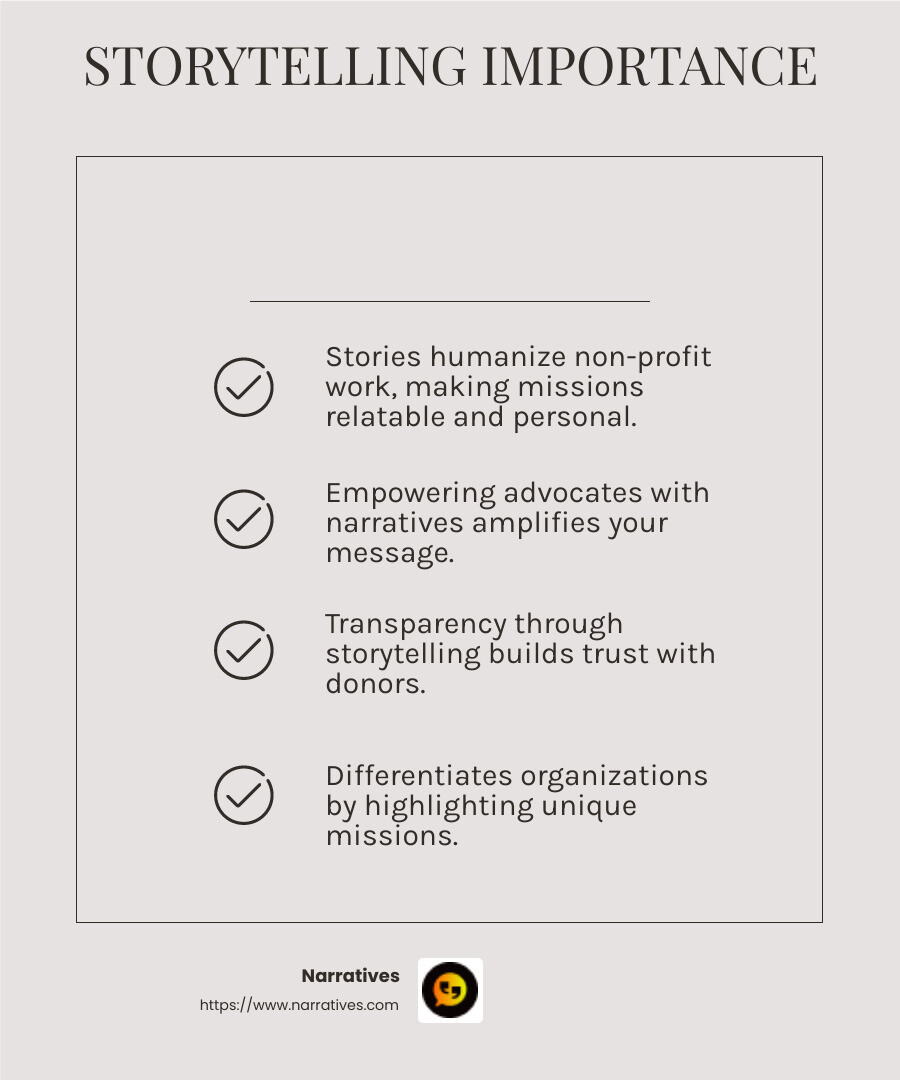
By focusing on these six essential elements, non-profits can leverage storytelling to improve their communication strategies and foster stronger connections with their audience.
How to Craft Compelling Non-Profit Stories
Crafting compelling non-profit stories is both an art and a science. It involves strategic planning and a deep understanding of your audience. Let's explore the key elements that make these stories impactful.
Real People
At the heart of every powerful story is a real person. To connect with your audience, focus on individual experiences rather than abstract concepts. Highlighting a central character makes the story relatable and memorable. For example, charity: water's founder, Scott Harrison, shared his personal journey of redemption and change to engage others on an emotional level. This approach helps audiences form a personal connection with the story.
Emotional Appeal
To move people to action, your story must have an emotional appeal. Use emotional vocabulary and sensory details to paint a vivid picture. This triggers empathy and encourages prosocial behavior, like donating or volunteering. Stories that evoke strong emotions are more likely to inspire action and foster a lasting connection with your audience.
Multimedia Assets
Incorporate multimedia assets to improve your storytelling. Visuals like photos, videos, and infographics can make your story more engaging and easier to understand. For instance, charity: water uses compelling photographs and videos to highlight the urgency of the global water crisis, making their message more impactful. Visual storytelling not only captures attention but also aids in memory retention.
Strategic Planning
Strategic planning is crucial in storytelling. Begin by defining your goal. Whether it's raising funds, increasing membership, or improving conversion rates, your story should align with these objectives. Plan the narrative structure carefully, using classic frameworks like the Hero’s Journey to keep your audience engaged.
Empathy Activation
Finally, focus on empathy activation. Empathy is a powerful motivator for action. By making your audience feel the emotions of the characters in your story, you create a strong emotional bond. This connection is key to turning passive viewers into active supporters.
By integrating these elements, non-profits can create stories that resonate, inspire, and drive action. These stories not only communicate the mission but also build a community of engaged supporters.
Top 5 Digital Storytelling Techniques for Non-Profits
Non-profits have an arsenal of tools at their disposal to tell compelling stories. Let's explore the top five techniques that can lift your storytelling game.
Interactive Content
Interactive content transforms passive consumption into active participation. It invites your audience to engage directly with the story, making them feel part of the narrative. An example is the United Nations Development Programme's "A Tidal Wave of Plastic," which uses interactive infographics to help readers grasp the scale of plastic pollution. By allowing users to explore data and visuals, interactive content creates a deeper connection and understanding.
Visual Storytelling
Visual storytelling is all about using imagery to convey your message. Photos, illustrations, and videos can make abstract issues tangible and relatable. For instance, Habitat for Humanity's annual report opens with a video showcasing their projects, instantly connecting viewers to their mission. Visuals not only capture attention but also improve memory retention, making your story more impactful.
Multimedia Integration
Integrating multiple forms of media—like text, video, and audio—creates a rich, immersive experience. This approach leverages the strengths of each medium to tell a more complete story. As web technologies advance, multimedia stories become more accessible and engaging. Non-profits can use multimedia to highlight different facets of their work, as seen in CAFOD's campaign for drought-stricken Uganda, which blends illustrations and real photographs to powerful effect.
Longform Content
Don't shy away from longform content. While there's a myth that people have short attention spans, the truth is they will engage with longer content if it's interesting and well-structured. Longform allows non-profits to dive deep into their stories, providing detailed narratives that foster a stronger emotional connection. This format is particularly effective when combined with visual and multimedia elements, offering a comprehensive view of your cause.
Digital Platforms
Finally, choosing the right digital platforms is crucial. Different platforms cater to different audiences and storytelling styles. Social media, websites, and dedicated storytelling platforms each offer unique opportunities. For example, social media can amplify your reach through shares and likes, while a dedicated website can host detailed stories with rich multimedia. Understanding where your audience spends their time will help you tailor your storytelling strategy effectively.
By embracing these digital storytelling techniques, non-profits can craft stories that not only inform but also inspire action and drive change.
Frequently Asked Questions about Non-Profit Storytelling
What makes a non-profit story compelling?
A compelling non-profit story hinges on emotional depth and a central character. Imagine reading a story where you can't help but feel what the character feels—joy, pain, hope. That's emotional depth. It’s what makes stories stick in our minds and hearts.
At the heart of these stories is a central character. This character becomes the face of your cause, someone your audience can root for. Think of Georgina, the widowed dairy farmer in Zambia from the World Bicycle Relief campaign. Her story isn't just about her struggles; it's about triumph, resilience, and the power of a simple bicycle to change a life.
How can visuals improve non-profit storytelling?
Visuals are like the glue that holds a story together. They make abstract ideas tangible and memorable. Visual engagement is crucial; it draws people in and keeps them interested. When you see a photo or a video, it sticks with you longer than words alone.
Consider the Rainforest Alliance's clever video campaign. It uses powerful imagery to contrast what people feel they should do about rainforest destruction versus what they can actually do. This visual storytelling not only captures attention but also improves memory retention.
Why is storytelling important for donor engagement?
Storytelling creates an emotional connection with donors, which is essential for building and maintaining relationships. When donors feel connected to a cause, they’re more likely to give and keep giving. This is known as donor retention.
A story that resonates emotionally can transform a one-time donor into a lifelong advocate. It's like reading a book you can't put down. You become invested in the characters and their journey. Similarly, when donors connect emotionally with your story, they become invested in your mission. This emotional bond is what keeps them coming back to support your cause time and again.
Conclusion
In compelling non-profit storytelling, Narratives stands out as a guide for those who wish to lift their impact stories. Our mission is to amplify underrepresented voices and create emotionally resonant content that not only tells a story but inspires action. By partnering with us, non-profits can harness the power of community-driven storytelling to drive social change.
Community-driven storytelling is at the heart of what we do. It ensures authenticity and builds trust by sourcing stories directly from those who experience the impact of non-profit work. When stories come from the community, they resonate more deeply because they are rooted in real experiences and emotions. This authenticity is what makes stories memorable and impactful.
The social impact of storytelling is profound. It goes beyond just raising awareness; it fosters empathy and encourages action. When people hear a story that moves them, they're more likely to engage, whether that's by donating, volunteering, or spreading the word. Stories connect us on a human level, bridging gaps and creating a shared understanding of the challenges and triumphs faced by communities around the world.
By focusing on these elements, Narratives helps non-profits not only tell their stories but also make a difference. Our approach is about creating content that not only informs but also transforms. It's about taking the narrative of change and making it a reality.
Ready to lift your storytelling? Explore our media services and find how we can help you make your story heard.


.avif)