Weaving Tales: The Power of Storytelling in Building Connections

Connecting through storytelling is like weaving invisible threads that link us all. This powerful art transforms mere words into a shared mix of human experience and emotion, creating bonds that transcend facts and figures.
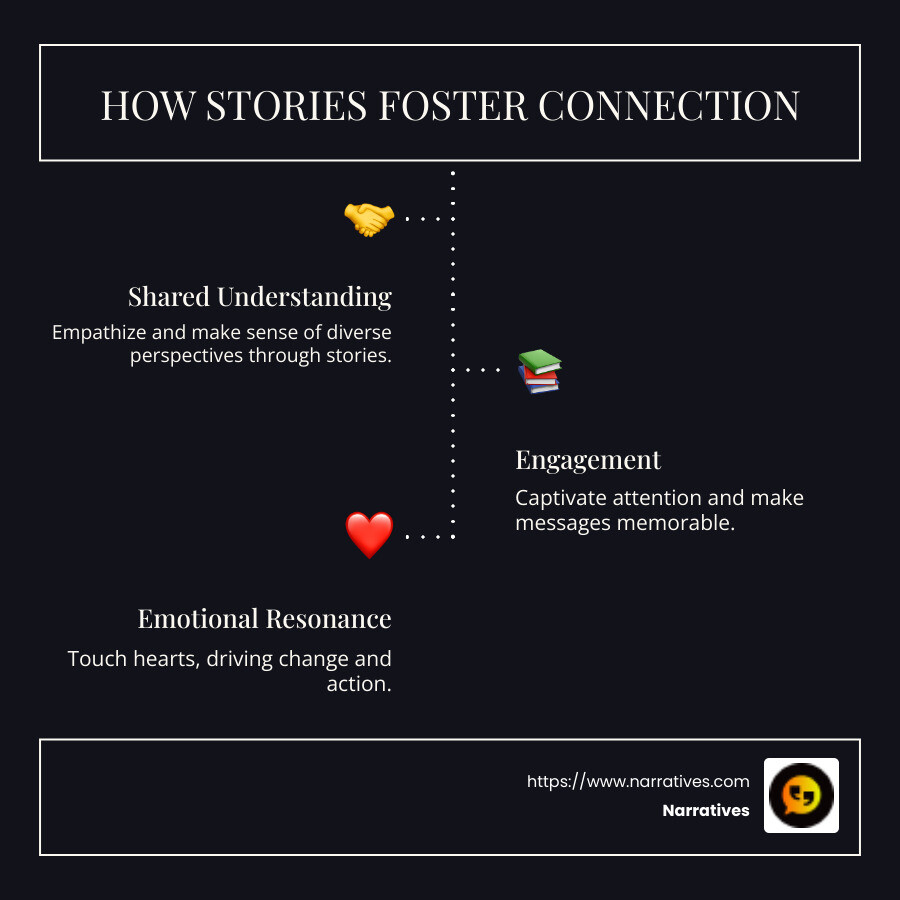
- Shared Understanding: Stories help us empathize, making sense of diverse perspectives.
- Engagement: They captivate attention, making messages memorable.
- Emotional Resonance: Stories touch hearts, driving change and action.
In today's world, stories bridge gaps and build connections in a way few other methods can. They offer more than mere information—they provide a glimpse into the human soul.
Maya Angelou once said, “There is no greater agony than bearing an untold story inside you.” Whether for inspiring others, fostering community, or sparking movements, the tales we share shape who we are and connect us in meaningful ways.
Connecting through storytelling terms made easy:
The Science of Storytelling
Our brains are wired for storytelling. When we hear a story, something magical happens: our brains sync up with the storyteller's. This phenomenon is called neural coupling. Imagine it as our brains mirroring the storyteller's brain, allowing us to experience the story almost as if it were our own.
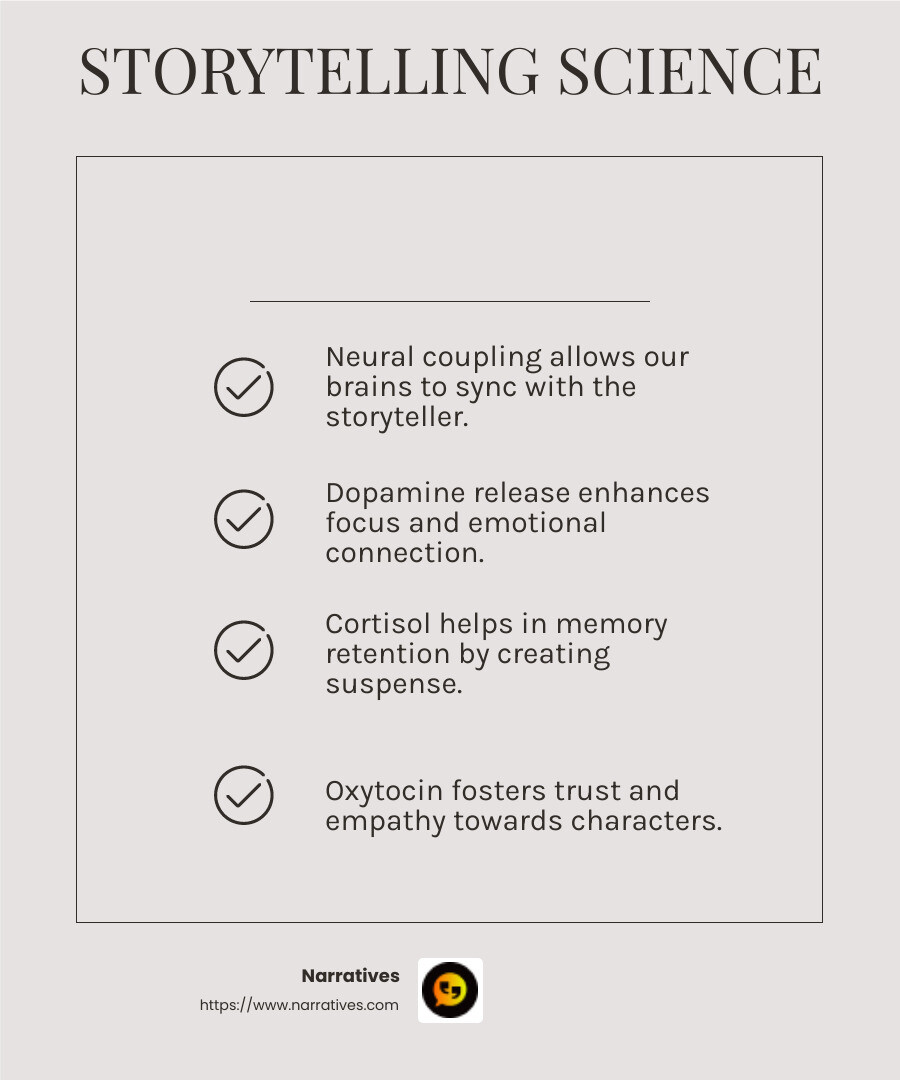
But there's more at play. Our brains release chemicals like cortisol, dopamine, and oxytocin during storytelling. Each of these plays a crucial role:
- Cortisol helps us form memories, ensuring we remember the story.
- Dopamine keeps us engaged, providing a sense of anticipation and pleasure.
- Oxytocin fosters empathy, helping us connect with the characters and emotions.
These chemicals make stories stick in our minds long after we've heard them. They help us not only understand the story but also feel it deeply.
Storytelling is a powerful tool for connection. It taps into our emotions, making us more open to new ideas and perspectives. Through stories, we don't just learn—we connect and grow together.
Connecting through Storytelling
Storytelling isn't just about sharing information. It's about creating a bridge of understanding and empathy between the storyteller and the audience. When we share stories, we invite others into our world, allowing them to see, feel, and experience life through our eyes. This is how shared experiences are born.
Shared Experiences
When a story resonates with us, it often reminds us of our own experiences. This connection is powerful. It makes us feel understood and less alone. For instance, when students at Southern New Hampshire University listened to a Vietnam veteran share his story, they weren't just learning history—they were connecting with a lived experience that transcended textbooks.
Emotional Bonds
Stories have the unique ability to create emotional bonds. These bonds are formed when we see parts of ourselves in the characters or situations being described. Consider the cave paintings on an Indonesian island, believed to be the earliest known record of storytelling through pictures. Even 44,000 years ago, humans were using stories to connect and convey emotions across time and space.
When we engage with a story, our brain releases oxytocin, often called the "love hormone." This fosters empathy and trust, making us more open to the storyteller's message. As Robert McKee, a renowned screenwriting expert, stated, stories "fulfill a profound human need to grasp the patterns of living—not merely as an intellectual exercise, but within a very personal, emotional experience."
Audience Engagement
Engaging an audience isn't just about holding their attention—it's about involving them in the narrative. A well-crafted story draws the audience in, making them an active participant. This is crucial in settings like business presentations, where facts and figures alone can fall flat. By weaving data into a narrative, you create a journey that the audience can follow and relate to.
Nancy Duarte highlights in her book "Resonate" that stories act as the emotional glue that connects an audience to an idea. This connection is what makes stories memorable and impactful. They transform a passive listening experience into an interactive journey, where the audience feels invested in the outcome.
In conclusion, connecting through storytelling is about more than just sharing a tale. It's about creating a shared journey, building emotional bonds, and engaging your audience in a way that facts alone cannot achieve. Through stories, we not only inform but also inspire and unite.
Storytelling in Business and Education
Storytelling is a game-changer in both business and education. It's not just about telling tales; it's about building trust, creating teaching moments, and making information relevant to your audience.
Trust Building
In business, trust is everything. Sharing stories can help build that trust. When a company shares its journey, challenges, and successes, it humanizes the brand. Customers see the people behind the logo and feel a connection. This connection fosters trust and loyalty.
A study by Prezi found that 55% of people say a great story captures their focus and keeps them engaged. When businesses use storytelling, they aren't just selling a product; they're sharing a part of themselves. This transparency is key to building trust.
Teaching Moments
In education, stories make learning stick. Facts and figures are important, but they can be dry and hard to remember. Stories, on the other hand, make information relatable and memorable.
For example, when teachers incorporate stories into their lessons, students are more likely to remember the material. Stories create a narrative that students can follow, making complex ideas simpler and more engaging. As Newkirk (2014) noted, narrative is a preferred way of learning because students want explanations and patterns.
Audience Relevance
In both business and education, it's crucial to know your audience. The stories you tell must be relevant to their interests and needs. A story that's meaningful to one group might fall flat with another.
For businesses, this means tailoring stories to the concerns and priorities of their audience. A story about overcoming a major challenge might resonate with a corporate audience, while a story about community impact might be more relevant to a local group.
In education, understanding what matters to students helps educators craft stories that engage and inspire. This relevance is what makes storytelling such a powerful tool for connection.
Storytelling in business and education isn't just about entertainment. It's about building trust, creating memorable teaching moments, and ensuring your message resonates with your audience. Whether you're in a boardroom or a classroom, stories have the power to transform how we connect and communicate.
Storytelling Techniques for Non-Profits
Connecting through storytelling is a powerful tool for non-profits. It helps them foster empathy, highlight social impact, and create community-driven narratives that resonate deeply with their audience.
Empathy
Empathy is at the heart of effective storytelling. When non-profits share stories about the people they serve, they invite the audience to step into someone else's shoes. This creates a powerful emotional connection.
For example, when a non-profit shares the story of a single mother overcoming adversity with the help of their services, it humanizes the issue and evokes empathy. This emotional bond encourages supporters to take action, whether through donations, volunteering, or advocacy.
Social Impact
Stories are an excellent way to showcase the social impact of a non-profit's work. Instead of just presenting statistics, organizations can use narratives to illustrate how their efforts are changing lives.
Consider a non-profit focused on education. Instead of simply stating how many students they've helped, they might tell the story of a particular student who, thanks to their programs, became the first in their family to attend college. This story highlights the tangible impact of their work and inspires others to support their mission.

Community-Driven Narratives
Community-driven narratives are crucial for non-profits. These stories aren't just about the organization; they're about the people and communities they serve. By focusing on these narratives, non-profits can create a sense of shared purpose and belonging.
For instance, a non-profit working with immigrants might organize events where community members share their stories. This not only raises awareness but also empowers individuals by giving them a platform to be heard. As seen with initiatives like Suitcase Stories, storytelling can bridge gaps and foster understanding across diverse groups.
In summary, storytelling for non-profits is about more than just sharing information. It's about creating empathy, showcasing impact, and building a sense of community. Through these techniques, non-profits can connect with their audience on a deeper level, driving meaningful engagement and support.
Frequently Asked Questions about Storytelling
What is storytelling?
Storytelling is the art of sharing a narrative to convey experiences, emotions, and messages. It's not just about telling a series of events; it's about crafting a tale that resonates with an audience. A well-told story has a structure with a beginning, middle, and end, featuring relatable characters, conflicts, and resolutions. This technique can capture attention, evoke emotions, and convey meaning beyond mere facts and figures.
A quote that captures the essence of storytelling is by Maya Angelou:
"There is no greater agony than bearing an untold story inside you."
Importance of storytelling in teaching?
Storytelling in teaching is a powerful tool that fosters student engagement and improves learning. It humanizes the learning process by appealing to students' imaginations and emotions. When educators use stories, they create a meaningful connection between the content and the students.
Why does storytelling work in education?
- Engagement: Stories capture students' attention and keep them interested in the lesson.
- Relatability: By sharing stories, educators can make complex concepts more relatable and understandable.
- Memory: Stories are memorable. They help students remember information better than plain facts or figures.
For example, a psychology professor might use a story about a real-life case to illustrate a psychological concept, making the lesson both engaging and memorable.
How can storytelling facilitate human connection?
Connecting through storytelling is about creating shared experiences and emotional bonds. When people share stories, they reveal their emotions, perspectives, and values. This opens the door to understanding and empathy.
Why is this connection important?
- Shared Experiences: Stories help us uncover common interests and values, which are the building blocks of community.
- Emotional Bonds: Sharing narratives triggers empathy and compassion, fostering deeper connections.
- Engagement: Stories engage audiences emotionally, making the information more impactful and memorable.
As noted by experts, storytelling releases chemicals like dopamine and oxytocin in our brains, which improve our connections with others. This chemical response makes storytelling a natural and effective way to build relationships.
Storytelling is a bridge that connects people, allowing them to understand and relate to one another on a deeper level. Whether in personal interactions or broader community settings, stories have the power to unite us.
Conclusion
In digital storytelling, Narratives stands out as a guide for non-profits and purpose-driven organizations. We believe in the power of stories to connect, inspire, and drive change. Through high-quality multimedia content, we help lift underrepresented voices, bringing their stories to life in a way that resonates emotionally and inspires action.
Why is this important for non-profits?
Building Trust: Stories humanize organizations, making them relatable and trustworthy. When non-profits share their impact through storytelling, they build credibility and foster trust with their audience.
Inspiring Action: A well-crafted story doesn't just inform; it moves people to act. Whether it's donating, volunteering, or spreading the word, stories are a catalyst for action.
Increasing Visibility: In a digital age crowded with information, stories stand out. They capture attention and make a lasting impression, helping non-profits increase their reach and impact.
At Narratives, we are dedicated to helping non-profits harness the power of storytelling to achieve their goals. Our approach is centered on creating emotionally resonant content that not only shares impactful stories but also builds a sense of community and shared purpose.
If you're ready to amplify your organization's voice and make a difference through storytelling, learn more about how we can help.
In a world that often feels divided, stories remind us of our shared humanity. They are the threads that weave us together, creating a mix of experiences, emotions, and connections. Let's continue to tell these stories and build a future that is not only informed but inspired.

.avif)