Digital Storytelling: Where Creativity Meets Technology

Creative digital storytelling is where imagination meets technology to craft narratives that not only engage the audience but also amplify causes, drive awareness, and inspire action. In just a few steps, anyone can use digital tools to transform ideas into compelling visual stories.
Key Points:
- Definition: It's the art of using technology to tell a story in an engaging way, often incorporating multimedia like images, video, and audio.
- Purpose: To connect with audiences on an emotional level, creating relatable and impactful narratives.
- Impact: Lifts your cause, whether through advocacy, education, or brand storytelling.
Digital storytelling has revolutionized how we communicate. It blends traditional narrative techniques with modern technology, making it possible to share stories on a global scale. This method caters perfectly to organizations that strive for social impact and wish to convey powerful messages efficiently.
Let’s explore how digital storytelling can improve the way you connect with audiences, turning complex topics into relatable content that speaks directly to the heart of your mission.
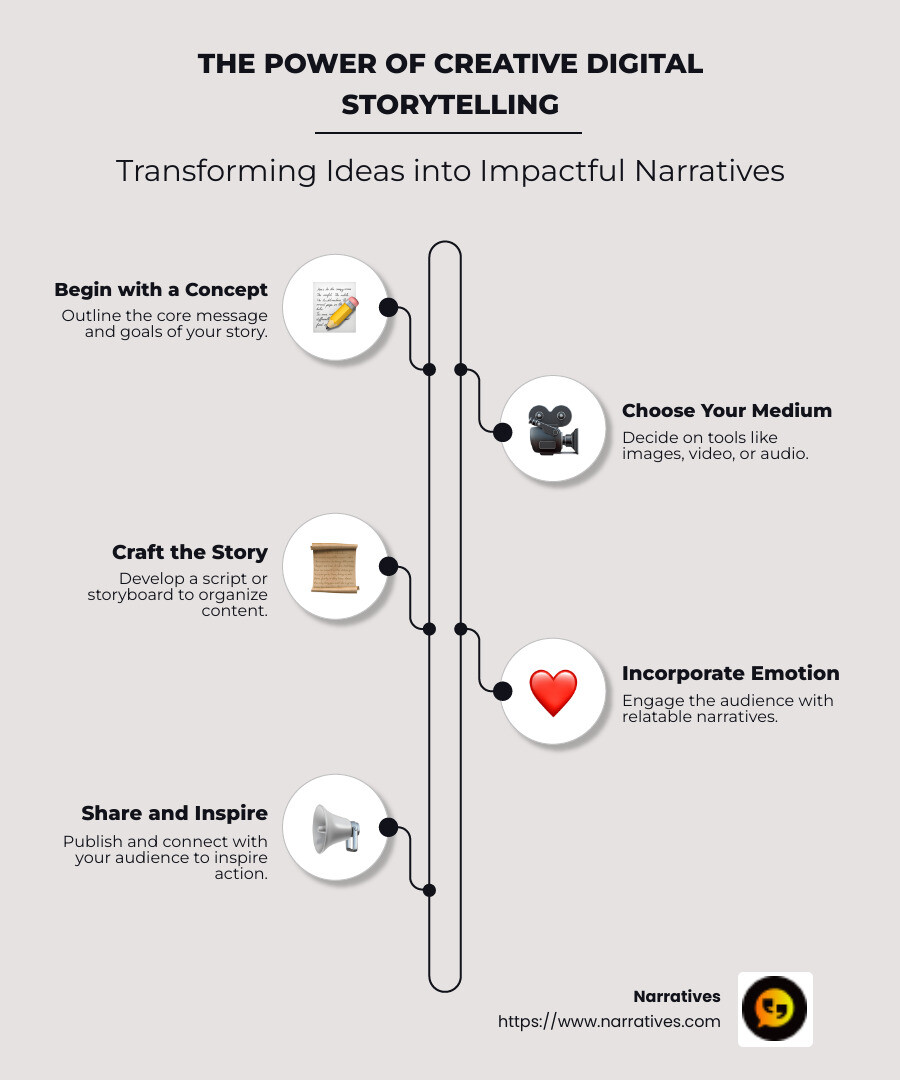
Quick look at Creative digital storytelling:
The Evolution of Digital Storytelling
Digital storytelling has come a long way since its inception in the mid-90s. Initially, it was a novel approach to combining text, images, and audio to create immersive narratives. Today, it has evolved into a dynamic medium that leverages cutting-edge technology to engage audiences like never before.
A Brief History
The roots of digital storytelling can be traced back to early multimedia projects that sought to merge various forms of media to tell a cohesive story. Over the years, as technology advanced, so did the capabilities of digital storytelling. The introduction of user-friendly tools and platforms has democratized the process, allowing anyone with a story to share it with the world.
The Role of Multimedia
At the heart of digital storytelling is the use of multimedia. By integrating images, video, audio, and even interactive elements, storytellers can create rich, engaging experiences. For example, platforms like Genially allow creators to add interactivity and animation to their stories, making them more captivating and memorable.
- Images: Provide visual context and evoke emotions.
- Video: Offers dynamic storytelling through motion.
- Audio: Adds another layer of immersion with soundscapes and narration.
- Interactive elements: Engage audiences by allowing them to interact with the story.
Enhancing Engagement
One of the key strengths of digital storytelling is its ability to engage audiences on a deeper level. By using multimedia, storytellers can craft narratives that resonate emotionally and intellectually. This approach not only captures attention but also encourages active participation from the audience.
For instance, in education, digital storytelling has been shown to boost student engagement and improve understanding of complex subjects. By imagining themselves as characters in a story, students develop empathy and critical thinking skills.
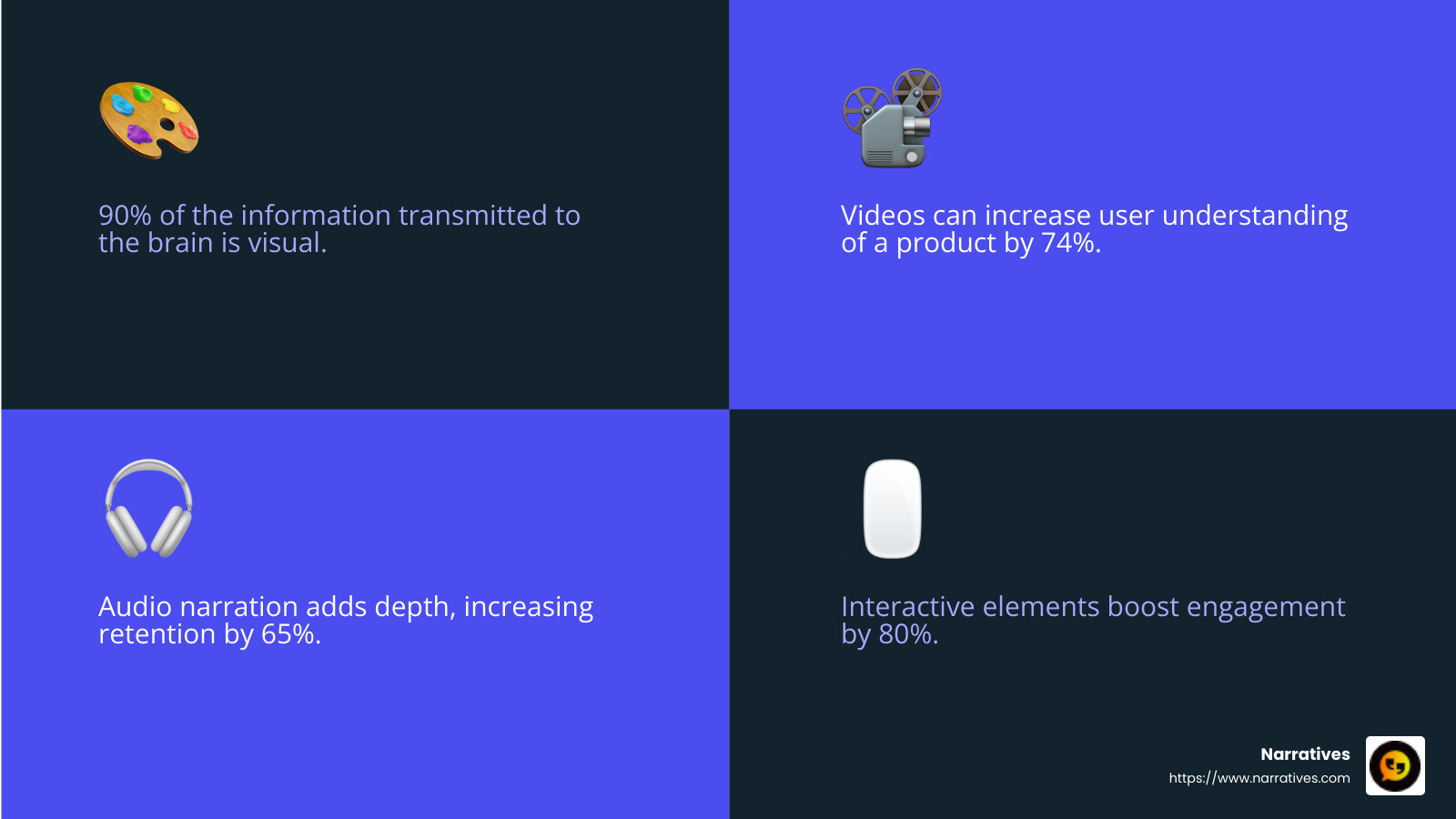
In summary, the evolution of digital storytelling has transformed it into a powerful tool for communication. By embracing multimedia and focusing on audience engagement, storytellers can create impactful narratives that leave a lasting impression.
Creative Digital Storytelling Techniques
In creative digital storytelling, the magic lies in how well you can connect with your audience. It's not just about telling a story but making it resonate deeply. Let's explore some techniques that make digital stories compelling and memorable.
Emotional Content
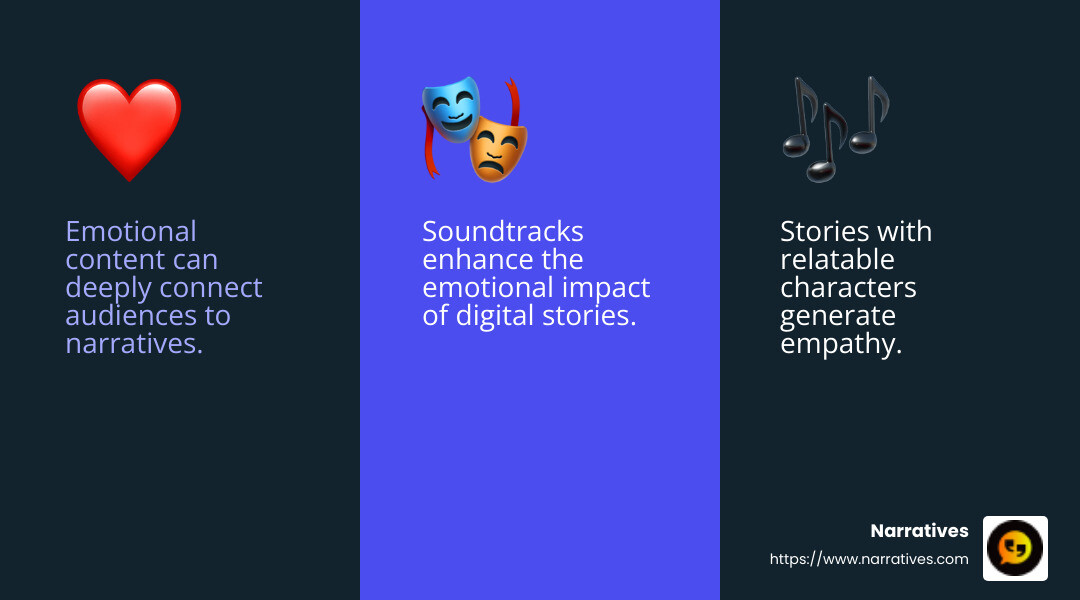
Emotional content is the heartbeat of any captivating story. It's what transforms a simple narrative into a journey that tugs at the heartstrings. For a digital story to succeed, it must create an emotional connection with its audience. This connection can be achieved through relatable characters, evocative images, or powerful soundtracks.
Consider the example of the University of Utah Health's digital story about burn survivors. By featuring powerful portraits and personal stories, the narrative creates an emotional bridge between the audience and the survivors' experiences. This approach not only informs but also fosters empathy and understanding.
Personal Perspectives
Starting with personal perspectives can make complex issues more accessible. When viewers see a story through the eyes of an individual, it becomes relatable and engaging. Personal stories act as a gateway to broader themes, allowing audiences to connect on a personal level before exploring larger issues.
For instance, beginning with a personal anecdote before delving into a complex topic like climate change can help viewers relate to the narrative. This technique is effective in advocacy, where building empathy is crucial.
Pacing
Pacing is the rhythm of your story. It keeps the audience engaged by guiding them through a clear beginning, middle, and end. A well-paced story maintains interest and ensures that the narrative flows smoothly.
Sky News' "Brexit by Numbers" exemplifies effective pacing in digital storytelling. By balancing data with compelling illustrations, the story avoids overwhelming the audience. Instead, it leads them through Britain's complex journey of leaving the EU in an engaging and digestible manner.
In summary, the art of creative digital storytelling lies in weaving emotional content, personal perspectives, and well-considered pacing. These elements work together to create stories that not only capture attention but also leave a lasting impact.
Tools for Creative Digital Storytelling
When it comes to creative digital storytelling, the right tools can make all the difference. They help bring stories to life by adding visuals, interactivity, and multimedia elements. Let's explore some of the best tools available for crafting compelling digital stories.
Canva
Canva is a versatile tool perfect for creating visually stunning content. It offers beautiful templates and an easy drag-and-drop interface. Whether you need social media posts, infographics, or presentations, Canva can help you design them with ease. Its customization options for colors and fonts make it easy to maintain a consistent brand style across your digital stories.
Adobe Spark
For those who love visuals, Adobe Spark is a great choice. It excels at creating short, linear stories with lots of images. Spark Pages allow you to showcase your story with ready-to-use images, although it lacks the ability to embed interactive content. It's ideal for projects that focus on strong visual narratives.
Genially
Genially is another fantastic tool for creating interactive content. It allows you to craft engaging presentations, infographics, and even escape games. With Genially, you can add interactive elements like buttons and animations, making your digital stories more engaging and immersive.
StoryMap JS
StoryMap JS is perfect for geographic storytelling. It lets you layer narrative text, images, and multimedia content over maps. If your story revolves around specific locations, this tool helps you create a dynamic and interactive map-based narrative.
Timeline JS
For chronological storytelling, Timeline JS is a powerful tool. It enables you to build interactive timelines using a simple Google spreadsheet. You can incorporate videos, images, and audio files, making it easy to tell a story through time. While it requires some HTML knowledge for customization, it’s a great way to present historical or sequential events.
These tools are essential for anyone looking to lift their creative digital storytelling. By leveraging visuals, interactivity, and multimedia, you can craft stories that captivate and engage your audience.
Creative Digital Storytelling in Education
Creative digital storytelling in education isn't just a trend—it's a powerful way to engage students, boost critical thinking, and foster interactive learning.
Student Engagement
Imagine a classroom where students are not just listening but actively participating. Digital storytelling transforms students from passive receivers into active creators. Instead of just reading about historical events, students can create digital stories that place them in the shoes of a historical figure. This approach not only makes learning more fun but also deeply engaging.
A teacher shared that her students "love these projects and often ask for more as the year goes on." This enthusiasm is driven by the opportunity to explore and express their understanding in a personal and creative way.
Critical Thinking
Digital storytelling challenges students to think critically. When crafting a story, they must analyze information, make connections, and decide how best to represent their ideas. For instance, when students create a story about a scientific process, they not only learn the steps but also consider the implications and perspectives involved.
This kind of project requires planning, decision-making, and problem-solving, all of which are key components of critical thinking. As students decide how to tell their stories, they learn to evaluate different perspectives and evidence, leading to a deeper understanding of the subject matter.
Interactive Learning
With digital storytelling, learning becomes an interactive experience. Tools like Genially allow students to add interactive elements such as audio, animations, and clickable content to their stories. This interactivity helps students explore topics in a way that's both informative and entertaining.
For example, a digital story about ecosystems can include interactive maps and videos, enabling students to explore different habitats and the species that live there. This kind of immersive experience makes complex topics more accessible and memorable.
In summary, creative digital storytelling in education not only makes learning more engaging but also develops essential skills like critical thinking and creativity. By integrating technology with storytelling, educators can create a dynamic learning environment that inspires students to explore and express their knowledge in innovative ways.
Creative Digital Storytelling for Non-Profits
Creative digital storytelling is a game-changer for non-profits. It helps build empathy, drives advocacy, and shares impactful stories that resonate with audiences.
Building Empathy
Non-profits often face the challenge of connecting with people on an emotional level. Digital storytelling bridges this gap by humanizing social causes. By sharing personal stories of those they help, non-profits can create a strong emotional connection with their audience.
Consider the example of a non-profit that helps refugees. By sharing a refugee's journey through a digital story, viewers can see the struggles and triumphs firsthand. This approach turns statistics into real, relatable human experiences.
Driving Advocacy
Stories have the power to inspire action. Non-profits use digital storytelling to advocate for change and rally support. When people see the real-world impact of a cause, they're more likely to get involved.
A compelling story about a community overcoming adversity can motivate viewers to donate, volunteer, or spread the word. As Jonathan Gottschall noted, "stories are simply the best tool that exists for binding people together." This unity can drive powerful advocacy efforts.
Sharing Impact Stories
Impact stories are crucial for non-profits. They show donors and supporters the tangible difference their contributions make. Digital storytelling allows non-profits to showcase these success stories in a visually engaging way.
For example, a non-profit focused on clean water can create a digital story highlighting a village's change after gaining access to clean water. Through images, videos, and testimonials, the story can vividly illustrate the impact, building trust and credibility.
In conclusion, creative digital storytelling for non-profits is not just about sharing information—it's about connecting with people on a deeper level. By fostering empathy, driving advocacy, and showcasing impact, non-profits can effectively engage their audience and amplify their message.
Frequently Asked Questions about Creative Digital Storytelling
What is digital storytelling?
Digital storytelling is the art of using technology to tell stories. It combines various media formats like text, images, video, and audio to create engaging narratives. This approach allows storytellers to bring stories to life in a dynamic way, making them more relatable and impactful.
Digital storytelling is widely used in education, business, and non-profits to simplify complex topics and create emotional connections. By leveraging multimedia tools, storytellers can craft compelling stories that resonate with audiences on multiple levels.
How can digital storytelling benefit non-profits?
Non-profits can greatly benefit from creative digital storytelling by building empathy, driving advocacy, and sharing impactful stories. Here's how:
Building Empathy: Digital storytelling humanizes social causes by sharing personal stories. It allows audiences to connect emotionally with those in need, turning abstract statistics into real human experiences.
Driving Advocacy: Stories inspire action. By showcasing real-world impacts, digital storytelling can motivate people to donate, volunteer, or spread the word about a cause, as highlighted by Jonathan Gottschall's insight on storytelling's power to unite people.
Sharing Impact Stories: Non-profits can use digital storytelling to demonstrate the tangible difference their work makes. Through engaging visuals and testimonials, they can build trust and credibility with donors and supporters.
For example, a non-profit focused on education can create a digital story showing how their programs have transformed students' lives, illustrating the value of their mission.
What tools are best for creating digital stories?
Several tools can help you create engaging digital stories. Here are some popular ones:
Adobe Express: Ideal for creating visually stunning stories with a wide range of design templates and multimedia integration.
Canva: A user-friendly platform for designing graphics and presentations, perfect for beginners.
Genially: Offers interactive elements to make stories more engaging and immersive.
StoryMap JS: Great for storytelling with maps, allowing you to integrate geographical data into your narratives.
Timeline JS: Useful for creating interactive timelines, making it easier to present historical or sequential information.
These tools provide various features that cater to different storytelling needs, enabling non-profits, educators, and businesses to craft compelling digital narratives.
Conclusion
Narratives is pioneering the way for non-profits to harness the power of creative digital storytelling. By blending technology with storytelling, we help organizations amplify their social impact and strengthen community-driven storytelling.
Social Impact
Digital storytelling is more than just a communication tool—it's a catalyst for change. By crafting emotionally resonant stories, we can highlight the challenges faced by underrepresented communities and inspire action. This approach not only raises awareness but also builds empathy, encouraging audiences to support causes that matter.
Community-Driven Storytelling
At Narratives, we believe in the power of community. By elevating voices from within the communities we serve, we ensure that every story is authentic and impactful. This approach fosters a deeper connection between non-profits and their audiences, creating a shared sense of purpose and commitment.
Our focus on community-driven storytelling allows us to showcase the real-world impact of non-profits, helping them build trust and credibility. By using engaging visuals and personal narratives, we turn complex issues into relatable stories that resonate with audiences.
As we continue to partner with purpose-driven organizations, our goal remains clear: to use digital storytelling as a force for good. We invite you to learn more about how Narratives can help your organization share its story and make a difference. Find our services and join us in creating a more empathetic and connected world.

.avif)