The Future of Storytelling: Digital Solutions for Modern Narratives

Digital storytelling solutions are revolutionizing how organizations convey their messages. In today's world, capturing attention through modern narratives is crucial. Whether you're a small non-profit or a large agency, digital storytelling provides the tools to reach your audience more effectively.
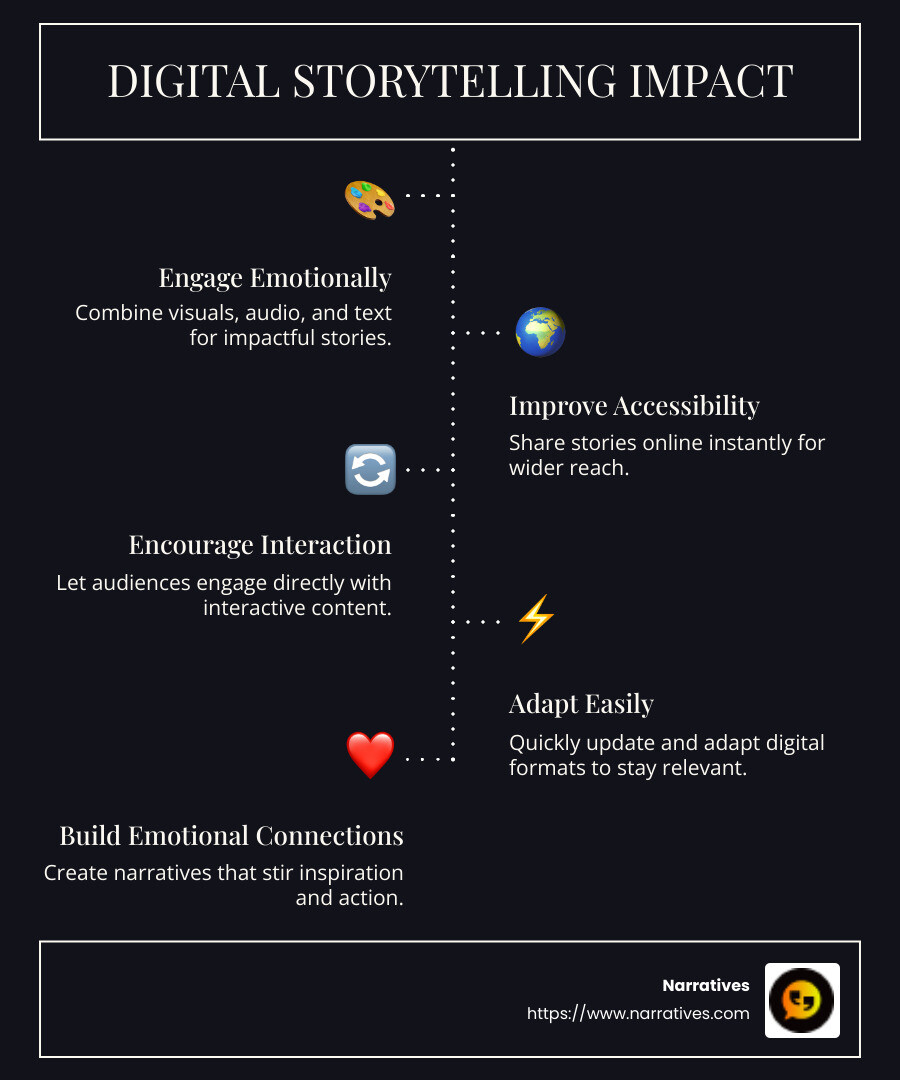
- Engage Emotionally: Digital storytelling combines visuals, audio, and text to create impactful stories that resonate.
- Improve Accessibility: With online platforms, stories can be shared easily and instantly, reaching wider audiences.
- Encourage Interaction: Interactive elements allow audiences to engage directly with the content, creating a more memorable experience.
- Adapt Easily: Digital formats allow for quick updates and adaptations, crucial for staying relevant and responsive to current events.
Digital storytelling is more than just conveying facts—it's about building an emotional connection and stirring inspiration. As highlighted by Deloitte, today's immersive digital reality allows stories to unfold in real-time, providing unique engagement opportunities. This approach not only tells your story but invites your audience to be part of it, leading to deeper connections and more significant impact.
Digital storytelling solutions terms to learn:
Understanding Digital Storytelling Solutions
Digital storytelling solutions are revolutionizing the way we share stories by utilizing multimedia tools and storytelling techniques to create emotional content. Let's explore what makes these solutions so powerful.
Multimedia Tools
Digital storytelling integrates various forms of media—visuals, audio, and text—to craft rich, engaging stories. These tools enable storytellers to create experiences that captivate and maintain the audience's attention.
- Visuals: Pictures and videos are essential elements. They bring stories to life, making them more relatable and memorable.
- Audio: Soundtracks and voiceovers add depth and emotion, enhancing the storytelling experience.
- Text: Words guide the narrative, providing context and clarity.
By blending these elements, storytellers can create a more immersive and impactful experience for their audience.
Storytelling Techniques
Effective storytelling isn't just about the tools; it's about how you use them. Here are some techniques that enhance digital storytelling:
- Narrative Structure: A clear beginning, middle, and end help guide the audience through the story.
- Pacing: The speed at which the story unfolds can build suspense or provide emphasis.
- Point of View: The perspective from which the story is told can significantly affect how it's received.
These techniques ensure that the story is not only told but felt by the audience, making it more engaging and memorable.
Emotional Content
Emotional content is at the heart of digital storytelling. It's what connects the audience to the story on a personal level.
- Empathy: Stories that evoke empathy can inspire action and change. According to research, emotional connections can drive business results and spark social movements.
- Relatability: Personal stories or familiar scenarios help the audience see themselves in the narrative.
- Impact: Powerful stories can change perspectives and even influence behavior.
By focusing on emotional content, storytellers can create narratives that resonate deeply with their audience, leading to lasting impressions and meaningful connections.
In summary, digital storytelling solutions use multimedia tools, storytelling techniques, and emotional content to create stories that are not just seen or heard, but felt. This approach transforms traditional storytelling into an interactive, immersive experience that engages audiences like never before.
Top Digital Storytelling Tools for Non-Profits
In digital storytelling solutions, the right tools can make all the difference. For non-profits, these tools are crucial for crafting stories that inspire and engage. Let's explore some of the best options available.
Geographic Storytelling
Geographic storytelling is ideal for stories centered around locations. Tools like ESRI Maps and StoryMap JS allow non-profits to add layers of narrative text, images, and multimedia to maps. This makes it easier to visualize data and connect stories to specific places.
- ESRI Maps: Perfect for creating custom maps with detailed data layers. It's great for showcasing projects that cover large geographic areas or require spatial analysis.
- StoryMap JS: Offers a user-friendly platform to layer information like titles, text, images, and videos over a geographic map. It's an excellent choice for non-profits wanting to tell stories of events tied to specific locations.
Image-based Storytelling
For stories rich in visuals, tools like Adobe Spark and Canva are invaluable. They help non-profits create stunning, image-driven narratives that captivate audiences.
- Adobe Spark: Known for its simplicity, Spark allows users to create beautiful, linear stories with a focus on visuals. It's perfect for short projects where images speak louder than words.
- Canva: Offers a wide range of templates for infographics, social media posts, and more. With drag-and-drop features, non-profits can create professional-looking visuals without needing graphic design expertise.
Interactive Storytelling
Interactive storytelling engages audiences by letting them explore the story on their own terms. Tools like Timeline JS and WeVideo provide platforms for creating interactive narratives.
- Timeline JS: An easy-to-use tool for creating interactive timelines using a Google spreadsheet. It allows the incorporation of videos, images, and audio to tell chronological stories.
- WeVideo: A robust video editing platform that supports collaborative projects. It's ideal for non-profits looking to produce high-quality video content that can be shared across various platforms.
These digital storytelling solutions empower non-profits to craft engaging, interactive, and impactful stories. By leveraging these tools, they can reach wider audiences and inspire action through compelling narratives.
Effective Strategies for Digital Storytelling
Digital storytelling is more than just using the right tools; it's about connecting with your audience on a deeper level. Let's explore strategies that make stories resonate.
Building Emotional Connections
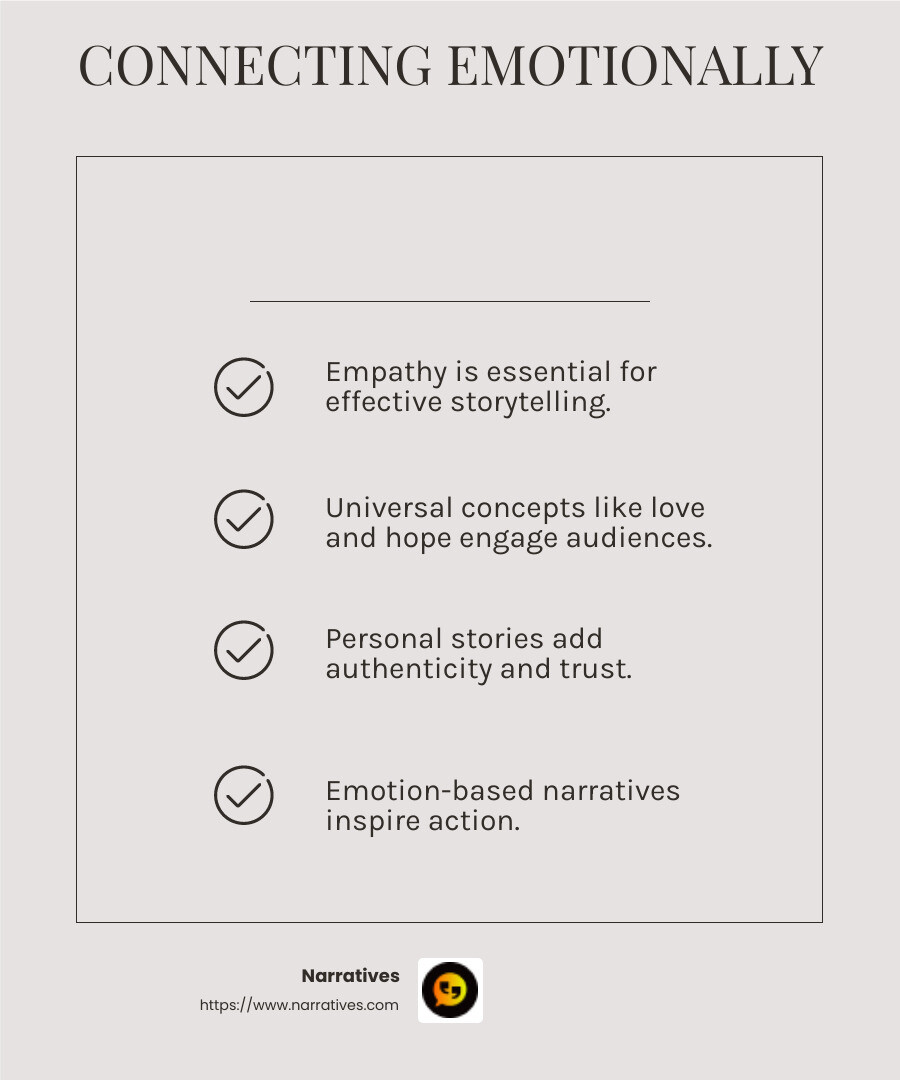
To truly engage your audience, building emotional connections is key. Empathy plays a critical role here. By understanding and reflecting the emotions of your audience, you can create stories that resonate deeply. This connection often inspires action and builds trust.
Universal Concepts: Use themes that are universally relatable, like love, hope, or struggle. These concepts transcend cultural and language barriers.
Personal Perspectives: Share stories from a personal viewpoint. This adds authenticity and helps the audience connect with the storyteller.
Crafting Compelling Narratives
Creating a compelling narrative involves several elements, including point of view and pacing.
Point of View: Decide whose story you're telling. First-person narratives offer intimacy and immediacy, while third-person perspectives provide a broader view.
Pacing: Control the speed at which your story unfolds. Use pacing to build tension or highlight key moments. Quick pacing can excite, while slower pacing can emphasize emotional depth.
Storytelling Analytics can also improve your narrative. By analyzing how audiences interact with your stories, you can refine your approach to better meet their needs. This data-driven insight allows for more targeted and effective storytelling.
Audience Engagement is the final piece of the puzzle. Encourage participation and interaction, whether through comments, sharing, or even co-creation. This not only increases engagement but also fosters a sense of community around your story.
By integrating these strategies, you can create digital stories that are not only compelling but also deeply meaningful to your audience.
Frequently Asked Questions about Digital Storytelling Solutions
What are digital storytelling solutions?
Digital storytelling solutions are tools and techniques that help creators tell stories using digital media. These solutions combine text, images, video, and audio to create engaging narratives. They enable storytellers to craft immersive experiences that can be shared across various digital platforms.
The goal is to make stories more interactive and engaging, allowing audiences to connect with the content on a deeper level. This can involve anything from simple photo slideshows to complex multimedia projects using tools like Adobe Spark or Canva.
How can non-profits benefit from digital storytelling?
Non-profits can greatly benefit from digital storytelling solutions by effectively communicating their mission and impact. Here's how:
Emotional Engagement: Digital stories can evoke strong emotions, helping non-profits connect with their audience on a personal level. This emotional connection can inspire people to support a cause.
Wider Reach: By leveraging digital platforms, non-profits can reach a broader audience. Stories can be shared easily on social media, increasing visibility and engagement.
Cost-Effective: Compared to traditional media, digital storytelling is often more cost-effective. Non-profits can use free or low-cost tools to create compelling content.
Measurable Impact: Digital storytelling allows for tracking engagement through analytics. Non-profits can see what resonates with their audience and adjust their strategies accordingly.
What tools are best for creating digital stories?
There are numerous tools available for creating digital stories, each catering to different needs and skill levels. Here are some popular ones:
ESRI Maps and StoryMap JS: Great for geographic storytelling, allowing users to create narratives based on maps and locations.
Adobe Spark and Canva: Ideal for image-based storytelling, these tools offer easy-to-use interfaces for creating visually appealing content.
Timeline JS and WeVideo: Perfect for interactive storytelling, providing platforms to create timelines and edit videos with ease.
These tools empower creators to build rich, multimedia narratives that capture and hold the audience's attention. By choosing the right tool, storytellers can improve their storytelling capabilities and create impactful digital stories.
Conclusion
As we look to the future of storytelling, Narratives is committed to using the power of digital storytelling solutions to drive social impact and foster community-driven storytelling. By partnering with non-profits and purpose-driven organizations, we aim to amplify underrepresented voices and share impactful stories that resonate with audiences worldwide.
Social impact is at the heart of our mission. Through emotionally resonant multimedia content, we help non-profits communicate their missions effectively, inspiring action and building trust. This is not just about telling stories—it's about making a difference. Digital storytelling allows us to highlight the challenges faced by communities and the efforts made to overcome them, fostering a deeper understanding and connection between audiences and causes.
Community-driven storytelling is a powerful tool for change. By involving communities in the storytelling process, we ensure that narratives are authentic and reflective of real experiences. This approach not only lifts the voices of those often unheard but also empowers communities to take control of their narratives. As a result, stories are more engaging and impactful, driving meaningful conversations and actions.
In conclusion, digital storytelling is not just a method—it's a movement. It's about using technology to create stories that matter, stories that inspire, and stories that can change the world. As we continue to innovate and explore new storytelling techniques, we remain dedicated to our mission of leveraging digital storytelling for social good.
For more on how we can partner with your organization to create compelling digital stories, learn more about our services. Let's tell stories that make a difference.

.avif)