Digital Storytelling Tools: Empowering Student Voices

Digital storytelling tools for students are changing traditional education, making it more engaging and interactive. Storytelling is no longer confined to verbal or written formats; technology has opened up new ways for students to express their creativity and communicate their ideas.
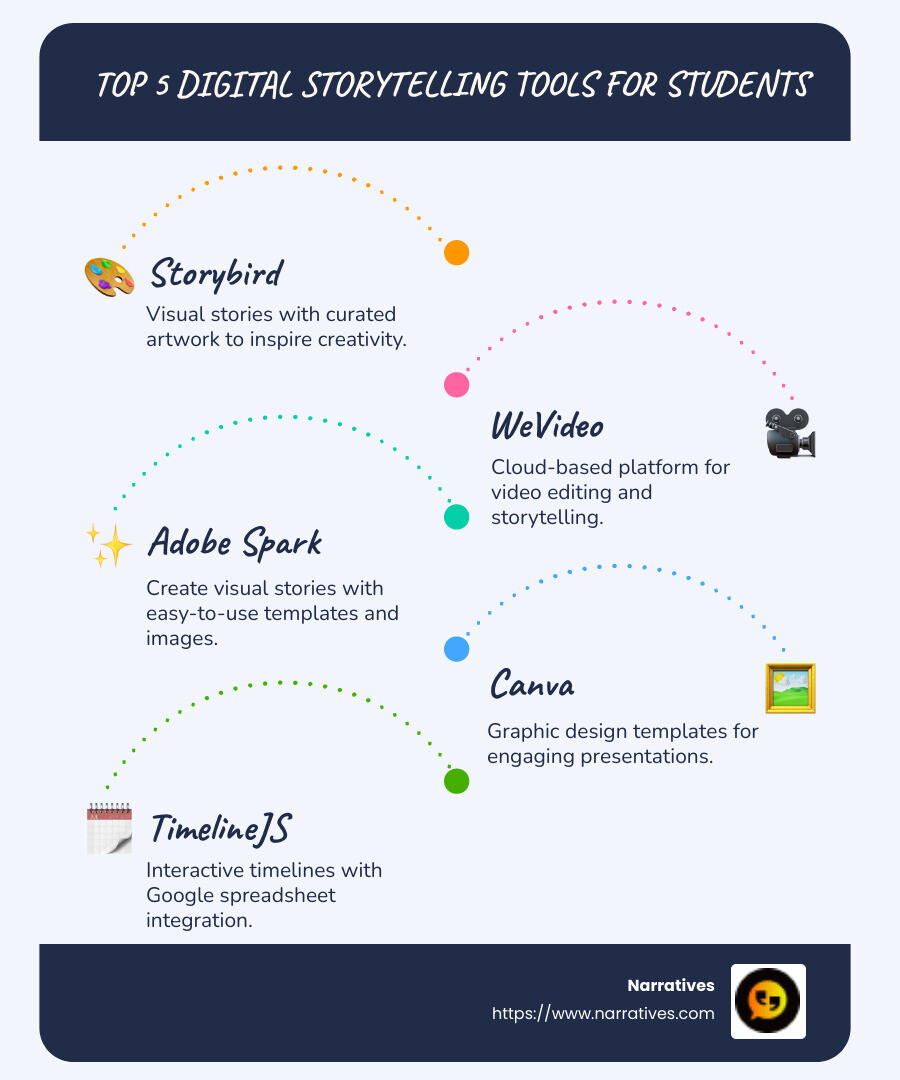
Here's a quick list of some top digital storytelling tools for students:
- Storybird: Create visual stories with curated artwork to inspire creative writing.
- WeVideo: A cloud-based platform for editing and creating engaging video content.
- Adobe Spark: Offers an easy way to make visual stories with ready-to-use images and templates.
- Canva: Provides graphic design templates to help students craft eye-catching presentations and stories.
- TimelineJS: Allows the creation of interactive timelines using Google spreadsheet integration.
Storytelling is a crucial element of human communication. It not only improves learning but also fosters emotional engagement and empathy. For students, employing digital storytelling tools is an effective way to cultivate creativity and improve communication skills. These tools provide a platform for students to share their stories with peers and the wider community, making their voices heard and understood.
Moreover, these digital platforms are instrumental in educational settings, where they can help teachers make lessons more interactive and relatable, ensuring that students remain engaged and motivated to learn.
Check out this infographic for a visual summary of the top digital storytelling tools for students:
Handy digital storytelling tools for students terms:
- digital storytelling for students
- digital storytelling tools for educators
- digital storytelling in education
Understanding Digital Storytelling
Digital storytelling is a modern approach to sharing stories using various multimedia elements like videos, images, and audio. It's a powerful educational tool that transforms how students learn and express themselves.
Multimedia Elements
In digital storytelling, multimedia elements work together to create a rich narrative experience. Instead of relying solely on text, students can use:
- Videos to bring stories to life with motion and sound.
- Images to visually represent ideas and themes.
- Audio to add depth through music and voiceovers.
These elements help students convey their messages more effectively and engage their audience in a dynamic way.
Educational Tool
Digital storytelling tools are not just about telling stories; they are about learning and development. They offer students a chance to:
- Improve creativity by experimenting with different media.
- Develop critical thinking as they decide how best to convey their stories.
- Collaborate with peers in creating shared narratives.
In classrooms, these tools make learning more interactive and relatable. Teachers can use them to create lessons that capture students' attention and make complex topics easier to understand.
Interactive Experiences
One of the most exciting aspects of digital storytelling is the ability to create interactive experiences. Tools like TimelineJS and StoryMapJS allow students to build timelines and maps that readers can explore. This interaction encourages active participation, making stories more engaging and memorable.
For instance, a student can create an interactive timeline of historical events, allowing classmates to click through and learn at their own pace. This kind of engagement makes learning more enjoyable and effective.
By integrating digital storytelling tools into education, we empower students to be not just learners, but creators and sharers of knowledge. These tools open up a world of possibilities for storytelling, making it a vital part of modern education.
Top Digital Storytelling Tools for Students
Digital storytelling tools are changing classrooms into hubs of creativity and engagement. Let's explore some of the top tools that empower students to tell their stories in unique and interactive ways.
Storybird
Storybird is all about visual stories. It offers a treasure trove of curated artwork that students can use to craft their narratives. This tool is perfect for students who want to focus on the art of storytelling. By selecting from a wide range of illustrations, students can create picture books, longform stories, and even poetry. This visual-first approach helps students improve their narrative skills and express their ideas vividly.
WeVideo
For those interested in video storytelling, WeVideo is a fantastic choice. This cloud-based platform allows students to edit videos with ease, even if they're beginners. Students can upload clips, add music, and use special effects to create compelling video stories. The platform's accessibility from any device makes it ideal for collaborative projects, where students can work together seamlessly, no matter where they are.
Adobe Spark
Adobe Spark is a powerhouse for visual storytelling. With its library of ready-to-use images and templates, students can create stunning graphics, web pages, and videos. It's ideal for students who want to combine text, images, and video into a cohesive story. Adobe Spark's intuitive interface ensures that even those new to design can produce professional-looking content with minimal effort.
Canva
When it comes to graphic design, Canva is a go-to tool. It offers a vast array of templates for everything from presentations to social media posts. Students can customize these templates with their own images, text, and colors to create unique projects. Canva's drag-and-drop interface is user-friendly, making it accessible for students of all ages. It's a great way for students to develop design skills while telling their stories.
TimelineJS
TimelineJS is perfect for creating interactive timelines. With Google spreadsheet integration, students can easily input dates and events to build timelines that are both informative and engaging. This tool is excellent for history projects, allowing students to visualize events in a chronological order. The interactivity of TimelineJS encourages exploration, making it a dynamic way to present information.
By utilizing these digital storytelling tools for students, educators can foster an environment where creativity and learning go hand-in-hand. These tools not only make storytelling more engaging but also develop essential skills that students can carry into the future.
Benefits of Digital Storytelling in Education
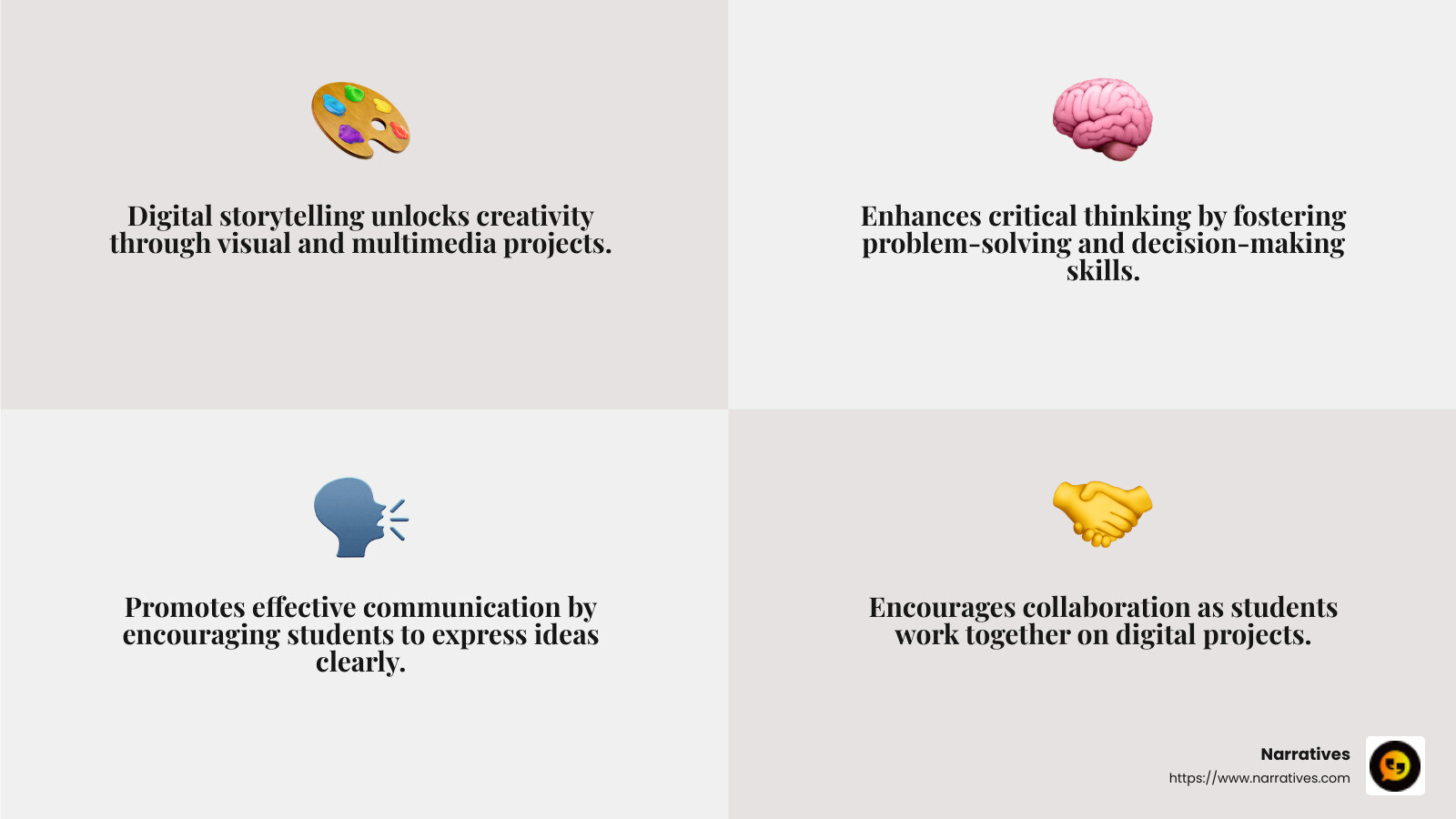
Digital storytelling is more than just a fun activity; it's a powerful educational tool that nurtures creativity, critical thinking, and collaboration among students.
Creativity Releaseed
Digital storytelling tools encourage students to think outside the box. Whether they're crafting a visual narrative on Storybird or designing a presentation on Canva, students have the freedom to explore their creative instincts. This process helps them develop unique voices and express themselves in ways traditional assignments might not allow.
- Visual Storytelling: Tools like Adobe Spark and Storybird provide a canvas for students to blend art with narrative, fostering a deeper connection to their work.
- Multimedia Projects: Platforms such as WeVideo enable students to incorporate video, music, and graphics, adding layers to their storytelling.
Building Critical Thinking Skills
Digital storytelling pushes students to analyze, synthesize, and evaluate information. As they create stories, they must decide which elements best convey their message.
- Problem Solving: Choosing the right multimedia elements to illustrate a point requires careful thought and planning.
- Decision Making: Students learn to make choices about narrative structure, design, and content, which improves their critical thinking abilities.
Fostering Collaboration
Many digital storytelling tools are designed for collaborative work, allowing students to share ideas and learn from each other.
- Group Projects: Tools like WeVideo and Canva support collaborative features, enabling students to work together on projects from different locations.
- Peer Feedback: Students can easily share their stories for feedback, fostering a community of learning and improvement.
By integrating these digital storytelling tools for students into the curriculum, educators can create a dynamic learning environment. This not only makes education more engaging but also equips students with skills that are invaluable in today's digital world.
Next, we'll explore how to choose the right digital storytelling tool for your classroom needs.
How to Choose the Right Tool
Choosing the right digital storytelling tools for students can feel overwhelming with so many options available. Let's break it down into three key factors: user-friendliness, multimedia capabilities, and educational resources.
User-Friendliness
A tool that's easy to steer means less time spent on learning how to use it and more time on creativity. Look for platforms with intuitive interfaces and simple drag-and-drop features. For example, Narratives is known for its user-friendly design, making it ideal for students of all ages.
- Ease of Use: Check if the tool requires extensive training or if students can start creating right away.
- Support: Consider tools that offer tutorials or help centers to guide students through any challenges.
Multimedia Capabilities
The best digital storytelling tools allow students to incorporate a variety of media elements. This includes text, images, audio, and video, providing a rich storytelling experience.
- Diverse Formats: Tools like Narratives offer robust multimedia capabilities, allowing for a comprehensive storytelling experience.
- Integration: Some tools integrate with platforms like Google Sheets, allowing for interactive timelines.
Educational Resources
Having access to educational resources can greatly improve the learning experience. This might include templates, lesson plans, or community forums where students and teachers can share ideas.
- Templates and Guides: Platforms like Narratives offer pre-made templates that can inspire and guide students.
- Community and Support: Look for tools that have active user communities or educational blogs, which offer classroom project examples and resources.
By considering these factors, educators can select the right digital storytelling tools that not only meet their classroom needs but also empower students to express themselves creatively and effectively. Next, we'll address some common questions about digital storytelling tools for students.
Frequently Asked Questions about Digital Storytelling Tools for Students
What are digital storytelling tools?
Digital storytelling tools are platforms that allow students to tell stories using multimedia elements. These tools integrate text, images, audio, and video to create engaging narratives. By weaving together these elements, students can craft stories that are not only informative but also visually and audibly captivating.
Interactive elements are a key feature of these tools. They allow students to create content that readers can engage with, such as clickable timelines, animated graphics, or interactive maps. For instance, TimelineJS enables the creation of interactive timelines using Google Sheets, making historical events or project milestones come alive.
How can students benefit from digital storytelling?
Digital storytelling offers students a range of benefits that extend beyond traditional storytelling:
Creativity: Students have the freedom to experiment with different media and formats, fostering their creative thinking. By using tools like Canva or Adobe Spark, they can design unique visual stories that reflect their individual styles.
Communication Skills: Crafting a digital story requires students to organize their thoughts and present them clearly. This process improves their ability to communicate ideas effectively, a skill valuable in both academic and future professional settings.
Critical Thinking: Students must decide how best to convey their message, which involves analyzing and synthesizing information. This promotes critical thinking as they evaluate the most effective way to engage their audience.
Are there free digital storytelling tools available?
Yes, there are many free digital storytelling tools accessible to students and educators. These tools provide an opportunity for all students to explore storytelling without financial barriers.
Accessibility: Free tools like Storybird and WeVideo offer basic features at no cost, making them accessible to schools with limited budgets. They ensure that every student can participate in digital storytelling, regardless of their economic background.
Ease of Access: Many of these tools are cloud-based, meaning they can be used on any device with internet access. This flexibility supports learning both in the classroom and at home.
By leveraging these free resources, educators can empower students to harness the power of digital storytelling, encouraging them to express their voices in innovative and impactful ways.
Conclusion
At Narratives, we believe in the power of storytelling to amplify underrepresented voices and drive meaningful change. Our mission is to partner with non-profits and purpose-driven organizations to share their impact stories in ways that resonate deeply with audiences. Through digital storytelling tools, we can empower students and communities to tell their stories with authenticity and creativity.
Digital storytelling isn't just about technology—it's about connecting people through shared experiences and emotions. By using these tools, students can not only improve their creativity and communication skills but also learn to tell stories that inspire action and build trust. This is especially important for non-profits, where storytelling can illuminate the challenges and triumphs of the communities they serve.
As we continue to support digital storytelling, our focus remains on elevating voices that often go unheard. By providing high-quality, emotionally resonant multimedia content, we help non-profits share their stories in a way that not only informs but also inspires. Together, we can build a more empathetic and connected world.
To learn more about how Narratives can help empower your storytelling efforts, visit our service page. Let’s work together to create stories that matter.


.avif)